Maine Buck Age Structure
Maine buck age structures depend on hunting pressure and habitat quality, influencing deer herd health and mature whitetail populations.
Know what you’re after.
Big game, small game, upland birds, and waterfowl — identification, behavior, rut and migration timing, and how each species moves through the season.
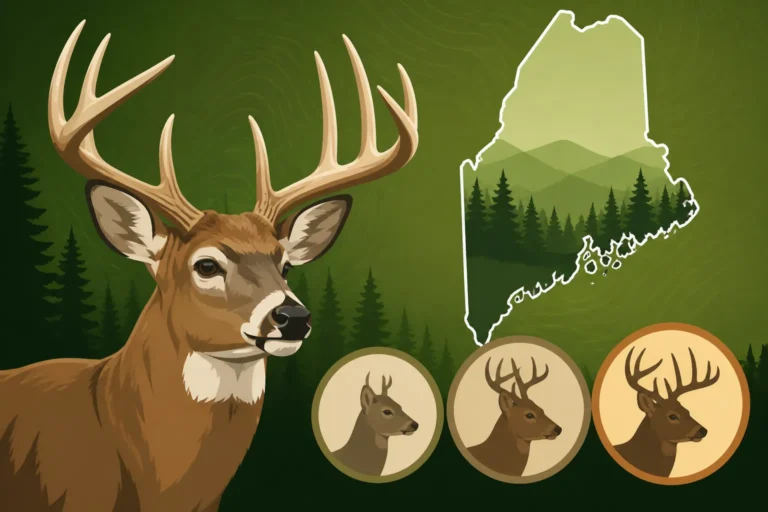
Maine buck age structures depend on hunting pressure and habitat quality, influencing deer herd health and mature whitetail populations.
The Maine whitetail rut progression explains deer behavior across early pre-rut, seeking phase, and peak breeding lockdown.
Maine deer record book standards, qualification rules, and official antler scoring processes for white-tailed deer harvests.
Maine Boone and Crockett whitetails require specific antler scoring measurements and rare conditions to achieve record book status.
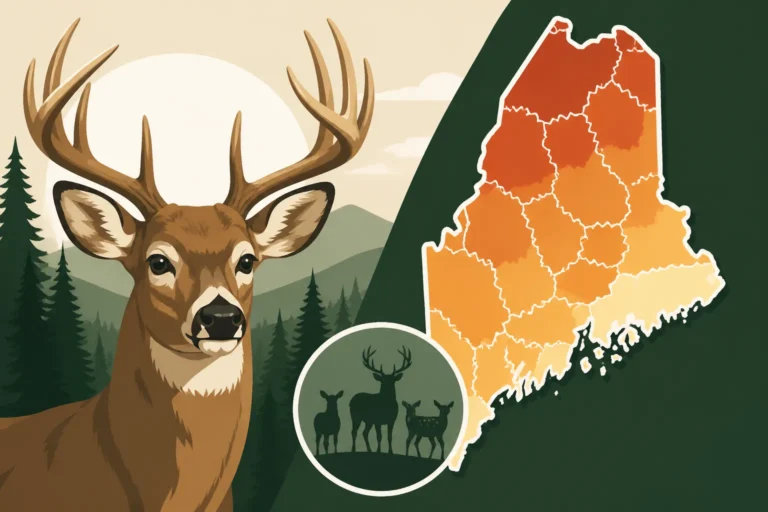
Northern Maine deer density remains low due to severe winters, deep snow accumulation, and the critical need for conifer wintering yards.
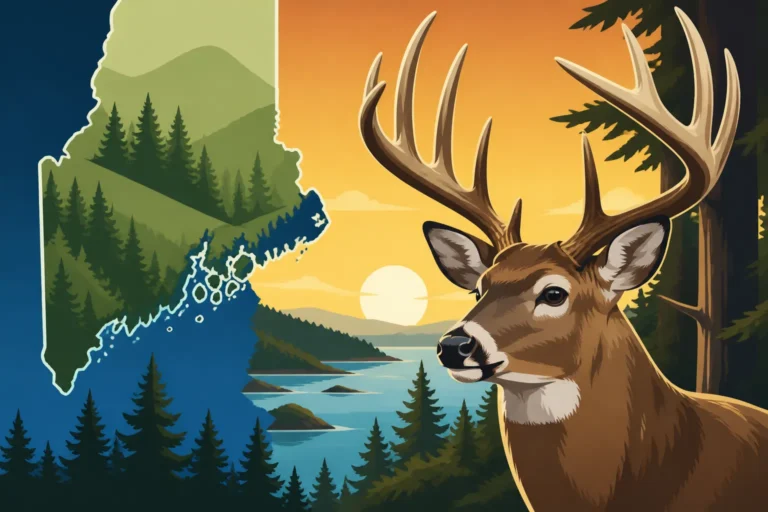
Southern Maine deer habitats offer nutrient-rich forage and milder winters, allowing bucks to grow larger antlers than northern populations.
Maine Wildlife Management Districts explain how habitat diversity and lower hunting pressure help hunters tag mature whitetail bucks.
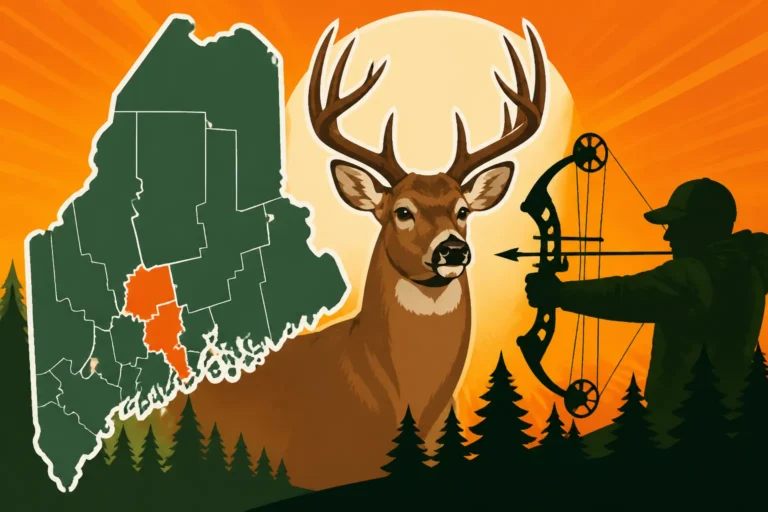
Maine deer harvest statistics reveal which southern and central counties consistently report the highest whitetail numbers annually.
Maine annual deer harvest reports provide hunters with vital population data, trends, and habitat insights to inform future hunting strategies.
Maine white-tailed deer herd estimates and population trends explained using harvest data, aerial surveys, and winter tracking methods.