Judging a Legal Bear From a Sow With Cubs
You've spent hours, maybe even days, scouting, sitting patiently, and finally, a black bear steps out of the shadows. Your heart races, adrenaline surges, but then a crucial question hits you: Is this a legal bear, or could it be a sow with cubs hidden nearby? That split-second decision can be incredibly stressful, and the last thing any ethical hunter wants to do is make a mistake that impacts the bear population or leads to a fine. This guide is designed to help you confidently distinguish between a mature, legal bear and a sow that might have cubs out of sight, ensuring a responsible and successful hunt in the Maine woods.
The Inherent Challenge of Field Identification
Let's be real, judging bears in the wild is tough, even for seasoned hunters. Maine's black bears are notoriously elusive, often moving through dense cover, and you rarely get a clear, prolonged look. They all look "big and black" at first glance, and that initial excitement can easily cloud judgment. The challenge isn't just about identifying a legal animal; it's about the ethical responsibility that comes with hunting. Nobody wants to break the law, but more importantly, no one wants to accidentally orphan cubs or compromise the health of the bear population.
The difficulty is amplified by several factors unique to our Maine environment. The vast, thick spruce and fir forests, coupled with the rugged terrain, mean bears can appear and disappear quickly. Lighting conditions, especially at dawn and dusk when bears are most active, can play tricks on your eyes. And let's not forget the sheer size variation within the bear population; a large, lone sow can look just as substantial as a smaller boar, making size alone an unreliable indicator. It's not uncommon for hunters to experience a mix of excitement and anxiety when a bear finally presents itself, highlighting why a clear strategy for identification is essential.
Key Physical Differences Between Sows and Boars
While every bear is an individual, there are some general physical characteristics that can help you lean one way or another when trying to determine if you're looking at a boar or a sow. It's rarely a single feature that gives it away, but rather a combination of observations.
Body Shape and Size Nuances
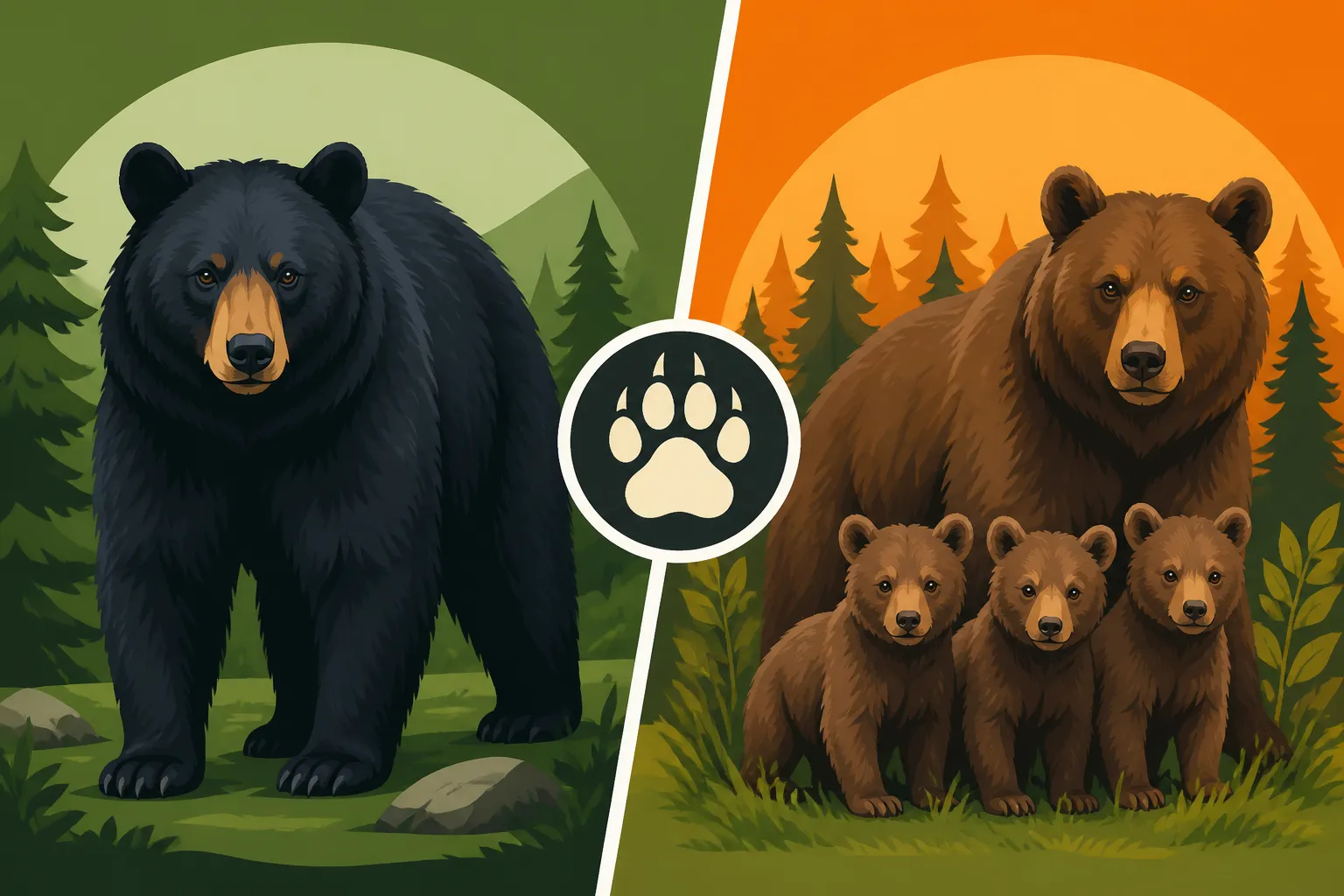
When you first spot a bear, try to get a holistic view of its body. Boars, particularly older ones, tend to have a blockier, more muscular build. Think of a thick, robust animal with broad shoulders that often appear wider than their hindquarters. Their necks are typically thicker and shorter, blending smoothly into their powerful shoulders. Sows, on the other hand, often appear more slender and proportionate, sometimes even a bit "pear-shaped" if they've been feeding heavily, with their widest point often around the hips. However, a well-fed sow can carry a surprising amount of weight, especially in the fall, making size comparison tricky. The critical thing to remember is that while boars are generally larger, a big sow can easily outweigh a smaller boar, making direct size comparison without a reference point almost impossible. Look for the distribution of mass, not just the overall impression of size.
Head Shape and Ear Placement
The head can offer some of the most reliable clues. Boars often have a wider, more blunt-looking muzzle and a broader skull. Their ears, while still prominent, can appear smaller in proportion to the overall size of their head, sitting lower and further apart. Imagine a bear with a powerful, almost bulldog-like facial structure. Sows, conversely, often have a more delicate, narrower, and sometimes more pointed muzzle. Their ears tend to appear larger relative to their head size and might sit higher and closer together on their skull, giving them a more "alert" or deer-like appearance. Again, this isn't a hard and fast rule, but in combination with other factors, it can be a strong indicator. Pay attention to how the head integrates with the neck and shoulders. A boar's thick neck will often make its head appear almost "set" into its shoulders, while a sow's neck might seem a bit longer and more graceful.
Visible Teats and Other Subtle Signs
This is perhaps one of the most definitive physical indicators, but it requires the bear to be in a position where you can see its underside, which doesn't happen often. If a bear stands on its hind legs, stretches, or sits down, try to look for visible teats. If you can clearly see multiple nipples, especially if they appear slightly enlarged or elongated, it's a strong sign of a sow that has recently nursed or is currently nursing cubs. While not always obvious, particularly if the fur is thick or the bear is moving quickly, it's worth a careful look if the opportunity arises. Beyond teats, look at the overall condition of the fur. While not directly linked to sex, healthy, shiny fur often indicates a well-fed bear, which could be either sex, but exceptionally poor fur might indicate a sow struggling to support cubs, though this is speculative and not a reliable indicator.
Behavioral Cues to Aid Identification
Beyond the physical, a bear's behavior can tell you volumes about whether it's a lone boar or a sow with cubs. Paying close attention to how the bear moves, interacts with its surroundings, and even its apparent demeanor is critical.
Movement Patterns and Confidence Levels
A boar often moves with a certain swagger or confidence. They'll typically be focused on the task at hand, whether it's feeding at a bait site, traveling along a game trail, or scent-checking for other bears. Their movements tend to be deliberate and less hesitant. They might pause to sniff the air or listen, but their overall trajectory is usually purposeful. Sows, especially those with cubs, often exhibit more cautious, hesitant, or even skittish behavior. They might move slower, pause more frequently, and often appear to be constantly scanning their surroundings for danger. They're not just looking ahead; they're often glancing behind them, listening intently, as if expecting something or someone to follow. This constant vigilance is a strong instinct driven by the need to protect their young. Consider how they approach a food source; a boar might barge right in, while a sow might circle, sniff, and hesitate, almost creating a perimeter check before committing. This can be particularly noticeable if you're Baiting Black Bears Legally in Maine.
The "Looking Back" Tendency and Pauses
This is one of the most talked-about behavioral cues and for good reason. A sow with cubs almost invariably will pause and look back over her shoulder, or even turn her head completely to scan the area she just traversed. She's checking for her cubs, making sure they're keeping up and haven't encountered any immediate threats. This "looking back" motion is a huge red flag. If a bear does this repeatedly, or even once very deliberately, it should immediately make you consider the possibility of cubs. Boars, generally, do not exhibit this behavior. They are typically focused on their own movement and immediate environment. The frequency and intent of these glances can be telling. A quick glance might be nothing, but a prolonged, repeated look back, especially if the bear seems to be waiting or listening, is a very strong indicator of hidden cubs. Sometimes you'll even see their ears swivel back, listening for the soft rustle of little paws.
The Elusive Presence of Cubs
Of course, the most definitive sign is seeing cubs. But here's the kicker: you often don't see them right away, or at all. Cubs are masters of camouflage and staying hidden in dense cover, especially if they sense danger. A sow might send her cubs up a tree or into a thicket before stepping out into an open area or approaching a bait site. This is why the "looking back" behavior is so crucial. If you see any bear that seems to be acting cautiously, scanning behind itself, or simply waiting for an unusually long time, assume there are cubs present, even if you can't see them. Remember, cubs can be anywhere from small, fuzzy bundles in the spring to substantial yearlings that could be mistaken for smaller adult bears in the fall. If you see a bear that looks like a small adult alongside another, assume it's a sow with a yearling, and therefore, not a legal target. The Maine hunting regulations are very clear on this: it's illegal to harvest a sow accompanied by a cub or cubs. Always err on the side of caution.
Practical Strategies for Confident Identification
Given the challenges, having a solid strategy in the field is paramount. It’s not just about knowing what to look for, but how to approach the situation to maximize your chances of making the correct identification.
The Golden Rule: Patience and Optics
The single most important piece of advice is to be patient. Never, ever rush a shot. Your first instinct might be to raise your rifle or bow, but take a deep breath. Observe the bear through quality binoculars or a spotting scope. These optics will magnify details that are impossible to discern with the naked eye. Look for those subtle physical cues – the shape of the head, the proportion of the ears, the muscle structure around the shoulders. Then, observe its behavior. Let the bear move, turn, and present different angles. A bear that moves around a bait site or along a trail for several minutes gives you multiple opportunities to study it. Some hunters even count slowly to 60 or 120 seconds, forcing themselves to observe before making any decision. Remember, the game laws are there for a reason, and rushing leads to mistakes. If you’re utilizing tools like GoHunt for scouting and mapping, you might even be able to mentally overlay the bear’s position with potential escape routes or thick cover where cubs might be tucked away, adding another layer to your observation.
Utilize GoHunt for Scouting and Data Analysis
Before you even step foot in the woods, leverage modern tools like GoHunt to give you an edge. While GoHunt is often associated with Western big game, its mapping and data features can be incredibly useful for Maine bear hunting. Use the satellite imagery to identify areas of dense cover adjacent to known bear travel corridors or bait sites. Cubs will often remain hidden in these thickets. By understanding the terrain through GoHunt’s mapping overlays, you can anticipate where a sow might stage her cubs before moving into a more open area. Furthermore, stay updated on Maine Bear Population Estimate and Maine Bear Harvest by Bait Versus Hounds data, which can sometimes provide insights into regional bear densities and overall population health, influencing your decision-making. Knowing the general health of the local bear population can reinforce the importance of protecting breeding sows.
When in Doubt, Don't Shoot
This is the ultimate ethical guideline and one that every responsible hunter lives by. If, after all your observation, you still have any doubt whatsoever about whether a bear is a sow with cubs or a legal boar, do not take the shot. It's always better to go home empty-handed than to make a mistake you'll regret. Maine's bear population is healthy, but conservation means protecting our breeding stock. There will always be another bear, another season. Passing on a questionable animal is not a failure; it's a testament to your ethical commitment as a hunter. This principle extends to other forms of hunting too; for instance, applying for a Maine Moose Lottery Application Process or understanding Maine's WMD-Based Turkey Bag Limits all require careful adherence to regulations and an ethical approach.
Remember, a bear hunt in Maine, whether you're Muzzleloader Deer Hunting in Maine or engaged in a dedicated bear pursuit, is about the experience and the tradition, not just pulling the trigger. The satisfaction of a legal, ethical harvest far outweighs the fleeting desire to fill a tag at any cost.
Here’s a quick reference table to help summarize some of these indicators:
| Characteristic | More Likely Boar | More Likely Sow (Especially with Cubs) |
|---|---|---|
| Body Shape | Blockier, broader shoulders, thick neck, robust frame | More slender, proportionate, possibly "pear-shaped" if heavily fed |
| Head Shape | Wider, blunt snout, small ears relative to head size | Narrower, more pointed snout, larger ears relative to head size |
| Movement | Confident, purposeful, less frequent scanning behind | Cautious, hesitant, frequent pauses, often looking behind or to sides |
| Paws/Tracks | Generally larger, wider, more substantial | Generally smaller, more delicate, more proportionate |
| Behavior | Focused on feeding/moving, may scent-check for other bears | Skittish, protective, may appear to be "waiting" for something |
| Visible Teats | Rarely, if ever, visible | Potentially visible, especially if recently nursed |
| Cubs Present | No | Yes (even if hidden or not immediately visible) |
A great hunt isn't just about the harvest; it's about the respect shown to the animal and the adherence to ethical standards. By honing your observation skills and sticking to these guidelines, you'll be well-prepared to make the right call when that black shadow finally emerges in the Maine woods. Good luck out there, and hunt safe!
Disclaimer
Always consult the most current Maine Department of Inland Fisheries & Wildlife (MDIFW) regulations before heading afield. Hunting laws and seasons can change, and it is the hunter's responsibility to know and follow all applicable rules and regulations.