Field Dressing a Deer in Cold Weather
The biting chill of a Maine November or December can turn a successful deer hunt into a real challenge the moment you need to field dress your harvest. You've just put in all that effort, perhaps trudging through snow and ice, and now you're faced with the critical task of preserving your meat in conditions that are tough on both you and your gear. This guide will walk you through the nuances of field dressing a deer in cold weather, ensuring your hard-won venison is handled properly from the moment it hits the ground.
Why Cold Weather Field Dressing is Different in Maine
Field dressing a deer isn't just about getting the guts out; it's about cooling the animal down quickly to prevent bacterial growth and ensure the best quality meat. In Maine, where temperatures can plummet, you might think the cold takes care of all your cooling needs. While it certainly helps, there are unique considerations and challenges that make cold weather field dressing a distinct skill set.
The Urgency of Heat Management
Even when the air outside is well below freezing, a deer's internal body temperature remains around 100 degrees Fahrenheit at the moment of harvest. This internal heat, combined with the gut bacteria, creates a perfect environment for spoilage if not addressed promptly. While the cold air does help dissipate heat, it also stiffens the carcass and can make the task more cumbersome. The goal is always to remove the heat-generating organs as quickly as possible. Imagine a large roast cooking in its own juices; that's essentially what's happening inside the deer's body cavity. The sooner you open that cavity and allow cold air to circulate, the better. Don't fall into the trap of thinking "it's cold enough, I can wait." That internal heat is persistent, and delay is the enemy of good meat.
Dealing with Frozen Hands and Fingers
One of the most immediate and frustrating challenges of field dressing in cold Maine weather is the impact on your hands. Dexterity decreases rapidly as your fingers get cold, turning what should be precise knife work into a clumsy, even dangerous, fumbling session. You're dealing with sharp blades, slippery organs, and potentially stiff joints, all while trying to maintain control. This isn't just about comfort; it's a significant safety concern. Reduced sensation means you might not realize how close your fingers are to the blade, or you might struggle to get a secure grip on the knife handle. When the thermometer drops to single digits, or even below zero, your hands will become stiff and painful without proper protection, making every cut feel twice as hard.
Essential Gear for Cold Weather Field Dressing
Having the right equipment is paramount when field dressing in frigid conditions. It's not just about having a knife; it's about having the right clothing, specialized tools, and even hygiene supplies that are suited to the cold. Neglecting any of these can turn a manageable task into an ordeal.
Clothing and Hand Protection
Layering is your best friend when hunting and field dressing in Maine's cold. Start with a moisture-wicking base layer, add insulating layers like fleece or down, and top it with a waterproof and windproof outer shell. For your hands, the key is a two-glove system. Wear a thin, tight-fitting pair of gloves (like synthetic liners) that allow for good dexterity when handling your knife. Over these, wear a pair of heavy, insulated, waterproof gloves or mittens. When you need to make precise cuts, you can slip off the bulky outer gloves, perform the task, and quickly put them back on to prevent your hands from freezing. Consider bringing a few chemical hand warmers to stash in your outer gloves, or even in a chest pocket to warm your liner gloves between tasks. There's nothing worse than trying to manipulate a small gut hook or make a careful cut when your fingers are numb with cold.
Tools of the Trade
Your knife is obviously critical. A fixed-blade knife with a non-slip handle is ideal, as it offers better control and won't fold on you with cold, stiff hands. Many hunters also carry a gut hook tool or a dedicated gut hook knife, which can make the initial abdominal incision much safer by preventing accidental puncture of the intestines. A small, lightweight bone saw can be invaluable for splitting the pelvis or sternum if you plan to do so in the field, making it easier to thoroughly clean and cool the cavity. Don't forget game bags – breathable cloth bags that protect the meat from dirt, insects (even in cold weather, flies can emerge on warmer days or in sheltered spots), and debris, while still allowing air circulation. A sturdy rope can help you position the deer for easier access or tie legs back. Finally, a reliable headlamp or flashlight is non-negotiable, as daylight fades fast in the shorter cold-weather hunting days. Consider a headlamp that offers a red light setting to preserve your night vision and not spook other wildlife, as found when Coyote Calling at First Light.
| Item | Cold Weather Benefit | Important Considerations |
|---|---|---|
| Layered Clothing | Retains body heat, allows for adjusting to exertion. | Moisture-wicking base, waterproof outer shell. |
| Two-Glove System | Maintains dexterity for knife work while providing overall warmth. | Thin inner gloves for precision, insulated outer for warmth. |
| Fixed Blade Knife | More secure grip and control with cold, stiff hands. | Non-slip handle, sharp edge, easy to clean. |
| Gut Hook Tool | Reduces risk of puncturing intestines, especially when cold. | Safe, efficient for opening the belly cavity. |
| Bone Saw (Small) | Facilitates splitting pelvis/sternum for thorough cooling. | Lightweight, sharp, easy to handle with gloves. |
| Headlamp/Flashlight | Essential for tasks after dark, crucial in short winter days. | Bright, long battery life, red light option. |
| Game Bags | Protects meat from contamination, aids in cooling by allowing airflow. | Breathable, sturdy, sized for deer. |
| Hand Warmers | Quick warmth for numb fingers, improves dexterity. | Chemical packets, reusable options. |
Hygiene and Cleanup Supplies
Even in the cold, maintaining hygiene is important. Bring a small pack of wet wipes and some hand sanitizer. These are invaluable for cleaning your hands after the dirty work, especially before handling food or driving. A small bottle of water can be useful for a quick rinse (though avoid using too much, as it can freeze), and paper towels can help wipe down knives and hands. Keeping things clean not only prevents contamination but also makes subsequent meat handling more pleasant. It’s also good practice to have a small plastic bag to collect any waste, like used wipes or paper towels, for proper disposal, ensuring you leave no trace behind.
Step-by-Step Field Dressing in Icy Conditions
Now that you're geared up, let's get into the practical steps of field dressing your deer when the temperatures are dipping. The process is similar to field dressing in warmer weather, but with extra attention to technique, speed, and mitigating the effects of the cold on both you and the animal.
Initial Assessment and Positioning
First things first, take a moment to ensure the area is safe. Double-check that your firearm is unloaded and secured, or your bow is unstrung. Assess the deer itself. If it's on a slope, try to position it so its head is uphill; this allows gravity to assist in draining blood and fluids away from the body cavity. If the ground is flat, rolling it onto its back with its hindquarters slightly elevated can work. Getting the deer into a stable position is crucial, especially on uneven, frozen, or snowy terrain. You don't want the deer rolling over mid-procedure. Spread out a small tarp or heavy-duty plastic sheeting if you have one, to keep the deer cleaner and to make cleanup easier, especially if the ground is muddy or covered in melting snow. Having a clear plan of attack before you start cutting will make the process smoother, faster, and safer, as you're not fumbling with frozen fingers and a dull blade. This kind of careful planning is also key to a successful Cold-Weather Sitting Strategy in Maine.
Making the Incisions
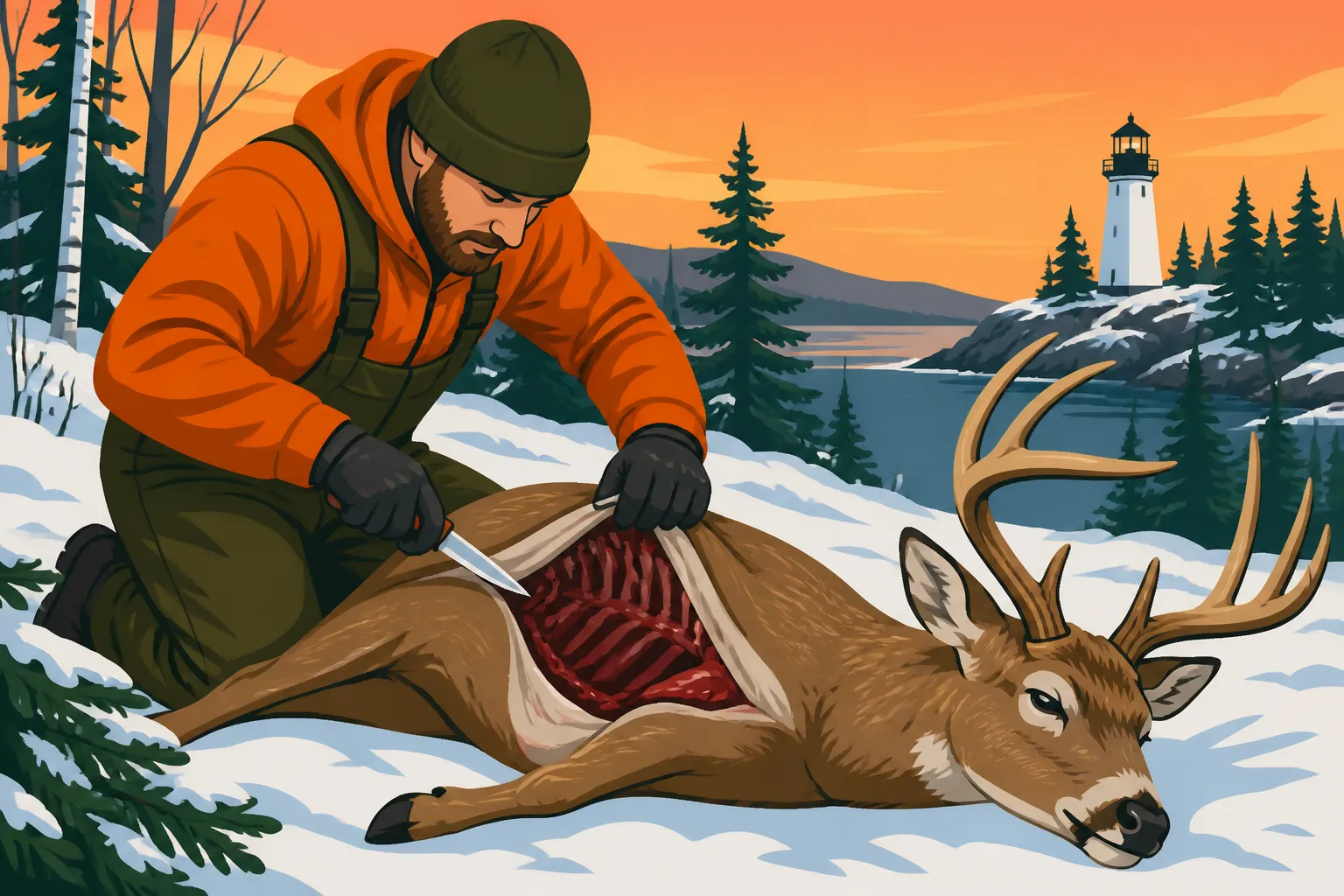
With the deer positioned, start by making the initial incision. Begin at the sternum and carefully cut downwards toward the pelvis. If you have a gut hook, this is where it shines; simply slide the hook under the skin and pull upwards, unzipping the belly without puncturing the internal organs. If you’re using a regular knife, insert the blade just through the skin, then turn it so the sharp edge is facing outwards, and use two fingers to guide the blade, lifting the skin away from the organs as you cut. This "zipper" technique prevents you from accidentally piercing the intestines, which can contaminate the meat.
Once the abdominal cavity is open, you’ll need to cut around the anus and rectum. Make a circular incision to free the rectum, and carefully pull it out a few inches. Some hunters like to tie off the rectum with a string or zip tie to prevent fecal matter from contaminating the cavity as you remove the entrails. This precision can be challenging with cold, stiff tissue, so take your time, and make sure your knife is razor-sharp. You can use mapping tools like GoHunt to mark your precise location for later retrieval, especially if you're in a new area.
Evisceration and Cooling
Now for the main event: removing the entrails. Reach into the chest cavity and carefully sever the esophagus and windpipe as high up as you can. Then, working your way back, pull out all the internal organs, ensuring everything from the diaphragm back is removed. Check for any remaining bits and pieces, as leaving them behind can hinder cooling and potentially cause spoilage.
Once the cavity is clear, the goal is to get it to cool down as quickly as possible. Prop the cavity open with a stick or two, or even the deer's own rib cage, to allow maximum airflow. You want cold air circulating freely inside. In very cold weather, this happens rapidly, but ensuring the opening stays wide is critical. Resist the urge to rinse the cavity with water, especially if temperatures are below freezing. Water will quickly freeze, creating an icy layer that can actually insulate the meat and prevent proper cooling. Instead, use clean paper towels or a cloth to wipe away any blood or debris. This attention to detail ensures your venison will be clean and ready for further processing, reducing the chance of needing a Maine Deer License Refund Policy because of spoiled meat.
Post-Evisceration Care
After eviscerating, it’s vital to protect the exposed meat. Place the deer in game bags immediately. These bags allow air to circulate while keeping dirt, debris, and opportunistic scavengers at bay. If you're not moving the deer right away, try to position it out of direct sunlight and away from areas where snow might accumulate in the cavity. If the ground is icy or muddy, elevate the deer slightly off the ground using logs or rocks to keep the meat cleaner.
Transport the deer as soon as possible. If you're dragging it, be mindful of how you drag it to minimize dirt and debris getting into the cavity. A dragging sled can be a lifesaver, especially when you're navigating tricky terrain and trying to avoid getting mud or snow into that freshly cleaned cavity. Knowing how to carefully manage a retrieve, like Dragging a Deer Out of a Cedar Swamp, can preserve the quality of your harvest. Once you get it back to camp or your vehicle, keep the cavity propped open if possible, and ensure continued airflow. If you have a long drive home, consider covering the deer loosely with a tarp (but not tightly, as that will trap heat). Again, GoHunt's offline mapping capabilities can be a lifesaver for quickly navigating back to your vehicle or a safe processing area, especially in remote parts of Maine's How Many Acres Maine's Public Land Covers.
Common Challenges and Troubleshooting
Even with the best preparation, Maine's unpredictable cold weather can throw some curveballs. Understanding potential challenges and knowing how to troubleshoot them can save your meat and your sanity.
Preventing Meat Spoilage in Fluctuating Temperatures
Maine weather can be notoriously fickle, even in late fall and early winter. You might start your hunt in crisp, cold air, only for the temperature to rise unexpectedly, or even dip further into deep freeze conditions. This fluctuation can lead to issues like partial freezing and thawing, which can negatively impact meat quality. If the meat partially freezes and then thaws, ice crystals can damage muscle fibers, leading to a mushier texture.
The best defense is prompt processing. Once the deer is field dressed and cooled, get it to a processor or your butchering area as quickly as possible. If it's going to be a few days before you can butcher it yourself, ensure it's kept in a consistent, cool environment, ideally between 35-40°F. An unheated garage or shed can work, as long as it stays consistently cool. Keep the cavity propped open and protected from scavengers. Even in cold weather, coyotes, foxes, and birds are always looking for an easy meal. Hanging the deer, if possible, allows for better airflow around the entire carcass and keeps it off the ground, further protecting it from dirt and critters. For those looking to butcher themselves, understanding how to handle and age venison, as explored in Butchering a Deer at Camp, is crucial.
Working Against the Clock
While cold weather reduces the immediate urgency of cooling compared to a warm September day, there's still a clock ticking. Daylight is short in late fall and winter, meaning you often find yourself field dressing in fading light or complete darkness. Cold, numb fingers slow you down. The sheer physical exertion of hunting, combined with the cold, can make you tire faster, reducing efficiency.
The solution? Preparation and practice. Mentally walk through the field dressing steps before you even head out. Know exactly where your tools are in your pack. Use that headlamp early, even if you think you have enough light, to ensure you can see every cut clearly. Don't rush to the point of making mistakes, but strive for efficiency. Having a partner can drastically cut down on time and effort, with one person holding legs or illuminating the cavity while the other works the knife. Efficiency here is key, especially if you're trying to get a deer registered online quickly, as outlined in Registering a Maine Deer Online.
Dealing with Frozen Gut Piles and Blood
The mess left behind after field dressing can be quite something. In warm weather, flies and scavengers quickly clean it up. In cold weather, however, gut piles can freeze solid, turning into unsightly, rock-hard masses that persist for weeks or even months. Blood on the snow can be equally stark and long-lasting.
While it's usually acceptable to leave gut piles in the woods (unless specifically regulated otherwise, such as near trails or water sources), try to move them off game trails and away from visible areas. If you're on private land, consider burying them or covering them with snow, leaves, or brush to minimize their visual impact and reduce attraction for scavengers near human activity. Be mindful of where you spill blood; try to contain it as much as possible to a small area. Respect for the land, as emphasized in Maine Hunter Education Requirements, means minimizing your footprint, even when nature is doing its part to keep things frozen.
Disclaimer
Please note that hunting regulations, seasons, and requirements can change. Always consult the most current Maine Department of Inland Fisheries and Wildlife (MDIFW) regulations before heading afield. This guide provides general information and best practices, but individual situations may vary.