Decoying Eiders on a Falling Tide
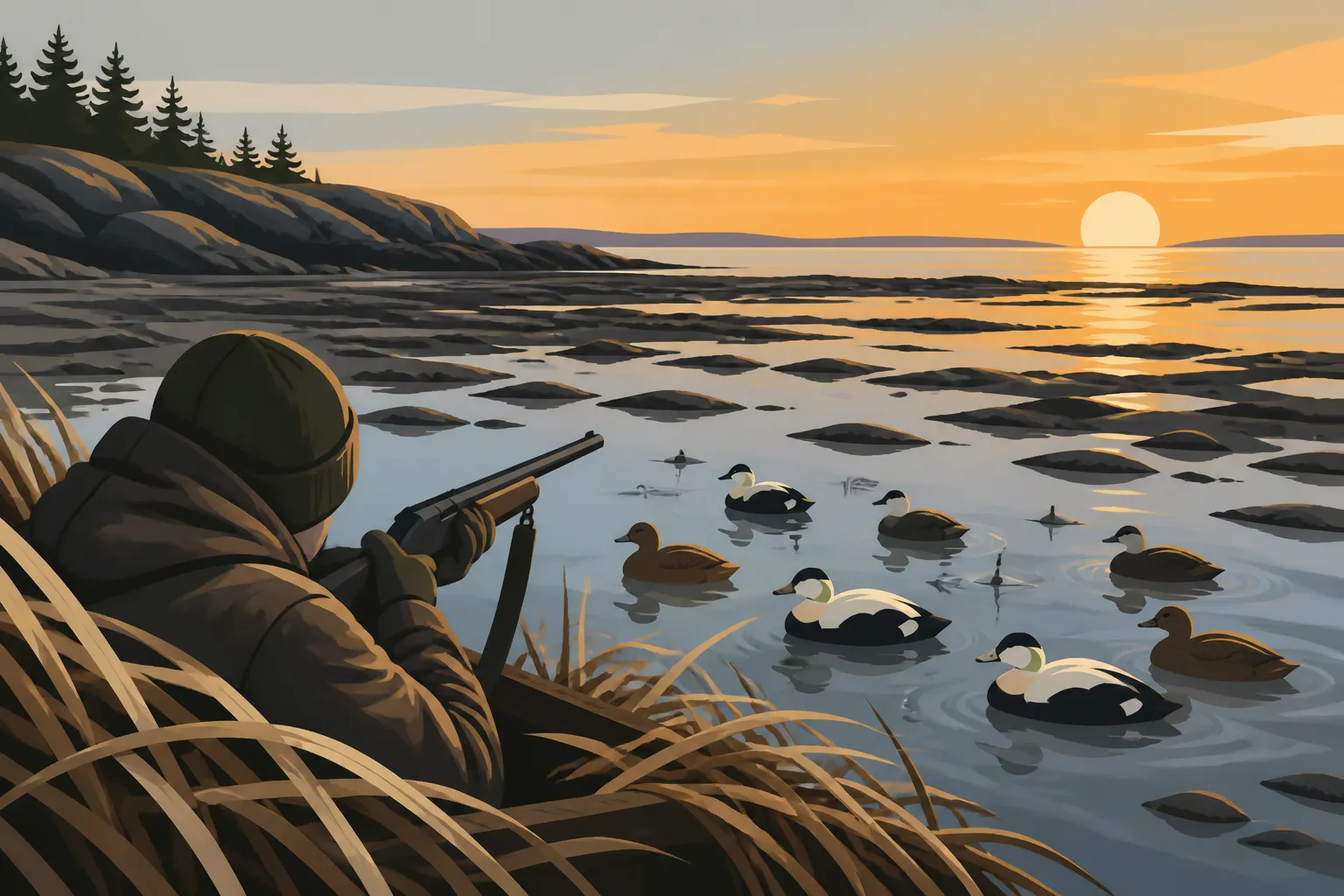
Trying to decoy eiders on Maine's rugged coast can be one of the most exhilarating—and frustrating—hunts you'll ever experience. Those big, bold sea ducks often seem to have a mind of their own, especially when the tide is doing its complicated dance. If you've spent countless hours freezing on a ledge, watching birds fly past your perfect spread, only to commit to some unseen spot downcurrent, you know the struggle. This guide is all about cracking the code of decoying eiders specifically during a falling tide, helping you understand their movements and set up for consistent success.
Understanding Eider Behavior and Tidal Influence
The ocean is a dynamic place, and Maine's coastline, with its countless islands, ledges, and tidal rips, creates a constantly changing environment for sea ducks. Eiders are perfectly adapted to this, but as hunters, we need to understand how they use these features, especially with the ebb and flow of the tide. It's not just about being where the birds are; it's about being where they want to be at a specific moment in the tidal cycle.
Why Eiders Love a Falling Tide
A falling tide, often referred to as an "outgoing" or "ebb" tide, is a golden hour for many sea duck hunters, and eiders are no exception. As the water level drops, it exposes vast areas of previously submerged ledges, mudflats, and rocky bottoms. This exposure, combined with the accelerating current, creates a buffet line for eiders.
Think about it: the retreating water churns up the bottom, dislodging mussels, periwinkles, crabs, and other invertebrates that eiders feast on. These delicious morsels are suddenly more accessible, either exposed on drying rocks or carried along in the current. Eiders will actively work these receding tide lines, diving frequently to grab what they can. The current itself, particularly around prominent ledges or through narrow passages, acts like a conveyor belt, bringing food right to them. They learn these patterns, understanding that certain structures, when the tide is falling, become prime feeding grounds. It’s not uncommon to see large rafts of eiders congregating around a dropping ledge, patiently waiting for the water to expose the next tier of their underwater pantry. This consistent feeding behavior makes them predictable, and predictability is a hunter's best friend.
Key Locations for Decoying on a Falling Tide
Identifying the right spot to set your spread is paramount. On a falling tide, eiders aren't just anywhere; they're concentrating on specific types of bottom structure and current flows. You need to scout these locations well in advance, perhaps even using satellite imagery tools like GoHunt to mark potential hot spots before you ever launch a boat.
One prime location is the downcurrent side of a prominent ledge or rock pile that becomes exposed or partially exposed as the tide drops. As the current sweeps around these obstructions, it creates eddies and current seams where food often collects, and where eiders feel comfortable rafting. Another excellent spot is along the edge of a tidal rip or a strong current line, especially where it meets calmer water. These rips are literally flushing food into the current, and eiders will fly along these lines, often just outside the heaviest chop, looking for easy meals. Shallow shoals and gravel bars that emerge or become very shallow during the ebb are also magnets for feeding birds. These areas often hold abundant mussels and other shellfish. Finally, consider bottlenecks—narrow channels between islands or points of land. As the vast amount of water from a bay or estuary funnels through these constrictions, the current speed increases dramatically, concentrating both food and eiders. Understanding these dynamics is crucial for Decoying Eiders on a Falling Tide. You'll often find birds working these spots relentlessly, diving and surfacing, signaling a good place to set up a spread.
Crafting Your Decoy Spread for Falling Tide Success
Once you've identified a promising location, the next challenge is creating a decoy spread that looks utterly natural and irresistible to wary eiders. These birds are survivors of harsh coastal conditions and are not easily fooled. Your spread needs to mimic a contented, feeding flock, moving subtly with the current, just like real birds.
Numbers and Types of Eider Decoys
When it comes to eiders, don't be shy with your decoy count. These birds are highly social and often congregate in large rafts. A small spread of six to twelve decoys might attract a curious single or a pair, but if you want to pull in larger groups, you'll need to think bigger. Often, 20-30 decoys is a good starting point, but don't hesitate to deploy 50, 75, or even 100+ if you have them and the conditions allow. The sheer numbers create a visual draw that signals safety and an active feeding area.
Beyond quantity, the type of decoy matters significantly. You'll want a good mix of drakes and hens, with a slight bias towards drakes, as their bold black and white plumage stands out on the water. Crucially, incorporate "sleeper" or "resting" decoys. These low-profile decoys, often with heads tucked, convey a sense of calm and contentment, indicating a safe spot for feeding and resting. Upright, "active" decoys, with heads alert, can be mixed in to suggest a more dynamic, feeding flock. Durability is key for saltwater hunting; look for high-quality, heavy-duty plastic or foam decoys that can withstand constant abuse from waves, currents, and sharp rocks. Brands like GHG (Greenhead Gear) and Fowl Play are popular choices among serious sea duck hunters for their realism and resilience. When you're assessing your setup, services like GoHunt might even offer aerial views of historical spreads from other hunters, giving you ideas for optimizing your own. Remember, the goal is to make your spread look like a thriving, natural eider colony.
Strategic Placement in Currents
This is where many hunters miss the mark. You can have the best decoys in the world, but if they're not moving naturally with the falling tide's current, they'll look like static plastic and spook incoming birds. The current is your friend, but it needs to be managed.
Your primary goal is to create a dynamic, natural-looking spread that gives the illusion of feeding and resting birds. Eiders prefer to land into the wind and often into the current, so your spread should generally be set up "upcurrent" from your hide, allowing birds to approach over the decoys and settle in front of your shooting position. Use heavy anchor weights (often 2-3 lbs per decoy or more in strong currents) and long lines to ensure your decoys ride the waves and current realistically without dragging. A common and effective strategy is to create loose "pods" or small groups of 5-10 decoys, rather than one giant blob. These pods should be spaced out to allow landing zones for incoming birds, mimicking how real eiders raft and move. You might place a larger "mother" raft furthest out, with smaller groups closer to your hide, creating an inviting funnel. Observe the current: are your decoys swinging naturally, or are they getting tangled? Are they getting pushed too far together? Make adjustments. Sometimes, extending a single line of decoys far downcurrent can serve as a "bread crumb trail," guiding distant birds towards your main spread. This methodical approach, accounting for both wind and the relentless pull of the tide, is fundamental to success. Learning to manage these forces is a critical part of Hunting Scoters in Maine's Open Water too, as they share similar coastal habitats.
Setting Up Your Hide and Executing the Hunt
Having a fantastic decoy spread is only half the battle. You need to be invisible, comfortable, and ready to react when the eiders commit. Maine's rugged coastline offers unique challenges and opportunities for concealment.
Choosing the Right Concealment Spot
Your hide needs to blend seamlessly with the environment and offer an unobstructed shot over your decoys. For shore-based hunts, utilize natural features like large boulders, driftwood piles, or thick stands of spruce trees right at the water's edge. Build a blind that is low profile, wide enough to conceal all hunters, and camouflaged with local vegetation. This might mean piling up seaweed, rocks, or branches to break up your outline. Remember that tide changes can dramatically alter the shoreline. A perfect hide at low tide might be completely exposed or even underwater at high tide, so plan accordingly for a full tidal swing.
For boat-based hunting, especially in deeper water or around offshore ledges, a dedicated sea duck hunting boat with a well-designed blind is essential. These boats are built to handle the rough Maine seas and provide stable shooting platforms. Layout boats are another effective option, particularly for incredibly wary birds or when hunting far offshore. These low-profile vessels allow you to lie flat, becoming virtually invisible on the water, blending into the waves and the decoy spread. When using a layout boat, you'll typically have a larger "mother ship" nearby to ferry hunters and retrieve birds. Regardless of your choice, ensure your hide offers good visibility of your entire spread and the surrounding air space, allowing you to track incoming birds and make quick, clean shots. For those who opt for a Layout Boat Hunting the Maine Coast, understanding the specific tactics for this method can greatly increase your odds.
Reading the Birds and Adjusting Your Spread
The best hunters aren't just static observers; they're constantly analyzing and adapting. Eiders, especially those that have been hunted before, can be incredibly wary. Pay close attention to how birds are reacting to your spread and your hide. Are they flaring out too soon? Are they circling but never committing? This feedback is invaluable.
If birds are flaring, check your concealment first. Is someone moving too much? Is a shadow giving you away? Next, look at your decoys. Are they too tightly packed? Do they look unnatural in the current? Sometimes, a slight adjustment to the anchor lines, allowing a bit more drift, can make all the difference. If birds are passing by without even a glance, you might need to try calling. Eider calls, which mimic the deep guttural "ah-ooh" of the drakes or the growl of the hens, can be very effective, especially on foggy days or when birds are distant. Don't overcall; a few soft calls can be more persuasive than a frantic honking. Watch their approach path: are they consistently coming in from a particular direction? Adjust your spread to create a more inviting landing zone in that path. For instance, if birds are swinging wide, create a larger gap in your decoys on the side they're avoiding, as if other eiders have left space for newcomers. The ability to quickly adapt, whether by making a subtle decoy adjustment or changing your calling cadence, often separates a successful hunt from a frustrating one. This kind of flexibility is also key when you're Reading a Ledge for a Morning Sea Duck Flight, as conditions can change rapidly.
Safety Considerations for Coastal Eider Hunting
Maine's coastal waters are beautiful but unforgiving. The success of your eider hunt hinges not only on your hunting prowess but, more importantly, on your commitment to safety.
Navigating Maine's Treacherous Coastline
The coast of Maine is notorious for its rapidly changing weather, strong currents, and hidden ledges. A flat calm morning can turn into a gale with 4-foot seas in a matter of hours. Always check multiple weather forecasts before heading out, paying close attention to wind speed and direction, as well as swell height. Know your boat's capabilities and, more importantly, your own. If the conditions feel questionable, it's always better to stay ashore.
Currents on a falling tide can be incredibly powerful, especially in channels and around prominent points. Understand how the current will affect your boat, your decoys, and your ability to retrieve birds. Be aware of the tides, knowing exactly when high and low tide occur at your specific location. Running aground on a receding tide can leave you stranded for hours, or worse, expose your boat to damaging waves when the tide eventually returns. Always have up-to-date nautical charts or a reliable GPS chartplotter on board. Services like GoHunt can also help you mark known hazards and safe navigation routes. Finally, always tell someone ashore your float plan – where you're going, when you expect to return, and who is with you. These simple steps can be life-savers.
Essential Gear and Emergency Preparedness
Beyond your hunting gear, specific safety equipment is non-negotiable for sea duck hunting. Every person on board must wear a U.S. Coast Guard-approved personal flotation device (PFD) at all times. Cold water immersion is a real and immediate danger in Maine's frigid waters, even in early fall. Survival time in water below 50 degrees Fahrenheit is severely limited. An immersion suit or dry suit can drastically increase your survival time if you unexpectedly go overboard.
Ensure your boat is equipped with all required safety gear, including visual distress signals (flares), an air horn, a first-aid kit, a bilge pump, and navigation lights for early morning or late evening trips. Carry multiple means of communication, such as a VHF marine radio, a cell phone in a waterproof bag, and ideally, a satellite communication device like a Garmin inReach. These devices are crucial for calling for help if you get into trouble in areas with no cell service. Pack extra warm, waterproof clothing, food, and water. A spare propeller, repair kit, and extra fuel are also wise additions. Finally, never hunt alone, especially in potentially hazardous conditions. Having an extra set of hands and eyes, and someone to help if an emergency arises, is invaluable on the vast Maine coast. Knowing your Maine Sea Duck Season and Zones is also critical, as is ensuring you have your Maine Federal Duck Stamp Requirement and Maine HIP Certification for Bird Hunters in order. Stay safe out there so you can enjoy many more years of chasing these magnificent birds.
| Decoy Type/Configuration | Purpose on Falling Tide | Ideal Placement | Notes |
|---|---|---|---|
| Sleeper/Resting Decoys | Indicate safety, contentment, feeding. | Closest to hide, or in tight pods | Use generously; suggests a calm, secure environment. |
| Active/Upright Decoys | Suggests movement, alertness, feeding activity. | Mixed with sleepers, especially upcurrent | Creates a dynamic, lifelike spread. |
| Drake Eider Decoys | High visibility due to bold plumage. | Outer edges of spread, furthest out | Acts as a strong visual draw for distant birds. |
| Hen Eider Decoys | Adds realism, balances gender ratio. | Within pods, closer to landing zones | Blends naturally with drake decoys. |
| Long Line Spreads | Creates a large, natural-looking raft effect. | Across currents, with a bend (J or V shape) | Allows birds to land into wind/current, funneling them. |
| Single Decoys (Outliers) | Creates illusion of breaking birds, or curiosity. | Scattered downcurrent or off to the side | Can draw attention from passing birds towards main spread. |
| Heavy Anchor Weights | Prevents decoys from dragging in strong currents. | Essential for all decoys, especially in rips | Use 2-3 lbs per decoy or more depending on current strength. |
Disclaimer
Hunting is an inherently dangerous activity. The information provided in this guide is for informational purposes only and is not a substitute for proper training, experience, or adherence to all applicable laws and regulations. Always prioritize safety, understand local conditions, and ensure you have the necessary skills and equipment before venturing into the field.