Getting a Moose Out of the North Woods
The moment that magnificent Maine bull moose hits the ground, a wave of elation washes over you. You've worked tirelessly, perhaps for years, to draw that coveted permit and execute the perfect hunt in the vast, wild North Woods. But as the initial adrenaline subsides, the stark reality hits: you're now faced with the monumental task of transforming a ton of raw wildness into manageable, edible portions, and then, the even bigger challenge, actually getting it out of some of the most remote country in the Lower 48. This isn't a small deer you can drag a hundred yards to the truck; this is a true wilderness extraction, and this guide is here to help you navigate every sweaty, bone-tired step of the process.
Initial Field Dressing and Breaking Down the Animal
Congratulations, you've done the hard part: making the shot and harvesting your moose. Now, the clock starts ticking. The biggest enemy of wild game meat, especially a massive animal like a moose, is heat. The faster you can get that animal cooled and processed, the better your meat quality will be. This initial stage is physically demanding and requires a clear plan.
Cooling the Carcass Quickly
Immediately after the animal is down and confirmed expired, your priority shifts to cooling. A moose's thick hide and massive body mass trap an incredible amount of heat, even on a chilly day. The very first step is to completely field dress the animal. Don't delay this. Get the guts out, open up that body cavity, and allow air to circulate. If the ground is cold, position the moose on its back or side, propping the rib cage open with sticks or logs to maximize airflow. Many hunters carry a few short lengths of sturdy PVC pipe or even some strong zip ties to hold the cavity open.
Once the initial gutting is complete, the next critical step is to get the hide off as soon as possible. While some hunters will quarter a moose bone-in with the hide on for transport, removing the hide is the most effective way to dissipate body heat. Work quickly, but deliberately. The hide is thick and tough, so sharp knives are non-negotiable. If you're planning for a full shoulder mount, you'll need to be particularly careful with the caping process, ensuring you make the correct cuts to preserve enough hide for the taxidermist. Otherwise, a rough skinning job to get the hide off and away from the meat is perfectly acceptable for meat preservation.
Quartering the Moose on the Ground
Breaking down a moose in the field is a true test of grit and planning. You simply can't drag a whole moose out of the North Woods. The most common and practical method is to quarter the animal. This means separating the four legs, backstraps, tenderloins, neck meat, and any other desirable cuts into manageable sections.
Start by removing the front legs, which are attached only by muscle and connective tissue. Then, move to the hind legs. These are typically ball-and-socket joints, requiring a bit more work to disconnect, but can still be done without a saw by carefully cutting through ligaments. Once the legs are off, you can access the prized backstraps, running along the spine. These can be removed as long, solid strips of meat. Don't forget the tenderloins, which are inside the body cavity, tucked against the spine. They are relatively small but incredibly tender. Every scrap of usable meat is valuable, so take your time and be thorough. When Field Dressing a Moose in the North Woods, consider the tools you have on hand and the number of people in your party; teamwork here is invaluable.
The choice between boning out the meat in the field or transporting bone-in quarters depends on your method of extraction and the distance involved. Boning out meat means separating all muscle tissue from the bone at the kill site. This significantly reduces weight, as bone accounts for a substantial portion of the quarter's mass. This is often the preferred method for backpack extraction, especially when facing truly remote locations. However, it requires more time and can make the meat harder to handle if not properly bagged. Bone-in quarters, while heavier, can be easier to manage for short distances or if you have ATV access. They also tend to cool more evenly and maintain their shape better. No matter which method you choose, make sure you have plenty of good quality game bags – not just cotton pillowcases – to protect your meat from dirt, insects, and debris.
Extracting Meat from Remote Terrain
Once your moose is broken down into manageable pieces, the real logistical puzzle begins. Getting hundreds of pounds of meat out of the Maine woods often involves a combination of sheer muscle, strategic planning, and sometimes, a little mechanical help.
The Power of the Pack Frame
For many successful North Woods moose hunts, especially those deep in the backcountry, packing out the meat on your back is the primary, if not only, option. This is where a sturdy external frame backpack becomes your best friend. Internal frame packs simply aren't designed to comfortably carry the awkward, heavy loads of bone-in quarters or large boned-out meat sections. You'll be making multiple trips, sometimes over several days, so having a well-fitted pack frame is non-negotiable. Think about carrying 80-100 pounds per load over uneven ground, through thick brush, and potentially in the dark.
When packing, distribute the weight evenly, securing the meat tightly to prevent shifting. Consider bringing along an extra tarp or heavy-duty plastic sheeting to wrap meat quarters before placing them in game bags and then securing them to your pack. This adds a layer of protection from external dirt and potential leaks. Planning your route, even marking trees with flagging tape (to be removed later, of course), can save you immense frustration, especially if you're navigating after dark. Having a reliable GPS unit or a smartphone with a mapping app like GoHunt installed and offline maps downloaded is absolutely essential for navigating out of the deep woods, especially when making multiple trips under duress.
Utilizing Mechanical Advantage: ATVs, UTVs, and Snowmobiles
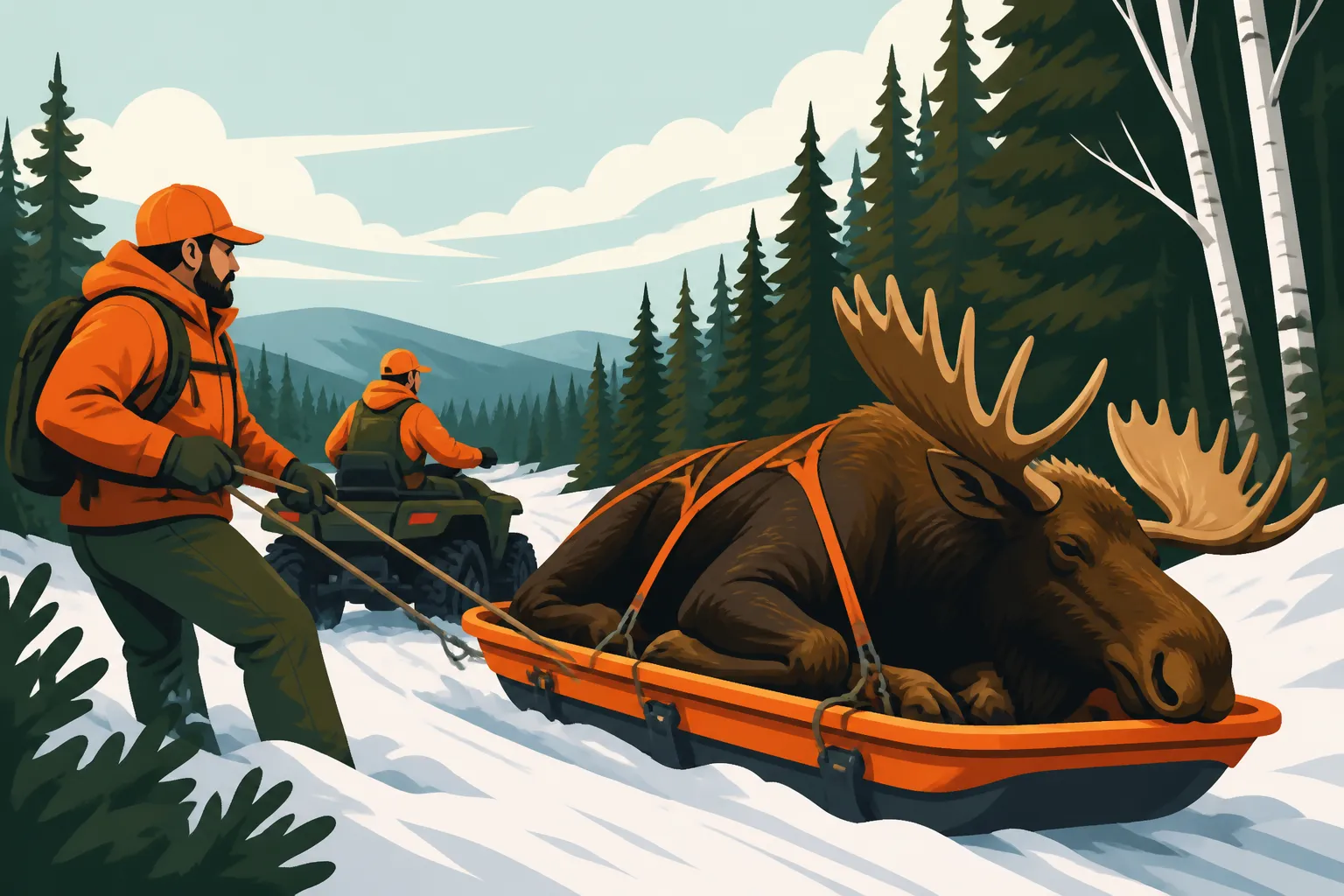
If you're fortunate enough to hunt a zone with accessible logging roads or trails, ATVs (All-Terrain Vehicles) and UTVs (Utility Terrain Vehicles) can be a game-changer. These machines can drastically reduce the number of trips and the physical toll of extraction. However, it's crucial to understand the regulations regarding ATV use on specific lands, particularly in the North Maine Woods. Many logging roads are privately owned and may have restrictions on vehicle access, especially during certain times of year or based on permits.
When using an ATV or UTV, you'll want to carefully load the meat. Ensure it's secured and balanced to prevent tipping. A small utility trailer designed for ATVs can be incredibly helpful. If the ground is soft, be mindful of damaging trails or getting stuck. In late-season hunts or in certain WMDs, a snowmobile might be the only viable option for winter conditions. Tracked ATVs or UTVs are also becoming increasingly popular for their versatility in varying terrain and snow depths. Always confirm the local rules for using these vehicles, as enforcement can be strict to prevent environmental damage. Knowing the regulations for Hunting a North Maine Woods Checkpoint Tract is particularly important if you plan on using mechanized transport.
The Role of Air and Water Transport
For truly remote kills, or for those who plan extensively with a guide, air and water transport are sometimes options. Float planes can land on remote lakes and ponds, offering a swift and relatively easy way to extract meat. This is typically an expensive option and usually part of a pre-arranged guided hunt package, like those offered when Hiring a Guide for a Drawn Moose Permit. The guide will often have a relationship with a local air service. Similarly, if your kill is near a navigable river or large lake, a canoe or small boat can be used to float meat out, though this often requires careful maneuvering and protective wrapping of the meat to keep it dry. These methods, while less common for the average hunter, highlight the extreme measures sometimes necessary to retrieve a Maine moose.
Preserving the Meat and Trophy
Getting the meat out is only half the battle; ensuring it remains in top condition until it reaches your freezer is equally important. Proper care of the hide and antlers is also critical if you're hoping for a trophy mount.
Staging and Cooling the Meat for Extended Periods
Sometimes, due to the sheer size of the moose or the remoteness of the kill site, you might not be able to get all the meat out in one day. Staging the meat for overnight cooling is a common necessity. After quartering and bagging, find the coolest, shadiest spot available. Hang the meat quarters from tree branches if possible, allowing air to circulate around them and keeping them off the ground where scavengers might be a problem. If hanging isn't feasible, place the bagged meat on logs or rocks, covered with a tarp to protect from rain and insects, but still allowing airflow. Never pile meat directly on the ground.
Keep the game bags clean and inspect them for holes or tears that could allow flies or dirt to contaminate the meat. In colder weather, cooling is less of an issue, but in early season hunts, especially during warmer spells in September, dry ice or even large blocks of ice brought into the woods can be a lifesaver for rapid chilling of the core meat. Always remember that good ventilation is key.
Trophy Care: Head and Hide
For many hunters, the antlers are the prize, but for a shoulder mount, the cape (the hide from the head, neck, and shoulders) is just as important. Caping requires precise cuts to ensure enough hide is left for the taxidermist. Generally, you'll need to cut well behind the front legs, bringing the cut up over the shoulder and then down the back of the neck to the base of the skull. Carefully skin around the antlers, ears, and eyes. Once the cape is removed, it needs to be cooled quickly, just like the meat. Fold it skin-to-skin, roll it up, and get it to a cooler as soon as possible, or freeze it if you're not far from a freezer.
If you're only keeping the antlers, you can simply remove the skull plate with a bone saw. Cut across the top of the skull, just below the pedicles where the antlers attach, and then saw down to create a solid plate that can be mounted. This is a much easier and lighter option for transport. Remember, antlers are heavy, especially those of a large bull moose! Secure them well for transport, ensuring they don't shift and cause damage to your vehicle or gear.
Planning and Teamwork: Your Keys to Success
Successfully extracting a moose from the Maine North Woods isn't just about brawn; it's heavily dependent on meticulous planning and effective teamwork. You simply cannot do this alone.
Essential Gear for Moose Extraction
A well-prepared moose hunter carries more than just a rifle and ammunition. Here’s a checklist of items that will make your extraction infinitely smoother:
- Knives: Multiple sharp knives, and a sharpener or replaceable blades. A boning knife, a skinning knife, and a gut hook knife are all useful.
- Game Bags: Heavy-duty, breathable game bags in sufficient quantity for all meat sections. Don't skimp here.
- Gloves: Rubber or latex gloves for sanitation, and tough work gloves for handling meat and hide.
- Rope/Cordage: At least 50 feet of strong rope for hanging meat, securing loads, or dragging.
- Tarp/Plastic Sheeting: For keeping meat clean while working, or covering it during staging.
- Headlamp/Flashlight: With extra batteries. You'll likely be working in the dark.
- First-Aid Kit: For cuts, scrapes, and other wilderness mishaps.
- Water & Snacks: Stay hydrated and energized; this is physically grueling work.
- Pack Frame: A dedicated external frame pack for carrying heavy, awkward loads.
- Saw: A small bone saw for the pelvis (if not fully boning out) and skull plate.
- Coolers/Ice: If weather is warm, have these ready at your vehicle or camp.
- Navigation: GPS, maps (digital or paper), and compass. Tools like GoHunt's mapping features can be incredibly helpful for planning routes and marking your kill site.
When Packing for a North Woods Moose Hunt, consider the potential for a moose harvest and pack accordingly. Being caught unprepared after a successful kill will only add stress and can compromise your meat.
Scouting and Access Considerations
The work of moose extraction truly begins long before you pull the trigger. Effective scouting includes not just looking for moose sign, but also identifying potential access points and extraction routes. Using mapping tools, like those found on platforms such as GoHunt, to identify potential extraction routes or nearby access points is critical long before you even step foot in the woods. Look for old logging roads, ATV trails, or even dry creek beds that might offer a slightly easier path out. Understanding the terrain, elevation changes, and density of cover in your assigned Hunting a Drawn Moose Zone in the North Woods will allow you to mentally plan for the worst-case scenario.
Access permits, especially in the North Maine Woods, might also dictate where you can and cannot take vehicles. Some areas have gates or checkpoints where fees are required, or where certain vehicles are prohibited. Always check with the land managers or the Maine Department of Inland Fisheries and Wildlife (MDIFW) for current regulations. Preparing for a Moose Hunting Maine's North Woods adventure requires extensive research into these details.
The Absolute Necessity of Teamwork
Attempting to extract a moose by yourself is incredibly difficult and potentially dangerous. This is a job for a team. Most successful moose hunts involve a party of at least three to four hunters, and often more. Each person brings an extra set of hands, a fresh back for packing, and additional gear. Assign roles: one person on gutting, another on skinning, others on preparing game bags or clearing a work area.
The mental and physical exhaustion of breaking down and packing out a moose can be overwhelming. Having a team provides not only physical help but also moral support. When you’re making your third trip out in the dark, soaking wet, and tired to the bone, a friendly face and a helping hand make all the difference. Discuss your extraction plan thoroughly with your hunting party before the hunt, so everyone knows their role and what to expect. This also extends to post-harvest reporting, as understanding things like Handling a Bear Harvest Check-In can give you an idea of the process for moose registration. The MDIFW has specific requirements for reporting your moose kill and often involves checking it at an official station or online.
Summary of Moose Extraction Strategy
Getting a moose out of the North Woods is an epic undertaking, but it’s an integral part of the experience and a testament to your respect for the animal and the meat it provides. From the moment the moose is down, every action must be deliberate and focused on rapid cooling and efficient breakdown. Whether you're relying on pure manpower with pack frames, utilizing ATVs on designated trails, or planning a more elaborate extraction with a guide, preparation is paramount.
Here's a quick overview of key considerations:
| Stage of Extraction | Key Actions | Primary Goals | Essential Gear |
|---|---|---|---|
| Field Dressing | Gut, open cavity, remove hide promptly | Rapid cooling, prevent spoilage | Sharp knives, gloves, game bags, tarp |
| Quartering | Separate legs, backstraps, tenderloins; bone out if remote | Reduce weight, create manageable pieces | Bone saw (optional), robust game bags, pack frame |
| Transport | Backpacking, ATV/UTV, snowmobile, air/water | Efficient removal from kill site to camp/vehicle | Pack frame, ATV/UTV, ropes, navigation (GoHunt) |
| Meat Preservation | Hang/stage, keep clean, cool | Maintain meat quality, prevent contamination | Game bags, tarp, cool place, ice (if available) |
| Trophy Care | Proper caping cuts, skull plating | Preserve hide for taxidermy, manage antlers | Sharp knives, saw (for skull plate), cooler |
| Planning & Teamwork | Pre-scout, gear prep, clear roles | Safety, efficiency, successful recovery | Maps, GPS, first aid, sufficient hunting party |
Remember, your What a Once-in-a-Lifetime Moose Tag Means often extends beyond the shot; it encompasses the entire journey, including the monumental task of bringing that incredible animal home. By planning, preparing, and working as a team, you can ensure your hard-earned moose provides delicious meals and lasting memories.
Disclaimer
The information provided in this guide is for general informational purposes only and does not constitute legal or professional advice. Hunting regulations, land access rules, and safety protocols can change. Always consult the most current Maine Department of Inland Fisheries and Wildlife (MDIFW) regulations, local land manager guidelines, and obtain all necessary permits and licenses before hunting or engaging in any outdoor activities. Safety should always be your top priority.