Blood Trailing After Dark in Maine
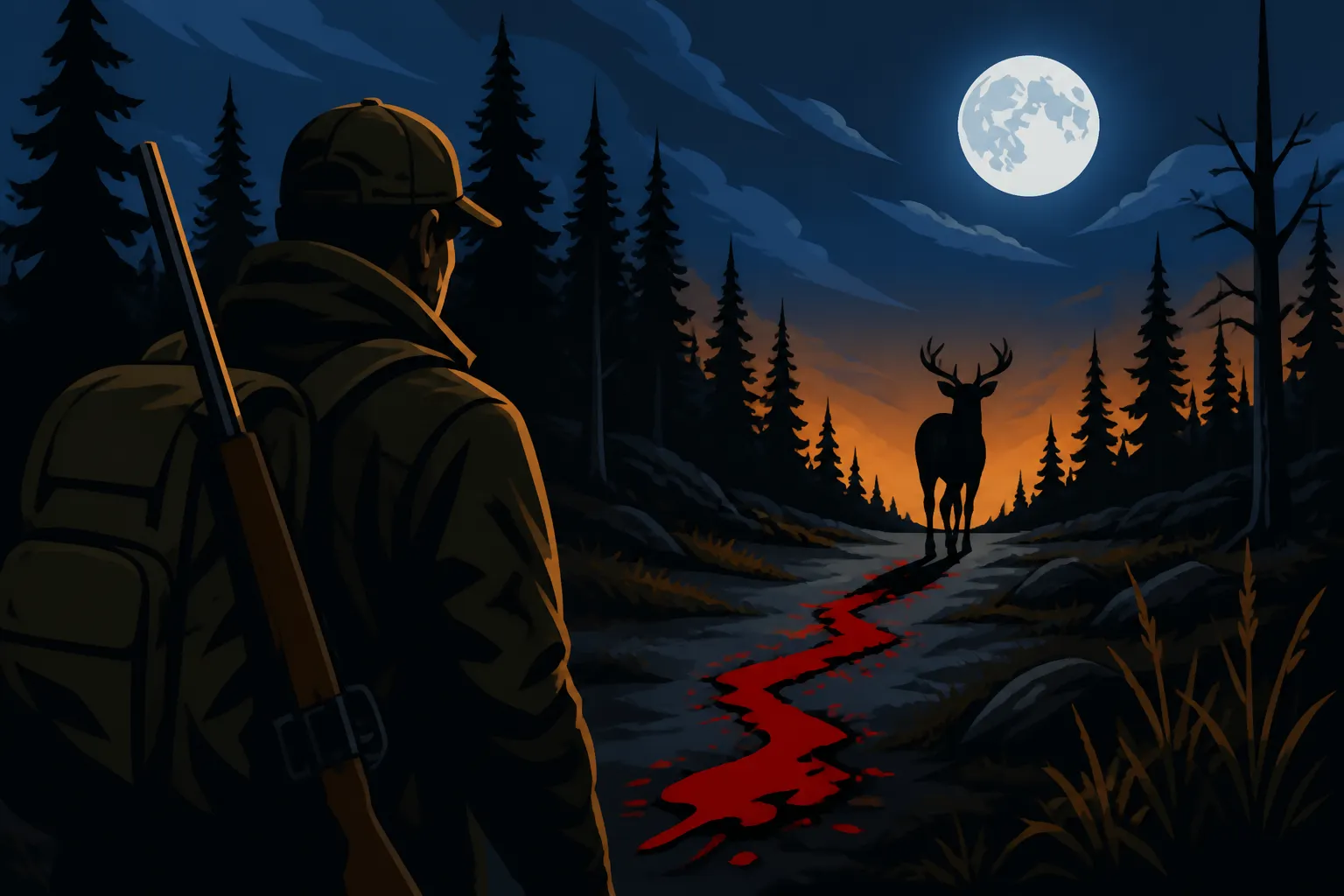
There’s arguably no worse feeling for a hunter than making a shot on a deer, having that gut wrenching sensation that it might not have been perfect, and then watching daylight fade as the blood trail dwindles. The pressure mounts with every passing minute, especially here in Maine where cold nights and active predators can quickly complicate recovery. This guide aims to equip you with the knowledge and tactics to confidently and ethically recover your game when the sun goes down.
The Inevitable Anxiety of a Fading Blood Trail
We've all been there, or at least imagined it. You've had a great day in the woods, the shot felt good, but the deer didn't go down immediately. You give it some time, walk over, and the sign just isn't what you hoped for. Maybe it's sparse, maybe it's just muscle blood, or maybe it starts strong and then simply vanishes into the thick Maine woods. Now, with dusk settling in, that knot in your stomach tightens. The thought of losing an animal, especially one you worked so hard for, is agonizing.
The Desperate Race Against Darkness and Nature
When the light starts to disappear, the race truly begins. Beyond the moral imperative to recover any animal you hit, there are very practical concerns. Here in Maine, coyotes are always on the prowl, and a wounded or deceased deer left overnight can quickly become their meal. You also have the worry of meat spoilage, especially if the weather isn't freezing cold. This pressure can lead to mistakes, like pushing too hard, too fast, and actually pushing the deer further or losing the trail entirely. It's a balancing act: you want to recover your deer, but you don't want to make things worse out of desperation.
Validating the Frustration of a Difficult Track
It's okay to feel frustrated and worried. Blood trailing is rarely like a movie scene where a bright, continuous crimson line leads you directly to your quarry. Real-world conditions are often far more challenging. Leaf litter, sporadic drops, thick underbrush, and even rain can turn a seemingly straightforward task into a detective mission. When darkness adds another layer of difficulty, it can feel overwhelming. Many hunters, even seasoned ones, find themselves in this predicament, and knowing how to approach it methodically is key to overcoming that initial panic. The aim isn't to be reckless, but to be prepared and strategic.
Essential Gear for a Successful Nighttime Recovery
You wouldn't head into the Maine woods in November without your blaze orange, and you shouldn't head out on a nighttime blood trail without the right tools. Having the correct gear isn't just about making the job easier; it's about making it possible and safer. The quality of your equipment can make all the difference between a successful recovery and a frustrating, lost animal.
Lighting the Way: Headlamps, Flashlights, and Blood Lights
This is where your primary investment should go. A good headlamp frees up your hands, allowing you to carry your rifle, mark the trail, or even just keep your balance on uneven terrain. Look for one with adjustable brightness settings, a red light option (to preserve night vision if you're taking a break or need to look up), and a strong, focused beam. I personally favor headlamps with at least 500 lumens, and a spare one in your pack is always a smart move.
Beyond your headlamp, a powerful handheld flashlight is indispensable. It allows a second person to help scan a wider area, or for you to focus a more intense beam on a specific spot you suspect holds sign. Rechargeable flashlights with long battery life are ideal.
Then there are the specialized "blood lights" or UV lights. These can sometimes make blood pop against the natural background, especially on leaves or pine needles where it might otherwise blend in. However, they aren't magic. Their effectiveness can vary greatly depending on the type of blood, the surface, and ambient light. I find them most useful in conjunction with a good white light, rather than as a primary tool. Don't rely solely on them, but they can be a helpful addition to your kit.
Marking the Trail: Tape, Glow Sticks, and Navigation Tools
As soon as you find blood, mark it. Brightly colored flagging tape is a classic, easy to tie to branches, and highly visible. I also carry a handful of small LED glow sticks or reflective tacks. These are fantastic for marking the trail in a way that’s visible from a distance in the dark, creating a breadcrumb path that helps you keep track of your direction and the last known sign. You can easily see them from your next marked spot, confirming you're still on the right path.
For navigation, a good GPS unit or a reliable smartphone app is a must. Apps like GoHunt, onX Hunt, or similar mapping tools allow you to drop waypoints at each sign, showing your progress and direction. This is especially crucial in the North Maine Woods or any large, unbroken timber tract where it's easy to get disoriented at night. Before you even start your hunt, make sure your phone is fully charged, and consider carrying a portable power bank. Knowing exactly where you are in relation to roads, property lines, or your vehicle is not just convenient; it's a safety essential, especially when Blood Trailing After Dark in Maine takes you deeper into unfamiliar territory.
Personal Safety and Comfort Items
Don't forget the basics. You'll be out in the dark, potentially for hours, and Maine nights can get cold, even in early fall. Pack extra layers, a warm hat, gloves, and a small first-aid kit. A bottle of water and a snack can keep your energy up. If you're going deep, a whistle and a way to start a fire might be smart additions, though typically you're not going that far at night. Remember, safety first – a lost hunter is a far worse outcome than a lost deer.
| Gear Category | Recommended Item | Key Features | Why It's Essential |
|---|---|---|---|
| Primary Lighting | High-Lumen Headlamp (500+ lumens) | Adjustable brightness, red light option, long battery life, comfortable strap | Hands-free operation, preserves night vision, strong focused beam |
| Secondary Lighting | Powerful Handheld Flashlight (1000+ lumens) | Rechargeable, wide beam, durable construction | Wider area scan, intense focus, backup light |
| Specialty Lighting | Blood Trailing/UV Light (optional but helpful) | Specific wavelength to make blood fluoresce | Can reveal faint blood on certain surfaces |
| Trail Marking | Bright Flagging Tape | Durable, highly visible colors (orange, pink) | Easy to tie, creates visible markers |
| Small LED Glow Sticks or Reflective Tacks | Battery-powered, visible from distance, waterproof | Visible "breadcrumbs," easy to see from next mark | |
| Navigation | GPS Device or Smartphone with Mapping App | GPS accuracy, waypoint dropping, offline maps (e.g., GoHunt) | Tracks your path, marks sign, prevents getting lost |
| Portable Power Bank | High capacity (10,000+ mAh), durable | Keeps phone/GPS charged in the field | |
| Safety & Comfort | Extra Layers (hat, gloves, jacket) | Warm, waterproof/resistant | Protects against cold, keeps you comfortable |
| Small First-Aid Kit | Bandages, antiseptic wipes, pain relievers | Addresses minor injuries, essential for any outing | |
| Water and Snacks | High-energy, easy to consume | Maintains energy and hydration during long searches |
Mastering the Art of Nighttime Blood Trailing
Once you've got your gear, the real work begins. Blood trailing after dark isn't about speed; it's about methodical, patient detective work. Every drop, every scuff, every broken twig tells a story. The key is to interpret those signs correctly and not rush the process.
Starting at the Last Known Location
The absolute first step is to establish a solid "last known location" (LKL). This is where you last saw the deer, or more importantly, where you found the very first sign of blood or impact. Mark this spot thoroughly with flagging tape. If you're using a GPS or mapping app, drop a waypoint immediately. This LKL becomes your anchor point, the spot you can always return to if you lose the trail. If you're coming back in the morning, having this marked clearly is crucial for Hunting the Muzzleloader Close in Mid-December or any other late-season hunt where time is of the essence.
From the LKL, start by thoroughly searching the immediate area. Don't just look for blood; look for other signs. Scuff marks in the leaves, overturned dirt, broken branches, or even deer hair can indicate the direction of travel. Slowly expand your search in a grid pattern from the LKL.
Reading the Sign: More Than Just Blood
Blood itself can tell you a lot. Bright red, frothy blood often indicates a lung hit – a good sign. Dark, thick blood with bits of digested food or a pungent odor points to a gut shot, meaning a much longer wait and a tougher trail. Pink, watery blood with small bubbles can suggest a muscle hit. Knowing what kind of blood you're seeing helps you decide how aggressively to pursue or if you need to back off.
But don't stop at blood. Look for hair. Short, dark hair often means a shoulder hit. Long, brown hair can be from the flank or back. If you find bone fragments, note their size and shape. Small, sharp fragments could be from a rib, while larger, flat pieces might indicate a leg bone or scapula. Each piece of evidence is a puzzle piece.
As you find each sign, mark it. Tie a piece of flagging tape to a branch directly above it, or place a glow stick beside it. Step to the side of the trail and move forward, always looking ahead and to the sides. If you have multiple people, one person can focus on the ground, another can scan for future signs, and a third can mark. Using a mapping app like GoHunt, you can quickly drop a pin for every piece of sign, creating a digital breadcrumb trail that can be invaluable.
The Slow, Methodical Pace of Night Trailing
This isn't a sprint. It's a crawl. Move slowly, literally on your hands and knees if necessary. Scan every leaf, every patch of moss. Shine your light at different angles to catch the sheen of blood. Sometimes, blood might be on the underside of a leaf or on a small twig you wouldn't notice otherwise. Don't be afraid to take breaks, let your eyes rest, and clear your mind. Fatigue can lead to missed signs.
If the trail gets very sparse, go back to the last good sign you found. Expand your search from there in ever-widening circles. Sometimes a deer will make a sharp turn or jump a downed log, leaving no visible sign for a short distance. Take your time. It’s better to spend an hour meticulously covering a small area than to rush past crucial evidence. If you're Tracking a Deer in Fresh Maine Snow, the signs might be more obvious, but without it, every little detail counts.
Dealing with Tough Terrain and Lost Trails
Maine's diverse terrain can be a major challenge. Cedar swamps, thick spruce stands, or rocky outcrops can make blood trailing incredibly difficult. If you lose the trail in a particularly nasty patch, don't panic. Go back to your last marked spot. If you're confident the deer is hit well, try to anticipate its movements. Wounded deer often seek thick cover or water. They might go downhill, follow a game trail, or try to cross a stream. Consider these possibilities as you expand your search from the last known sign.
Sometimes, after exhaustive searching, the trail simply vanishes. This is where you need to make the tough call of backing out.
Knowing When to Back Out and Resume at Dawn
One of the hardest decisions in hunting is knowing when to call it quits for the night. The emotional pull to find your animal is strong, but sometimes, continuing the search in the dark will do more harm than good. It’s a balance between persistence and prudence.
When to Make the Tough Call
There are several scenarios where backing out and returning at first light is almost always the best strategy:
- Sparse or Erratic Blood Trail: If the blood is very minimal, or seems to disappear for long stretches, pushing on in the dark drastically increases your chances of losing the trail permanently. You might miss a crucial sign that would be obvious in daylight.
- Gut Shot or Paunch Blood: If you find evidence of a gut shot (dark blood, stomach contents, strong odor), the deer will need several hours to expire. Pushing a gut-shot deer will often make it travel for miles, making recovery nearly impossible. In this case, backing out for at least 6-8 hours, preferably until morning, is critical.
- Heavy Rain or Snow: Precipitation can quickly wash away or obscure a blood trail. If it starts to rain heavily, your window for trailing effectively might be closing fast. Mark your last spot and retreat. While Tracking a Deer in Fresh Maine Snow can be easier, a blizzard can bury the trail completely.
- Difficult Terrain: Deep swamps, thick alder runs, or steep, rocky slopes are treacherous enough in daylight. Navigating them in the dark, especially while trying to focus on a blood trail, significantly increases your risk of injury or getting lost.
- Uncertainty of Shot Placement: If you're truly unsure whether you made a lethal hit, backing out is usually safer. You don't want to bump a lightly wounded deer that might otherwise bed down and recover slightly, allowing you a better chance in the morning.
Marking Your Position for a Morning Return
If you decide to back out, marking your last known sign thoroughly is paramount. Use multiple pieces of flagging tape. Place a few glow sticks or reflective tacks in a small circle around the last spot of blood. Drop several waypoints on your GoHunt app or GPS unit. Take a moment to orient yourself, noting prominent landmarks or the direction of camp or a road. The goal is to return to this exact spot with confidence in the morning, ready to pick up the trail in a fresh light. Knowing Where Maine Bucks Bed in Big Timber can help you anticipate where it might have gone, but you'll need that good mark to start from.
The Benefits of a Fresh Start
Coming back at first light offers several distinct advantages. Your eyes will be fresh, not strained by the artificial light. The natural light of dawn can reveal blood that was invisible in your flashlight beam, especially if it was a faint or older trail. The dew on the leaves can sometimes make blood stand out more clearly. Your mind will also be clearer, allowing for more patient and methodical searching. While it's hard to leave an animal overnight, the increased chance of a successful recovery often outweighs the desire to push on in the dark. Plus, if the weather is cold, the meat will be chilling, minimizing spoilage concerns, especially before you undertake Field Dressing a Deer in Cold Weather.
Legal Considerations and Ethical Responsibilities in Maine
Recovering a wounded animal isn't just a personal ethical responsibility; it's also governed by specific laws, especially when it involves hunting after dark or crossing property lines here in Maine. Knowing these rules is crucial to ensure you're acting legally and responsibly.
Maine's Rules on Night Hunting and Retrieval
Generally, hunting after sunset is illegal in Maine. However, the law often makes provisions for the retrieval of legally wounded game. It's not about actively hunting; it's about recovering an animal that was legally shot during daylight hours.
According to the Maine Department of Inland Fisheries and Wildlife (MDIFW) regulations, if you wound a deer or moose and darkness sets in, you are generally allowed to retrieve it with artificial light. However, you should not be carrying a loaded firearm or bow unless you have a specific permit or are otherwise legally authorized for night hunting (which is usually restricted to certain furbearers like coyotes under very specific conditions, as outlined in Coyote Calling Maine Farm Country and Night Hunting Rules for Maine Coyotes).
The key distinction is retrieval versus hunting. If you are pursuing a wounded deer after legal shooting hours, your weapon should be unloaded and encased, or left at your vehicle. The focus is solely on finding the animal, not taking another shot. Always check the most current MDIFW regulations or contact a game warden if you are unsure of the rules in a specific scenario. Ignorance of the law is not a valid defense, and you don't want a successful recovery to turn into a Maine Wildlife Violation Penalties issue.
Respecting Property Lines and Seeking Permission
Another critical aspect of nighttime recovery is land access. Maine has a strong tradition of implied permission for recreational access on unposted private land, but this implied permission usually doesn't extend to accessing land after dark, especially if you're pursuing a wounded animal. If a deer crosses onto posted land, you absolutely must seek landowner permission before crossing that property line, day or night. This is a non-negotiable rule.
The best practice is to have a plan in place before you even head out. Know the property boundaries around your hunting area using a mapping app like GoHunt. If you anticipate a potential issue, try to contact landowners beforehand and explain your intentions. Most landowners are reasonable and understand the ethical imperative to recover a wounded animal. Showing respect for their property and proactively asking for permission builds goodwill and prevents potential conflicts. Remember, maintaining good Maine Landowner Relations Program is vital for continued hunting access.
The Ethical Imperative to Recover
Beyond the legalities, there's a profound ethical responsibility that every hunter carries. When you pull the trigger or release an arrow, you commit to doing everything in your power to recover that animal. This means spending the extra hours, returning in the morning, and enlisting help if needed. Leaving a wounded animal to suffer, or simply giving up because the trail is tough, is not only wasteful but goes against the very core values of ethical hunting.
Even if you recover a deer and it's late, ensure you adhere to Maine's Maine Deer Registration Requirements. Many services, including online registration or checking stations, are available to make this process as straightforward as possible, no matter the hour.
Disclaimer
The information provided in this guide is for general informational purposes only and does not constitute legal advice. Hunting regulations can change, and interpretations may vary. Always consult the most current Maine Department of Inland Fisheries and Wildlife (MDIFW) regulations or contact a local game warden for specific legal guidance before engaging in any hunting activities, particularly those involving night retrieval or private land access.