Reading a Ledge for a Morning Sea Duck Flight
Few hunting experiences in Maine are as exhilarating and demanding as chasing sea ducks along our rugged coastline. But if you’ve spent any time out on the choppy waters of Penobscot Bay or the Downeast coast, you know the frustration of setting up on a ledge only to have birds fly right past, just out of range. This guide is all about peeling back the layers of mystery to truly understand how to read a ledge for that epic morning sea duck flight, transforming those frustrating near-misses into unforgettable hunts.
Understanding Sea Duck Behavior Around Coastal Ledges
Maine’s rocky coastline offers an incredible bounty for sea ducks, making it a prime destination for hunters. But to consistently find success, you need to think like a duck – or at least understand why they do what they do around those craggy ledges and churning waters. It's not just random; there's a method to their madness, especially when those morning flights kick off.
Why Ledges Attract Sea Ducks
Ledges are veritable buffets and sanctuaries for sea ducks. Imagine standing on a submerged rock, being constantly washed with fresh food – that's what a good ledge offers. The primary draw is food. Our coastal ledges are absolutely teeming with mussels, barnacles, periwinkles, and other small invertebrates that make up the bulk of a sea duck's diet, especially for species like the common eider. These mollusks cling to the rocks, thriving in the nutrient-rich, oxygenated water that flows over and around them.
Beyond the dinner table, ledges also offer crucial shelter. The chaotic waters of the Atlantic can be relentless. Ledges create current breaks, eddies, and areas of slightly calmer water where ducks can rest and preen without expending too much energy fighting the tide. Think of it as their favorite recliner. When the wind is howling or the currents are ripping, those sheltered pockets become invaluable. Understanding this dual function – food and refuge – is the first step in knowing which ledges will be hot. The more diverse the food source, and the better the shelter from prevailing conditions, the more likely a ledge will be a regular haunt.
Common Flight Patterns and Times
Sea ducks, like most waterfowl, are creatures of habit, particularly during their morning movements. As dawn breaks, you'll often see birds leave their overnight roosts, which might be in larger, more protected bays or out on the open ocean, and head towards their feeding grounds. These morning flights are what we live for, and ledges often serve as natural waypoints or destination points.
Eiders, for instance, often fly relatively low over the water, following the contours of the coastline, moving between islands and ledges. They're often in tight flocks, presenting a challenging but rewarding target. Scoters might fly a bit higher, sometimes in longer strings, and often seem to key in on specific travel corridors between major feeding areas. Long-tailed ducks, with their distinctive calls, can be more erratic in their flight, sometimes darting about, but they too follow general patterns dictated by tides and food.
Tidal influence is massive here. A rising or falling tide can concentrate food sources or open up new feeding areas around a ledge, dictating when and where birds will be most active. Many hunters find peak activity during the first few hours of light, especially as the tide is either just starting to fall or just beginning to rise, stirring up those tasty morsels. During a full slack tide, activity might slow as the water isn't moving as much to dislodge food. Knowing your tide charts, which you can easily access through a marine navigation app or a dedicated hunting tool like the GoHunt app, is non-negotiable for successful sea duck hunting on the Maine coast.
Key Indicators for Identifying Active Ledges
Alright, you’re out there, the salty air is biting, and you’re scanning the horizon. How do you tell a "dead" ledge from one that's a magnet for sea ducks? It comes down to meticulous observation and understanding the subtle cues the ocean provides. It’s like reading a cryptic novel, but with wings and waves.
Reading the Water and Tides
The water itself is your primary informant. It's not just a flat surface; it's a dynamic system of currents, rips, and eddies that tells a story. When you're scouting, or even on the morning of the hunt, observe where the water is moving fastest and slowest around a ledge. Rips and eddies often signify current breaks where food gets funneled or where ducks might seek refuge from strong flows. A strong current can be your friend, as it helps move your decoys naturally and dislodges food, but it also means the birds will be moving quickly.
Pay close attention to the tide stage. A Decoying Eiders on a Falling Tide strategy often works because falling water exposes new areas for ducks to feed on invertebrates that were previously too deep. Conversely, a rising tide might bring new feeding opportunities as it covers shallow flats or brings warmer water closer to shore. The precise timing of the tide, not just high or low, but the rate of the tide change, can be critical. A rapid change often means more active feeding, while slack tide can slow things down. Learning the nuances of the tide in a specific area, perhaps by studying a detailed chart, can be a game-changer. For serious hunters, detailed tide and current predictions available through marine apps are invaluable.
Observing Bird Activity
Sometimes, the best way to find ducks is to find where the ducks were or are. Scouting before your hunt is incredibly valuable. If you see rafts of birds on a particular ledge at mid-day, or notice distinct flight lines they follow from open water to a calmer cove, that ledge is worth investigating further. Ducks often return to the same areas day after day, so historical knowledge is a huge asset.
When you're out there, look for signs of active feeding. Are birds diving repeatedly? Are they constantly in motion, dabbling and foraging? That's a good sign. Also, watch the trajectory of birds flying over. Are they just passing through, or are they banking and losing altitude as if to land? Birds that show interest in a particular area, even if it's not the exact ledge you're on, indicate good general waterfowl presence in the vicinity.
Don't overlook the obvious: if there are already ducks rafted up near a ledge, but out of range, they're showing you where they want to be. Your job is to create an irresistible spread that pulls them in. Remember that using high-quality optics can help you glass distant ledges from a safe distance without disturbing the birds. This kind of diligent observation, combined with tools like the GoHunt app for aerial imagery and land status, can give you a significant advantage when targeting these smart coastal birds.
Setting Up for Success: Decoys and Blind Placement
Once you've identified a promising ledge, the real artistry begins. Your decoy spread and blind placement aren't just about throwing out some fakes and hiding; they're about painting a picture that convinces wary sea ducks that your spot is the safest, most appealing place on the water.
Strategic Decoy Spreads
Sea ducks are gregarious, often traveling and feeding in large groups. This means your decoy spread for species like eiders should generally be substantial. For Decoying Eiders on a Falling Tide, you might want to create a large, realistic-looking raft of decoys, perhaps 30 to 50 or more, positioned to appear as if they're feeding contentedly. Use a mix of drakes and hens to make it look natural. The goal is to convey confidence and safety.
For scoters or long-tailed ducks, smaller groups might be more typical, perhaps 12-24 decoys, often arranged in loose strings or small family groups. When Hunting Scoters in Maine's Open Water, consider how they dive and feed. Often, they’ll be in somewhat linear patterns. Always consider the current: decoys should look like they are naturally riding the water. Use keeled decoys or add extra weight to prevent them from spinning unnaturally in strong tides. Consider a "kill hole" or landing zone downwind or down-current from your blind, where the birds will want to cup their wings and commit. Motion decoys, like a few floating or swimming models, can add realism and draw attention from afar. Don't forget confidence decoys – a few gulls or even a few silhouettes of resting ducks can make the spread even more convincing to high-flying birds.
Utilizing Natural Cover
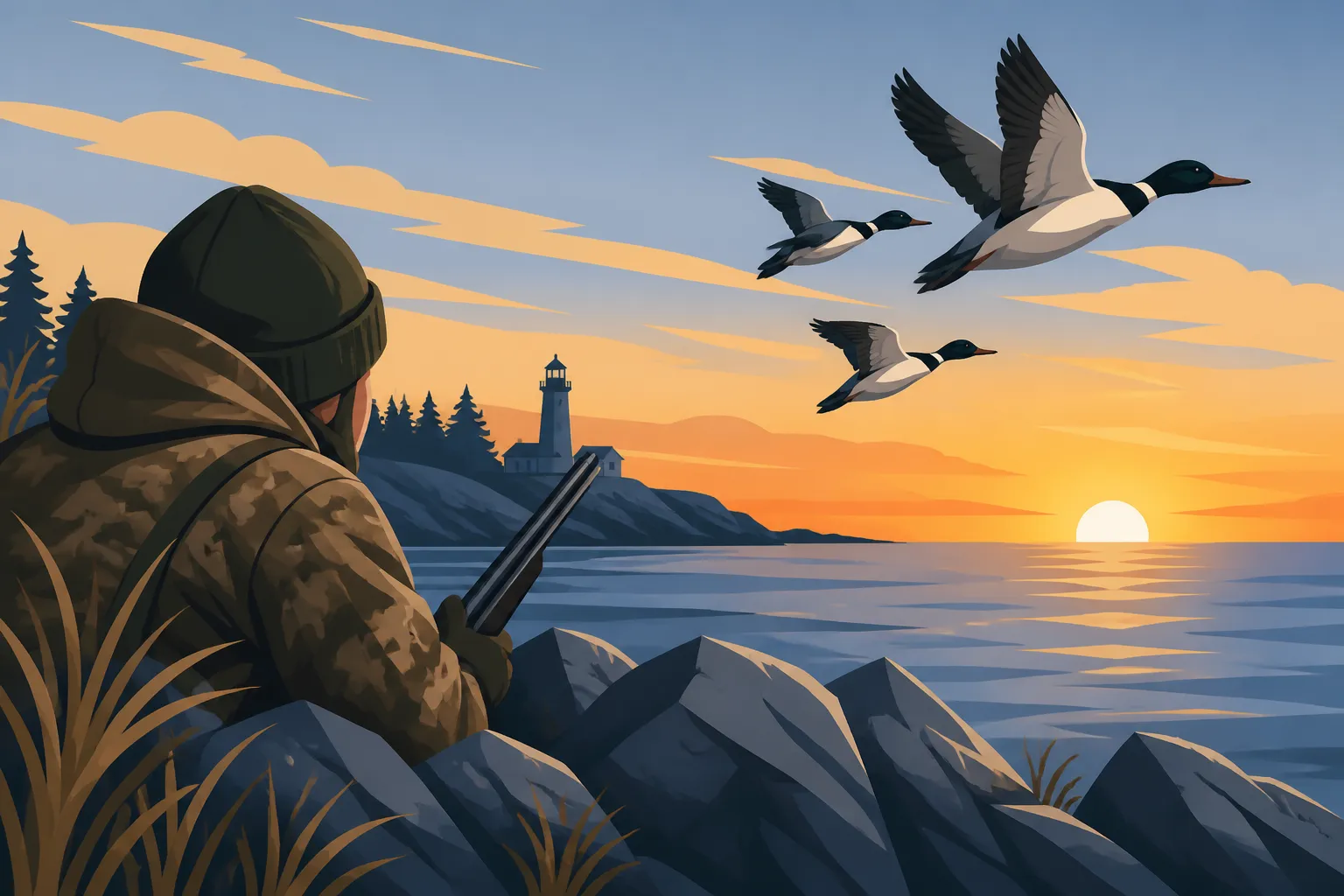
Blending into the environment is absolutely critical. Maine's coast offers plenty of natural cover, but sometimes you have to get creative. Large granite boulders, rock outcroppings, or small islands adjacent to a hot ledge can provide excellent natural blinds. Position your boat or layout blind so that you are perfectly camouflaged against the background, breaking up your outline. The sun's angle can also play a role; try to position yourself so the rising sun is at your back, silhouetting incoming birds against the brighter sky, making it harder for them to spot you.
If you're Layout Boat Hunting the Maine Coast, the boat itself is your blind. You'll want to brush it in or use a low-profile design that blends seamlessly with the choppy surface. Always think about your approach to the blind and the decoys. If you spook birds on your way in, the whole morning could be ruined. Being able to access your spot discreetly before first light is paramount. A good setup, invisible to the wary eyes of a sea duck, is often the difference between birds flaring off at 100 yards and confidently committing to your spread.
Maximizing Your Morning Hunt
Even with the perfect scout and a well-placed spread, coastal conditions in Maine are constantly changing. Staying adaptable and putting safety first are the hallmarks of a seasoned sea duck hunter.
Adapting to Changing Conditions
Maine’s weather is famously fickle, and coastal hunting adds another layer of complexity. A morning that starts calm can quickly turn blustery, shifting winds and changing wave patterns. Be prepared to adjust your decoy spread if the wind shifts significantly. Birds will always try to land into the wind, so understanding the new wind direction is key to maintaining your kill hole.
Tides continue to move, and what was a perfect setup at the beginning of the hunt might not be ideal an hour later. If bird activity slows, don’t be afraid to pull anchor and move to another spot, especially if you’ve identified a secondary ledge that might be coming into its prime with the current tide. Sometimes just a small adjustment in your boat's position, even 20 or 30 yards, can put you right in the flight path. Having a good understanding of Maine Sea Duck Season and Zones can also help you identify alternative locations quickly. Patience is a virtue, but so is knowing when to make a tactical move. Remember to always keep an eye on your surroundings, especially for other boaters or changes in the weather that could affect your safety or the effectiveness of your hunt.
Safety First on Coastal Waters
I can't stress this enough: safety is paramount when hunting sea ducks on the Maine coast. The frigid water, strong currents, and unpredictable weather can turn a beautiful morning into a dangerous situation quickly. Always wear your life jacket, or at the very least have it easily accessible. Ensure your boat is well-maintained, with all necessary safety equipment, including navigation lights, a marine radio, extra fuel, and flares.
Tell someone where you're going and when you expect to be back. The Maine Warden Service has to respond to too many incidents that could have been avoided with proper planning. Knowing the local conditions, particularly regarding currents and wave action, is vital. Rogue waves can appear out of nowhere, especially in exposed areas. Don't push the limits of your boat or your comfort level. If the weather forecast looks dicey, it's always better to reschedule. No bird is worth risking your life over. It's also critical to review Maine Blaze Orange Requirements if you'll be on land for any part of your hunt, even though it's less of a concern on open water. A safe hunt is a successful hunt, regardless of your bag limit.
Sea duck hunting is more than just shooting birds; it's about connecting with the raw power and beauty of the Maine coast. By honing your ability to read the ledges, understand bird behavior, and prioritize safety, you'll not only increase your success but also deepen your appreciation for this unique hunting experience.
| Sea Duck Species | Preferred Ledge Features | Optimal Tide Stage | Typical Flight Altitude |
|---|---|---|---|
| Common Eider | Mussel beds, shallow rocky areas | Falling tide | Low over water |
| Black Scoter | Mollusks, deeper ledges | Mid-to-rising tide | Mid-high, in strings |
| Surf Scoter | Clams, crustaceans, current breaks | Rising tide | Mid-high, often in V's |
| White-Winged Scoter | Deepwater mollusks, kelp beds | Any, often deeper | High, strong fliers |
| Long-Tailed Duck | Small crustaceans, open water | Any, active diver | Variable, often erratic |
Disclaimer
Please remember that hunting regulations, seasons, and licensing requirements can change. Always consult the most current Maine Department of Inland Fisheries & Wildlife (MDIFW) regulations before heading out. Safety should always be your top priority when hunting.