Rattling Volume in Thick Spruce Cover
There's nothing quite like the dense, dark embrace of thick Maine spruce cover. It feels primeval, a place where big woods bucks truly thrive, but it also presents a monumental challenge when you're trying to communicate with them through rattling. Many hunters get frustrated, thinking their calls are just swallowed by the needles, or that deer are ghosting them unseen in the labyrinth of evergreen. This guide is all about cutting through that frustration, teaching you how to adjust your rattling volume and technique to effectively pull a wary buck out of the shadows of a deep spruce thicket.
The Unique Challenges of Rattling in Maine's Thick Spruce
Hunting Maine's vast timberlands means encountering plenty of thick spruce and fir. These areas are sanctuaries for deer, especially mature bucks seeking cover, thermal protection, and security. But what makes them great for deer can make them incredibly tough for hunters trying to use auditory calls like rattling. You're not just fighting against the deer's senses; you're fighting against the very environment itself.
Sound Absorption and Limited Range
One of the biggest hurdles when rattling in dense spruce is how sound behaves—or rather, misbehaves. Unlike open hardwoods where sound can travel for hundreds of yards on a calm morning, thick spruce acts like a giant sound sponge. The dense canopy, the layers of branches, and the thick carpet of needles on the forest floor all work together to absorb sound waves, drastically reducing the effective range of your rattling. You might be putting out a full-blown fight sequence, but to a buck a hundred yards away, it could sound like little more than a whisper, or not even register at all. This phenomenon is a common frustration, making hunters question if their technique is off, when in reality, the environment is just exceptionally efficient at muffling noise. It means you have to rethink your approach entirely, understanding that the rules of engagement are different here.
Visual Obstruction and Close Encounters
Beyond sound, the visual component of hunting in thick spruce is profoundly different. Visibility might be only a few dozen yards, sometimes even less, before the trees become an impenetrable green wall. This dramatically alters how deer approach a sound source and how you need to prepare for their arrival. In open woods, you might spot a buck picking his way towards your rattling sequence from a long distance, giving you ample time to prepare for a shot. In spruce, deer often seem to materialize silently, like apparitions, stepping into a shooting lane without warning. This makes the hunt intensely focused on close quarters. Hunters often feel like deer are "ghosting" them, when in fact, the deer were there all along, moving through the cover unseen until they were practically on top of the hunter. This necessitates not only different rattling techniques but also a heightened sense of awareness and readiness. Successful hunting in these conditions often hinges on your ability to react instantly to a fleeting opportunity that might only last a few seconds, a blink-and-you-miss-it situation that separates the prepared from the surprised. It also means paying close attention to every rustle and snap, trusting your ears even more than your eyes.
Mastering Rattling Volume and Intensity for Dense Cover
Given the unique acoustic properties of thick spruce, a "one-size-fits-all" approach to rattling simply won't cut it. You need to become a master of subtlety, knowing when to whisper and when to shout, all while listening intently for the response from the hidden world around you.
Soft Rattles and Subtlety
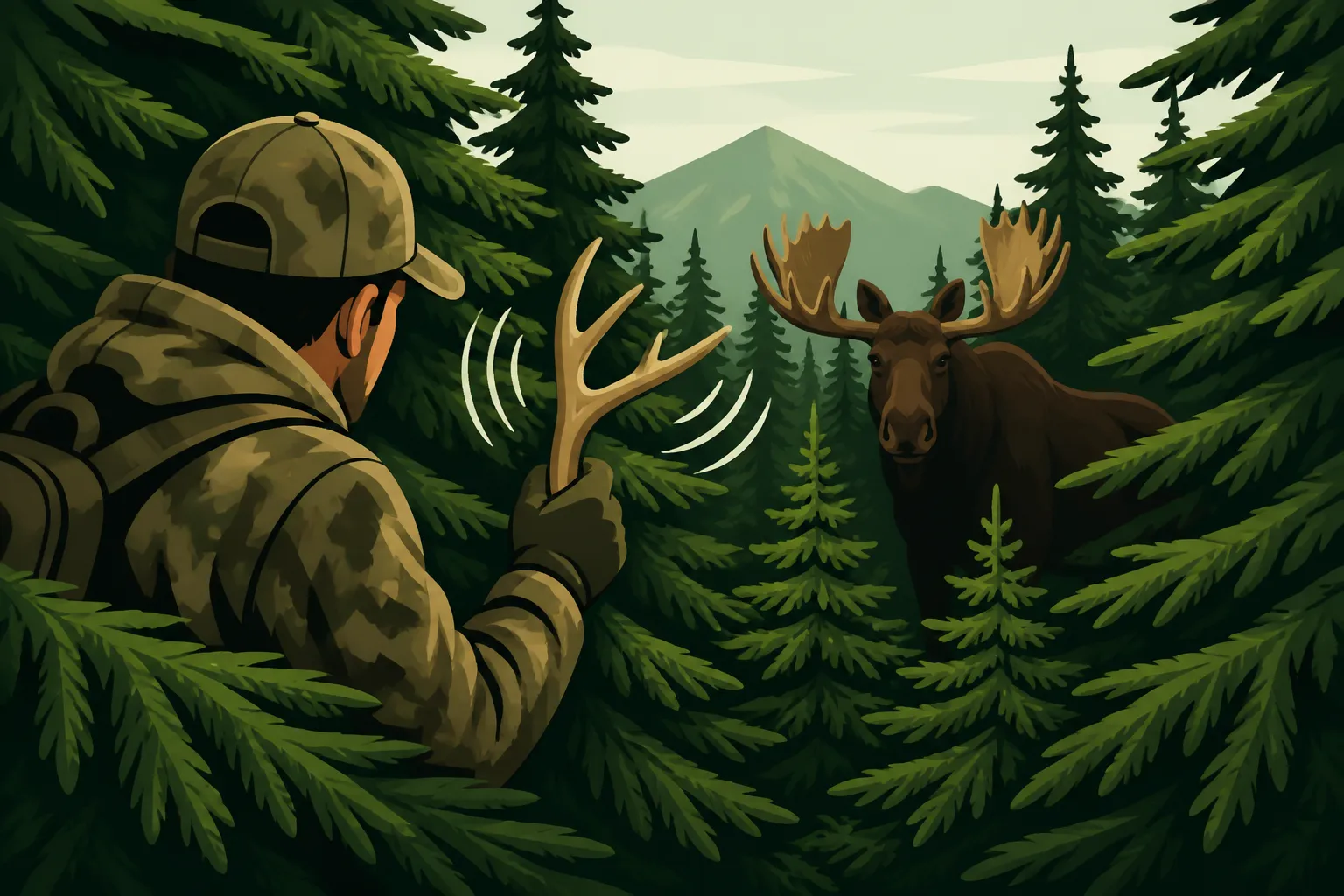
When you're tucked into a dense spruce thicket, the first rule of rattling is often "start small." A full-on, aggressive antler clash might be standard in open hardwoods during the peak rut, but in close quarters, it can be startling and unnatural. Instead, begin with a very soft, subtle sequence. Think about two young bucks gently sparring, or even a single buck rubbing his antlers against a small tree, not a full-blown fight. This light contact, mimicking the sound of antlers gently clashing or brushing against each other, can be incredibly effective. It's an invitation, not a challenge.
Imagine you're set up on the edge of a dense spruce stand, where you know deer are bedding. Instead of crashing antlers together, try holding your rattling horns loosely and just tapping them together, or lightly raking them against a branch. The goal is to create just enough sound to pique a nearby buck's curiosity without immediately putting him on high alert. This softer approach can often bring a buck in stealthily, allowing you to get a visual before he becomes aware of your exact location. This is especially true if you're trying to pull a buck out of a thick bedding area where he's already feeling secure. Remember, in spruce, visual confirmation is hard, so a soft rattle can bring him in just far enough to see, without him pinpointing your exact location.
Gradual Escalation and "The Pause"
While starting soft is key, you don't always have to stay there. The beauty of rattling in thick cover is the ability to escalate the intensity as the situation demands, always paying close attention to "the pause." After an initial soft sequence, wait. And I mean really wait. Give it a good five to ten minutes, maybe even more. In dense cover, a buck might take his sweet time to respond, moving cautiously, trying to circle downwind, or just pausing to assess the situation before committing.
During this pause, listen intently. Is anything moving in the dense undergrowth? Did you hear a twig snap, a branch brush, or the tell-tale rustle of deer passing through the needles? If nothing comes in, then consider a slightly louder, more aggressive sequence. This could involve clashing the antlers a bit harder, dragging them through some low branches, or adding some grunts and snort-wheezes. The key is to gradually increase the volume and aggression, always followed by another patient pause. This allows you to gauge a deer's interest and avoid over-calling.
A good rule of thumb for this escalation is to visualize the fight:
- Initial Soft Rattle: Two young bucks testing each other, or a single buck rubbing.
- Medium Rattle: A more serious sparring match, but not yet a full-blown brawl.
- Aggressive Rattle: A full-on, no-holds-barred fight, antlers locked, leaves flying.
Always ensure that between each sequence, you are absolutely motionless and listening. This is where the magic happens, as often, a buck will move in silently during the lull, trying to get a read on the situation. The more patient you are during these pauses, the higher your chances of spotting that ghost-like buck before he spots you. Understanding Rattling and Grunting Maine Bucks can provide even more context on how to effectively mix vocalizations with your rattling strategy to maximize your chances.
Mimicking Specific Scenarios
To truly master rattling in dense spruce, you need to think beyond just making noise and instead focus on mimicking real-world buck encounters. Deer don't just randomly crash antlers together; fights erupt over territory, does, or dominance. By understanding these scenarios, you can tailor your rattling sequence to be more convincing.
For instance, if you're hunting during the early rut, you might focus on light, drawn-out sparring sessions, a common sound as bucks feel each other out. Later in the rut, when bucks are more agitated and competing for does, a short, sharp, aggressive sequence followed by silence might be more effective, imitating a quick, decisive fight. Don't forget the sounds of vegetation breaking and hooves scuffing the ground – these subtle additions can make your rattling sound incredibly real.
Using a mapping tool like GoHunt can help you identify areas where certain scenarios might be more effective. For example, if GoHunt data shows a tight concentration of doe bedding areas near a thick spruce stand, an aggressive rattling sequence might simulate a dominant buck fighting for breeding rights, pulling in an opportunistic buck looking for a chance to intercept a hot doe. On the other hand, a more subtle approach might work better in an area with sparse deer sign, just trying to draw in any buck that might be passing through.
Table: Rattling Volume and Intensity Guide for Thick Spruce
| Scenario / Goal | Rattling Volume | Intensity | Duration | Post-Call Pause | Ideal Conditions |
|---|---|---|---|---|---|
| Curiosity/Testing Waters | Soft to Medium | Gentle Taps, Light Rakes | 30-60 seconds | 5-10 minutes | Early Morning, Calm Wind, Cold |
| Aggressive Challenge/Rut Fight | Medium to Loud | Hard Clashes, Branch Breaks | 60-90 seconds | 3-5 minutes | Peak Rut, Active Scrapes, Overcast |
| Interception/Seeking | Soft to Medium | Mix of Taps & Grunts | 45-75 seconds | 5-10 minutes | All-Day Sit, Food Source Nearby |
| Dominance Display/Territorial | Loud | Intense, Sustained Clashing | 90-120 seconds | 3-5 minutes | Known Buck Hotspot, Post-Rut |
This table provides a framework, but remember, the ultimate teacher is experience in the field. Every buck, every day, and every spruce thicket is a little different.
Strategic Positioning and Combining Tactics
Rattling effectively in dense spruce isn't just about the sound; it's also about where you are and what other tools you bring to the table. Your setup is just as critical as your calling technique when trying to entice a buck from the green tunnel.
Leveraging Natural Funnels and Travel Corridors
In thick spruce, deer movement is often dictated by the easiest path. This means they'll utilize subtle terrain features like old logging roads, game trails, edges of clear-cuts, or natural funnels created by small ridges, swamps, or changes in timber type. Setting up your rattling position along these natural travel corridors is paramount. Instead of blindly rattling into a sea of spruce, you want to position yourself where a buck responding to your call is most likely to pass by a specific opening or through a bottleneck.
Consider scouting these areas beforehand. Using satellite imagery on a platform like GoHunt or the Scouting With the Maine Hunting App can help you identify these subtle features even before you step foot in the woods. Look for pinch points where two dense sections of cover come close together, or where a spruce thicket meets an older growth hardwood stand. These are prime locations for bucks to travel, and therefore, prime locations for you to set up. When you rattle, a buck will likely approach downwind, trying to catch your scent. If you've set up on a natural funnel that forces him into a certain approach, you can anticipate his movement and increase your chances of getting a shot. Think of it as guiding him into your trap with sound.
Incorporating Visuals and Scents
Because visual obstruction is such a challenge in thick spruce, adding a visual component can sometimes make all the difference, even if it's only partially visible. A small, lightweight buck or doe decoy, positioned where it's only partially visible through the trees, can provide that extra bit of realism that pushes a curious buck to investigate. The key is "partially visible"—you don't want a full, obvious decoy in thick cover, as it can look out of place and fake. Instead, have just enough of it showing to suggest another deer is present, perhaps the rump or a portion of the head and antlers.
Alongside visuals, strategically deployed scents can be highly effective. A drag rag with estrus scent leading towards your setup, or a scent wick hung near your stand, can draw a buck in, especially if he's circling downwind. The combination of an auditory "fight," a suggestive visual, and an alluring scent can create a powerful illusion that overrides a buck's natural caution. Remember, you're trying to appeal to all his senses to draw him out of the safety of the dense cover. This multi-sensory approach can be especially potent when hunting the rut in early November, when bucks are highly responsive to both visual and olfactory cues.
Using Ground Blinds in Thick Cover
For many, hunting in thick spruce automatically brings thoughts of tree stands. However, in extremely dense cover, a tree stand might offer limited visibility and restrict your shooting lanes. This is where a ground blind can be an absolute game-changer. Whether it's a pop-up blind or a carefully brushed-in natural blind, being on the ground allows you to capitalize on the already limited visibility that the spruce provides.
A well-placed ground blind allows for quiet movement, provides excellent concealment, and lets you manage shooting lanes more effectively in dense vegetation. You can position it against a thick evergreen, in a small opening, or along a subtle game trail, giving you a distinct advantage. With a ground blind, you're not fighting the cover; you're becoming a part of it. This is particularly relevant when you anticipate close-range encounters, which are almost a given when rattling in thick spruce. For more on this, check out Using a Ground Blind on Posted-Free Land – the principles apply even more acutely in dense woods. You need to be ready for that buck to appear silently, sometimes just yards away, and a ground blind gives you that edge.
Gear Considerations for Effective Spruce Rattling
Your equipment choices can significantly impact your success when rattling in Maine's challenging spruce cover. It's not just about having antlers; it's about having the right tools for the specific environment.
Choosing the Right Rattling Antlers or Call
The type of rattling device you use matters, especially when trying to control volume and produce realistic sounds in dense cover.
- Real Antlers: Many purists swear by real antlers for their authentic sound. They can produce a wide range of tones, from light tickles to heavy clashes. The advantage in spruce is that you can use the density of the branches to your advantage, lightly raking a real antler through a low-hanging branch to simulate a buck rubbing or moving through thick cover. However, real antlers can be bulky and noisy to carry through dense woods. If you opt for real antlers, consider a smaller, lighter set that can be carried more discreetly.
- Synthetic Rattling Calls: Modern synthetic calls, like those from BlackRack or RattleBag, are designed to replicate the sound of real antlers in a more compact, quieter package. Some even offer adjustable volume, which is a huge benefit in spruce. The RattleBag, for instance, allows you to control the intensity of the "clash" by how hard you shake it, making it easier to start with those subtle, soft calls. They are also much easier to carry silently. Experiment with both types to see what you're most comfortable with and what produces the most realistic sounds for your specific hunting style. Remember, consistency in sound is just as important as volume when you're trying to fool a wary Maine buck.
Integrating Mapping and Scouting Tools
In dense spruce, where visibility is limited, relying solely on what you can see in the moment is a recipe for frustration. This is where digital mapping and scouting tools become indispensable. Platforms like GoHunt provide invaluable satellite imagery, topo maps, and land ownership data that can help you understand the landscape before you even set foot in it.
With GoHunt, you can identify dense spruce thickets, potential bedding areas (like those described in Where Maine Bucks Bed in Big Timber), natural funnels, and subtle elevation changes that might dictate deer movement. You can mark potential stand locations or ground blind spots, plan silent entry and exit routes, and anticipate where a buck might approach from based on prevailing winds and terrain. This pre-hunt scouting, done from the comfort of your home, allows you to enter the woods with a strategic plan rather than just wandering aimlessly. It helps you find those hidden gems, those forgotten corners of the woods where a big buck might feel secure enough to respond to your rattling. The ability to overlay different map layers and pinpoint exact locations dramatically increases your efficiency and reduces the amount of disturbance you create in the woods before your hunt.
The Importance of Silent Movement and Gear
Hunting in thick spruce cover inherently means you'll be moving through noisy terrain. Every step on dry needles or snapping a small twig can broadcast your presence. Therefore, silent movement and thoughtful gear choices are paramount.
- Clothing: Opt for quiet fabrics that won't rustle or swish as you move. Fleece, wool, or softshell materials are generally quieter than stiff synthetics. Dress in layers that allow you to shed clothes to avoid overheating and sweating, which can amplify scent and noise.
- Gear Management: Keep all your gear secure and quiet. Pad anything that might clank or rub. Your rattling antlers, whether real or synthetic, should be stowed in a way that prevents them from banging against other items or your body. Consider wrapping real antlers in a cloth or using a specialized carrying pouch. Your backpack should be well-organized, so you don't have to rummage loudly for items.
- Footwear: Choose boots that offer good traction but are also relatively quiet. Avoid boots with overly stiff soles that might create more noise when stepping on uneven terrain.
The goal is to move like a ghost. This level of stealth is crucial because when a buck does respond to your rattling in thick spruce, he's likely to be close. Any unnatural noise from your approach or setup can quickly alert him to your presence and send him slipping away unseen. Remember, you're not just calling deer; you're creating an entire experience for them, and every detail matters. Being able to navigate silently is key to getting into position for Cold-Weather Sitting Strategy in Maine when bucks often seek out the thermal cover of spruce.
Disclaimer
Hunting is an inherently dangerous activity. Always follow all local, state, and federal hunting regulations. Ensure you have the proper licenses and permits. Prioritize safety by wearing blaze orange as required, informing others of your hunting location, and always positively identifying your target and what lies beyond it. The information provided here is for educational purposes and should not replace proper hunter education or professional guidance.