Recovering a Deer From a Cedar Swamp
That moment when you’ve made what felt like a perfect shot, only for your deer to bolt into the thickest, most impenetrable cedar swamp imaginable, is one of the most disheartening experiences a Maine hunter can face. The dread of losing an animal, combined with the sheer exhaustion of navigating such brutal terrain, can be overwhelming. But don't despair—recovering a deer from a cedar swamp in Maine is certainly possible with the right preparation, tools, and a systematic approach. This guide will walk you through everything you need to know to give yourself the best chance of success.
Understanding the Challenges of Cedar Swamps
Before you even step foot into that tangled mess, it's crucial to acknowledge exactly what you're up against. Cedar swamps are notorious for making deer recovery a true test of grit, patience, and often, physical endurance. They're not just a little wet; they're an entirely different beast.
Dense Cover and Limited Visibility
The first thing that hits you when you enter a classic Maine cedar swamp is the incredibly dense vegetation. Eastern white cedar often grows in thick, almost impenetrable stands, with branches interweaving to create a canopy that lets in very little light, even on a sunny day. Below, you'll find a jumble of downed logs, thick spruce saplings, and undergrowth that makes seeing more than a few feet in front of you nearly impossible. This dramatically impacts your ability to follow a blood trail, which might be sparse to begin with, and makes it incredibly easy to get disoriented. Without a clear line of sight, you're relying heavily on subtle signs and careful navigation. This is where patience truly becomes a virtue; rushing will only lead to missed signs and increased frustration.
Treacherous Terrain and Water Hazards
Beyond the visual obstruction, the ground itself in a cedar swamp is a significant challenge. These areas are often low-lying, poorly drained, and characterized by boggy, mucky soil. You'll encounter knee-deep mud, hidden water pockets that can swallow a boot (or worse), and treacherous root systems that trip you up at every turn. Large, moss-covered logs might look stable, but they can be incredibly slick or rotten beneath. The water itself is often cold, especially later in the season, presenting a real risk of hypothermia if you're not adequately dressed. You might find yourself wading through icy water or breaking through thin ice in colder conditions, adding another layer of danger and discomfort to an already difficult situation. It’s a physical battle against the elements and the terrain, and it can wear you down quickly.
The Urgency of Recovery
Time is of the essence when you're trying to recover a deer, and this is magnified in a cedar swamp. While cold weather in Maine can slow spoilage, the dampness of a swamp can often accelerate it, especially if the deer has fallen into water. If the temperatures are mild, or if the animal is submerged, the meat can begin to spoil much faster than it would on dry ground. There’s also the risk of scavengers finding the deer before you do, particularly in remote areas. The desire to recover your animal for ethical reasons and to utilize the meat you've earned is a powerful motivator, but the environment of a cedar swamp constantly works against you. Understanding these inherent challenges helps set realistic expectations and informs the careful preparation you’ll need to undertake.
Essential Gear for a Swamp Recovery
Venturing into a cedar swamp unprepared is a recipe for disaster. The right gear isn't just about comfort; it's about safety, efficiency, and maximizing your chances of a successful recovery. Think of it as suiting up for battle – because that's what a swamp recovery often feels like.
Personal Safety and Comfort
Your personal well-being is paramount. The cold, wet, and often physically demanding nature of a swamp recovery demands specific clothing and gear. First and foremost, a good pair of chest waders or hip boots is non-negotiable. Look for insulated, durable models that can withstand punctures from sticks and provide some warmth against the cold water. Layer your clothing underneath with synthetic or wool materials that retain warmth even when wet. A waterproof and windproof outer shell is also essential.
Don't forget a bright headlamp with extra batteries. Cedar swamps are often dark even in broad daylight, and if your search extends into dusk or after dark (which, let's be honest, it often does), a reliable light source is critical. For navigating, a handheld GPS device or a reliable GPS app on your phone (like the GoHunt app or the official Maine Hunting App) is an absolute must. Mark your entry point, your last known blood sign, and any other crucial waypoints. A physical compass and a paper map, even if laminated, serve as important backups in case electronics fail. Also, pack some high-energy snacks and water to keep yourself fueled, and consider a small first-aid kit for minor cuts or scrapes.
Tracking and Extraction Tools
Once you're geared up for safety, turn your attention to the tools that will help you find and move the deer. A specialized blood trailing light, which enhances the visibility of blood, can be incredibly helpful in low-light conditions. These lights often emit a specific wavelength that makes blood glow. A roll of bright, biodegradable flagging tape is crucial for marking the blood trail, your path, and the last known location of the deer. This ensures you can retrace your steps and prevents you from losing the trail.
For extraction, a sturdy dragging harness or rope will be your best friend. Trying to drag a deer by its legs through thick mud and over downed logs is an exhausting and often fruitless endeavor. A good harness distributes the weight and allows for better leverage. If you're hunting with a partner, having two harnesses or a system that allows two people to pull simultaneously can make a huge difference. Sometimes, a small, collapsible saw or a sturdy pair of loppers can be invaluable for clearing small obstacles in your path, especially if you need to create a narrow lane to pull the deer through. Don't forget heavy-duty gloves to protect your hands from thorns, sharp branches, and the cold.
Communication and Navigation
Beyond your personal GPS, reliable communication is key, especially if you're hunting alone or in a remote area. A fully charged cell phone is standard, but be aware that service can be spotty or non-existent in deep Maine woods, particularly in some of the more isolated WMDs. Consider carrying a two-way radio if you're with a group, or even a satellite messenger device for true emergency situations.
Using mapping apps like the GoHunt app or the state's official offering can be incredibly beneficial. These apps often provide detailed topographic maps and aerial imagery that can help you identify subtle changes in terrain, water bodies, or denser cover patches within the swamp. Being able to mark your shot location and last seen point on such an app means you have a precise reference to return to, especially if you need to leave and come back with more help. The detailed satellite imagery can sometimes reveal more open areas or game trails that you wouldn't notice from the ground. These tools, when used effectively, reduce the chances of getting lost or giving up prematurely.
| Item | Purpose | Notes |
|---|---|---|
| Chest Waders/Hip Boots | Stay dry and warm in water/mud | Insulated, durable models recommended |
| Waterproof Outerwear | Protection from rain, wind, and splashes | Layer underneath with synthetic/wool |
| Headlamp + Extra Batteries | Hands-free illumination for low-light tracking | Essential for evening or night searches |
| GPS Device/App (GoHunt) | Navigation, marking waypoints, tracking path | Offline maps are crucial where cell service is limited |
| Compass & Paper Map | Backup navigation in case of electronic failure | Laminated maps are ideal for wet conditions |
| Blood Trailing Light | Enhances visibility of blood in low light | Specific wavelengths make blood glow |
| Flagging Tape (Biodegradable) | Marking trail, last seen, obstacles, deer location | Avoid plastic tape; choose biodegradable options |
| Dragging Harness/Rope | Efficiently move deer through dense terrain | Distributes weight, better leverage for one or two people |
| Small Saw/Loppers | Clearing minor obstacles, creating a path | Collapsible models are easy to carry |
| Heavy-Duty Gloves | Hand protection from cold, water, thorns | Waterproof and insulated are best |
| Snacks & Water | Maintain energy and hydration | High-energy, non-perishable options |
| First-Aid Kit | Address minor injuries or emergencies | Basic supplies for cuts, blisters, sprains |
| Cell Phone / Two-Way Radio | Communication, emergency contact | Be aware of signal limitations in remote areas |
Step-by-Step Recovery Strategy
You've made the shot, and the deer has disappeared into the abyss. Now it’s time to switch gears from hunting to methodical recovery. This isn't a race; it's a careful, calculated operation.
Marking the Shot Site and Last Seen Point
This is arguably the most critical first step. As soon as you suspect your deer has run into the swamp, don't rush in after it. Instead, mark the exact location where you took the shot. Use a piece of flagging tape, a brightly colored hat, or even your hunting pack. This spot is your baseline. Next, walk to where you last saw the deer or where you found the first visible sign of impact (hair, blood, disturbed ground). Mark this "last seen" or "first sign" point distinctly.
Take a moment to analyze the situation. Note the deer's direction of travel. Consider the time of day – if it's getting late, you might only have a short window before darkness. Pay attention to the wind direction and thermals, as deer often travel into the wind. If you're using a GPS device or an app like GoHunt, immediately mark both the shot site and the last seen point as waypoints. This creates a digital breadcrumb trail that can be invaluable, especially if you lose the physical trail in the thick cover. Having these points precisely recorded gives you a starting point and a known trajectory, even when the swamp swallows all other visual cues. You might also find it helpful to look at the Reading Maine Mud for Fresh Deer Movement post for tips on interpreting subtle ground signs.
The Slow, Deliberate Tracking Process
Once your initial points are marked, the real work begins. This is where most hunters get frustrated, but patience is absolutely paramount. Start at your "last seen" or "first sign" point and move slowly in the direction the deer was headed.
- Look for any sign: Don't just look for bright red blood. Search for disturbed leaves, broken twigs, hair on low branches, matted grass, or even hoof prints in soft mud. Sometimes, a deer will leave a faint smudge of blood on a cedar bough, which is barely visible. Think like a detective.
- Grid Search: If the trail disappears, don't keep plowing forward blindly. Return to the last confirmed sign and expand your search in a systematic grid pattern. Move 5-10 yards in the direction of travel, then sweep side to side, gradually widening your search. Have a partner do the same, allowing you to cover more ground. This systematic approach is far more effective than randomly wandering. The article on Blood Trailing After Dark in Maine has some excellent strategies for meticulous searching that apply here.
- Use elevated vantage points: If there’s a slightly higher piece of ground or a sturdy downed log, climb it (safely!) to get a better perspective. Sometimes a higher angle can reveal a faint trail or the outline of the deer itself.
- Call for help: Don't be afraid to call in friends, family, or even other hunters in the area. More eyes on the ground significantly increase your chances. In Maine, the hunting community is generally supportive, and many seasoned hunters will offer assistance. Just make sure everyone knows the plan and communicates effectively.
- Take breaks: This is physically and mentally exhausting work. Step away for a few minutes, have a snack, rehydrate, and clear your head. Frustration leads to mistakes.
- Night tracking consideration: If daylight is fading, consider if you have the right gear for Tracking a Deer in Fresh Maine Snow or simply blood trailing in low light. A good headlamp and blood light become critical.
When you finally locate the deer, congratulations! But the job isn't over yet. The next challenge is getting it out.
Extracting the Deer from the Swamp
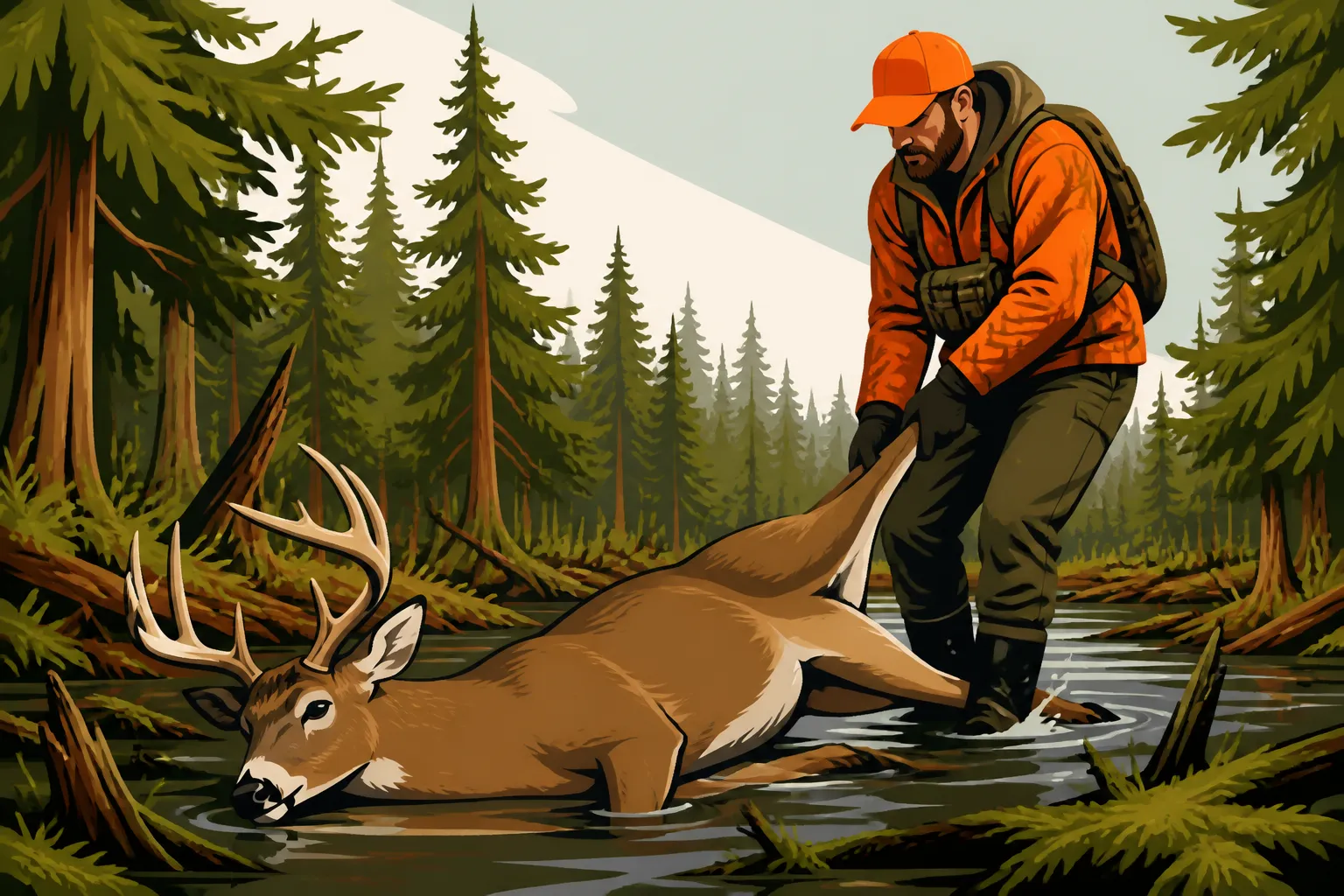
This is often the most physically demanding part. A deer, especially a good-sized Maine whitetail, is heavy, and dragging it through deep mud, over slippery logs, and through dense undergrowth is brutal.
- Clear a path: If possible, use your saw or loppers to clear a narrow lane, removing enough obstacles to make the drag slightly easier. This can save you immense effort in the long run.
- Utilize a dragging harness: Attach your dragging harness securely to the deer. If you have multiple people, have them spaced out along the rope to distribute the pulling power.
- Take advantage of gravity and terrain: Look for any slight rises or firm ground to get the deer onto. Use small logs as rollers if you can. If you can get the deer to the edge of the swamp, even if it's a longer drag to a main trail, it's often worth the effort compared to continually battling the swamp itself.
- Consider field dressing in situ: While not ideal, field dressing the deer where it lies in the swamp can significantly reduce its weight, making extraction much easier. This is especially true for larger bucks. If you choose this option, be mindful of the conditions and try to keep the meat as clean as possible. Remember to consult guides like Field Dressing a Deer in Cold Weather for best practices, even in a less-than-ideal environment.
- Protect the meat: Once the deer is out of the thickest mud, try to clean it as much as possible. If you need to store it temporarily, try to elevate it off the damp ground using logs or branches to promote airflow and prevent further spoilage.
The sheer effort of this phase often makes the success even sweeter. You've earned that venison.
Post-Recovery Care and Considerations
You've done the hard part: battled the swamp and recovered your deer. Now, it's time to ensure your hard-won meal is properly cared for and legally compliant.
Field Dressing and Cooling in Challenging Conditions
If you didn't field dress the deer in the swamp, do so immediately upon reaching firmer ground. Even in cold Maine weather, proper cooling is vital. The dense fur and body heat can quickly spoil the meat if left intact. Remove the entrails to allow the body cavity to cool down rapidly. If you're far from your vehicle or camp, consider propping the cavity open with a stick to maximize airflow.
In early season or milder temperatures, you might need to take extra steps. If you have access to ice, pack the cavity. If the weather is truly cold, however, you'll need to balance rapid cooling with preventing the meat from freezing too quickly, which can hinder the aging process. For detailed advice, articles like Butchering a Deer at Camp offer comprehensive steps for processing your harvest. Don't forget, the state also has guidance on Maine Deer Damage Permits for Farmers if you encounter unique circumstances.
Registering Your Maine Deer
Once your deer is recovered and field dressed, it's a legal requirement to register it with the Maine Department of Inland Fisheries and Wildlife (MDIFW). Maine offers several convenient ways to do this. You can register your deer online through the MDIFW's electronic registration system or at one of the many physical registration stations located throughout the state. Many gas stations, sporting goods stores, and general stores serve as official registration agents.
Make sure you have all the necessary information, including your license details and the harvest date and time. It’s always a good idea to double-check the Maine Deer Registration Requirements to ensure you're compliant. Don't procrastinate on this step; there's a deadline, and you don't want to jeopardize your harvest over a technicality after all that effort. Keep your tag securely attached to the deer until registration is complete. Understanding your Maine License Year Start Date is also good general knowledge for planning future hunts.
Preventing Future Swamp Recoveries
While every hunter aims for a clean kill and an immediate drop, deer often have other plans. However, you can take steps to minimize the chances of a grueling swamp recovery in the future:
- Shot Placement: The most critical factor. Aim for the vitals (heart/lungs) to ensure a quick, ethical kill. Practice regularly to become proficient and confident in your shot placement. Even a slight miss can mean a much longer, more difficult trail.
- Know Your Limits: Understand your effective range for your weapon and your own shooting ability. Don't take a marginal shot, especially if the deer is close to heavy cover. Waiting for a better angle or the deer to step into a more open area might mean the difference between an easy recovery and a nightmare scenario. For those interested in different methods, checking out When Maine's Archery Season Opens or similar method-specific guides can help refine techniques for precise shot placement.
- Observe After the Shot: Resist the urge to immediately run to where the deer was. Instead, watch and listen carefully. Note the direction of travel, how the deer reacted to the shot, and if it stumbled or went down. This initial observation provides crucial clues for the start of your trail.
- Understand Deer Behavior: Learn how deer utilize various habitats, including cedar swamps. Knowing that a deer, especially if wounded, might seek refuge in thick cover can prepare you mentally for what might come. Understanding a cedar swamp deer yard can give you insights into their movements. The overall Maine Deer Herd Size and local density can also influence how deer react to pressure and where they might seek refuge.
- Consider a Companion: Hunting with a partner not only enhances safety but also doubles your tracking capabilities and makes a difficult extraction much more manageable.
By combining meticulous preparation with a calm, systematic approach, you can significantly increase your odds of a successful and ethical recovery, even from the dreaded Maine cedar swamp.
Disclaimer
Please note that hunting regulations, seasons, and requirements can change. Always consult the official Maine Department of Inland Fisheries and Wildlife (MDIFW) website or their most current hunting law book for the most up-to-date and accurate information before heading into the field. This guide is for informational purposes only and does not replace official regulations or expert instruction.