Maine Sea Duck Zone Boundaries
Navigating the unique challenges of sea duck hunting along Maine's vast and intricate coastline can be daunting, especially when trying to understand where exactly you're legally allowed to hunt specific species and what regulations apply. It’s easy to get turned around, thinking you’re in the clear only to realize you’ve crossed into a different zone. This guide aims to demystify Maine's sea duck zone boundaries, helping you confidently plan your next coastal hunting adventure.
Understanding Maine's Sea Duck Hunting Zones
Maine's coastline is a wild, beautiful place, but its regulations for sea duck hunting can sometimes feel as wild and untamed as the waves themselves. For those of us who cherish the raw experience of decoying hardy eiders or challenging scoters in the rolling surf, understanding these zones isn't just about following the rules; it's about maximizing your hunting opportunities and staying safe and legal.
Why Zone Boundaries Matter
First off, let's talk about why these lines on a map are so crucial. Unlike inland duck hunting, where a pond is a pond and a river is a river, sea duck hunting introduces a whole new layer of complexity. Maine manages its migratory bird seasons, including sea ducks, in cooperation with federal guidelines set by the U.S. Fish and Wildlife Service, under the Atlantic Flyway Council. This means that specific species have specific open seasons and bag limits tied directly to these defined coastal zones. Straying outside a designated sea duck zone, even by a few hundred yards, could mean you're hunting out of season for sea ducks, or perhaps even using equipment or methods not permitted in general duck hunting areas. It's not just a minor technicality; it’s a fundamental aspect of conservation and fair chase. Knowing your boundaries prevents accidental violations and ensures you're contributing to sustainable hunting practices.
Furthermore, these zones are often established based on biological data, such as wintering grounds, migration patterns, and species density. For example, while the entire coast offers opportunities, specific areas might see higher concentrations of long-tailed ducks versus common eiders. Understanding the zones helps you align your hunt with the biology of the birds, leading to more successful and ethical hunting. It’s all part of the grand plan to ensure that these incredible birds continue to thrive along our rugged Maine shore for generations to come.
The General Coastal Zone Defined
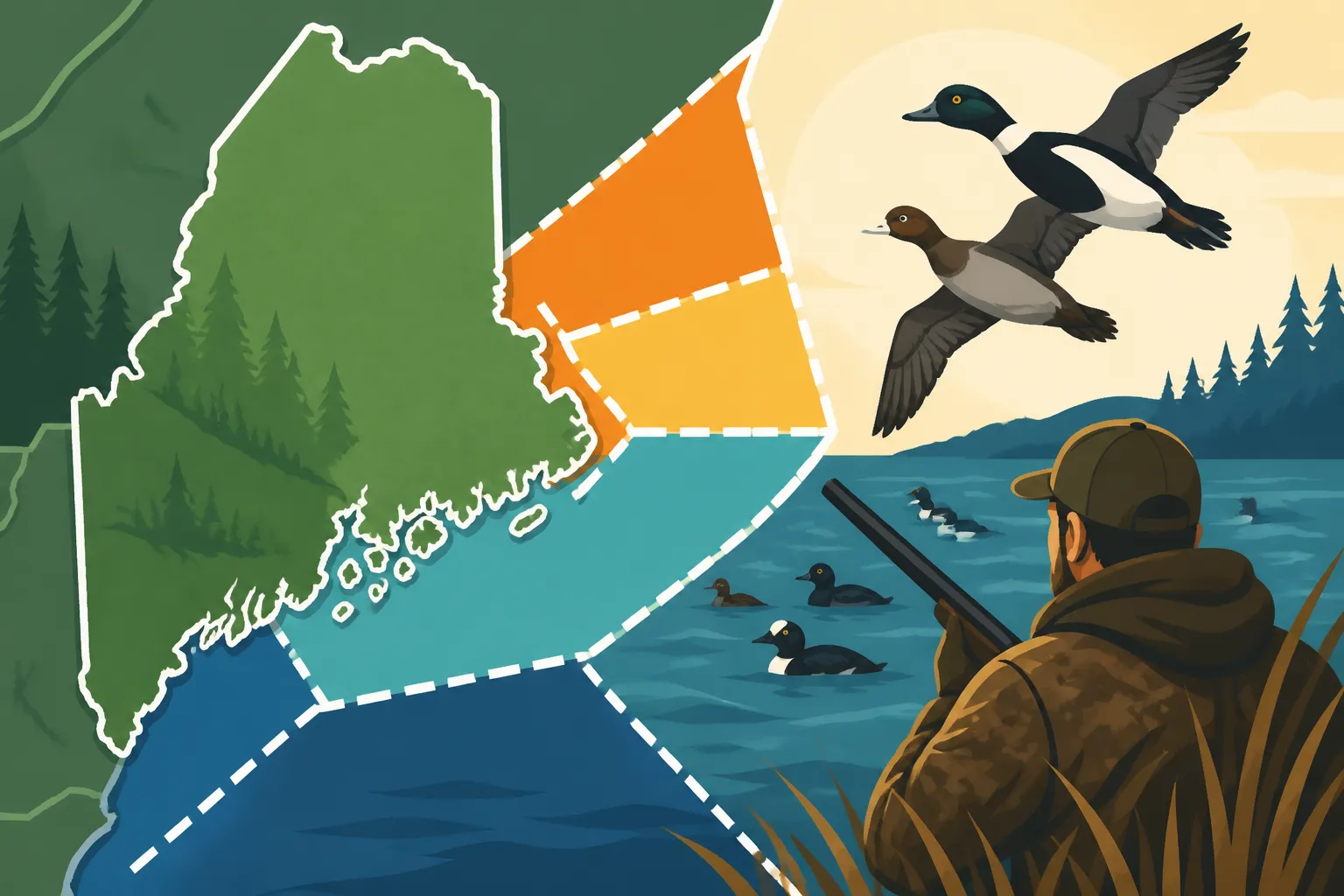
Maine's primary sea duck hunting area is often referred to as the "Coastal Zone." This isn't just a vague term for "anywhere near the ocean;" it has specific legal definitions. Generally speaking, this zone encompasses all coastal waters of the State of Maine and the waters of its estuaries and embayments seaward of the first upstream bridge or impoundment. What does that mouthful mean for us hunters? It means that if you're out on the open ocean, in a bay, or even heading up a tidal river as long as you haven't passed the first bridge or dam, you're likely in the sea duck zone. This expansive area stretches from Kittery all the way up to Calais, offering countless miles of shoreline, ledges, and open water for hunters willing to brave the elements.
This definition is crucial because it differentiates sea duck hunting from general duck hunting, which typically occurs on inland lakes, ponds, and rivers above the tidal influence. The birds you're targeting are distinctly different—think the robust physiology of an eider built for crashing waves compared to a mallard dabbling in a shallow marsh. The Coastal Zone is where these specialized divers thrive, feeding on mussels, crabs, and other marine invertebrates. It’s where you’ll find the classic Maine sea duck hunting scenarios, like setting up a formidable spread of decoys around a rocky ledge or layout boat hunting the Maine Coast, battling the chop and the spray to get a shot at these fast-flying birds. Understanding this general definition is the first step in pinpointing your specific hunting spot.
Navigating the Waters: Specific Boundary Descriptions
Maine's geography, with its deeply indented coastline, thousands of islands, and countless tidal rivers, makes defining these boundaries a bit more complex than just "the ocean." Knowing the precise lines where sea duck hunting regulations apply is paramount. It’s not enough to just be “near the coast”; you need to understand the precise markers that delineate legal hunting grounds.
The Inland Boundary: Where Coastal Meets Tidal
The most common point of confusion for many hunters is pinpointing the exact inland boundary of the sea duck zone. The rule states "seaward of the first upstream bridge or impoundment." This is a critical detail. Imagine a river like the Kennebec or the Penobscot; it's tidal for many miles upstream from the ocean. However, once you pass the first road bridge or dam, you're typically no longer in the designated sea duck zone. This means that while you might be hunting black ducks or mallards far upstream on tidal portions of these rivers, the specific regulations for species like scoters or long-tailed ducks won't apply there.
For practical purposes, this means you need to be familiar with the local geography of your chosen hunting area. Scouting before the season is invaluable here. Look for bridges on maps or, better yet, visit in person during low tide. The "mean high water mark" also plays a role in defining the boundary for some shorelines and marshes. Essentially, if the water is tidally influenced and you are seaward of the first upstream man-made structure that blocks tidal flow or vehicular passage, you're likely in the clear. This is particularly important when you're considering hunting small tidal creeks or marshes that might seem like general waterfowl habitat but are, in fact, integral parts of the sea duck zone due to their tidal connection to the ocean. Always double-check your maps, and if unsure, err on the side of caution.
The Seaward Boundary: Beyond the Coastline
While the inland boundary tends to cause more head-scratching, the seaward boundary is also important, especially for those venturing offshore. Maine's jurisdiction, and thus its state hunting regulations, generally extends three nautical miles from the coastline. This is a common federal standard for state territorial waters. Beyond this three-mile limit, you enter federal waters. For sea duck hunting, this isn't usually a major issue for most hunters, as the majority of prime sea duck hunting occurs within or very close to the three-mile line, often over shoals, ledges, and near islands where birds congregate to feed.
However, if you're contemplating a truly offshore trip, perhaps chasing birds that are rafted up far from shore, it's worth knowing this distinction. Federal regulations might apply in addition to or instead of state rules beyond three miles, though for most migratory birds, the core regulations remain consistent across the Atlantic Flyway. The most crucial takeaway here is that within three miles of the coast, Maine's specific sea duck regulations apply. This means that when you're out there, a few miles off Pemaquid Point or cruising near the outer islands of Muscongus Bay, you are firmly within the state's sea duck zone, and all associated rules, from daily limits to shooting hours, are in full effect.
Regulations and Bag Limits Within the Zones
Understanding the physical boundaries of Maine's sea duck zones is just the beginning. The next crucial step is to internalize the specific regulations and bag limits that apply within those zones. These aren't static; they can vary by species, and even sometimes by sub-zones if established, although Maine generally employs a broad coastal zone for sea ducks.
Species-Specific Bag Limits by Zone
Maine’s sea duck regulations are quite specific when it comes to daily bag limits and possession limits for each species. It’s not a one-size-fits-all approach. For instance, the daily bag limit for common eiders is often quite generous, allowing for a good harvest. However, other species like scoters (black, surf, and white-winged scoters combined) and long-tailed ducks (formerly known as oldsquaw) typically have more restrictive limits. These limits are designed to manage populations sustainably, accounting for species-specific abundance and vulnerability. Hunters need to be able to identify these birds in flight and on the water accurately.
Let's look at a general example of how these might break down, keeping in mind that actual numbers can change annually, so always check the current Maine migratory bird law book.
| Species | Daily Bag Limit (Coastal Zone) | Possession Limit (Coastal Zone) |
|---|---|---|
| Common Eider | 5 (not more than 3 hens) | 15 |
| Black Scoter | 4 (single species limit) | 12 |
| Surf Scoter | 4 (single species limit) | 12 |
| White-winged Scoter | 4 (single species limit) | 12 |
| Total Scoters | 4 (combined species limit) | 12 |
| Long-Tailed Duck | 4 (single species limit) | 12 |
| Total Sea Ducks | 15 (aggregate limit) | 45 |
Note: These are illustrative examples. Always consult the most current Maine hunting regulations before going afield.
This table illustrates the breakdown. You can shoot up to 5 eiders, but only 3 of those can be hens. For scoters, regardless of whether they are black, surf, or white-winged, your combined limit is usually 4. The same often applies to long-tailed ducks. And then there's an overall aggregate limit for all sea ducks. This level of detail underscores the importance of proper bird identification. Mistaking a hen eider for a scoter, or vice versa, could lead to over-the-limit situations. This is where spending time with identification guides and experienced hunters truly pays off. You can learn more about Maine Eider Daily Limit and Maine Scoter Daily Limit and Maine Long-Tailed Duck Daily Limit by checking out our other resources.
Overlapping Regulations with General Duck Hunting
Another common area of confusion is how sea duck regulations interact with those for general duck hunting when you're in coastal areas. It's not uncommon to find puddling ducks like mallards, black ducks, and wigeon sharing the same tidal estuaries, salt marshes, and protected coves where sea ducks also frequent. So, what happens when you’re hunting in a prime spot near the coast, and both types of birds are flying?
The key here is understanding that while the sea duck zone defines where sea duck regulations apply, you are still subject to all applicable migratory bird laws. This means you still need your federal duck stamp and your Maine HIP Certification for Bird Hunters, regardless of whether you're targeting a goldeneye or a green-winged teal. If you shoot a mallard while hunting in the sea duck zone, that mallard counts towards your general duck bag limit, not your sea duck limit. Conversely, if you shoot an eider, it counts against your sea duck limit. It’s not an either/or situation; it’s a combined set of rules.
This means a hunter might, hypothetically, shoot a limit of eiders and then, later in the day, move to a different tidal area and shoot a few black ducks, as long as they stay within the legal daily limits for each category of bird. The overarching Maine Duck and Goose Bag Limits are still in play. It's crucial to differentiate between these categories in the field and keep accurate counts for both. The rules are designed to allow for diverse hunting opportunities in Maine's rich coastal ecosystems, but they demand diligence and knowledge from the hunter.
Practical Application for Maine Sea Duck Hunters
Knowing the regulations is one thing, but actually applying them in the field is another. The rugged, dynamic environment of the Maine coast presents unique challenges. Tides, weather, and the sheer scale of the landscape can make precise navigation and adherence to boundaries tricky. Thankfully, modern tools can be a huge asset.
Using Maps and Technology to Stay Legal
In today's world, there's simply no excuse for not knowing where you stand, literally, in terms of hunting zone boundaries. Gone are the days of relying solely on paper maps and compasses (though those are still vital backups!). Mapping applications, often accessed right on your smartphone, have revolutionized how hunters navigate and understand land ownership and regulatory boundaries. Brands like GoHunt offer incredible tools that overlay property lines, public land, and even specific hunting zone boundaries onto detailed topographical or satellite maps.
Before you even launch your boat or step out onto a remote beach, you should be studying these maps. Zoom in on your intended hunting area. Identify the "first upstream bridge or impoundment" on any tidal rivers or estuaries. Mark it as a waypoint on your GPS. Look at the three-mile seaward boundary. Pay attention to any islands, ledges, or prominent coastal features that can serve as visual cues in the field. Using an app like GoHunt allows you to track your real-time position against these boundaries, giving you peace of mind. It’s an invaluable aid for planning your Decoying Eiders Off the Maine Coast strategy or figuring out the best approach for Hunting Scoters From a Sea Duck Boat. Don't just glance at it; spend time with the maps, understand the nuances, and save your hunting spots. This proactive approach significantly reduces the risk of inadvertently straying into non-sea duck waters or restricted areas.
Common Misconceptions and How to Avoid Them
Even with the best technology, hunters can sometimes fall prey to common misconceptions about sea duck zones. One of the biggest is assuming that "tidal water equals sea duck water." As we've discussed, it's tidal water seaward of the first upstream bridge or impoundment. Many miles of river can be tidal, but if they're upstream of that first bridge, they are typically considered general waterfowl zones for the purpose of species-specific sea duck regulations. So, while you might be hunting ducks, they won't be sea ducks under the specific rules.
Another common mistake is misjudging the mean high water mark when hunting from shore or very shallow areas. Tides in Maine are significant, sometimes swinging 9-12 feet. What looks like open water at high tide might be dry land or a very shallow, non-navigable mud flat at low tide. This affects not only where birds might feed but also where you can legally retrieve downed birds and even discharge firearms relative to structures or dwellings. Always consider the full tidal swing.
Finally, proper species identification cannot be overstated. A fast-flying goldeneye might be mistaken for a scoter in poor light, or a common merganser for a long-tailed duck. Both goldeneyes and mergansers are general waterfowl, with different bag limits and season dates. Mistaking them for sea ducks can lead to over-bagging or taking birds out of season. Invest time in learning your Maine Sea Duck Identification Guide so that when a flock of birds swings into your decoy spread, you can make an accurate, legal decision in a split second.
Seasonal Considerations and Zone Impact
The Maine sea duck season, with its unique challenges and opportunities, is heavily influenced by timing. Understanding how the season dates, especially the Maine Duck Season Split Dates, interact with the established zones is vital for planning a successful and legal hunt.
The Split Season's Influence on Zones
Maine's sea duck season often operates with a "split season" structure. This means there might be an early portion of the season, followed by a brief closure, and then a later, longer segment. This split is designed to align hunting pressure with peak migration periods and to manage harvest pressure on specific populations. For a sea duck hunter, this timing is incredibly important when considering the zones.
During the early part of the season, often in October, the weather tends to be milder, and birds might be found in more protected bays and estuaries before the harsh winter weather pushes them further offshore. This means that hunters might focus on areas closer to the inland boundary of the sea duck zone, where the waters are calmer and access is easier. As the season progresses into November and December, and especially into January, the weather becomes significantly colder and rougher. This is when the hardier sea ducks really come into their own, often preferring the exposed ledges and open ocean waters further seaward in the zone.
The split season also impacts what species you might encounter. Early in the season, you might see more juvenile birds or different migratory phases. By the later season, the birds are often concentrated in their wintering grounds, providing more consistent hunting for specific species. Always check the current Maine Sea Duck Season and Zones dates carefully. Missing the open dates, even within the correct zone, can lead to serious legal issues. Planning your hunt around these splits, and understanding how different parts of the sea duck zone might offer better opportunities at different times, is a mark of an experienced sea duck hunter.
Weather, Tides, and Safe Zone Navigation
Beyond legalities, the physical realities of Maine's coast—the relentless weather and dramatic tides—are paramount when navigating sea duck zones. Maine's coast is notorious for its sudden changes in weather. A calm morning can quickly turn into a gale, making even experienced boaters think twice. When Hunting Scoters in Maine's Open Water or Layout Boat Hunting the Maine Coast, safety is always the top priority. Strong winds can create dangerous chop and swell, pushing you off course and making it difficult to maintain position relative to your chosen hunting spot and its legal boundaries.
Tides also play a massive role. A rocky ledge that is a prime feeding spot for eiders at low tide might be completely submerged at high tide, forcing birds elsewhere and altering your effective hunting zone. Understanding local tide charts is non-negotiable. Not only does it help you predict bird movements, but it also ensures safe passage in and out of launching areas and around islands. What looks like a deep channel at high tide could become impassable mud flats at low tide, leaving you stranded outside of safe, legal waters.
This isn't just about convenience; it's about survival. Hunting sea ducks means exposing yourself to cold water, strong currents, and unpredictable weather. Always check marine forecasts, know your boat's capabilities, carry appropriate safety gear, and let someone know your float plan. Being intimately familiar with the sea duck zone boundaries and how they interact with the ever-changing coastal environment ensures not just a legal hunt, but a safe and enjoyable one.
Disclaimer
Please remember that hunting regulations, including zone boundaries, season dates, and bag limits, are subject to change annually. Always consult the most current official Maine Department of Inland Fisheries and Wildlife (MDIFW) migratory bird hunting regulations and federal regulations before planning and executing your hunt. This guide is for informational purposes only and should not be considered a substitute for the official legal documents. Stay safe, hunt ethically, and enjoy Maine's incredible sea duck hunting opportunities!