Maine’s Five-Bird Fall Turkey Districts
For many fall turkey hunters in Maine, the thought of tagging just one bird after weeks of scouting and calling can feel a little anticlimactic. It’s tough when you know the potential is out there for more, but the regulations often feel restrictive. This guide is dedicated to breaking down Maine's special five-bird fall turkey districts, revealing where these opportunities lie and how you can maximize your chances of filling your freezer with delicious wild turkey.
Understanding Maine's Fall Turkey Landscape
Maine's wild turkey population has seen an incredible resurgence, especially in the southern and central parts of the state. It wasn't always this way, and the success we enjoy today is a testament to dedicated wildlife management and restoration efforts. However, this success isn't uniform across the entire state, leading to varied hunting opportunities.
The General Fall Turkey Season Overview
Generally speaking, when folks talk about fall turkey hunting in Maine, they often think of a single-bird limit, which, let's be honest, can feel pretty limited. The fall season itself, when it's open, usually spans a good chunk of October and sometimes into early November, depending on the specific Wildlife Management District (WMD) you're in. This statewide allowance for one turkey with a valid permit is a decent opportunity, but for those of us who really love chasing birds in the autumn woods, it leaves us wanting a bit more. It’s frustrating to know there are abundant flocks out there but be limited to just one for the season.
The Purpose of WMDs and Varying Bag Limits
So, why the different rules? Maine is divided into numerous WMDs, or Wildlife Management Districts, each with its own set of ecological conditions, habitat, and, crucially, wildlife population densities. These districts are the bedrock of how the Maine Department of Inland Fisheries and Wildlife (MDIFW) manages game species like deer, moose, and, of course, wild turkeys.
The varying bag limits in the fall turkey season directly reflect these population dynamics. In areas where turkey numbers are booming, and the habitat can easily support higher harvest rates, the MDIFW increases the bag limit. This isn't just about giving hunters more opportunities; it's a vital management tool to help keep turkey populations healthy, prevent overpopulation, and reduce conflicts with landowners, especially farmers. Conversely, in WMDs where turkey numbers are lower, perhaps due to harsher winters, less suitable habitat, or just slower population growth, the limits remain more conservative. It's all about striking that delicate balance, ensuring a sustainable future for these magnificent birds. For a broader look at how these limits are determined, check out Maine's WMD-Based Turkey Bag Limits.
Unveiling Maine's Five-Bird Fall Turkey Districts
Now, let's get to the good stuff—the districts where you can pursue a truly generous fall turkey limit. These are the areas where the turkey populations are thriving, offering hunters an unparalleled opportunity to fill their tags and their freezers.
Identifying the High-Density WMDs
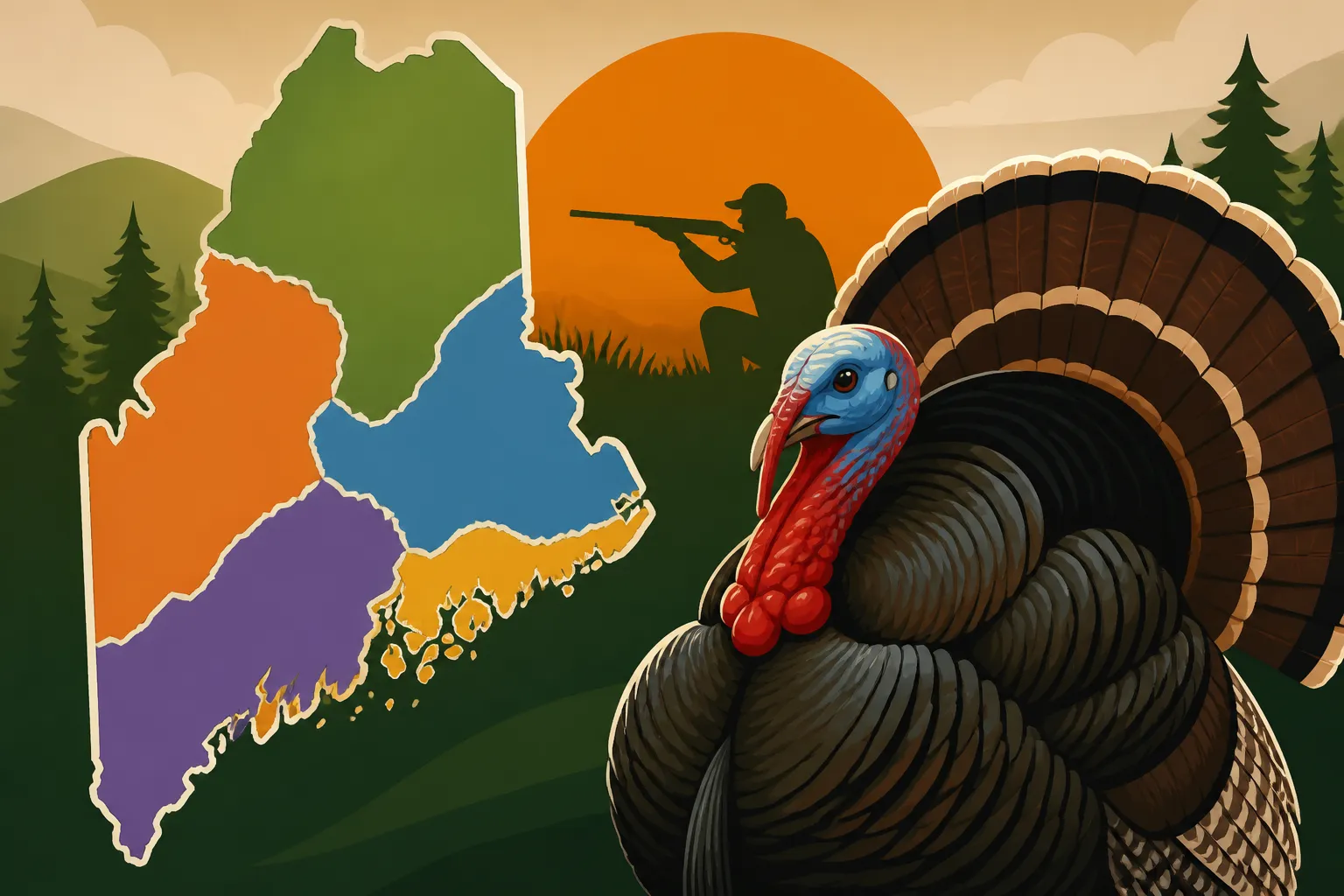
For the 2023-2024 fall turkey season, and typically in recent years, a significant portion of southern and central Maine has been designated as a five-bird fall turkey district. These WMDs are where the wild turkey population is most robust, allowing for a much higher harvest. While it's crucial to always verify the most current regulations directly from the Maine IFW website, commonly included WMDs in this generous category are 15, 16, 17, 20, 21, 22, 23, 24, 25, 26, 27, and 29.
Why these specific WMDs? It really comes down to prime turkey habitat. These areas often feature a mosaic of agricultural fields, mature hardwoods providing mast crops like acorns and beechnuts, and ample woodlots with dense undergrowth for roosting and security. The milder winters in southern Maine also play a huge role, allowing for higher overwinter survival rates compared to the harsher conditions of the northern parts of the state. This combination creates an environment where turkey numbers can truly flourish. When planning your hunt, a tool like GoHunt can be invaluable for pinpointing these WMD boundaries and cross-referencing with public land opportunities. Knowing Where Maine Turkeys Are Densest can give you a significant advantage.
Strategic Considerations for Hunting These Districts
Hunting in a five-bird fall turkey district comes with its own set of strategic considerations. First and foremost, while the birds are abundant, so too can be the hunting pressure, especially on public lands or easily accessible private parcels. You'll often find these areas near more populated towns, meaning more hunters might be out and about. This doesn't mean you can't be successful; it just means you need to adjust your approach.
Scouting becomes even more critical. Look for areas with diverse habitat where turkeys can find food, water, and cover without too much disturbance. Field edges adjacent to thick woods, active logging cuts, and areas with good mast production are all prime locations. Early season scouting, even before the leaves drop, can reveal roosting areas and travel corridors. Later in the season, after some hunting pressure, birds might become warier and stick to thicker cover. Understanding how turkeys use the land, especially when they're not breeding, is key. This is where tactics for Calling a Fall Turkey Flock Apart become highly effective.
Maximizing Your Five-Bird Fall Turkey Hunt
With the opportunity to tag five turkeys, you'll want to be prepared to make the most of it. This isn't just about finding the birds; it's about employing effective strategies and staying on top of the regulations.
Essential Gear and Tactics for Fall Flocks
Fall turkey hunting is a completely different ballgame than spring gobbler hunting. Instead of focusing on single, lovesick gobblers, you're looking for entire flocks – often led by an old hen – and aiming to break them up. Shotguns (like a 12 or 20 gauge with turkey-specific loads) are the most common choice, but archery gear is also legal and can be incredibly rewarding.
The classic fall tactic involves locating a flock, then busting it up as loudly and quickly as possible. This scatters the birds in all directions. Once they're scattered, you find a good hiding spot, settle in, and begin to call like a lost turkey. The goal is to imitate soft yelps, clucks, and purrs, mimicking a lonesome hen or poult trying to regroup with the flock. Often, young birds will come in fairly quickly, eager to rejoin their family. Old hens can be much warier. Decoys can be useful, but in the fall, a simple hen or jake decoy might be enough to draw in a curious bird. For detailed methods, exploring Breaking Up a Fall Turkey Flock offers specific techniques.
Navigating Permits and Regulations
Even in these generous five-bird districts, you still need to adhere to Maine's regulations. First, you'll need a valid Maine hunting license, and a specific fall turkey permit is also required. This permit is what allows you to harvest turkeys during the fall season, and it's essential regardless of whether you're in a one-bird or five-bird WMD. Always double-check the current Maine Fall Turkey Permit Rules before heading out.
The five-bird limit is a seasonal limit that applies only to the designated WMDs. If you happen to hunt in a different WMD with a one-bird limit, that's your maximum for that specific district. It’s important to know your WMD boundaries and keep track of how many birds you’ve tagged. After a successful harvest, remember that Maine Turkey Checking Requirements are mandatory. You'll need to report your kill to the MDIFW through their online system or designated check stations. GoHunt can be a great tool to keep all these details straight, from license requirements to WMD maps, helping you stay compliant.
Beyond the Five-Bird Limit: Other Fall Turkey Opportunities
While the five-bird districts offer the pinnacle of fall turkey hunting in Maine, it’s also important to understand the broader context of the season and what other opportunities exist.
Hunting One-Bird Fall Turkey WMDs
Not all WMDs are created equal, and many still maintain a one-bird fall turkey limit. While this might seem less exciting than the five-bird areas, it still offers a fantastic hunting experience and can be a great option if you live closer to these districts or prefer less crowded woods. The tactics will remain largely the same – finding and busting flocks – but with a heightened sense of care, knowing you only have one bird to tag. Pressure in these areas might also be lower, potentially making birds less wary. If you’re considering these areas, take a look at specific strategies for Hunting a One-Bird Fall Turkey District.
Late Season Considerations for Maine Turkeys
As the fall season progresses, especially into late October and early November, conditions can change dramatically. Leaves fall, making visibility better but also removing some concealment. Weather can turn cold, even bringing early snow. Turkeys will shift their focus even more heavily to reliable food sources. This means concentrating your efforts around active agricultural fields (especially corn stubble), mast-producing stands of oak and beech, and even finding areas where specific shrubs or berries might still be available.
In the late season, turkeys often form larger flocks, and their patterns can become more predictable, revolving around feeding and roosting sites. Understanding Late-Season Food Sources for Maine Whitetails can also guide your turkey hunting, as deer and turkeys often utilize similar food resources during these colder months. Look for tracks in the snow, droppings, and scratchings under trees. The MDIFW provides valuable data on Maine Turkey Harvest Numbers by WMD, which can also inform your late-season strategy, showing where consistent success has been achieved. Again, GoHunt’s mapping features and layers showing private and public land can help identify these vital late-season food plots and cover.
Maine Fall Turkey Bag Limits by WMD (Example Data – Always Confirm Current Regulations)
| WMD Number | General Location | Fall Season Dates (Typical) | Bag Limit (Turkey) | Notes |
|---|---|---|---|---|
| 15 | Central Maine | Oct 1 – Nov 7 | 5 | Excellent mix of agriculture and hardwoods, high turkey density. |
| 16 | Central Maine | Oct 1 – Nov 7 | 5 | Good populations, often sees consistent success. |
| 17 | Central/Coastal | Oct 1 – Nov 7 | 5 | Coastal influences, strong turkey presence. |
| 20 | Southern Maine | Oct 1 – Nov 7 | 5 | High population, often good mast crops. |
| 21 | Southern Maine | Oct 1 – Nov 7 | 5 | Urban fringe areas with strong turkey numbers. |
| 22 | Southern Maine | Oct 1 – Nov 7 | 5 | Mix of developed and wild land, good opportunities. |
| 23 | Southern Maine | Oct 1 – Nov 7 | 5 | Prolific turkey populations, popular hunting area. |
| 24 | Southern Maine | Oct 1 – Nov 7 | 5 | Often a top producer for fall turkeys. |
| 25 | Southern Maine | Oct 1 – Nov 7 | 5 | Excellent habitat diversity. |
| 26 | Southern Maine | Oct 1 – Nov 7 | 5 | Consistent high numbers. |
| 27 | Southern Maine | Oct 1 – Nov 7 | 5 | Good mix of farmlands and woods. |
| 29 | Southern Maine | Oct 1 – Nov 7 | 5 | Strong turkey populations in the most southern part of the state. |
| Other WMDs | Various | Oct 1 – Nov 7 (Varies) | 1 | Always check specific WMD regulations as limits can differ. |
Disclaimer: Hunting regulations, including WMD boundaries, season dates, and bag limits, can change annually. Always consult the official Maine Department of Inland Fisheries and Wildlife (MDIFW) website or the current hunting law book before planning your hunt to ensure you have the most up-to-date and accurate information.