Where Maine Turkeys Are Densest
If you've ever dreamt of hearing that thunderous gobble echoing through the crisp Maine air, you're not alone. Many hunters flock to our beautiful state with visions of a big tom, but the reality is, knowing where those birds are most concentrated can feel like searching for a needle in a vast, sprawling haystack. It’s frustrating to put in the time scouting only to find sparse sign, or to hunt areas that look perfect but just aren't holding birds. This guide is all about helping you cut through that guesswork, giving you a clear picture of where Maine's wild turkey populations truly thrive, and how to focus your efforts for the best possible experience.
The Remarkable Comeback of Maine's Wild Turkeys
It might be hard to believe now, given how widespread wild turkeys have become, but there was a time when these magnificent birds were completely absent from Maine. Their reintroduction and subsequent explosion across the landscape is one of the greatest conservation success stories in our state's history. Understanding this journey helps us grasp why some areas are now veritable turkey havens while others remain less populated.
From Absence to Abundance: A Conservation Triumph
For centuries, wild turkeys were a common sight in New England, but by the mid-1800s, habitat loss and unregulated hunting had extirpated them from Maine entirely. Imagine a time when the only turkeys you saw were on a farm! The landscape had changed drastically, and the birds just couldn't sustain themselves. It wasn't until the late 1970s and early 1980s that a dedicated effort began to bring them back. This wasn't a quick fix; it involved carefully trapping wild turkeys from other states where populations were booming, like Vermont and New York, and releasing them into carefully selected habitats here in Maine.
These initial stocking efforts focused on areas that offered a perfect blend of agricultural fields for foraging, diverse hardwood forests for roosting and mast crops, and reasonable protection. Slowly but surely, those small flocks began to grow, spreading out from their release sites. It took decades of careful management, but the patience and foresight paid off immensely. Today, when you drive through many parts of southern and central Maine, it's not uncommon to see flocks of turkeys strutting through fields or picking their way along woodland edges. This success story is a testament to what focused conservation can achieve, turning an empty niche into a vibrant ecosystem once again. You can learn more about this incredible journey by reading How Turkeys Were Restored to Maine.
Understanding Turkey Population Trends and Distribution
Just because turkeys are widespread doesn't mean they're everywhere in equal numbers. Their distribution and density are heavily influenced by habitat quality, food availability, and the success of those initial reintroduction efforts. The earliest release sites and their surrounding areas naturally had a head start, allowing populations to expand and solidify over a longer period. As their numbers grew, turkeys started pushing into new territories, but their expansion wasn't always uniform.
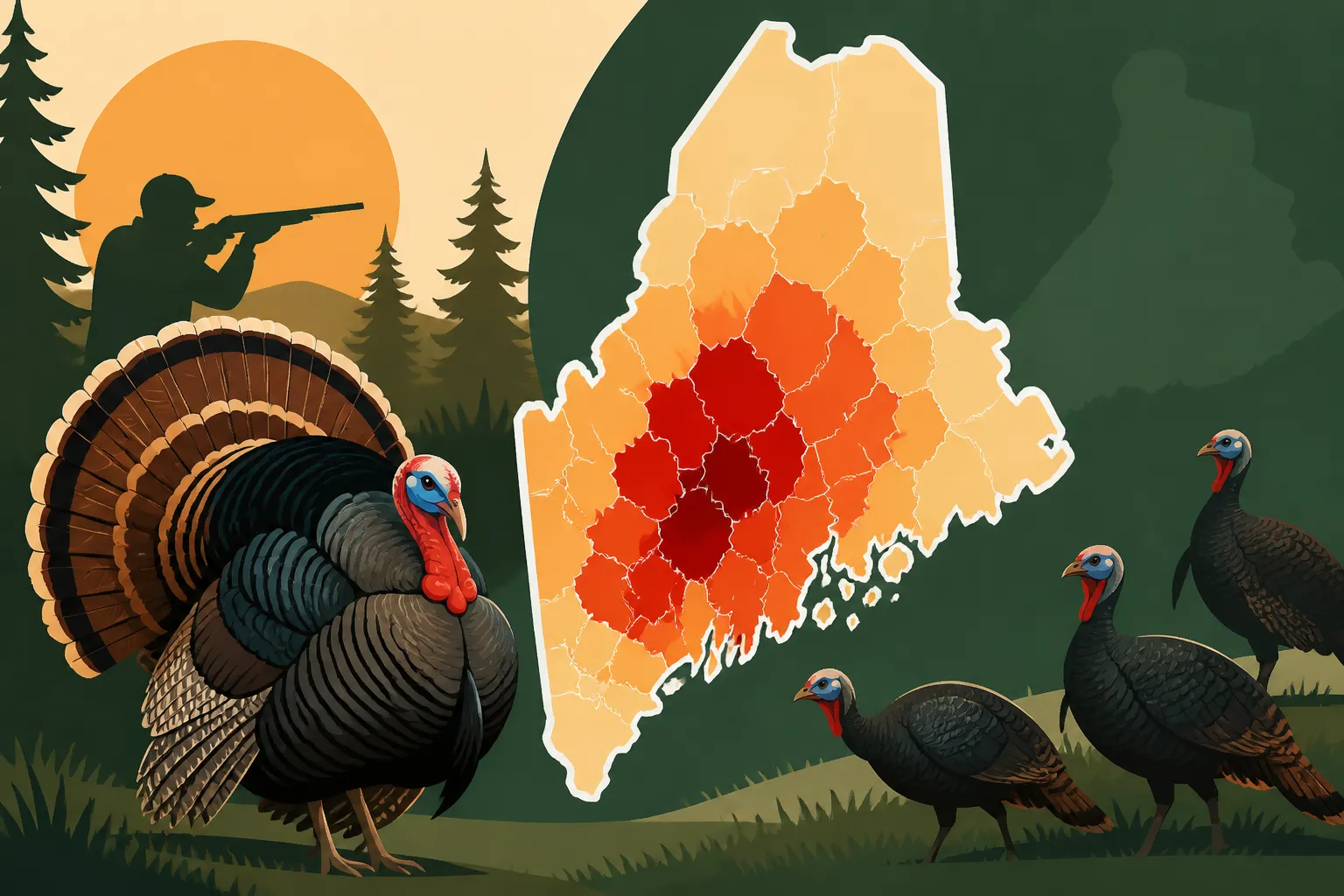
Think about it: a flock needs a reliable food source through all seasons, safe roosting trees, and plenty of cover from predators. Areas with a mosaic of mature hardwoods (especially oak, beech, and cherry for their mast crops), open fields (for insects and waste grain), and water sources are going to support a much higher density of birds than vast, unbroken tracts of conifer forest or heavily urbanized areas. Maine Turkey Population Trends show a clear pattern of growth, particularly in the southern and central parts of the state. While turkeys are now found in every county, their strongholds remain where these optimal habitat conditions are most prevalent. This knowledge is crucial for any hunter looking to pinpoint those high-density zones.
Pinpointing High-Density Turkey Wildlife Management Districts (WMDs)
Maine is divided into Wildlife Management Districts (WMDs) for various species, and understanding these boundaries is key to hunting success. When it comes to wild turkeys, certain WMDs consistently show higher populations and harvest numbers, making them prime targets for hunters. These districts aren't just random lines on a map; they often correspond to areas with superior turkey habitat.
The Role of Agriculture and Habitat in Turkey Concentration
One of the biggest factors in turkey density is the presence of agriculture. Turkeys are omnivores, and while they love acorns, beechnuts, and other mast crops found in our forests, they absolutely thrive on the waste grains left behind in corn, oat, and hayfields. These fields provide an easy, calorie-rich food source, especially important during the lean winter months and for growing poults in the spring and summer.
WMDs that encompass a significant amount of active farmland interspersed with mature hardwood forests tend to have the highest turkey densities. These areas provide the perfect balance: open fields for feeding and dusting, and tall trees for roosting at night, along with dense undergrowth for nesting and escape cover. If you're looking at a map and see a checkerboard pattern of fields and woods, chances are you're looking at prime turkey country. Tools like GoHunt can be invaluable here, allowing you to layer different mapping features to identify these habitat mosaics. This type of analysis can really help narrow down where to focus your scouting efforts before you ever even step foot in the woods.
Top WMDs for Strong Turkey Populations
While turkeys are doing well across much of the state, there are definitely some standout WMDs that consistently report higher populations and, consequently, higher harvest rates. These are the areas where hunters often find greater success and encounter more birds. Generally, the WMDs in southern and central Maine are your best bet.
Consider districts like WMDs 15, 17, 20, 21, and 23. These areas frequently show up in harvest reports as having robust turkey numbers. They are characterized by a healthy mix of agricultural lands, particularly in places like Kennebec, Androscoggin, Cumberland, and York counties, combined with extensive hardwood forests. These WMDs also benefit from milder winters compared to the deeper North Woods, which aids in turkey survival rates.
It's always a good idea to check the latest Maine Turkey Harvest Numbers by WMD before you plan your hunt. This data can give you insights into recent trends and help confirm which districts are currently hot. Remember, while these WMDs boast high densities, they might also experience more hunting pressure, so adapting your tactics, perhaps by Calling an Early May Gobbler Off the Roost before other hunters are in the woods, becomes crucial.
Regional Snapshots: Where Turkeys Roam in Maine
Maine is a big state, and its diverse landscapes mean that turkey hunting experiences can vary dramatically from one region to another. While the southern and central parts of the state offer the highest densities, understanding the nuances of each region can further refine your hunting strategy.
Southern and Central Maine: The Turkey Heartland
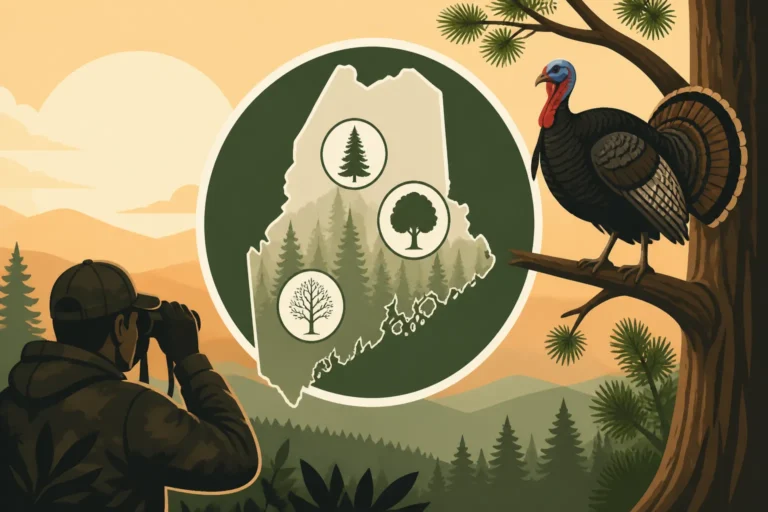
This is undoubtedly the epicenter of Maine's wild turkey population. Counties like York, Cumberland, Androscoggin, Kennebec, Waldo, and parts of Oxford and Penobscot are absolutely loaded with turkeys. Why here? It comes down to that perfect storm of habitat factors we discussed. You'll find a higher concentration of active farms, including dairy, corn, and hay operations, providing consistent food sources. These agricultural lands are often interspersed with mature oak and beech forests, providing critical mast crops and ideal roosting habitat.
In these areas, it's not uncommon to see large flocks of birds numbering in the dozens, especially outside of the breeding season. Hunting here means you'll likely encounter more birds, but also potentially more competition from other hunters, especially on public land. Private land access is often key in these regions, and a little groundwork asking for permission can go a long way. You might also find yourself Setting Up Against a Big White Pine on the edge of a field, using the cover to conceal your approach. This region is so productive that several WMDs here qualify as Maine's WMDs With Two-Bird Spring Limits or even Maine's Five-Bird Fall Turkey Districts, reflecting the robust health of the populations.
Midcoast and Downeast Maine: Coastal Influences
As you move eastward towards the Midcoast and Downeast regions, turkey densities can still be strong, but often in more localized pockets. The habitat shifts a bit, with more spruce-fir forests mixing in, particularly closer to the coast. However, areas around agricultural valleys or where hardwood ridges meet open land will still hold good numbers.
You might find turkeys utilizing blueberry barrens in Washington County, for instance, once the season is right and they're feeding on the berries, but the overall population might not be as universally distributed as it is further west. Hunting here can sometimes feel a bit more secluded, even if the densities aren't quite as high as the southern interior. The birds might be more patterned to specific food sources or landscape features. Utilizing detailed mapping tools, even general ones like those found on GoHunt, can help you identify these specific habitat niches that might be overlooked by others.
Northern Maine and the North Woods: A Challenging Frontier
The vastness of the North Maine Woods, while iconic for moose and deer, presents a tougher environment for wild turkeys. The deeper you go into Aroostook County and the northern reaches of Piscataquis and Somerset, the more the habitat shifts to extensive softwood forests (spruce, fir, cedar) with fewer large agricultural tracts or significant mast-producing hardwoods. This means fewer reliable year-round food sources and often harsher, deeper snow conditions in winter, which can be brutal for turkeys.
While turkeys are expanding their range northward, and you'll find them in and around the towns and agricultural fringes of Aroostook, densities generally decline significantly in the wilderness interior. Hunting for turkeys in the true North Woods often means focusing on smaller, isolated pockets of mixed forest and abandoned farmlands, or along river valleys that offer a slightly milder microclimate and more diverse vegetation. It's not impossible to find turkeys here, but it requires more dedicated scouting and a willingness to cover a lot of ground in areas where birds are simply less numerous. Success might feel more earned, a testament to true grit.
Here's a quick comparison of turkey hunting across Maine's regions:
| Region | Typical Habitat | Turkey Density | Hunting Pressure | Challenges | Opportunities |
|---|---|---|---|---|---|
| Southern/Central | Mixed agriculture & hardwood forests | High | High | Private land access, competition | Abundant birds, diverse methods |
| Midcoast/Downeast | Mixed forest, some agriculture, coastal areas | Moderate-High | Moderate | Localized pockets, habitat variability | More solitude, patterning specific food sources |
| Northern/North Woods | Extensive softwood, limited agriculture | Low-Moderate | Low | Sparse populations, vast terrain, harsh winters | Remote experience, truly wild birds |
Factors Influencing Turkey Movement and Presence
Beyond just regional density, several other factors influence where you'll find turkeys on any given day. Understanding these dynamics can make the difference between a frustrating hunt and a successful one, even in a high-density WMD.
Seasonal Food Sources and Mast Crops
Turkeys are always looking for the easiest, most nutritious meal, and their diet changes throughout the year. In the spring and summer, insects, tender greens, and small fruits are key, often found in fields, forest edges, and along waterways. As fall approaches, their focus shifts heavily to mast crops – acorns from oak trees, beechnuts, and wild cherries are all high-energy favorites.
A good mast crop year can mean turkeys stay in the woods more, feeding on the bounty beneath the trees. A poor mast crop year, on the other hand, will drive them into agricultural fields earlier and more frequently, making them more predictable for hunters. Before your hunt, knowing if it was Hunting After a Poor Acorn Year can drastically influence where you decide to set up. Scouting for these changing food sources is paramount. Look for fresh droppings, scratch marks in the leaves, and dusting bowls near these areas.
Weather Patterns and Winter Survival
Maine weather can be unforgiving, and deep snow can be particularly tough on wild turkeys. While they're incredibly resilient, prolonged periods of deep, soft snow limit their ability to forage, especially for ground-dwelling food items. This can lead them to concentrate in areas where snow depth is less severe, such as south-facing slopes, conifer stands that catch snow, or near roads where plows have exposed the ground.
During harsh winters, survival rates can dip, impacting the overall population density the following spring. That's why regions with milder winters (like southern Maine) tend to sustain higher densities. When you're planning a spring hunt, keep the preceding winter in mind. A tough winter might mean turkeys are a bit more scattered or concentrated in specific areas where they found refuge. This is also where Reading Aerial Photos for North Woods Deer can actually help you locate potential turkey habitat, as good deer wintering grounds often overlap with turkey refuges.
Hunting Pressure and Turkey Behavior
Even in the densest WMDs, excessive hunting pressure can make birds incredibly wary and difficult to hunt. Turkeys are smart, and they quickly learn to associate human presence with danger. Heavily hunted public lands, especially during the opening weeks of the season, might see birds go silent, move to thicker cover, or simply become harder to call in.
If you find yourself in an area with high pressure, consider changing your tactics. This might mean walking further off the beaten path, hunting later in the morning when other hunters have left, or even trying a different WMD that sees less traffic. Sometimes, the birds aren't gone; they've just shifted their patterns. Using a ground blind, perhaps Brushing In a Blind on a Field Edge, can offer you concealment and a stable shooting platform, allowing you to blend into the environment even in areas with more activity. Understanding how hunting pressure molds turkey behavior is a vital piece of the puzzle for consistent success in Maine.
Disclaimer
This article is for general informational purposes only and does not constitute professional advice. Laws, prices and regulations vary by location and change over time. Consult a qualified professional for guidance on your specific situation.