Maine Scoter Daily Limit
Navigating the specific regulations for sea ducks in Maine can feel like trying to hit a fast-flying long-tailed duck in a stiff easterly breeze. There's a lot of information, and getting it wrong can certainly put a damper on your hunt. This guide is dedicated to demystifying the Maine scoter daily limit, ensuring you're fully prepared and compliant when you head out on the magnificent Maine coast.
Understanding Maine's Sea Duck World and Its Regulations
Maine is a premier destination for sea duck hunting, attracting enthusiasts from all over. The sheer rugged beauty of our coast, combined with healthy populations of common eiders, various scoters, and long-tailed ducks (often still called oldsquaws by many of us old-timers), makes for an unforgettable experience. But with this abundance comes the responsibility of managing these resources, and that means specific, often detailed, regulations.
The Maine Department of Inland Fisheries and Wildlife (MDIFW), in cooperation with the U.S. Fish and Wildlife Service, sets these rules to ensure sustainable hunting. It’s not just about how many birds you can shoot; it’s about understanding the species, their habits, and the conservation efforts that keep these populations thriving for future generations of hunters. Before you even think about setting foot in a layout boat or hunkering down behind a rock blind, having a solid grasp of these overarching regulations, like the Maine Sea Duck Season and Zones, is absolutely critical.
The Trio of Maine Sea Ducks
When we talk about "sea ducks" in Maine, we're primarily focusing on three distinct groups:
- Common Eiders: These are our largest sea ducks, known for their striking black and white plumage on drakes and mottled brown on hens. They're robust birds, often found in large rafts close to shore or on ledges.
- Scoters: This group includes three species: Black Scoters, Surf Scoters, and White-winged Scoters. They tend to be a bit smaller than eiders and often show more black in their plumage, with varying degrees of white patches depending on the species and sex. Scoters are fast flyers and strong divers, often found further offshore but also frequenting tidal rips and ledges.
- Long-tailed Ducks: Formerly known as oldsquaws, these are arguably the most vocal and acrobatic of the sea ducks. They are distinctive with their long tail feathers (on drakes) and unique, constantly chattering calls. They're often found in deeper, open water.
Each of these species, or groups of species, has specific bag limits, which is where things can get a little tricky for the uninitiated. The rules are designed to protect populations, especially those that might be more vulnerable or less numerous than others.
The General Sea Duck Bag Limit Framework
Maine's sea duck hunting falls under migratory bird regulations, meaning both state and federal rules apply. You'll need a state hunting license, a Maine Migratory Bird Certification, and a federal duck stamp. Missing any of these means you're not legal. The season dates, often with a "split" season, are also crucial, so always double-check the current year's Maine Duck Season Split Dates.
The overall daily bag limit for sea ducks typically encompasses a combination of these species, with sub-limits for specific types of birds. This is where the scoter limit comes into play. You can’t just shoot six eiders and call it a day, for example, because there's usually an aggregate sea duck limit and individual species limits within that. It’s a bit like a jigsaw puzzle, and you need to make sure all the pieces fit together correctly to be compliant.
The Specifics of the Maine Scoter Daily Limit
Alright, let's get right down to it. For many years now, the daily bag limit for scoters in Maine has been 5 birds. This five-bird limit is typically an aggregate limit for all scoter species combined – meaning you can harvest any combination of Black, Surf, or White-winged scoters, but the total cannot exceed five in a single day.
This limit is a critical part of the overall sea duck regulations. It means that while you might have an overall sea duck bag limit (for instance, 6 sea ducks total), you can only have 5 of those be scoters. If you've got your eyes set on Decoying Eiders Off the Maine Coast, you still need to be mindful of how many scoters might be mixed in or flying by.
Daily Bag and Possession Limits
The "daily bag limit" refers to the maximum number of birds of a single species or group of species you can legally harvest in one day. So, for scoters, that's five.
The "possession limit" is equally important. This refers to the maximum number of birds you can have in your possession at any given time, including those taken on previous hunting days, until they are consumed, processed, or transported to your permanent residence. For sea ducks, including scoters, the possession limit is usually three times the daily bag limit. So, if the daily limit for scoters is 5, the possession limit is typically 15 scoters. This means you can hunt for a few days, harvest your daily limit each time, and keep them (properly tagged, of course) until you reach that possession limit. Always check the current year's regulations because these numbers can change.
Imagine you're out with a buddy, enjoying a morning Hunting Scoters From a Sea Duck Boat. You both limit out on scoters, each taking five birds. That's ten scoters for your group for the day. If you then head back to camp, you can legally possess those ten birds, assuming neither of you has already reached your individual possession limit from previous hunts. It's important to keep track, especially if you're on an extended trip or visiting from out of state.
Breaking Down the Scoter Species
As mentioned, Maine has three species of scoters that you might encounter:
- Black Scoter: These are the smallest and arguably the fastest-flying scoters. Drakes are entirely black with a distinctive orange knob on their bill. Hens are dark brown with pale cheeks.
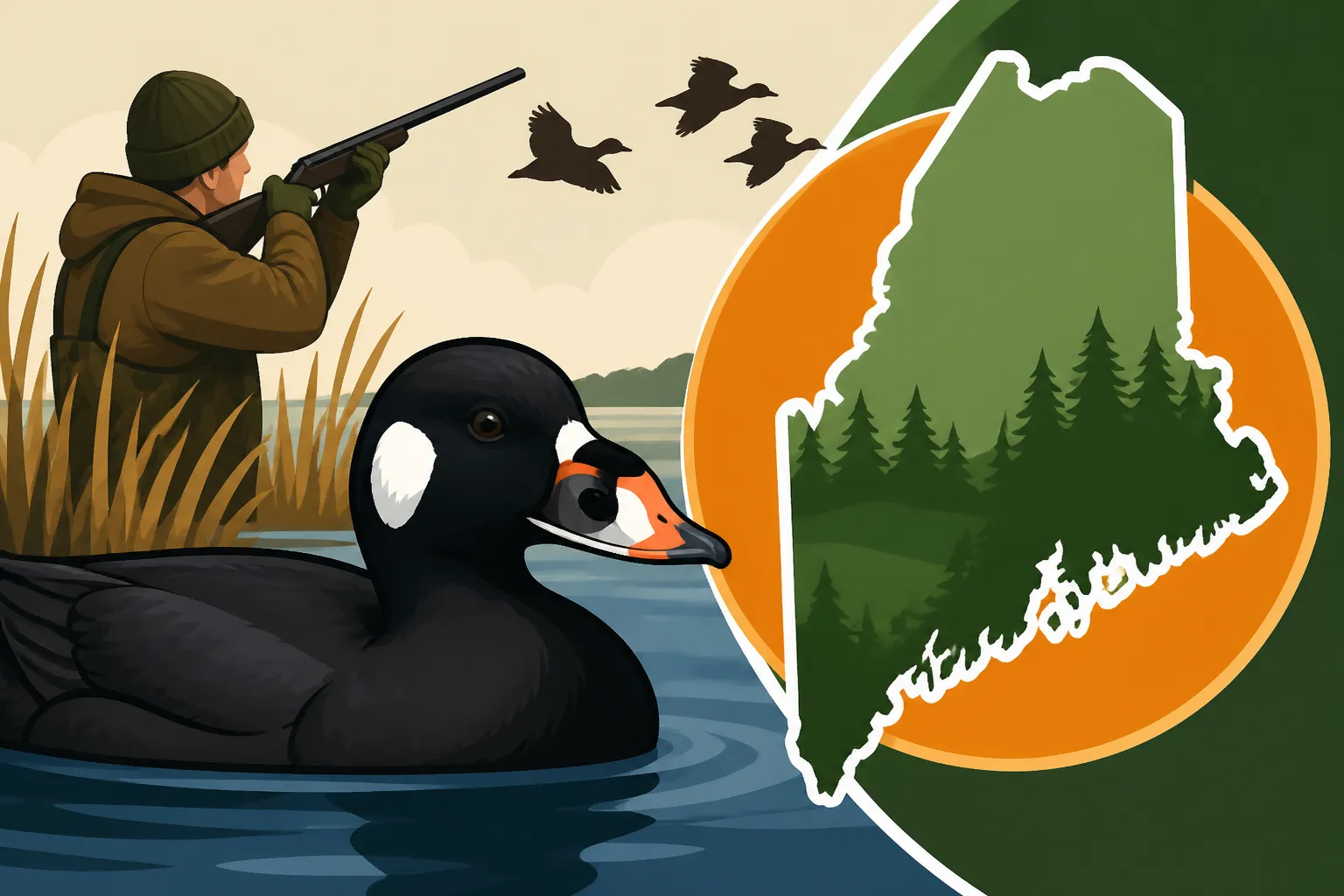
- Surf Scoter: Drakes are black with striking white patches on their forehead and nape, and a colorful, multi-hued bill. Hens are dark with two white patches on their face.
- White-winged Scoter: These are the largest of the scoters, identifiable by the prominent white speculum (wing patch) visible in flight and at rest, even on the mostly black drakes. Drakes have a white comma-shaped patch near their eye.
The good news for hunters is that the 5-bird scoter limit is generally aggregate, meaning you don't have a separate limit for each type of scoter. You can shoot three black scoters and two surf scoters, or five white-winged scoters, and still be within the limit. This simplifies things somewhat, but proper identification is still key to ensure you're not mistaking a scoter for an eider or long-tailed duck, which have their own distinct limits. For instance, the Maine Eider Daily Limit is usually a different number, often fewer than scoters.
Why These Limits Exist: Conservation and Management
You might wonder why these specific numbers, like 5 scoters, are chosen. It's not arbitrary, I assure you. These limits are the result of extensive scientific research, population surveys, and collaborative management efforts between state and federal agencies.
Population Monitoring and Data
Wildlife biologists spend countless hours monitoring sea duck populations. This includes aerial surveys, banding efforts, and harvest surveys. Every bird you legally harvest and register provides valuable data. This data helps agencies like MDIFW and the U.S. Fish and Wildlife Service assess population trends, reproductive success, and overall health of the species.
For scoters, like many sea duck species, their breeding grounds are often in remote northern areas of Canada and Alaska, making comprehensive surveys challenging. However, wintering grounds along the Maine coast provide crucial opportunities for observation. If surveys indicate a decline in a particular species' numbers, bag limits might be adjusted downward to reduce hunting pressure. Conversely, if populations are robust, limits might remain stable or even increase slightly, though significant increases are rare for sea ducks due to their relatively slow reproductive rates. Organizations often use data insights provided by tools like GoHunt to help hunters understand these trends, though the official data comes from state and federal agencies.
Conservation and Sustainability
The primary goal of these limits is conservation—ensuring healthy, viable populations of sea ducks for the future. Sea ducks face various challenges beyond hunting pressure, including habitat loss, oil spills, and changes in marine ecosystems. Hunting regulations are one tool in a larger conservation toolkit designed to mitigate these impacts.
By setting a daily limit of 5 scoters, managers aim to allow for recreational hunting opportunities without jeopardizing the species' long-term survival. It’s a delicate balance, and it requires constant vigilance and adaptation. Responsible hunters are, in fact, crucial conservation partners, contributing funds through license and stamp purchases that directly support wildlife management and habitat protection. Without these funds, many of the places we love to hunt, and the birds we pursue, would be in a much more precarious position.
Practical Tips for Adhering to Scoter Limits
Knowing the limit is one thing, but consistently adhering to it, especially when birds are flying fast and thick, requires preparation and discipline.
Sharpening Your Identification Skills
The single most important skill for staying within the scoter limit (and all sea duck limits) is accurate bird identification in flight. These birds are often moving rapidly, sometimes at a distance, and in challenging weather conditions.
- Study up: Before the season, spend time with a good bird identification guide or online resources. Pay attention to size, shape, flight pattern, and key plumage features visible in flight.
- Practice with binoculars: Even if you're not hunting, spend time observing sea ducks with binoculars. Learn their flight characteristics—how fast they flap, their flocking patterns, whether they fly high or low.
- Focus on key markers:
- Black Scoters: Entirely dark bodies, fast, direct flight. Drakes might show that orange bill.
- Surf Scoters: Bulky body, often with white patches on the head that can be visible.
- White-winged Scoters: The most identifiable due to the prominent white wing patches, especially when they cup their wings to land.
- When in doubt, don't shoot: This is the golden rule. If you can't positively identify a bird as a scoter, or if you're unsure if it's a legal bird (e.g., a hen eider looks similar to a scoter at times), simply hold your fire. It’s better to go home with fewer birds than to mistakenly take an illegal one.
When you're out Hunting Scoters in Maine's Open Water, the lighting can be tricky, the boat might be rocking, and the adrenaline is pumping. That's why having these identification skills ingrained is paramount.
Hunting Strategies to Avoid Over-Limiting
Smart hunting isn't just about bagging birds; it's about doing so responsibly and within the rules.
- Keep a mental tally: If you're hunting with a group, communicate clearly. "That's my third scoter." "Okay, I'm at two eiders and one scoter." This constant communication helps everyone stay aware of the group's progress toward limits.
- Decoy Spreads: If you're specifically targeting scoters, set your decoys appropriately. Decoying scoters in Maine's open water is a specific art. You might use larger spreads of scoter decoys, perhaps with a few eider or long-tailed duck decoys mixed in to add realism, but adjust your shooting to the birds you can legally take.
- Mind your partners: It's a shared responsibility in a hunting party to ensure no one exceeds their individual limits. If your buddy has already taken 5 scoters, they should shift their focus to other legal sea ducks or stop shooting scoters entirely.
- Utilize scouting tools: Before your hunt, use resources like GoHunt to scout potential areas. Look at bathymetric charts, observe satellite imagery for ledges and rips, and understand the typical behavior of sea ducks in those specific areas. This preparation helps you anticipate what birds you might encounter. Many hunters find these mapping tools invaluable for locating potential areas described in guides like Reading a Ledge for a Morning Sea Duck Flight.
| Sea Duck Species Group | Daily Bag Limit | Possession Limit (typically 3x Daily) | Key Identification Feature |
|---|---|---|---|
| Common Eiders | 5 (usually) | 15 (usually) | Large, bulky, distinct drake colors |
| Scoters (all species) | 5 | 15 | Dark body, varying white patches |
| Long-tailed Ducks | 5 (usually) | 15 (usually) | Very vocal, long tail on drakes |
| Total Sea Ducks | 6 (aggregate) | 18 (aggregate) | (Overall limit includes sub-limits) |
Note: Always consult the current year's Maine hunting regulations for exact and up-to-date limits, as these can change annually.
The Importance of Ethical Hunting
Beyond simply obeying the law, adhering to bag limits is a cornerstone of ethical hunting. It shows respect for the game, for the resource, and for the regulations that preserve our hunting traditions. Being a responsible hunter means not just taking what you're allowed, but also making clean shots, retrieving all downed birds, and being a good ambassador for the sport. Platforms like GoHunt and local guide services often emphasize these ethical considerations, helping new hunters understand their role in conservation. Whether you're a seasoned veteran or planning your first trip using resources like Layout Boat Hunting the Maine Coast, remember that ethical conduct is paramount.
By understanding the specific limits for scoters, knowing how to identify them, and employing smart hunting strategies, you'll ensure your Maine sea duck hunting experience is not only successful but also sustainable and fully compliant with the spirit of conservation.
Disclaimer
Please remember that hunting regulations, including bag limits and season dates, are subject to change annually. Always consult the most current official Maine Department of Inland Fisheries and Wildlife (MDIFW) hunting regulations guide before heading afield. This content is for informational purposes only and should not be considered a substitute for the official legal regulations.