Maine Apprentice Hunter License Rules
Trying to introduce someone new to the woods, especially the younger generation, or perhaps you're an adult who's always wanted to try hunting but hasn't had the time or means to complete hunter education? It can feel like a daunting hurdle, navigating all the rules before you even step foot in the forest. That's precisely where Maine's Apprentice Hunter License comes in, offering a fantastic pathway to experience hunting firsthand under the guidance of an experienced mentor.
Understanding the Maine Apprentice Hunter License
The Maine Apprentice Hunter License is a brilliant initiative designed to break down barriers for new hunters. It acknowledges that not everyone can commit to a full hunter education course right off the bat, or perhaps they just want to "try before they buy" into the full hunting lifestyle. Think of it as a guided apprenticeship, a hands-on learning experience where safety, ethics, and responsible hunting practices are learned directly from a seasoned hunter. It’s perfect for adults who might have a friend or family member who hunts, but haven't taken the plunge themselves, or for youth who are beyond the scope of a traditional mentored youth hunt but aren't quite ready for solo licensure.
This license isn't a shortcut around proper training; rather, it’s a supervised introduction. The whole idea is to foster new participation in hunting by providing a practical, immersive learning environment. It’s an opportunity to feel the chill of a crisp autumn morning in a deer stand, or the rush of calling a fall turkey flock apart, all while having an experienced eye watching over your shoulder. The goal is to make that initial step into hunting less intimidating and more accessible, ultimately strengthening the hunting community in Maine.
Who Can Benefit from an Apprentice License?
The apprentice license is really a boon for several groups. First, it’s fantastic for adults who are new to hunting and want to test the waters. Maybe you grew up in a non-hunting family but always felt a pull to the outdoors and harvesting your own food. This license allows you to go out with an experienced friend or relative without having to immediately invest the time into a full hunter safety course.
Secondly, it's excellent for youth who might be too old for the specific requirements of the official "Youth Deer Weekend" but are still developing their skills. While Maine has robust provisions for Mentored Youth Hunting Rules, the apprentice license caters to a slightly broader age range and allows for a more extended period of supervised learning across various seasons. It's a stepping stone for young adults who are serious about learning but appreciate the structured supervision. Lastly, it can be a great option for non-residents who might be visiting Maine with an experienced resident hunter and want to participate actively rather than just observing.
Eligibility Requirements and Application Process
Getting your hands on a Maine Apprentice Hunter License is designed to be straightforward, reflecting its purpose as an entry point. However, there are some fundamental requirements to ensure that everyone participating understands the gravity of the activity and is doing so responsibly. You won't be able to just waltz into the woods alone with this, and that's by design – safety and mentorship are paramount.
Meeting the Age and Residency Criteria
The beauty of the apprentice license is its broad accessibility. For residents of Maine, there's a relatively low minimum age, often starting around 10 years old, but importantly, there's no maximum age limit. This means whether you're a pre-teen or a retiree, if you're new to hunting, this license can be for you. For non-residents, the same age considerations generally apply. However, it's critical to note that you cannot have previously held a hunting license in Maine or any other state or country. The intent here is truly for new hunters, not those who have hunted before and simply let their license lapse.
The core requirement is that you have never successfully completed a hunter education course or held a prior hunting license. If you've ever had a full license, you'll need to pursue the standard Maine Hunter Education Requirements. This ensures the integrity of the apprentice program as a pathway for true novices.
The Simple Application Steps
Applying for the apprentice license is thankfully quite simple, especially compared to the process for a full hunting license which requires proof of hunter education. You can purchase your Maine Apprentice Hunter License directly through the Maine Department of Inland Fisheries and Wildlife (MDIFW) online portal. This is often the quickest and most convenient method. Many local licensing agents, like town clerks or sporting goods stores, also sell these licenses. The process typically involves providing basic personal information and acknowledging that you understand the rules of the apprentice program, particularly the requirement to hunt under the direct supervision of a qualified mentor.
Keep in mind that while you can buy most Maine Hunting Licenses and What They Cost through the same channels, the apprentice license has its own specific stipulations you'll confirm during purchase. There's no pre-requisite course, no exam to pass, just a direct purchase. It's truly designed for immediate access, making that first step into the woods as simple as possible.
Rules and Restrictions for Apprentice Hunters
The apprentice hunter license is a privilege, and with that comes a strict set of rules and restrictions. These aren't there to make things difficult, but rather to ensure the safety of the apprentice, their mentor, and the public. The primary goal is to provide a structured, safe learning environment where new hunters can gain confidence and practical skills.
The Indispensable Role of Your Mentor
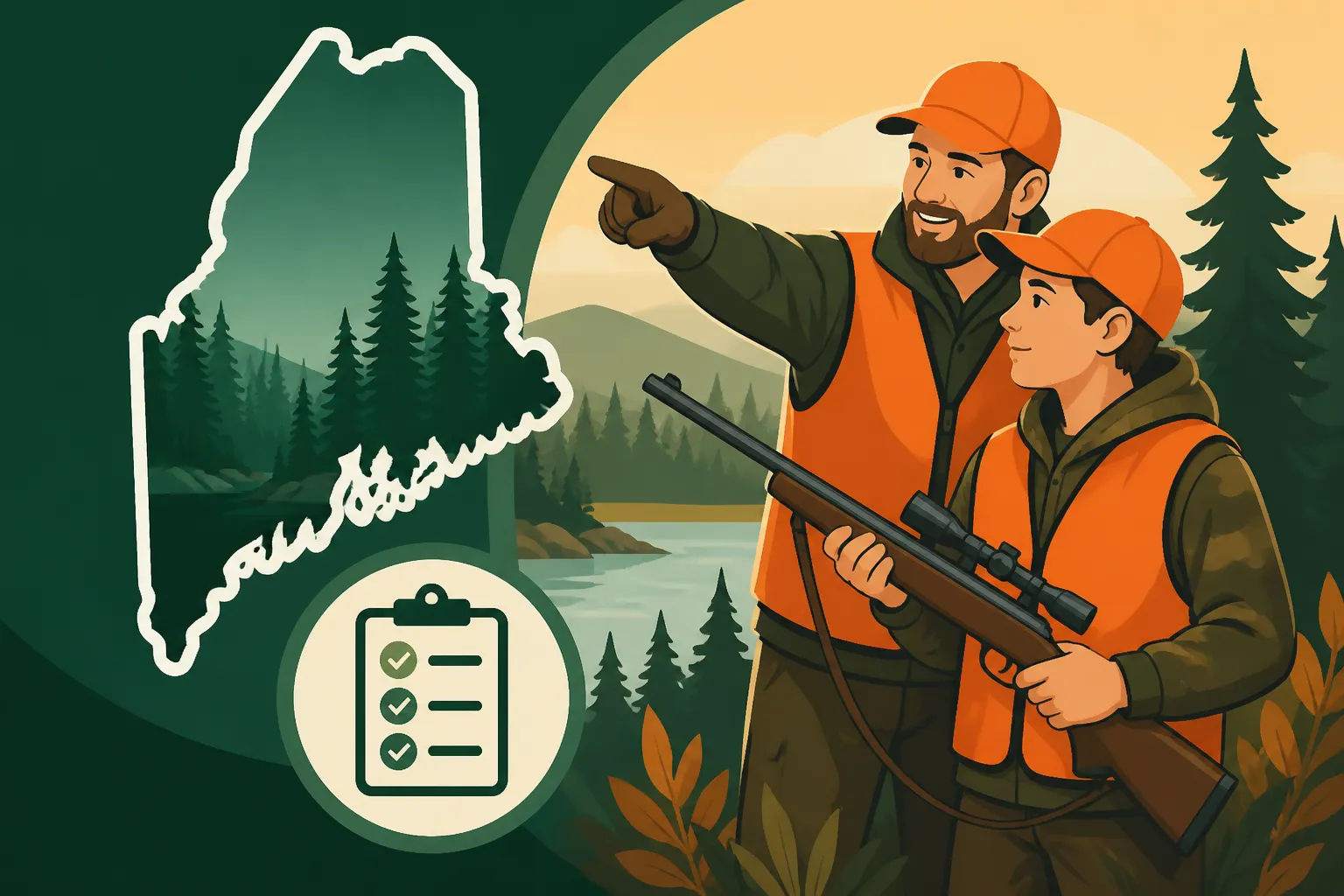
This is the absolute cornerstone of the apprentice program: you must hunt under the direct supervision of a licensed adult hunter. This isn't just a suggestion; it's a legal requirement. Your mentor must be at least 18 years old and hold a valid Maine hunting license for the species you are hunting. Furthermore, they need to have successfully completed a hunter education course or have proof of a prior hunting license. Essentially, they need to be a fully qualified, experienced hunter who can provide guidance and ensure safety.
The "direct supervision" aspect is crucial. This means your mentor must be close enough to you to give immediate instruction and to exercise direct control over the firearm or bow. In many practical scenarios, this means they're right next to you, within an arm's reach, especially when a shot is being taken. They are responsible for your actions and ensuring you adhere to all hunting laws. This isn't a scenario where you're dropped off at one end of a woodlot and your mentor is at the other. The intent is for continuous, close guidance, almost like a co-pilot relationship. When considering How Close a Maine Mentor Must Stay, think "immediate supervision."
Species, Seasons, and Equipment Limitations
While holding an apprentice license opens the door to most of Maine's hunting opportunities, there might be some specific limitations depending on the exact regulations of a given season or species. Generally, an apprentice hunter can hunt any species that their mentor is legally licensed to hunt, and during any open season that the mentor can legally participate in. This includes deer, moose (if the mentor has a permit), bear, turkey, and small game, provided all other licensing and permit requirements are met.
However, certain specialized seasons or hunting methods might have additional requirements. For instance, if you're looking into something like Bowhunting Maine's Long Archery Season, you'd need to ensure the apprentice license covers archery, and your mentor is proficient in bowhunting as well. The apprentice license is typically valid for one year. You can renew it, but most states limit the number of times you can renew an apprentice license (often to two or three years) before requiring you to complete hunter education. This encourages apprentice hunters to eventually pursue full certification.
Regarding equipment, the apprentice must adhere to all legal requirements for the specific weapon being used, just like any other hunter. Your mentor will be responsible for ensuring you understand and comply with these. For instance, if you're hunting during Maine's Four-Week Firearms Deer Season, you'll need to know the rules for legal firearms for deer hunting.
| Feature / Requirement | Apprentice Hunter License | Full Maine Hunting License (Resident/Nonresident) |
|---|---|---|
| Hunter Education | Not required (must never have completed one) | Required (proof of course completion or prior license) |
| Supervision | Mandatory direct supervision by licensed adult | Not required (can hunt solo) |
| Mentor Requirements | Must be 18+, licensed, hunter-ed certified/prior license | N/A (mentor not required) |
| Age Limits | Min. 10+ (no max) | Min. 10+ (no max, certain junior licenses exist) |
| Prior Hunting Experience | Must be a first-time hunter | Can have previous hunting experience |
| Duration | Typically one year | Typically one year |
| Renewals | Limited (e.g., 2-3 times) before Hunter Ed is required | Unlimited (provided requirements met) |
| Game & Season Access | Generally same as mentor, with direct supervision | Access to all legal game & seasons per license type |
Benefits and Limitations of the Apprentice License
The Maine Apprentice Hunter License is a fantastic tool for recruitment and retention in the hunting community, but it's essential to understand both its advantages and its inherent limitations. It's a bridge, not a final destination, and knowing that helps manage expectations and plan for the future.
The Advantages of a Guided Introduction
The most significant benefit is the direct, hands-on learning experience. Instead of just reading about hunting, you're living it. You're learning from someone who has years of experience, someone who can teach you how to read the landscape, interpret game sign, understand animal behavior, and practice ethical shot placement in real-time. This is invaluable, especially when you're just starting out and things like Wind and Thermals in Maine Hill Country can make or break a hunt.
It also offers a low-barrier entry point, removing the immediate time commitment and expense of a hunter education course, which can sometimes be a deterrent for someone who's just curious. It allows individuals to truly experience the traditions of the hunt, from pre-season scouting to the camaraderie of camp, before fully committing. This kind of experience can truly ignite a lifelong passion for conservation and outdoor recreation. Plus, for those interested in specific types of hunting, like Upland Bird and Small Game Hunting in Maine, having a mentor can be crucial for understanding dog handling, effective flushing techniques, and safe gun control in thick cover.
Recognizing the Program's Shortcomings
While beneficial, the apprentice license has limitations. Primarily, it's not a substitute for formal hunter education. It's designed to be a temporary solution, a trial period, usually limited to a few years. The expectation is that after this introductory period, you will complete the full Maine Hunter Education Requirements to obtain your regular hunting license. This ensures that all hunters eventually receive comprehensive training in safety, ethics, and regulations.
Another limitation is the constant need for direct supervision. This means you can never hunt alone. Your hunting opportunities are entirely dependent on your mentor's availability and willingness to accompany you. For those who enjoy solitary time in the woods, this can be a significant drawback. Furthermore, if you're a non-resident, the license generally still requires you to hunt under the supervision of a licensed Maine hunter, which might involve additional planning or finding a suitable resident to be your mentor. It's truly about the mentorship model.
Transitioning from Apprentice to Full Hunter
Once you’ve experienced a season or two as an apprentice hunter, you’ll likely have a good idea if hunting is for you. Many people fall in love with the challenge, the connection to nature, and the satisfaction of ethically harvesting their own food. The next logical step, and indeed the intended path, is to transition from an apprentice to a fully licensed hunter in Maine.
Completing Your Hunter Education
This is the big one. To move beyond the apprentice license and hunt independently, you must successfully complete a state-approved hunter education course. Maine offers various options for hunter education, including traditional classroom courses, online courses followed by a field day, and hybrid formats. These courses cover critical topics like firearm safety, archery safety, ethical hunting practices, wildlife identification, hunting laws and regulations, and survival skills. The goal is to equip you with the knowledge and confidence to hunt safely and responsibly on your own.
You'll find that having the practical experience from your apprentice hunts will make the hunter education course much more meaningful. The concepts discussed in class about shot placement, tracking, or understanding game behavior will resonate because you've seen them applied in the field. After passing the course, you'll receive a certification that allows you to purchase a regular resident or nonresident hunting license. You might even find some useful resources on platforms like GoHunt that help you prepare for the various aspects of hunter education, or even help you scout new areas once you're fully licensed.
Upgrading Your License and Future Opportunities
Once you have your hunter education certification, you can purchase a full Maine hunting license. This opens up a world of possibilities, allowing you to hunt independently (if you're of age, keeping in mind the Minimum Age for Unsupervised Maine Hunting) and explore more diverse hunting opportunities across the state. You'll be able to apply for antlerless deer permits, participate in special drawings, and generally engage in all aspects of Maine's hunting seasons without the constant need for direct supervision.
For example, you could then consider applying for a Maine Moose Permit, or delve into the specifics of Maine's WMD-Based Turkey Bag Limits knowing you have the foundational education. Having a full license also makes it easier to engage in other activities, such as scouting new areas using tools like GoHunt or even becoming a mentor yourself one day for a new apprentice hunter. The full license signifies your commitment to safe, ethical, and responsible hunting, and it's a testament to the valuable journey you took through the apprentice program.
Disclaimer
Please note that hunting regulations, license requirements, and season dates are subject to change. Always consult the most current official Maine Department of Inland Fisheries and Wildlife (MDIFW) regulations before planning or participating in any hunting activity. This guide is for informational purposes only and should not be considered legal advice.