Maine’s WMDs With Two-Bird Spring Limits
It can feel like you need a legal degree just to understand Maine's spring turkey regulations, especially when you're trying to figure out how many birds you can actually tag. The frustration of trying to maximize your hunting opportunities while staying on the right side of the law is real, and the thought of potentially leaving a second bird in the woods because you misunderstood a WMD boundary is enough to make anyone sigh. This comprehensive guide is here to clear up that confusion, specifically detailing which Wildlife Management Districts (WMDs) in Maine offer a generous two-bird spring limit, and how you can make the most of those opportunities.
Understanding Maine's Spring Turkey Bag Limits
Maine's approach to wild turkey management is designed to balance hunting opportunity with sustainable population growth, and that often means different rules for different regions. While it might seem like a headache on paper, this WMD-based system actually allows the Department of Inland Fisheries and Wildlife (MDIFW) to tailor harvest limits to the specific turkey densities and habitats across the state. In some areas, turkey populations are robust enough to handle a higher harvest, while in others, a more conservative approach is necessary.
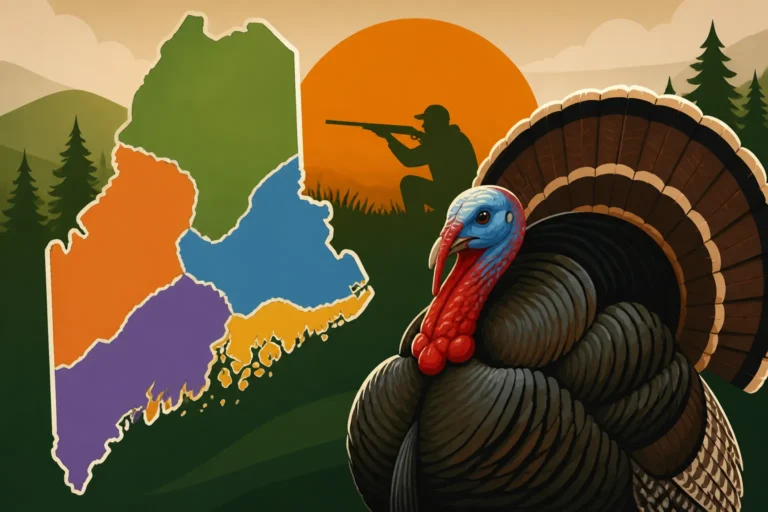
Generally, the vast majority of Maine's WMDs fall into one of two categories for spring turkey hunting: a one-bird limit or a two-bird limit. This limit always refers to gobblers or bearded birds, as hens are protected during the spring season to allow them to nest and raise poults. For newcomers, or even seasoned hunters crossing WMD lines, figuring out which is which can be a real challenge. You might be used to a blanket statewide limit in other states, but Maine’s system requires a bit more homework. Before you even set foot in the woods, it’s crucial to know the specific regulations for the WMD you plan to hunt. A quick check on the MDIFW website or using a mapping tool like GoHunt can save you a lot of grief and ensure you’re hunting legally. Understanding Maine's WMD-Based Turkey Bag Limits is your first step to a successful season.
Identifying Two-Bird WMDs for Spring Turkey Season
Alright, let's get down to brass tacks: which WMDs actually give you the chance to bag two bearded birds in the spring? Historically, these higher-limit zones are found in areas where turkey populations have really taken hold and thrived, often in the southern and central parts of the state where there's a good mix of agriculture, woodlands, and milder winters. These are the zones where the birds have expanded their range and numbers significantly since the successful reintroduction efforts began decades ago.
It's important to remember that regulations can change, so always double-check the current year's rules, but generally, the WMDs allowing a two-bearded-bird limit in the spring season are:
| WMD Number | General Location | Spring Gobbler Limit | Notes |
|---|---|---|---|
| 7 | Central Maine, including parts of Penobscot, Piscataquis, and Somerset Counties | Two Bearded Birds | Good mix of timber and agricultural land. |
| 8 | West Central Maine, including parts of Franklin and Somerset Counties | Two Bearded Birds | Features diverse habitat from mountains to valleys. |
| 10 | Southwestern Maine, including parts of Oxford and Cumberland Counties | Two Bearded Birds | High population density, popular hunting area. |
| 11 | Western Maine, including parts of Oxford County | Two Bearded Birds | Diverse terrain, from rolling hills to steeper slopes. |
| 12 | Southern Maine, including parts of Cumberland, Oxford, and York Counties | Two Bearded Birds | Very popular, close to population centers. |
| 13 | Central/Southern Maine, including parts of Kennebec, Lincoln, and Sagadahoc Counties | Two Bearded Birds | Strong agricultural influence, high turkey numbers. |
| 14 | Central/Eastern Maine, including parts of Kennebec and Waldo Counties | Two Bearded Birds | Varied habitat, excellent for turkey expansion. |
| 15 | Midcoast Maine, including parts of Knox, Lincoln, and Waldo Counties | Two Bearded Birds | Coastal influence, good mix of private and some public land. |
| 16 | Downeast Maine, including parts of Hancock and Washington Counties | Two Bearded Birds | Turkey populations expanding east, good opportunities. |
| 17 | Downeast Maine, including parts of Hancock and Washington Counties | Two Bearded Birds | Similar to WMD 16, consistent expansion. |
| 20 | South Central Maine, including parts of Androscoggin, Cumberland, and Sagadahoc Counties | Two Bearded Birds | High turkey density, frequently provides good hunting. |
| 21 | Southern Maine, including parts of York County | Two Bearded Birds | Very high turkey populations, close to urban fringe. |
| 23 | Southern Maine, including parts of Cumberland and York Counties | Two Bearded Birds | Similar to WMD 21, strong populations. |
| 24 | Southern Maine, including parts of Androscoggin and Oxford Counties | Two Bearded Birds | Good mix of rural and agricultural zones. |
| 25 | Midcoast Maine, including parts of Sagadahoc, Lincoln, and Knox Counties | Two Bearded Birds | Coastal and inland opportunities. |
| 26 | Midcoast/Downeast Maine, including parts of Waldo and Hancock Counties | Two Bearded Birds | Strong populations, expanding into new areas. |
| 27 | Central Maine, including parts of Kennebec and Waldo Counties | Two Bearded Birds | Well-established populations in farm and woodlot country. |
As you can see, a significant portion of the state offers this increased opportunity. If you're planning a trip to a WMD not listed above, it's highly likely you'll be in a one-bird zone. For those areas, refer to Maine's WMDs With One-Bird Spring Limits to ensure you're compliant. Remember that you'll also need to be aware of the Maine Spring Turkey Permit Rules before heading out.
Strategies for Tagging Two Gobblers in a Single Spring Season
Having the opportunity to harvest two bearded birds is fantastic, but actually pulling it off takes more than just showing up. It requires a dedicated strategy, careful scouting, and often a bit of flexibility. You're essentially planning two separate hunts within one season, which means doubling your efforts in terms of preparation and execution. The key isn't just to find a gobbler, but to find multiple birds or to be in an area where opportunities are frequent.
One common strategy is to focus on securing your first bird early in the season, perhaps during the first week or two when gobblers are often more vocal and less pressured. This takes the pressure off and allows you to then scout for your second bird. You might target a known hotspot for your first tag, then move to a different piece of ground or even a different WMD (if you've purchased permits for multiple zones and they're also two-bird areas) for the second. Using an app like GoHunt can be invaluable for pinpointing specific properties or public land tracts, letting you overlay property lines and topo maps to find those overlooked spots. When you're dealing with pressured birds, especially later in the season, your setup becomes critical; understanding Decoy Placement for Pressured Maine Birds can make all the difference.
Another approach is to scout areas with high turkey densities and diverse terrain that might hold multiple flocks. This could mean working agricultural field edges, open hardwood ridges, or areas around known roosting sites. If you manage to call in a group of gobblers, it might be possible to double up, but this is a rare feat in spring turkey hunting, usually requiring perfect timing and positioning. More realistically, you'll tag one, and then need to relocate or call to another individual bird. Running and gunning, especially on large tracts of private land where you have permission, can be an effective way to cover ground and find multiple birds over the course of the season. Read up on Run-and-Gun Turkey Tactics on Private Land for some excellent ideas. Early season, when gobblers are still grouped up and haven't been heavily pursued, offers the best chance. Later in May, When Maine Gobblers Go Quiet in Late May, it can be much tougher, demanding more patience and subtle calling.
Planning Your Spring Turkey Hunt for Two-Bird Zones
Proper planning is paramount for maximizing your chances of filling both tags in a two-bird WMD. This isn't a casual affair; it's an investment of time and effort. Start with meticulous scouting well before the season opens. You're not just looking for turkey sign; you're looking for multiple turkey hot spots within your chosen WMD. This means identifying potential roosting areas, feeding grounds (like old apple orchards or agricultural fields), and travel corridors. Tools like GoHunt can help you analyze terrain, identify pinch points, and even show you public access points or land ownership. Don't forget to get your Maine Resident Base License Cost or Maine Nonresident Turkey Permit Cost in order early.
Consider breaking your hunting area into distinct zones. Perhaps one zone is excellent for early morning roost hunts, while another is better for mid-day calling efforts when birds are on the ground. This compartmentalization allows you to adapt your strategy if you tag a bird in one area, or if hunting pressure becomes too high. Having multiple locations scouted means you're not putting all your eggs in one basket. Also, think about your calling strategy. For your first bird, a more aggressive approach might work, but after a successful harvest, you might switch to softer, more subtle calls to entice a second, potentially more wary gobbler. Learning to effectively call an early season bird off the roost is a game-changer; check out Calling an Early May Gobbler Off the Roost for some pointers.
Finally, think about the logistics of harvesting and processing two birds. If you're successful early in the season, how will you handle the meat and keep it cool while you continue hunting for your second bird? Having a cooler with plenty of ice back at camp, or a plan for immediate processing, is crucial. If you're hunting further from home, mapping out nearby butchers or processing facilities might be a good idea. Maine’s spring season allows ample time, typically running from late April through the end of May, giving you weeks to pursue your second bird. Being prepared for varying weather conditions, from frosty mornings to warm, rainy afternoons, will also increase your comfort and perseverance in the field. When you finally set up, whether it's against a fallen log or a massive white pine, ensuring you have good back cover and a clear shooting lane is essential, so understanding tactics like Setting Up Against a Big White Pine is always helpful.
Disclaimer
Always check the most current Maine Department of Inland Fisheries and Wildlife (MDIFW) regulations before heading afield, as rules and WMD boundaries can change. This guide is for informational purposes only and should not be considered a substitute for official legal documentation.