Maine Disabled Hunter Permit Options
Hunting in Maine is a cherished tradition, a chance to connect with the wild landscapes and feel that primal satisfaction of providing for your family. But let's be honest, for hunters with disabilities, navigating the regulations and ensuring you have the right accommodations can feel like an overwhelming hurdle. This guide is here to cut through the confusion, offering a clear, empathetic look at the disabled hunter permit options available in Maine, so you can focus on what truly matters: getting out into the woods.
Understanding Maine's Commitment to Accessible Hunting
Maine prides itself on its strong hunting heritage, and that heritage extends to ensuring that as many people as possible can participate. The state understands that hunting isn't just a sport; for many, it's a way of life, a connection to the land that should be accessible regardless of physical challenges. This commitment is reflected in the various permits and accommodations designed to remove barriers for disabled hunters, allowing them to pursue deer, moose, bear, and other game with the necessary support. It’s not about special privileges, but about leveling the playing field so everyone has a fair shot at experiencing the Maine outdoors.
The Spirit of Maine's Hunting Tradition for All
The idea behind these provisions isn't just about ticking a box; it's about upholding the very spirit of Maine hunting. Our woods and waters don't discriminate, and neither should our regulations. Whether you're a lifelong Mainer who's recently faced a disabling injury, or a non-resident looking to experience the vastness of the North Maine Woods, the state wants to make sure you have the opportunity. This means crafting rules that are flexible enough to accommodate different needs while still maintaining the integrity of wildlife management and public safety. It’s about ensuring that the next generation of hunters, regardless of their physical abilities, can continue to enjoy and pass on these invaluable traditions.
Challenges Faced by Hunters with Disabilities
Let's face it, hunting in Maine isn't always easy even for the most able-bodied among us. Navigating dense spruce thickets, scaling rocky inclines in the western mountains, or just sitting for hours in a cold, damp blind can be physically demanding. For someone with a mobility impairment, a prosthetic limb, or other significant disability, these challenges are magnified exponentially. Simple tasks like getting to a stand, tracking a deer, or even safely handling equipment can become monumental obstacles. The frustration of wanting to be out there but feeling physically limited is very real. That's why understanding these specific permit options is so crucial – they're designed to mitigate these very real struggles, offering a pathway back into the woods that many thought was closed to them. It helps turn potential barriers into manageable challenges, making that dream hunt a tangible reality rather than just a wistful thought.
Specific Disabled Hunter Permit Options
Maine offers a range of permits and licenses tailored to assist hunters with various disabilities. These aren't one-size-fits-all solutions, but rather specific provisions designed to address particular needs, from long-term medical conditions to service-related injuries. Knowing which option applies to you is the first step toward securing your spot in the field.
Disabled Veteran Lifetime License
For our esteemed veterans who have faced service-related disabilities, Maine offers a profound thank you in the form of a lifetime hunting license. This isn't just a permit; it's a recognition of sacrifice and a commitment to ensuring that those who have served can continue to enjoy the freedoms they fought to protect, including the freedom to hunt. To qualify for this invaluable license, you typically need to be a Maine resident and have a service-connected disability rating of 50% or more, as determined by the U.S. Department of Veterans Affairs. This license covers basic hunting privileges, often including archery, firearms, and muzzleloader seasons, though specific tags like moose or antlerless deer permits still need to be acquired through the regular lottery or application processes. It's a significant benefit that eases the financial and administrative burden of renewing licenses year after year, allowing veterans to focus on the peace and healing that the Maine wilderness can offer. You can find more details on this and other options within the broader scope of Maine Resident License Options and what they entail.
Permanently Disabled Hunter Permit
Beyond veterans, Maine also extends accommodations to resident hunters with other severe and permanent disabilities that significantly impact their ability to hunt safely or effectively under standard regulations. This permit is often granted to individuals who, due to a permanent physical disability, cannot walk without aid, have suffered a severe permanent injury to a limb, or have other conditions that severely restrict mobility or motor function. The intent here is to allow certain exemptions or assistance that would otherwise be prohibited, such as shooting from a vehicle (under very specific conditions and only for non-deer species, or under special deer hunting permits in specific WMDs) or allowing a designated assistant to help in certain aspects of the hunt. This permit often requires detailed medical documentation from a licensed physician outlining the nature and permanence of the disability. The goal is to provide reasonable accommodations so that hunting remains a possibility, rather than an inaccessible dream.
Crossbow Permit for Disabled Archery Hunters
Archery hunting requires a significant amount of upper body strength and mobility to draw and hold a compound or traditional bow. For many hunters with shoulder injuries, arthritis, nerve damage, or other conditions that impair these movements, a traditional bow is simply not an option. Recognizing this, Maine offers specific permits that allow disabled hunters to use a crossbow during the regular archery season. This is a huge game-changer for many, as it opens up the thrilling challenge of archery hunting without requiring the physical demands of drawing a conventional bow.
To qualify for a crossbow permit due to disability, you'll need a statement from a licensed physician certifying your inability to use a conventional bow due to a permanent physical disability. This permit is an acknowledgement that the spirit of archery hunting – close-range, ethical shot placement, and intimate woods experience – can be preserved through adaptive equipment. It integrates seamlessly into the broader Maine Crossbow Season Eligibility rules, ensuring that all hunters, regardless of physical limitations, have the opportunity to participate in this popular season. Hunters often use resources like GoHunt to scout accessible areas before applying for these specialized permits, ensuring their chosen hunting grounds are suitable for crossbow use.
Specific Accommodations for Mobility Impairments
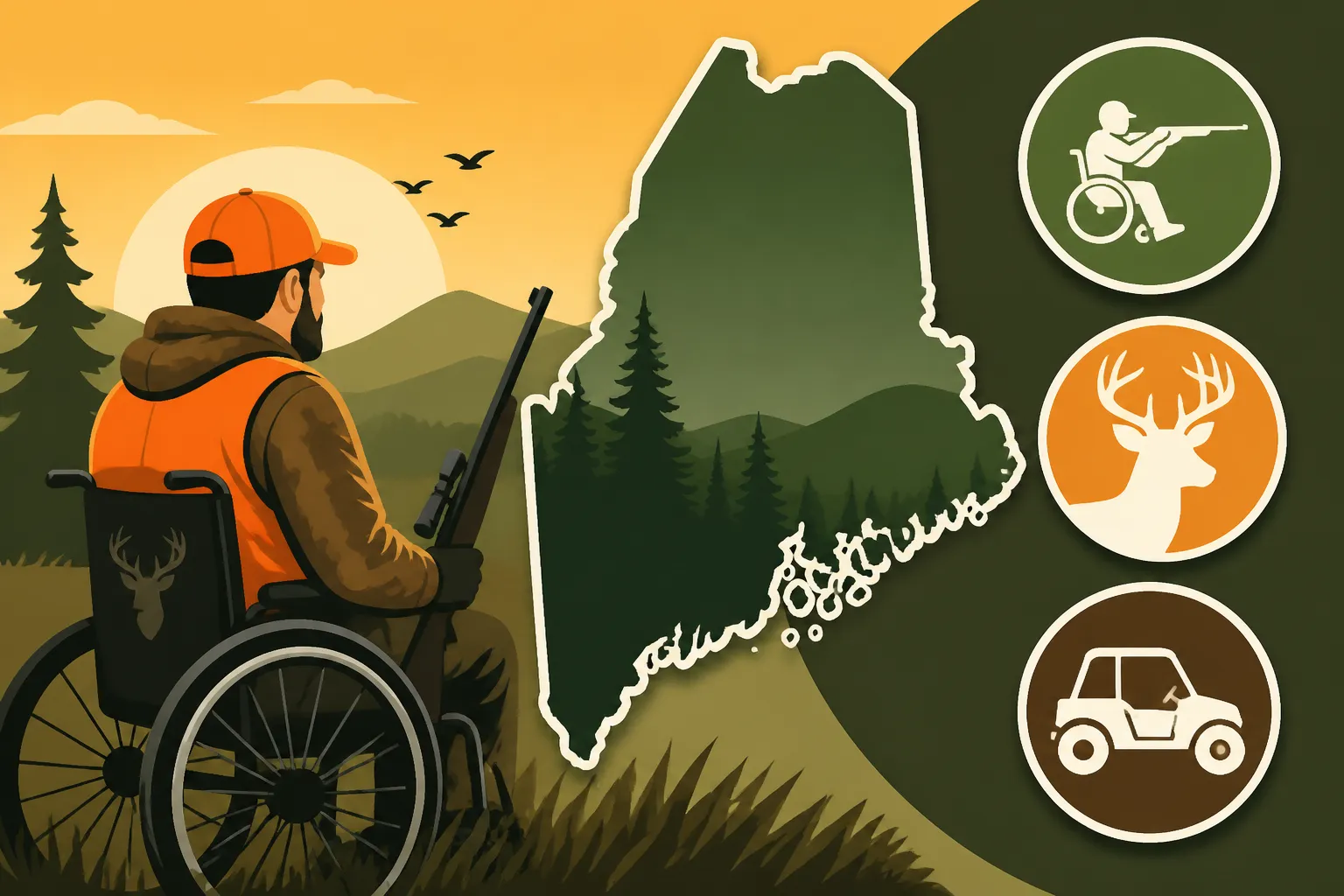
Maine's regulations go further to address specific mobility challenges. For instance, there are provisions that allow a person with a permanent disability, especially one affecting lower limb mobility, to receive certain privileges that would normally be illegal. This could include allowing a licensed hunter with a disability to shoot from a stationary motor vehicle or ATV if they hold a special permit and are hunting specific species, or in specific managed hunts where this is explicitly allowed. It's critical to understand that these are highly specific exceptions, not blanket permissions. You cannot simply shoot from a road-right-of-way or common trail without proper authorization, and typically, deer cannot be shot from a vehicle or ATV under any circumstances unless participating in an officially sanctioned special management hunt (e.g., urban deer management permits in specific zones for population control).
Always double-check the precise wording of the regulations and your specific permit. The Maine Department of Inland Fisheries and Wildlife (MDIFW) has the ultimate say, and ignorance of the law is never an excuse. These accommodations are designed to overcome physical barriers to the act of hunting itself, but they come with strict limitations to maintain safety and fair chase principles. For hunters utilizing these accommodations, pairing them with an understanding of Maine Public Land Hunting Hours and any specific restrictions on public land is paramount for a legal and ethical hunt.
Applying for Disabled Hunter Permits in Maine
Navigating the application process for disabled hunter permits can feel like a bureaucratic maze, but with the right information and preparation, it's entirely manageable. The key is understanding what documentation is required and following the steps meticulously to avoid delays. Remember, these permits are not automatically granted; they require proper verification of eligibility.
Required Documentation and Medical Certification
The cornerstone of any disabled hunter permit application in Maine is official documentation of your disability. For the Disabled Veteran Lifetime License, this means providing proof of your service-connected disability rating from the U.S. Department of Veterans Affairs. A letter or official document stating your percentage of disability is usually sufficient.
For other permanently disabled hunter permits, a detailed medical certificate completed by a licensed physician is absolutely essential. This certificate needs to clearly state the nature of your permanent physical disability and how it impairs your ability to hunt under normal conditions. It should specify limitations related to mobility, motor skills, or the use of standard hunting equipment. The MDIFW needs to be confident that your condition meets the criteria for the requested accommodation. Don't just send a doctor's note; ensure your physician uses the official MDIFW form, if one is provided, or includes all the requested information the department outlines in their guidelines. In some cases, such as for a crossbow permit due to disability, a statement specifically addressing the inability to draw a conventional bow is required. This level of detail helps prevent unnecessary back-and-forth and speeds up the approval process, getting you closer to your hunting adventure.
The Application Process Step-by-Step
Once you have all your supporting documentation ready, the application process generally involves a few key steps. First, you'll need to obtain the correct application form from the MDIFW website or a local licensing agent. These forms are specific to each permit (e.g., general disabled hunter permit, disabled veteran license, crossbow permit).
Application Steps:
| Step # | Action Required | Details & Tips |
|---|---|---|
| 1 | Gather Documentation | Collect all medical certifications, VA disability letters, etc. |
| 2 | Obtain Application Form | Download from MDIFW website or pick up at licensing agent. Ensure it's the correct form for your specific permit. |
| 3 | Complete the Form Thoroughly | Fill in all personal details accurately. Double-check for completeness. |
| 4 | Attach Supporting Documents | Ensure all required medical or veteran disability proof is securely attached. |
| 5 | Submit Application | Mail to MDIFW headquarters, or submit online if an electronic option is available for your specific permit. |
| 6 | Await Approval | Allow sufficient time for processing. The MDIFW will notify you of their decision. |
| 7 | Receive & Carry Permit | Once approved, ensure you carry your permit with you at all times while hunting. |
Remember to submit your application well in advance of the hunting season you plan to participate in, as processing times can vary. It’s always better to be early than to miss out because your permit is stuck in limbo. While GoHunt might help you plan the actual hunt, the MDIFW website is your primary resource for all licensing and permit application information. Checking the status of your application online is often an option, providing peace of mind as you anticipate your upcoming season.
Essential Considerations and Resources for Disabled Hunters
Getting the right permit is a huge step, but it's just one piece of the puzzle. To truly have a successful and enjoyable hunting experience as a disabled hunter in Maine, you need to think about logistics, preparation, and leveraging all the resources available to you.
Planning Your Hunt with Accessibility in Mind
Once you have your permit, the real planning begins. This isn't just about what species you're chasing, but where you'll hunt and how you'll get there. Consider the terrain: Are you looking at the rolling hills of Southern Maine or the vast, remote forests of Aroostook County? If you have mobility challenges, deep snow or rugged, uneven ground can be prohibitive. Scouting is crucial, and utilizing tools like the Scouting With the Maine Hunting App can provide invaluable insights into topography, road access, and potential pinch points or food sources, all from the comfort of your home.
Think about access roads, potential ATV trails (where legal), and how far you'll need to travel from your vehicle. Many hunters with disabilities find success hunting field edges, old logging roads, or near beaver flowages where the cover provides ambush points and the terrain is often flatter. If you're using a ground blind, consider Brushing In a Blind on a Field Edge to maximize concealment while minimizing the physical exertion of climbing a tree stand. Communication with landowners or guides is key, too. If you're considering a guided hunt, don't hesitate to ask about their experience with disabled hunters and what specific accommodations they can provide, such as specialized transportation within their hunting area. Organizations like the Maine Adaptive Sports and Recreation provide invaluable insights and support for outdoor activities, including hunting.
Leveraging Technology and Support Networks
In today's world, technology offers an incredible advantage for disabled hunters. Beyond scouting apps, consider adaptive equipment for shooting, such as specialized rests or shooting aids that can enhance stability and accuracy. Personal emergency devices, like satellite communicators, are also a smart investment, especially if you're hunting in remote areas where cell service is non-existent. Many hunters find that resources like GoHunt offer detailed mapping layers that show not only public land boundaries but also topography and access points, which are critical for pre-hunt planning for those with mobility restrictions.
Furthermore, don't underestimate the power of your support network. Hunting with a trusted partner or an experienced Registered Maine Guide can make all the difference. A partner can help with packing gear, tracking game, or providing assistance in difficult terrain. Many guides specialize in working with disabled clients and have the knowledge and equipment to facilitate a successful hunt. Joining local hunting clubs or online forums dedicated to disabled hunters can also connect you with invaluable advice, shared experiences, and potential hunting partners. Remember, hunting is often a team sport, and there's no shame in seeking the assistance that helps you continue to enjoy the passion.
Disclaimer
The information provided in this guide is for informational purposes only and is subject to change. While every effort has been made to ensure accuracy, hunting regulations in Maine can be complex and are updated periodically. It is the responsibility of each individual hunter to consult the most current Maine Department of Inland Fisheries and Wildlife (MDIFW) regulations and obtain all necessary licenses and permits before hunting. This guide does not constitute legal advice.