Where to Get a Maine Deer Tested for CWD
The thought of Chronic Wasting Disease (CWD) casting a shadow over our deer herd is a stark reality that many hunters in other states grapple with. Here in Maine, we've been incredibly fortunate to remain CWD-free, a status we fight tirelessly to protect. But that protection isn't guaranteed; it relies heavily on informed, proactive hunters like you. Knowing exactly where to turn if you encounter a deer that raises concerns, or how to participate in our ongoing surveillance efforts, is paramount. This comprehensive guide will illuminate Maine's CWD monitoring program, explain how and when to get a deer tested, and outline your crucial role in safeguarding our state's wild deer.
Understanding Chronic Wasting Disease and Maine's Unique Status
Let's be clear: CWD is a nasty business. It's a fatal neurological disease that affects cervids—deer, elk, moose, and caribou. Caused by abnormal proteins called prions, it slowly degrades an animal's brain, leading to distinctive symptoms before eventually causing death. Unlike bacterial or viral infections, prions are incredibly resilient, resisting traditional disinfection methods and persisting in the environment for years. This makes controlling its spread incredibly challenging once it takes hold.
What CWD Is and Why It's a Concern
Imagine a deer that's slowly wasting away, showing listlessness, drooling, an emaciated body, and an uncoordinated gait. That's the tragic progression of CWD. It's often called a "zombie deer disease" because of these symptoms, and while it's never been found to naturally infect humans, health agencies like the Centers for Disease Control and Prevention (CDC) advise against eating meat from infected animals. The disease spreads through direct animal-to-animal contact and indirectly through contaminated environments, such as soil, water, and plants containing infected bodily fluids or carcasses.
The primary concern for hunters and wildlife managers is its devastating impact on deer populations. In areas where CWD is endemic, it can lead to significant declines in herd health and numbers, drastically altering hunting opportunities and the ecological balance. It's not just about the numbers; it's about the very future of deer hunting and the health of the entire ecosystem.
Maine's Vigilant CWD-Free Status
The good news is that Maine has maintained its CWD-free status. This isn't by accident; it's the result of years of dedicated surveillance, strict regulations, and the invaluable cooperation of hunters, landowners, and meat processors. Our state's remote geographical location, with limited commercial cervid farms (a common source of CWD spread in other states), has also played a role. However, CWD has been detected in neighboring states and provinces, making ongoing vigilance critical.
The Maine Department of Inland Fisheries and Wildlife (MDIFW) has a robust Maine's Chronic Wasting Disease Monitoring program in place. This isn't just a casual glance; it involves targeted surveillance efforts in specific Wildlife Management Districts (WMDs), particularly those near the borders with CWD-positive areas. It also relies heavily on hunter reports of sick or unusual-acting deer. We're all essentially frontline defenders in this fight, and every pair of eyes in the woods contributes to our collective protection.
The Importance of Continued Surveillance
You might wonder, "If Maine is CWD-free, why do we need to keep testing?" The answer is simple: an ounce of prevention is worth a pound of cure. Early detection is our best, and perhaps only, real chance at containing a potential outbreak if CWD were to ever breach our borders. If we could detect the disease in its earliest stages, management strategies might be able to localize and mitigate its spread before it becomes widespread and uncontrollable.
Our ongoing surveillance program monitors for the disease, giving wildlife biologists critical data to assess risk and implement strategies. This proactive approach ensures that we're not just reacting to a crisis, but actively working to prevent one. Understanding Why CWD Testing Still Matters in Maine is crucial for every hunter who cherishes our state's rich hunting heritage.
Recognizing the Signs: When to Consider CWD Testing for Your Deer
One of the most powerful tools in Maine's CWD prevention arsenal is an educated hunter base. You spend more time in the woods, observing deer behavior, than anyone else. Your ability to spot something out of the ordinary can be the first, most important step in protecting our herd.
Identifying Clinical Symptoms
While many factors can cause a deer to appear sick or behave strangely, there are a few key symptoms that should immediately raise a red flag for CWD. These include:
- Drastic Weight Loss (Wasting): This is perhaps the most characteristic symptom, hence the name "wasting" disease. The deer will appear emaciated, despite possibly still eating.
- Stumbling or Lack of Coordination: The animal may walk in circles, stumble, or have difficulty standing.
- Excessive Salivation/Drooling: You might notice saliva around the mouth or jaw.
- Lowered Head and Ears: An infected deer often carries its head and ears low.
- Blank Stare or Lack of Fear: The animal may appear disoriented or unusually unafraid of humans, almost "tame."
- Increased Thirst and Urination: While harder to observe directly, this is another common symptom.
It's important to remember that these symptoms can also be caused by other conditions, such as severe parasite infestations, malnutrition, or other diseases. However, if you see a deer exhibiting a combination of these signs, particularly if it appears to be progressively worsening, it warrants immediate attention.
Beyond Clinical Signs: Targeted Surveillance and Roadkill
Even if a deer doesn't show obvious clinical signs, there are instances where CWD testing is still highly valuable. MDIFW conducts targeted surveillance in specific WMDs, often focusing on areas with higher deer densities or those closest to Maine's Closest CWD Detection to Its Border in other states. If you harvest a deer in one of these designated surveillance zones, MDIFW may request or encourage voluntary sample submission. It's always a good idea to check the MDIFW website or consult the current hunting regulations for any such requests before you head out, or use a tool like GoHunt to check WMD-specific regulations.
Roadkill is another critical source of surveillance samples. If you encounter a deer that has been hit by a vehicle and it exhibits any of the suspicious clinical signs, or if it's in a known surveillance area, contacting MDIFW or a game warden is important. These animals provide valuable data without impacting the harvest numbers. Remember, the goal is always to gather as much information as possible to maintain our CWD-free status.
When to Contact MDIFW or a Game Warden
The most important takeaway here is this: If you suspect a deer might have CWD, do not field dress or move it extensively before contacting MDIFW. Your first call should be to the MDIFW main office (207-287-8000), their Wildlife Health Division (207-287-2803), or a local game warden. They will provide specific instructions on how to proceed.
They might ask you to:
- Describe the deer's behavior and physical condition.
- Provide the exact location where you observed or harvested the deer.
- Refrain from disturbing the animal further until an MDIFW biologist or game warden can assess it.
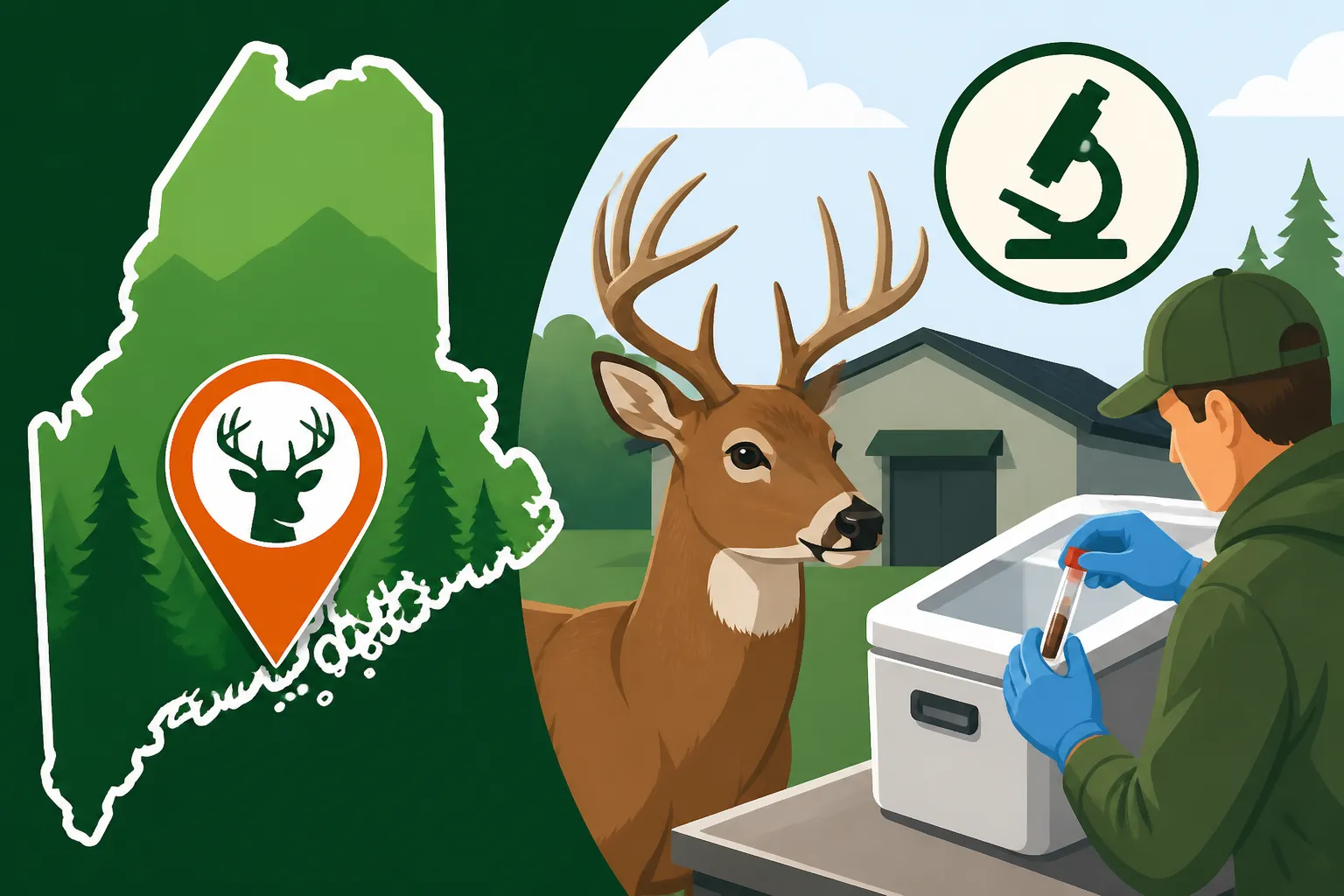
This initial contact is crucial because proper sample collection is vital for accurate testing. MDIFW staff are trained to collect the necessary tissues (typically brainstem and lymph nodes) in a way that minimizes contamination and ensures reliable results.
The Maine Approach: How to Get a Suspect Deer Sampled and Submitted
Unlike some states where CWD is widespread and mandatory testing is required for all harvested deer in certain zones, Maine's approach is highly targeted and driven by prevention and surveillance. It's not about routinely bringing every deer to a testing station; it's about reporting suspicious deer or participating in specific surveillance programs.
MDIFW Regional Offices and Game Wardens
Your primary point of contact for CWD testing, particularly for a deer exhibiting clinical signs, will be the MDIFW directly. When you call their main number or the Wildlife Health Division, they will guide you through the process. Depending on your location, they might dispatch a game warden or a wildlife biologist to the site of the animal to collect samples.
It's entirely possible that they will ask you to bring specific tissues to one of their regional offices. For instance, if you've harvested a deer that you only later realize had some subtle concerning symptoms, and you've already Field Dressing a Deer in Cold Weather, they might instruct you on how to properly remove the head or specific lymph nodes for submission. It's not a common occurrence for a healthy-looking deer, but it's part of our vigilance.
Here's a table of MDIFW Regional Offices and their general areas of coverage, though you should always call ahead for CWD-specific instructions:
| Regional Office Location | General Area of Coverage | Phone Number (General) | Notes for CWD Submissions |
|---|---|---|---|
| Ashland | Northern Aroostook County | (207) 435-3231 | Call the Wildlife Health Division first for instructions on samples. |
| Enfield | Penobscot, Piscataquis County | (207) 794-1039 | May accept samples by appointment if directed by MDIFW staff. |
| Sidney (Augusta Area) | Central Maine (Kennebec, Somerset) | (207) 547-5300 | Often the central hub for wildlife health concerns; direct submissions by appointment. |
| Strong | Western Maine (Franklin, Oxford) | (207) 778-3322 | Contact first to ensure proper handling and timing for samples. |
| Gray | Southern Maine (Cumberland, York, Androscoggin) | (207) 657-2345 | Best for samples from the more populated southern WMDs. |
| Machias | Downeast Maine (Washington, Hancock) | (207) 255-0811 | Critical for coastal and eastern surveillance efforts. |
Remember, these are general numbers. For CWD concerns, starting with the main MDIFW line or the Wildlife Health Division is usually best as they can direct you to the most appropriate regional contact or field staff.
Collaborations with Taxidermists and Meat Processors
In some targeted surveillance WMDs, MDIFW may partner with local taxidermists and meat processors to assist with sample collection. This is particularly helpful during peak hunting seasons when many deer are being processed. These facilities often serve as convenient drop-off points for specific tissues if they are participating in a designated surveillance effort.
However, you should never assume a taxidermist or processor is collecting CWD samples unless it's explicitly stated by MDIFW or posted prominently at their facility as part of an official program. Always verify with MDIFW first, or check their official communication channels. If a taxidermist or processor is participating, they will have specific protocols for handling the deer head or other tissues to ensure proper sample collection and chain of custody. Many hunters use mapping features on their GoHunt app to pinpoint processor locations, but always confirm their CWD involvement directly.
Self-Submission of Samples (Under Guidance)
For the most part, MDIFW prefers to collect CWD samples themselves, especially from sick animals, to ensure proper technique and minimize risk. However, there might be rare instances where, under direct guidance from MDIFW staff, a hunter could be instructed on how to collect and submit a specific tissue sample (like lymph nodes) from a harvested deer that wasn't obviously sick but was taken in a high-priority surveillance zone.
This is not a general practice, and it requires careful adherence to instructions. You'd need to be equipped with proper tools and understand the specific anatomical locations for the required tissues. For general purposes, after you've completed your Maine Deer Registration Requirements and harvested a healthy-looking deer, routine CWD testing isn't usually the next step unless you're specifically contacted by MDIFW. Always prioritize contacting MDIFW before attempting any self-sampling for CWD.
Beyond the Test: Your Role in Maine's CWD Prevention Efforts
Getting a deer tested for CWD, especially a suspicious one, is a critical step. But your responsibility as a conscientious hunter extends far beyond that. The collective actions of Maine's hunting community are the strongest defense against CWD ever establishing a foothold here.
The Lab Analysis and Understanding Results
Once a sample is submitted, it's sent to a specialized laboratory for analysis. This isn't an instant process; it can take several weeks to get results back. The labs use various diagnostic tests, often focusing on immunohistochemistry (IHC) or ELISA (enzyme-linked immunosorbent assay) to detect the presence of abnormal prions in the brainstem or lymph nodes.
If a sample tests positive for CWD (a rare and unfortunate event in Maine), MDIFW will immediately contact the hunter. They will then initiate a swift and comprehensive response, which could involve:
- Notifying the hunter about handling and disposal guidelines for the carcass.
- Potentially implementing special hunting regulations in the affected WMD to reduce deer density and limit disease spread.
- Increasing surveillance efforts significantly in the surrounding area.
Conversely, a negative result means no CWD prions were detected in the sample. This provides valuable data to affirm Maine's CWD-free status and helps guide future surveillance efforts.
Why Your Participation Matters So Much
Your willingness to report a sick deer, to cooperate with MDIFW surveillance requests, and to follow best practices is incredibly important. Think of it as protecting your own investment. Every time you buy a Maine Hunting Licenses and What They Cost, you're investing in the future of hunting. Every moment you spend in the woods, scouting or Scouting Maine Private Land Before Season, is an investment. Protecting our deer from CWD protects that investment.
Beyond reporting, preventing the introduction of CWD is a shared responsibility. This means:
- Do Not Bring Prohibited Carcass Parts into Maine: If you hunt deer, elk, or moose in a CWD-positive state or province, you are strictly prohibited from bringing certain high-risk carcass parts (like brain, spinal cord, eyes, spleen, lymph nodes) back into Maine. Only deboned meat, antlers, hides, and taxidermy mounts are generally allowed. Always check MDIFW regulations carefully before returning from an out-of-state hunt.
- Avoid Using Urine-Based Lures from Other States: While scientific evidence is still developing, some experts recommend avoiding the use of natural urine-based lures from CWD-positive areas, as prions could theoretically be present in urine.
- Responsible Carcass Disposal: If you harvest a deer in Maine, especially if it was part of a surveillance effort or exhibited any suspicious signs, proper disposal of the carcass is key. This usually means burying it deeply on site or taking it to a permitted landfill. Never leave high-risk carcass parts exposed in the environment.
Safeguarding Maine's Hunting Future
The ongoing success of Maine's CWD-Free Cervid Herd is a testament to the collaborative efforts of hunters and wildlife managers. By staying informed, being vigilant, and taking responsible actions, we can collectively ensure that future generations of hunters will continue to enjoy the incredible deer hunting opportunities that Maine has to offer. This isn't just about deer; it's about preserving a cherished way of life and a vital part of our state's natural heritage. Your commitment to these practices is what makes all the difference.
Disclaimer
The information provided in this guide is for informational purposes only and is subject to change. Always consult the most current regulations and guidelines published by the Maine Department of Inland Fisheries and Wildlife (MDIFW) or contact them directly for the most up-to-date and authoritative information regarding CWD testing and prevention.