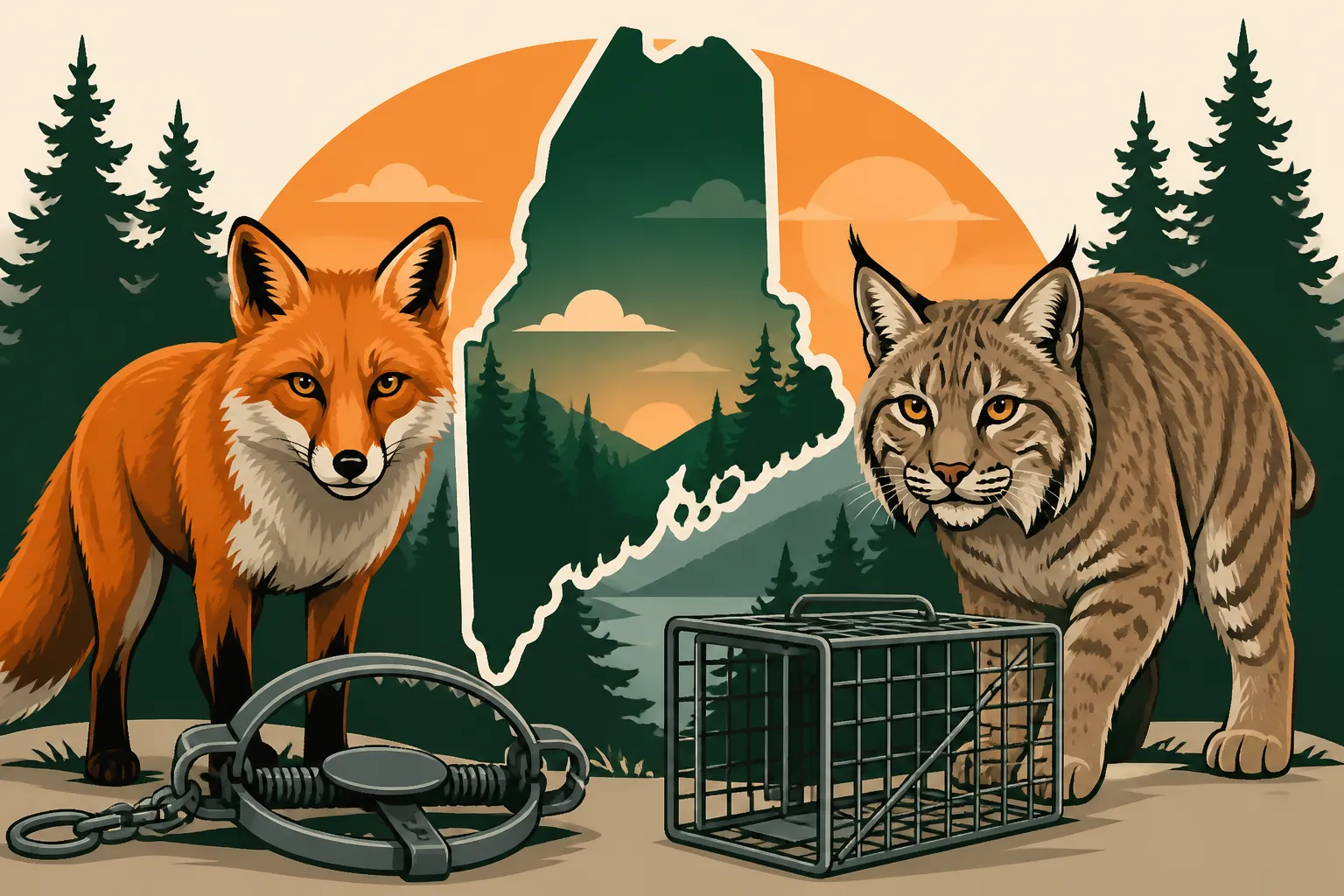
Maine Fox and Bobcat Trapping Season
The thought of chasing elusive fox and bobcat through Maine's diverse landscapes with traps can be exhilarating, but let's be honest, navigating the ever-changing seasons and complex regulations can feel like trying to untangle a snarled trap line. It's frustrating when you just want to focus on the craft, only to worry about whether your season dates are right or if you've got all your permits in order. This comprehensive guide is here to cut through that confusion, giving you a clear, detailed look at Maine's fox and bobcat trapping seasons, the rules you need to follow, and the practical knowledge to make your time in the field both successful and legal.
Understanding Maine's Fox and Bobcat Trapping Seasons
Trapping fox and bobcat in Maine is a tradition steeped in history, but the modern trapper needs to be keenly aware of specific season dates and geographical considerations. Unlike some hunting seasons that might span several weeks across the entire state, furbearer trapping often has specific opening and closing dates that can vary by Wildlife Management District (WMD) or even by the species you're targeting. Missing these windows can mean a missed opportunity or, worse, a violation.
The Maine Department of Inland Fisheries and Wildlife (MDIFW) sets these dates annually, usually by late summer or early fall, giving trappers time to prepare. Generally, the season for both fox and bobcat tends to open in late October or early November and runs through December, sometimes into early January. These dates are crucial for planning your pre-season scouting, setting up your trapline, and ensuring you're only targeting animals when it's legal. For instance, the Maine Fox and Bobcat Trapping Season typically kicks off around the last week of October, or the first week of November, with a closing date usually around the end of December. While the specific dates can shift slightly year to year, this general timeframe holds true for most of the state's WMDs. It's vital to check the current year's official MDIFW regulations booklet or their website to confirm these exact dates before you even think about putting steel in the ground. Many experienced trappers use tools like GoHunt's state-specific resources to quickly look up current season details and cross-reference them with the official regulations.
The statewide approach for furbearers often simplifies things compared to deer or moose hunting zones, but localized conditions can still affect strategy. For example, a heavy snowfall in Northern Maine might make access challenging earlier in the season, while coastal areas might experience milder conditions for longer. Pay attention to how the season dates align with typical weather patterns in your preferred trapping locations.
Key Dates for Fox and Bobcat
While specific dates are subject to annual change by the MDIFW, here's a typical range for the Maine fox and bobcat trapping season:
| Species | Typical Opening Date | Typical Closing Date | Notes |
|---|---|---|---|
| Fox | Late October/Early November | Late December/Early January | Check MDIFW for exact dates annually |
| Bobcat | Late October/Early November | Late December/Early January | Often mirrors fox season; fur tagging required |
Remember, these are general ranges. Always consult the official MDIFW hunting and trapping regulations for the current calendar year. This small but critical step is often overlooked by newer trappers, leading to potential headaches.
Navigating WMDs and Local Considerations
For fox and bobcat, Maine's trapping seasons are often uniform across all WMDs, unlike species like deer where season lengths or antlerless permit availability can vary dramatically between zones. This means if the season opens on November 1st, it's typically November 1st across the entire state where trapping is permitted. However, "where trapping is permitted" is a key phrase. You always need to be aware of local ordinances, private land restrictions, and designated public areas where trapping might be prohibited or require special permits. For instance, while you might be familiar with general rules on the extensive Maine's Private Land Access Tradition or the specific access points for Hunting a North Maine Woods Checkpoint Tract, trapping on these lands still requires careful consideration of local permission and rules.
Even on public lands, such as certain wildlife management areas or state parks, specific regulations for trapping might apply. Always double-check with the managing agency for any public land you intend to trap. Access to remote areas, especially in the North Maine Woods, might also be limited by gate closures or seasonal road conditions, regardless of the official season dates. This is where meticulous scouting and utilizing resources like topographical maps or services from GoHunt can make a real difference in planning your trapline. Don't assume that just because it's public land, you can trap there without further inquiry. A quick call to the local MDIFW office or the landowner of a large timber tract can save you a world of trouble.
Understanding Maine's Trapping Regulations for Fox and Bobcat
Trapping in Maine isn't just about knowing when to go; it's about understanding the "how." Maine has a comprehensive set of regulations designed to ensure humane practices, sustainable populations, and public safety. Ignorance of these rules is never an excuse, and violating them can lead to significant penalties, including fines, loss of equipment, and revocation of your trapping license.
Before you even set foot in the woods, you need the right licenses. A valid Maine trapping license is absolutely essential. For residents, this is separate from a hunting license, and for non-residents, there are specific Maine nonresident trapping license rules that apply. Beyond the general license, if you plan to trap bobcat, you'll need to obtain specific tags for each animal you intend to harvest, typically provided when you purchase your license or requested through the MDIFW. This tagging system helps the state monitor harvest numbers and ensures population health.
Beyond licensing, there are crucial regulations regarding trap types, sizes, and setting methods. Maine law specifies what kinds of traps are legal, generally favoring cage traps, foot-hold traps, and body-gripping traps of certain dimensions. For example, the jaw spread of a foothold trap or the measurement of a body-gripping trap must fall within legal limits to prevent the capture of larger, non-target animals or undue suffering. Conibear-style traps, while effective, have strict size limitations and might be restricted to water sets or require enclosures to prevent non-target captures. It's crucial to know these specifics, as using an illegal trap or setting it improperly can result in serious legal trouble.
License Requirements and Fur Tagging
To lawfully trap fox and bobcat in Maine, every trapper, regardless of age (though youth rules apply for mentored situations), must possess a valid Maine trapping license. This isn't something you can just pick up with your hunting license; it's a separate entitlement. Residents will find their Maine resident trapping license cost to be quite reasonable, but non-residents should be aware of potentially higher fees. You can typically purchase these licenses online through the MDIFW's portal, or from authorized agents throughout the state.
When it comes to bobcats, there's an additional layer of regulation: fur tagging. Maine requires that all harvested bobcats be tagged with an official CITES (Convention on International Trade in Endangered Species of Wild Fauna and Flora) tag. These tags are critical for both national and international trade regulations, proving that the animal was legally harvested. You'll typically receive these tags with your license or be instructed on how to acquire them. The tags must be affixed to the pelt immediately after the animal has been processed and kept with the fur until it's sold or used. Failing to tag a bobcat properly is a serious offense.
Foxes, on the other hand, do not currently require CITES tags. However, all furbearers, including foxes, must be registered with the MDIFW within a certain timeframe after harvest, usually 72 hours. This can often be done at a designated registration station, or in some cases, online. Proper documentation ensures accurate harvest data, which is vital for wildlife management.
Trap Checking and Set Restrictions
One of the most critical regulations for ethical and legal trapping is the trap checking requirement. In Maine, all traps, snares, and sets must be checked at least once every 24 hours. This means if you set a trap on Monday morning, you must check it by Tuesday morning. This rule is designed to minimize the time an animal spends in a trap, reducing stress and injury. Neglecting this duty not only harms the animal but also risks significant legal penalties. Planning your trapline routes and ensuring accessibility for daily checks is paramount.
Beyond checking frequency, there are strict rules about where and how you can set traps, particularly near dwellings or public ways. For example, setting a body-gripping trap within 50 feet of a public way (like a road or maintained trail) might be prohibited without specific signage or enclosures. Additionally, it is generally illegal to set any trap within 200 feet of a dwelling or business, unless you have explicit written permission from the landowner or occupant. These rules are in place for public safety and to prevent non-target captures, such as domestic animals.
Furthermore, Maine law outlines specific requirements for how traps must be identified. All traps must have a durable tag attached, clearly bearing the trapper's full name and address or a unique MDIFW identification number. This ensures accountability and allows wardens to identify the owner of any trap found. Understanding these nuanced rules can be the difference between a successful, ethical season and a costly mistake.
Essential Gear and Tactics for Successful Trapping
Trapping isn't just about setting a trap and hoping for the best; it's a strategic game of chess against nature. Success hinges on having the right gear, understanding animal behavior, and employing proven tactics. For fox and bobcat, this often means focusing on specific types of sets, lures, and locations that maximize your chances while adhering to all regulations.
When considering traps, you'll want a variety. For fox, coil spring or long spring foothold traps in the #1.5 to #2 size range are popular, as are cage traps if you prefer live capture. For bobcat, you'll want slightly larger foothold traps, like #2 or #3 coil springs, or even a larger cage trap. Body-gripping traps, such as Conibears (often a 160 or 220 size), can be highly effective for both, particularly in cubby sets or when properly stabilized and placed. Remember, all these must meet Maine's legal size and jaw spread requirements. Don't forget essential tools like a good trapping trowel, gloves to minimize human scent, a reliable hammer or setting tool, and plenty of strong stakes or drags to secure your traps. Using a good mapping application, such as the one found in the GoHunt platform, can help you scout and mark potential trap locations efficiently.
Beyond the physical traps, lures and baits are critical. Foxes are notoriously curious and respond well to musky gland lures, often combined with a sweet food lure like anise or fruit. Bobcat, being more predatory, are attracted to visual attractants like feathers or fur, combined with strong curiosity or gland lures mimicking prey or other bobcats. Scent control is paramount; animals, especially canids like fox, have an incredible sense of smell and can detect human odor even days after you've made a set.
Effective Trap Sets for Fox and Bobcat
The type of set you deploy is crucial for targeting fox and bobcat effectively. For fox, dirt hole sets are arguably the most common and effective. This involves digging a small hole (about 4-6 inches deep and angled), placing bait (a chunk of fish, commercial lure, or tainted meat) at the bottom, and setting a foothold trap approximately 6-8 inches from the hole's opening. The trap is then carefully bedded and covered with sifted dirt or peat moss, blending it seamlessly into the surroundings. A guiding stick or natural obstruction behind the hole encourages the fox to step on the trap pan.
For bobcats, specific sets can be incredibly productive. A cubby set, which involves building a small shelter (from logs, rocks, or even an overturned bucket) with bait at the back and a body-gripping trap (like a Conibear) or a foothold trap at the entrance, is a favorite. Bobcat are attracted to the shelter as a potential den or food cache. Another highly effective set for bobcats is the post set. This involves placing an upright stick or "post" in the ground, adding a visual attractant (fur, feathers) to the top, and applying a strong bobcat lure or urine. A foothold trap is then buried carefully at the base of the post. The bobcat's natural instinct to investigate and mark such a post leads them directly to your trap.
Regardless of the set, proper bedding of the trap (making sure it doesn't wobble when stepped on) and meticulous camouflage are key. You want the set to look as natural as possible, minimizing anything that screams "human." This often means using local materials for cover and brushing out your tracks as you leave.
Lure, Bait, and Scent Control Strategies
Lures and baits are the heart of attracting furbearers. For foxes, a combination of curiosity lures, food lures, and gland lures works wonders. Curiosity lures (like skunk essence or loud-smelling concoctions) grab their attention, while food lures (sweet, fishy, or musky) entice them to investigate closely. Gland lures, especially from dominant foxes, can provoke a territorial response. Using a small piece of beaver castor or a commercial fox lure at a dirt hole set can be incredibly effective.
Bobcats, being more discerning, often respond best to visual attractants combined with specific lures. A tuft of rabbit fur, a bird feather, or even the wing of a deceased bird hanging near a set can act as a powerful visual trigger. Pair this with a strong, musky bobcat gland lure or a curiosity lure that mimics a dying animal, and you've got a potent combination. Many trappers also use bobcat urine around their sets to signal the presence of another bobcat, drawing in territorial males or curious females.
Scent control is not just important; it's non-negotiable. Foxes and bobcats possess an olfactory sense far superior to humans. Any lingering human odor can alert them to danger. Wear clean gloves dedicated solely to trapping, and avoid smoking or handling strong-smelling substances (like gasoline) before working your trapline. Using natural attractants found in the field (like pine needles or leaves) to cover your traps and tracks can also help. Some trappers even age their traps outside for weeks or boil them in logwood dye to remove metallic odors and give them a natural appearance. Diligent scent control is often the single biggest factor distinguishing a consistently successful trapper from one who struggles. Regularly checking resources and forums, perhaps even through an application like GoHunt, can reveal new insights into regional scent strategies.
Ethical Trapping Practices and Wildlife Management
Trapping, like any form of harvesting wildlife, comes with a profound responsibility. Ethical practices are not just about following the law; they're about respecting the animals, ensuring humane treatment, and contributing positively to the overall health of Maine's ecosystems. Responsible trapping plays a vital role in wildlife management by helping to control furbearer populations, reduce disease spread, and minimize conflicts with humans and livestock.
One of the cornerstones of ethical trapping is humane equipment and methods. Maine's regulations on trap types and sizes are designed with animal welfare in mind, aiming to provide a quick, clean capture and minimize injury. Trappers have a duty to ensure their traps are properly maintained, clean, and functioning correctly. A rusty, poorly functioning trap can lead to unnecessary suffering for a captured animal. It’s also important to continually educate yourself on the most modern and humane trapping techniques.
Beyond the immediate welfare of the animal in the trap, ethical trapping contributes to broader wildlife management goals. By regulated harvest, trappers help maintain healthy population levels for species like fox and bobcat, preventing overpopulation which can lead to increased disease transmission or habitat degradation. This responsible management ensures these furbearers thrive for future generations. The MDIFW relies on trapper participation, including accurate registration and reporting of harvests, to gather crucial data for making informed management decisions. Participating in programs like Maine's Chronic Wasting Disease Monitoring for other species, even if not directly related to furbearers, shows a commitment to the overall health of Maine's wildlife.
Humane Trap Handling and Dispatch
The 24-hour trap check rule, as mentioned earlier, is the most fundamental aspect of humane trap handling. It ensures that an animal is not left in a trap for an extended period, which can cause undue stress, exposure, or injury. When you approach a set, do so cautiously but decisively. An animal in a trap is often stressed and can react unpredictably.
Once an animal is located, the trapper has a responsibility to dispatch it quickly and humanely. For fox and bobcat, this often involves a swift, clean shot with a small-caliber firearm or, for experienced trappers, a sharp, forceful blow to the head with an appropriate tool. The goal is to ensure the animal's suffering is minimized and its life is ended as rapidly as possible. Live release of a trapped fox or bobcat is generally not advised, particularly for bobcats which are regulated through the tagging system. Furthermore, animals should only be handled with heavy gloves to protect both the trapper and the animal.
Properly maintaining your traps is another aspect of humane trapping. Regularly inspect your traps for damage, rust, or worn springs. A trap that doesn't function correctly can cause unnecessary suffering. Clean traps after each catch to remove blood, fur, and odors that could deter future captures. This attention to detail reflects a trapper's commitment to ethical practices.
Contributing to Wildlife Management Through Trapping
Trappers are often the "eyes and ears" of the woods, providing valuable insights to wildlife biologists. Their daily presence on traplines means they observe animal populations, habitat changes, and potential disease signs that might otherwise go unnoticed. Accurate and timely reporting of harvests, including registering your bobcats and any incidental captures of non-target species, is a direct contribution to sound wildlife management. This data helps the MDIFW understand population trends, monitor health, and adjust regulations as needed.
Trapping also plays a significant role in managing furbearer populations that can sometimes come into conflict with human interests. For example, local overpopulations of fox can impact small game or poultry, and bobcats, while usually shy, can sometimes prey on domestic animals. Regulated trapping helps mitigate these conflicts, fostering a more balanced coexistence. Many trappers also engage in Trapping Maine Furbearers for other species, like beaver or muskrat, which helps manage water levels and habitat for a wider array of wildlife.
By adhering to all regulations, practicing humane techniques, and actively participating in the reporting process, trappers are not just taking from the land; they are actively managing it. This symbiotic relationship between trappers and wildlife agencies is critical for sustaining Maine's rich outdoor heritage and ensuring healthy wildlife populations for future generations to appreciate.
Disclaimer
Please note: The information provided in this guide is for informational purposes only and is subject to change. Hunting and trapping regulations, seasons, and licensing requirements are determined by the Maine Department of Inland Fisheries and Wildlife (MDIFW) and can be updated annually. Always consult the official MDIFW website or the most current hunting and trapping law book for the exact, up-to-date regulations before engaging in any hunting or trapping activities. Failure to do so may result in fines or legal penalties.