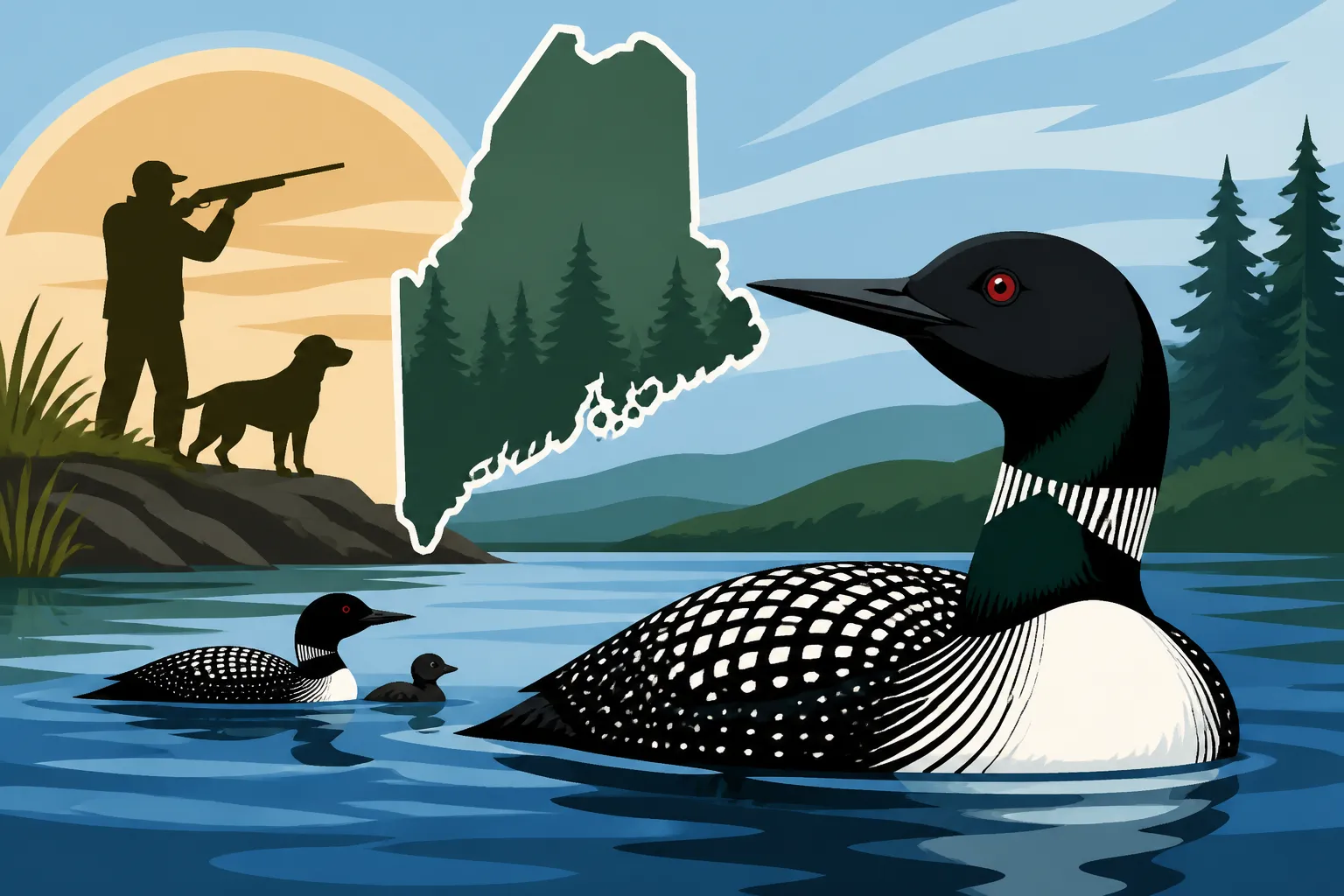
Maine Common Loon Population
For anyone who cherishes Maine's pristine lakes and wild places, the health of our common loon population is often a deep concern. These magnificent birds, with their haunting calls and striking appearance, are true symbols of Maine's wilderness, and when we see fewer of them or hear about threats to their survival, it stirs a real anxiety about the overall health of our environment. This guide is dedicated to shedding light on the current status of Maine's common loon population, exploring the challenges they face, the vital conservation efforts underway, and practical ways you can contribute to their well-being.
Understanding the Common Loon in Maine
The common loon (Gavia immer) is more than just a bird; it's an auditory icon of the Maine wilderness, especially during the quiet dawn or dusk hours on a still lake. Hearing that mournful, almost primal wail echo across the water is an experience deeply etched into the memories of many Mainers and visitors alike. They are large, distinctive birds, easily recognized by their sleek black heads and necks, checkerboard patterns on their backs, and striking red eyes that seem to pierce through the water as they dive. These adaptations make them superb underwater predators, masters of their aquatic domain.
Their Iconic Presence and Unique Adaptations
Loons are uniquely adapted to their aquatic lifestyle. Their legs are set far back on their bodies, making them incredibly efficient swimmers and divers, capable of pursuing fish to impressive depths. However, this specialized anatomy makes them quite awkward on land, where they can only push themselves along on their bellies for short distances to reach their nests. This vulnerability on land highlights how dependent they are on undisturbed shorelines for successful breeding. Their calls are equally distinctive and varied, ranging from the yodel, a territorial call typically made by males, to the wail, a long, eerie call used to signal location, and the tremolo, a shorter, quicker call often indicating alarm or agitation. Each call serves a crucial purpose in their complex social lives and contributes to the mystique of our northern lakes.
Loons have an almost ancient feel to them, often evoking a sense of wildness that speaks to the deeper parts of our connection with nature. They are often seen as indicators of water quality and overall ecosystem health. If loons are thriving, it’s a good sign that the freshwater environment they inhabit is relatively healthy. Conversely, a decline in loon numbers can be an early warning signal of environmental problems that could affect many other species, including ourselves. Their strong presence on postcards, merchandise, and in local lore underscores how deeply they are woven into the fabric of Maine's identity and cherished by its people.
Habitat, Nesting, and Life Cycle
In Maine, common loons prefer large, clear freshwater lakes and ponds, particularly those with quiet coves and islands, which provide ideal nesting and foraging opportunities. They are highly territorial during the breeding season, often returning to the same nesting sites year after year, sometimes with the same mate. Their nests are usually rudimentary scrapes or mounds of vegetation, often built on small islands, muskrat houses, or semi-submerged logs close to the water's edge. This proximity to water allows them to quickly escape into the safety of the lake if a predator approaches, mitigating their terrestrial clumsiness.
A pair of loons typically lays one or two large, olive-colored eggs. Both parents share incubation duties, which last for nearly a month. Once hatched, the chicks are precocial, meaning they are relatively mature and mobile, but they are still incredibly vulnerable. You’ll often see tiny loon chicks riding on their parents' backs, a behavior that not only protects them from predators like snapping turtles and large fish but also conserves their energy and keeps them warm. This parental care is intensive, with the adults constantly diving for small fish and invertebrates to feed their rapidly growing offspring. The chicks fledge, or learn to fly, after about 10-11 weeks, but they remain dependent on their parents for several more weeks as they hone their hunting and survival skills. As fall approaches, the family units disperse, and loons begin their migration to coastal wintering grounds, a journey that can take them as far south as the Atlantic Ocean off the southeastern United States.
Factors Affecting Maine's Loon Population
Despite their iconic status and the strong conservation ethic in Maine, common loons still face a variety of threats that can impact their population health. Many of these challenges are directly linked to human activity, making our understanding and mitigation efforts crucial for their survival. While Maine's loon population has generally been stable or slightly increasing in recent decades, these ongoing threats require constant vigilance and proactive management. It's not a set-it-and-forget-it situation; the health of these birds is always dependent on our actions.
Lead Fishing Tackle: A Persistent Danger
Perhaps the most significant and insidious threat to adult loons in Maine is lead fishing tackle. Loons inadvertently ingest lead sinkers and jigs when they swallow fish that have broken off lines, or they pick up lost tackle from the bottom of lakes while foraging for grit to aid digestion. Even a tiny piece of lead, as small as a split shot, is highly toxic and can cause lead poisoning, leading to severe neurological damage, paralysis, and ultimately death within a few weeks. The effects are agonizing, with birds becoming lethargic, losing their ability to dive and fly, and slowly starving.
Maine has taken steps to address this issue, implementing regulations that restrict the sale and use of certain sizes of lead tackle. While these laws are critical, their effectiveness relies heavily on public awareness and voluntary compliance. Many anglers, especially those visiting from out of state or those unfamiliar with the specific dangers to loons, may not realize the profound impact a small lead weight can have. Educational campaigns aim to encourage the switch to non-toxic alternatives like steel, bismuth, or tungsten, which are readily available and perform just as well without posing a threat to wildlife. The continued effort to educate and encourage the use of lead-free tackle is paramount, as lead poisoning remains a leading cause of adult loon mortality in Maine. Maine Wildlife Disease Monitoring Program is crucial for understanding these kinds of impacts.
Habitat Loss, Disturbance, and Water Quality
As more people seek to enjoy Maine's lakes, the cumulative impact of shoreline development and increased recreational activity becomes a significant concern for loons. Shoreline development can lead to the loss of suitable nesting sites, as natural shorelines are replaced with docks, beaches, and lawns. Loons require quiet, vegetated areas for nesting, and a busy, developed shoreline offers little in the way of privacy or protection. Increased boat traffic, especially fast-moving motorboats, can also be disruptive. Wakes from boats can swamp nests, washing away eggs or chicks, particularly if the nest is close to the water's edge. Noise and human presence can also cause adult loons to abandon their nests or leave their chicks vulnerable to predators while they flee.
Beyond physical disturbance, water quality issues also play a role. While loons generally prefer clear water, pollutants like mercury and acid rain can still impact their health and reproductive success. Mercury, often originating from distant industrial pollution, accumulates in the aquatic food chain, bioaccumulating in fish, which loons then consume. High levels of mercury can impair a loon's ability to reproduce, affect chick survival, and even alter their behavior. Acid rain, another airborne pollutant, can acidify lakes, impacting fish populations and thus reducing the food available for loons and their chicks. Even subtle changes in water chemistry can ripple through the ecosystem and affect these sensitive indicators.
Other Challenges: Predation and Disease
While human-induced threats are primary concerns, loons also face natural challenges. Nest predation, primarily from raccoons, skunks, foxes, and gulls, can result in the loss of eggs or young chicks, especially if nests are easily accessible from land. Loons are incredibly vulnerable on land due to their leg placement, making it difficult for them to defend their nests against terrestrial predators. In the water, large predatory fish or snapping turtles can occasionally take a young chick. However, adult loons are generally well-equipped to defend their chicks against most aquatic threats.
Disease outbreaks can also occur, though they are less frequent as a widespread population threat compared to lead poisoning. Avian botulism or other pathogens can occasionally affect waterfowl and waterbirds, including loons, particularly in warmer waters or during specific environmental conditions. These natural pressures, combined with human-caused stressors, create a complex web of challenges that loon populations must navigate to thrive. Understanding the various Maine Wildlife Disease Monitoring Program efforts helps us keep track of these threats across all species.
Conservation Efforts and Monitoring
Maine has a long and proud history of conservation, and the common loon is a prime example of a species that benefits from dedicated efforts by state agencies, non-profit organizations, and concerned citizens. These efforts range from long-term monitoring programs that track population trends to direct interventions that protect nesting sites and mitigate specific threats. The collective impact of these initiatives is what allows us to celebrate the continued presence of loons on our lakes.
Maine Audubon’s Loon Project and Citizen Science
One of the most impactful conservation initiatives for loons in Maine is the Maine Audubon Loon Project, which has been monitoring the state's loon population for decades. This program relies heavily on a network of dedicated citizen scientists – volunteers who survey specific lakes and report on loon sightings, nesting success, and observed threats. This vast amount of data helps scientists understand long-term population trends, identify critical breeding habitats, and pinpoint areas where loons are facing particular challenges. The annual loon count, a significant component of this project, provides a snapshot of the population each summer, offering invaluable insights into the health and distribution of loons across the state. This kind of broad participation demonstrates the passion Mainers have for their natural heritage.
Beyond counting, Maine Audubon also engages in banding efforts, where individual loons are captured, fitted with unique leg bands, and then released. This allows researchers to track individual birds over many years, providing data on survival rates, migration patterns, and reproductive longevity. This detailed information is critical for understanding the life history of loons and for developing effective conservation strategies. The project also plays a vital role in educating the public about loon conservation, advocating for policies that protect loons, and responding to reports of injured or distressed birds. Learning about efforts like these can be as inspiring as Maine Bald Eagle Recovery.
Lead Tackle Regulations and Public Awareness Campaigns
As mentioned earlier, lead fishing tackle is a major concern. Maine has progressively strengthened its regulations regarding the sale and use of lead sinkers and jigs. These regulations prohibit the use and sale of lead sinkers and jigs that weigh less than a certain threshold on inland waters. The goal is to phase out the most dangerous sizes of lead tackle that are most likely to be ingested by loons. However, laws alone aren't enough. Alongside these regulations, a persistent and widespread public awareness campaign has been instrumental.
"Get the Lead Out" programs, often spearheaded by Maine Audubon and other conservation groups, work to educate anglers, bait shops, and the general public about the dangers of lead tackle to loons and other waterfowl. These campaigns distribute informational brochures, provide workshops on non-toxic alternatives, and encourage anglers to voluntarily make the switch, even for tackle sizes not covered by current regulations. These efforts highlight that while legislation sets a baseline, individual responsibility and informed choices are what truly drive change and protect wildlife. This proactive approach helps to ensure the long-term health of our aquatic ecosystems.
| Threat Category | Primary Impact on Loons | Key Conservation Action | Example Effect on Loons |
|---|---|---|---|
| Lead Fishing Tackle | Lead poisoning (neurological damage, paralysis, death) | Regulations restricting lead tackle, "Get the Lead Out" campaigns | Ingestion of a single lead sinker can be fatal |
| Habitat Loss | Loss of nesting sites, reduced breeding success | Shoreline protection, land acquisition, nest platforms | Development along coves eliminates nesting areas |
| Human Disturbance | Nest abandonment, chick mortality from boat wakes | Education on respectful boating, "no wake" zones, buffer zones | Speeding boat swamps a fragile nest |
| Water Quality (Mercury) | Impaired reproduction, behavioral changes, chick survival | Reducing industrial emissions, monitoring fish mercury levels | High mercury levels in fish consumed by parents |
| Predation | Loss of eggs or chicks | Protecting secluded nesting sites, artificial nesting platforms | Raccoon raiding an exposed nest |
Nest Platforms and Community Involvement
To mitigate the impact of habitat loss and disturbance, particularly from fluctuating water levels or heavily developed shorelines, conservationists have deployed artificial nesting platforms in suitable locations. These platforms, often constructed from logs, wire mesh, and vegetation, provide stable, predator-resistant nesting sites that are less vulnerable to boat wakes or rising and falling water. Volunteers often help build and deploy these platforms, securing them in quiet coves before the loon breeding season begins. These platforms have been shown to be quite effective, often leading to successful nesting where natural sites might have failed.
Community involvement extends far beyond just building platforms. Many lake associations in Maine have embraced loon conservation as a core part of their mission. They organize local clean-up days to remove discarded fishing line and tackle, erect signs to warn boaters of nesting areas, and educate their members about loon-friendly practices. Reporting injured or distressed loons to wildlife officials or rehabilitation centers is another critical form of community involvement. Prompt reporting can mean the difference between life and death for a loon tangled in fishing line or suffering from poisoning. This grassroots dedication, often informed by data from the Maine Audubon Loon Project, is a powerful force in ensuring the loon's future. For those interested in broader wildlife management, exploring topics like Maine's Deer and Moose Disease Monitoring shows the range of efforts.
How to Help Protect Maine's Loons
While the challenges facing Maine's common loon population are real, the good news is that every individual can play a role in their protection. You don't need to be a scientist or a full-time conservationist to make a difference. Simple, conscious choices and actions, especially when you're enjoying Maine's beautiful lakes, can have a profound impact on these magnificent birds. Your personal stewardship contributes directly to their survival and the continued health of our shared natural heritage.
Switch to Lead-Free Fishing Tackle
This is perhaps the single most impactful action an angler can take. As we've discussed, lead poisoning from ingested fishing tackle is a primary cause of adult loon mortality. Making the switch to non-toxic alternatives for sinkers and jigs, such as those made from steel, bismuth, tin, or tungsten, is a direct way to eliminate this threat. These alternatives are widely available in sporting goods stores and online, and they perform just as well as lead. When you're outfitting your tackle box, make a conscious choice to leave the lead behind. Even if you don't fish in a specific loon habitat, the tackle can travel or be picked up by birds in other areas. Encourage your fishing buddies, family members, and local bait shops to do the same. This simple choice saves lives. For broader discussions on responsible hunting practices, consider Maine Hunting Licenses and What They Cost, which often includes conservation fees.
If you already have lead tackle, don't just throw it away. Dispose of it properly at a hazardous waste facility or through a "Get the Lead Out" tackle exchange program if one is offered in your area. These programs often allow you to trade in your old lead tackle for new, lead-free alternatives. It's a win-win for both you and the loons.
Respect Nesting Sites and Boating Responsibly
When you're out on the water, whether in a kayak, canoe, or motorboat, be mindful of loons, especially during the spring and early summer nesting season. Loons are very sensitive to disturbance at their nests. If you see a loon behaving defensively, such as giving alarm calls (the tremolo) or constantly diving and resurfacing close to its nest, it's a clear sign you're too close. Give them space. A good rule of thumb is to maintain a distance of at least 150 feet (about half a football field) from nesting loons or loons with chicks. Use binoculars to observe them from a respectful distance.
For motorboaters, responsible operation is crucial. Maintain a safe speed, especially in coves or near shorelines where loons might be nesting or feeding. Excessive wakes can swamp nests, washing away eggs or chicks, which cannot survive in cold water for long. Consider using "no wake" zones where applicable, or simply reduce your speed when you spot loons. Remember that what might seem like a small ripple to you could be a destructive wave to a fragile loon nest. Also, avoid unnecessary noise, as it can stress loons and cause them to expend valuable energy fleeing rather than foraging or caring for their young. Learn more about how human activities impact wildlife by exploring Maine Moose Vehicle Collision Numbers.
Support Conservation Organizations and Report Sightings
There are many organizations dedicated to loon conservation in Maine, with Maine Audubon being a prominent leader. Supporting these groups through membership, donations, or volunteering your time directly contributes to their ability to conduct vital research, implement conservation programs, and advocate for protective policies. Even a small financial contribution can help fund projects like artificial nest platform construction, educational outreach, or the treatment of injured loons. These organizations are the backbone of concentrated wildlife protection efforts.
Additionally, if you spend time on Maine's lakes, consider becoming a citizen scientist. Participating in the annual loon count or reporting your sightings and observations to organizations like Maine Audubon can provide invaluable data for tracking loon populations and understanding their needs. If you ever encounter an injured loon, a loon tangled in fishing line, or one exhibiting signs of distress (like lethargy or inability to dive), it's crucial to report it immediately to the Maine Department of Inland Fisheries and Wildlife (MDIFW) or a local wildlife rehabilitation center. Do not attempt to rescue the bird yourself, as a loon's sharp beak can inflict serious injury. Your quick report could save a loon's life. This kind of active engagement makes a real difference, just as people help by Reading a Maine Harvest Report to inform management decisions.
Disclaimer
This article is for general informational purposes only and does not constitute professional advice. Laws, prices and regulations vary by location and change over time. Consult a qualified professional for guidance on your specific situation.