Reading a Maine Harvest Report
It can feel a bit like cracking a secret code, can't it? You see those official harvest reports from Maine Inland Fisheries and Wildlife (IFW), pages dense with numbers, charts, and acronyms, and it's easy to just skim over them. But trust me, understanding how to truly read and interpret a Maine harvest report isn't just for wildlife biologists; it's an absolute game-changer for us hunters. This guide is here to demystify those reports, transforming them from a jumble of data into your most powerful scouting tool for the next season.
Understanding What Maine Harvest Reports Tell Us
When you look at a Maine harvest report, you're not just seeing how many animals were taken; you're getting a snapshot of the health of the deer herd, the bear population, the turkey flocks, and even the moose densities across our vast state. These aren't just dry statistics; they're the pulse of Maine's wildlife.
Why These Reports are Your Secret Weapon
Think of these reports as an insider's view into where success happened, where populations are thriving, and where hunting pressure might be concentrated. For those of us who spend countless hours scouting, hanging stands, and putting in our time, any piece of information that gives us an edge is invaluable. These reports allow you to make informed decisions, whether it's applying for an antlerless permit in a specific WMD (Wildlife Management District) or planning your moose hunt in a zone with historically higher success rates. They reveal trends over time, helping you understand if a specific area is seeing increasing or decreasing game numbers, which can directly influence your strategy. It’s like having access to years of collective hunting experience, condensed into easily digestible figures.
Where the Numbers Come From
Every time a hunter registers a deer, bear, moose, or turkey in Maine, that data point contributes to these comprehensive reports. It’s a mandatory step for a reason: it's how our state wildlife managers keep tabs on populations and make crucial decisions about season lengths, bag limits, and permit allocations. From the local registration stations at general stores and sporting goods shops to the online reporting systems, each harvested animal provides information on its species, sex, age (if applicable), and most importantly, the WMD it was taken in. This painstaking process of data collection is what forms the backbone of the harvest reports. Without accurate and timely Maine Deer Registration Requirements, for example, wildlife managers would be flying blind, and our hunting opportunities could suffer as a result. So, when you register your animal, you're not just complying with the law; you're actively contributing to the future of hunting in Maine.
Decoding the Key Data Points in Each Report
Maine's harvest reports typically break down data by species and by WMD. Understanding what each section means is the first step to making sense of the overall picture.
Deer Harvest: Bucks, Does, Fawns, and Antlerless Permits
The deer harvest report is often the most scrutinized. You’ll see breakdowns for total deer harvested, often separated into adult bucks, adult does, and fawns. The "adult buck harvest" is particularly telling, as a healthy buck harvest indicates a strong, mature deer herd. You’ll often see details about antlered vs. antlerless deer taken, which ties directly into the state's antlerless permit system. Areas with higher antlerless harvest numbers might suggest higher deer densities or specific management goals to reduce the doe population in that WMD.
When looking at the tables, pay close attention to the columns detailing "hunter success rate" for antlerless permits. This figure tells you the percentage of hunters who drew an antlerless permit in a given WMD who actually harvested a doe. A high success rate might indicate an area with abundant deer or less hunting pressure. Conversely, a low success rate could mean tougher hunting or lower deer numbers. These numbers are vital for anyone planning to apply for a permit in specific Maine Antlerless Permit Districts in future seasons, giving you an idea of your odds of filling that tag if you draw it.
Bear Harvest: Methods and Regional Success
Maine's bear harvest reports are unique because they break down the take by the three primary legal methods: baiting, hunting with hounds, and trapping. This is fascinating data, as it shows you which method is most effective in different regions of the state. You might find that in certain WMDs, baiting accounts for the majority of the harvest, while in others, hound hunting reigns supreme.
Beyond methods, the reports detail the number of bears harvested per WMD, often including age and sex ratios. A high proportion of adult males in the harvest, for instance, might suggest a robust population with plenty of younger bears coming up. These reports are crucial for understanding regional bear populations and how different hunting styles contribute to the overall management goals. Checking out the Maine Bear Harvest Numbers by Method will give you a clear picture of how many bears are being taken by each method and where, which can influence your decision on how to pursue bears in Maine.
Moose Harvest: Zone-Specific Success and Trends
Moose harvest reports are typically organized by the specific moose zones that are part of the lottery system. Since moose tags are so coveted and limited, the success rates for each zone are paramount. These reports will show you the total permits issued per zone, the number of moose harvested, and the overall hunter success rate. They often differentiate between bull and cow moose harvested, giving you a better understanding of the population structure within that zone.
High success rates in a particular zone, while attractive, don't necessarily mean it's "easy" hunting; it often reflects good guide services, accessible habitat, or a dense moose population. Conversely, zones with lower success rates might present a greater challenge, perhaps due to thicker cover or more remote access, but could still hold some monster bulls. Anyone considering applying for the lottery or trying to secure an auction permit will pour over these numbers. You can gain valuable insight into what to expect in different parts of the state by studying Maine Moose Hunt Success Rates. These reports also often track calf survival and other long-term trends, which inform future permit allocations and population health assessments.
Turkey Harvest: Spring vs. Fall, WMD-Specific Bag Limits
Wild turkey harvest reports are usually separated by the spring and fall seasons, reflecting the different hunting strategies and bag limits for each. Spring reports focus on gobblers, detailing beard and spur measurements, while fall reports often include both hens and jakes, depending on the WMD-specific rules.
What's really critical here are the WMD-specific harvest numbers. Maine has varying bag limits, from one-bird to five-bird WMDs in the fall, and one-bird to two-bird WMDs in the spring. The reports show you which WMDs are yielding the highest turkey harvests and which ones might be seeing increased pressure. If you're planning a fall hunt, knowing the Maine Turkey Harvest Numbers by WMD for your preferred district can help you gauge the population and adjust your expectations. High harvest numbers can signal a dense turkey population, but also potentially more competition.
Turning Data into Actionable Hunting Strategy
The real magic happens when you move beyond just reading the numbers and start thinking about how they apply to your hunting.
Identifying High-Success WMDs and Hotspots
Harvest reports are fantastic for identifying WMDs that consistently produce high numbers of animals, especially big bucks or bears. While a WMD might be geographically large, consistent high harvest numbers suggest good habitat and a healthy population. For deer, look for WMDs with a high buck harvest and strong age classes represented. For moose, high success rates in a particular zone year after year can point to areas with better habitat or more consistent moose presence.
However, a high harvest number doesn't automatically mean easy hunting. It could also mean more hunters. You need to combine this data with your own scouting, topographical maps, and perhaps even apps like GoHunt that layer land ownership and habitat features. Maybe a particular WMD has high overall numbers, but a closer look reveals that harvest is concentrated in specific types of habitat or private lands that might be harder to access. This deeper dive helps you narrow down potential "hotspots" within a WMD, not just the WMD itself. For insights into trophy potential, you might also want to consult reports on Best Maine WMDs for Big Bucks to see where the big ones are consistently being taken.
Understanding Population Health and Trends
Beyond just numbers, harvest reports offer insights into the overall health and trends of game populations. For deer, a sustained, healthy buck-to-doe ratio and good fawn recruitment, as inferred from harvest data over several years, suggests a robust herd. Declining harvests in an area could signal environmental changes, increased predation, or other factors affecting the population. Similarly, if Maine Deer Population Estimate numbers show a downward trend in a particular region, it might prompt you to look for new hunting grounds or adjust your expectations.
For species like moose, changes in calf survival or overall harvest success could be indicative of issues like winter tick infestations, which have been a concern in some areas. For bear, a consistent harvest without a decline in average size or age suggests a stable population that can sustain current hunting pressure. Learning to read between the lines, looking at multi-year trends rather than just a single season, provides a much more nuanced understanding of the ecosystem you’re hunting in.
Planning Your Hunt Around Known Success Areas
Once you've identified WMDs or zones that align with your hunting goals, you can start to strategically plan your applications for permits or focus your scouting efforts. If you're hoping for an antlerless deer tag, knowing which WMDs have had higher success rates for those permits can inform where you put in your application. For moose, studying the historical success rates for each zone is a crucial first step in the Maine Moose Lottery Application Process.
If you're a bear hunter, the reports can help you decide which method to focus on and in which region. If hound hunting is your passion, you'll look for WMDs where that method is particularly effective. If you prefer baiting, you'll find zones where bait sites consistently produce. This data-driven approach doesn't guarantee success, but it significantly increases your odds by directing your time and energy to areas with proven potential.
Tools and Resources for Accessing and Visualizing Harvest Data
Getting your hands on these reports is easier than you might think, and there are tools to help you make sense of them.
Official Maine IFW Sources
The primary source for all Maine harvest reports is the official Maine Inland Fisheries and Wildlife (IFW) website. They typically publish annual reports for deer, bear, moose, and turkey, often broken down by species, WMD, and sometimes even by town. These reports are usually in PDF format and available to the public. While they might seem intimidating at first glance, a little patience goes a long way. They often include an introduction and methodology section that explains how the data was collected and what certain terms mean, which can be incredibly helpful for new readers.
Third-Party Hunting Apps and Platforms
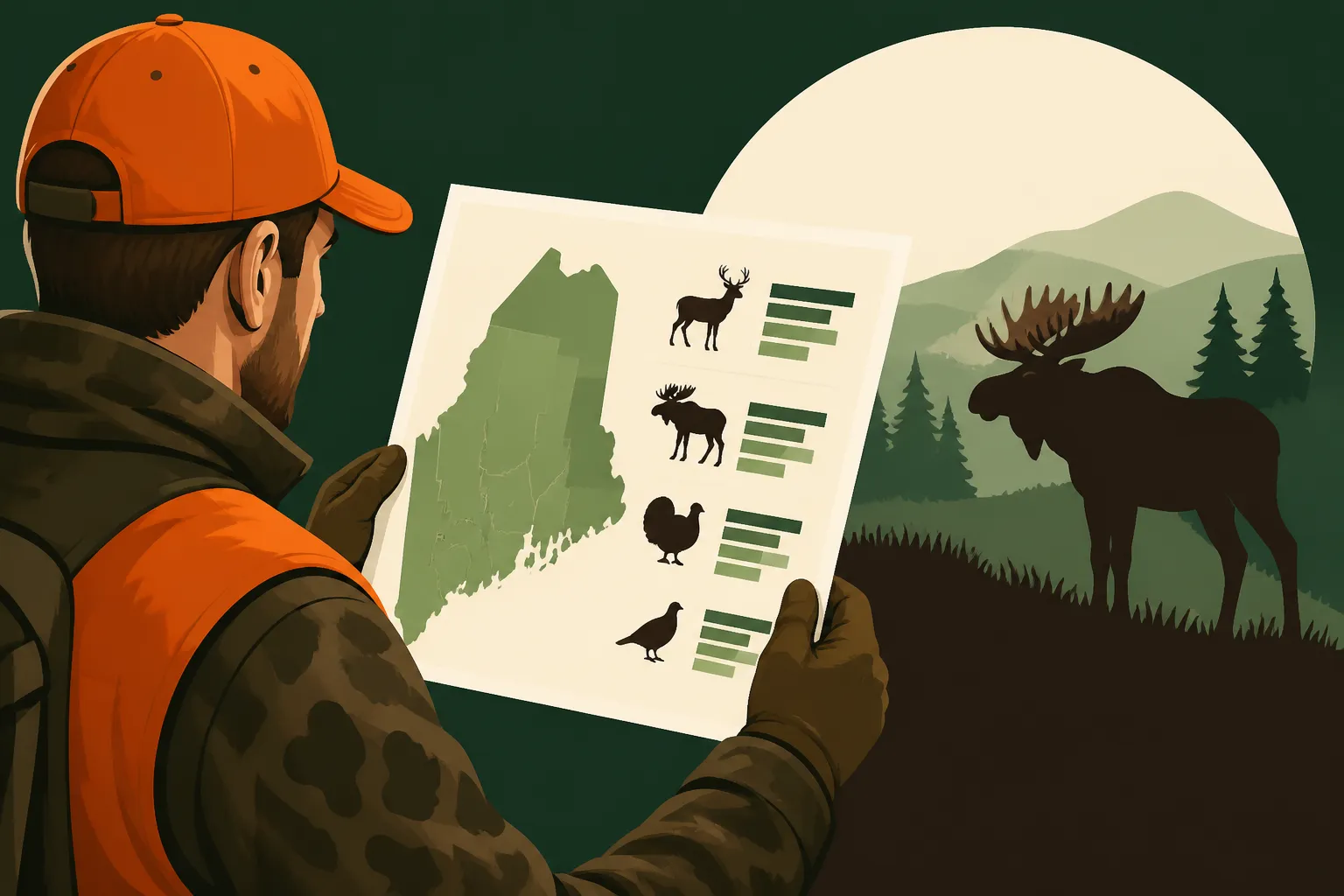
Beyond the official state website, several third-party hunting apps and platforms compile and visualize this data in user-friendly ways. These tools often take the raw numbers and present them through interactive maps, charts, and filters, making it much easier to digest and compare information across different WMDs or over multiple years. For instance, platforms like GoHunt often integrate harvest data directly into their mapping systems, allowing you to see historical success rates layered over satellite imagery and land ownership information. This can be a huge time-saver, helping you quickly identify trends without manually sifting through dozens of PDF pages.
Interpreting Data with Platforms like GoHunt
Imagine seeing a color-coded map of Maine where each WMD glows brighter based on its historical buck harvest success. That's the kind of visualization that platforms like GoHunt can offer. They allow you to filter data by year, species, and even hunting method, giving you a dynamic view of harvest trends. Want to see which WMDs have had the highest bear harvest by baiting over the last five years? GoHunt or similar analytical tools can pull that up in seconds. This greatly simplifies the process of identifying those high-potential areas and understanding how various factors contribute to hunting success. While the official reports provide the raw truth, these platforms provide an accessible interface to uncover the actionable insights contained within.
To give you a better idea of the kind of detailed information you might find within these reports, here's a simplified example of how deer harvest data could be presented for a few hypothetical WMDs:
| WMD | Total Deer Harvest | Adult Bucks | Adult Does | Fawns | Antlerless Permits Issued | Antlerless Permit Success Rate (%) | Total Hunters |
|---|---|---|---|---|---|---|---|
| 1 | 450 | 200 | 180 | 70 | 250 | 72 | 1500 |
| 2 | 620 | 280 | 250 | 90 | 350 | 68 | 2000 |
| 3 | 310 | 140 | 120 | 50 | 180 | 65 | 1200 |
| 4 | 780 | 350 | 320 | 110 | 450 | 70 | 2500 |
| 5 | 190 | 90 | 70 | 30 | 100 | 60 | 800 |
This table, even in its simplified form, immediately allows you to compare WMDs. You can see which WMDs have higher overall harvest numbers, a strong buck take, or a better success rate for antlerless permits. This kind of comparative analysis is exactly what you should be doing with the actual reports. Use it to inform your scouting trips, your permit applications, and your overall hunting strategy in Maine. You might find that Maine's Four-Week Firearms Deer Season provides ample opportunities in certain zones that consistently produce. Or perhaps Maine's WMD-Based Turkey Bag Limits guide your choice of fall turkey hunting destination. Every piece of data tells a story about the hunting landscape in Maine.
Disclaimer
This article is for general informational purposes only and does not constitute professional advice. Laws, prices and regulations vary by location and change over time. Consult a qualified professional for guidance on your specific situation.