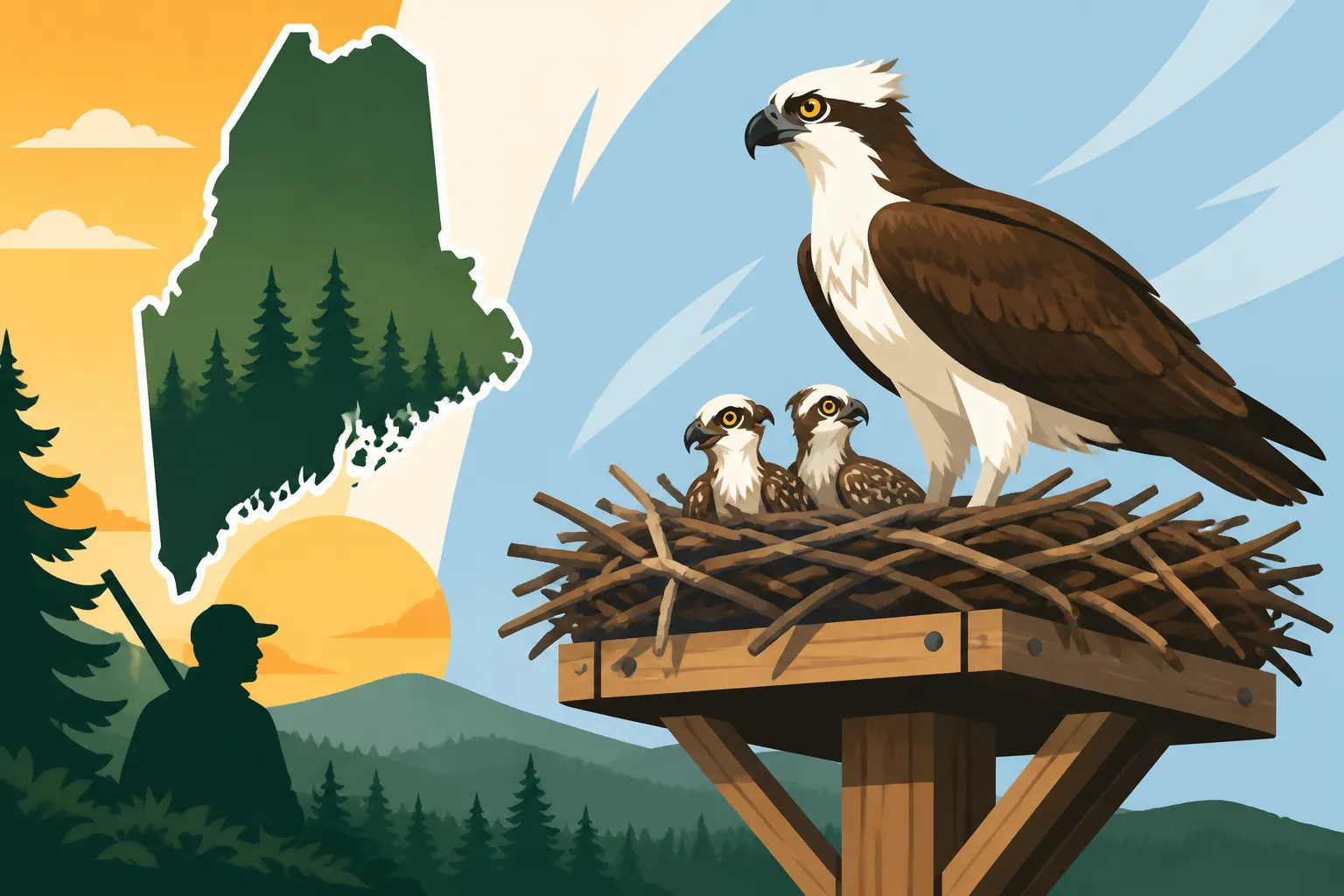
Maine Osprey Nesting Platforms
It's easy to get caught up in the pursuit of game when we're out in the Maine woods, but sometimes we forget that the health of the entire ecosystem is what truly underpins our rich hunting tradition. One often-overlooked but incredibly successful conservation story you might encounter on your excursions involves the majestic osprey, and more specifically, the man-made platforms they now call home. You've probably seen them—those towering poles with a basket-like structure at the top, often near a lake, river, or coastal marsh. Many folks just drive by, maybe snapping a quick photo, without realizing the profound history and ecological significance behind these structures. This guide isn't just about identifying these platforms; it's about understanding why they're so vital, how they symbolize a triumph in wildlife management, and how recognizing them enriches our appreciation for Maine's wild places.
The Resurgence of Ospreys and the Role of Platforms
For a long time, the sight of an osprey gracefully diving talons-first into the water was becoming increasingly rare across North America, including right here in Maine. These magnificent fish-eating raptors faced a grave threat, primarily due to the widespread use of DDT, a pesticide that accumulated in their prey and caused their eggshells to thin, leading to reproductive failure. It was a bleak time for many raptor species, and it highlighted how profoundly human activity could impact the natural world.
Why Ospreys Needed Our Help
Ospreys are incredibly specialized predators, almost exclusively feeding on fish. This made them particularly vulnerable to environmental toxins that bioaccumulated in aquatic food chains. As DDT entered the waterways, it moved up the food chain from small fish to larger fish, and ultimately to the ospreys. The result wasn't immediate death, but a silent, insidious reproductive collapse. Female ospreys would lay eggs, but the shells were so fragile they would often break under the weight of the incubating parent, leading to very few, if any, chicks surviving.
Beyond chemical threats, ospreys also faced habitat challenges. They prefer to nest in tall, prominent structures near water, offering a clear view of their fishing grounds and protection from ground predators. Historically, this meant large, dead trees (snags) or isolated rock pinnacles. However, as human development expanded and old-growth timber dwindled, suitable natural nesting sites became scarcer, adding another layer of pressure to an already struggling population. The future of the osprey looked grim, mirroring the plight of many other incredible birds of prey, until dedicated conservation efforts began to turn the tide. Just like the recovery of another iconic raptor, the Maine Bald Eagle Recovery, the osprey's comeback is a testament to what focused conservation can achieve.
The Design and Purpose of a Nesting Platform
The artificial nesting platform became a cornerstone of osprey recovery efforts. These aren't just random poles stuck in the ground; they are carefully designed structures intended to mimic and improve upon natural nesting sites. Typically, an osprey platform consists of a tall, sturdy pole, often retired utility poles, anchored securely in the ground or seabed. At the very top, a rectangular or circular wooden platform is installed, usually with a low perimeter railing. Sometimes, a few sticks are pre-placed on the platform to encourage ospreys to recognize it as a potential nesting site.
The purpose is twofold: first, to provide a stable, predator-resistant foundation that won't collapse, unlike a decaying tree snag. This ensures the eggs and young chicks are safe from falls and many terrestrial predators. Second, these platforms are strategically placed near abundant fishing grounds, giving ospreys prime real estate with easy access to food. By offering these ideal homes, conservationists helped mitigate the habitat shortage while the broader environmental battle against DDT was being won. These platforms have been remarkably successful, giving ospreys a crucial leg up in re-establishing their populations.
Here's a quick look at how artificial platforms offer a distinct advantage over natural nest sites:
| Feature | Natural Osprey Nest (e.g., in a dead tree) | Artificial Osprey Platform |
|---|---|---|
| Location Stability | Vulnerable to tree decay, wind, and storms | Engineered for long-term stability and weather |
| Predator Access | More susceptible to climbing predators (raccoons, bears) | Generally higher and slicker, harder for ground predators |
| Visibility/Safety | Can be obscured by surrounding canopy, less open | Open, commanding views of territory, often safer |
| Longevity | Limited by tree lifespan and decay | Designed to last for decades with minimal maintenance |
| Human Impact | Reduced suitable sites due to logging/development | Direct human intervention to provide needed habitat |
Finding and Appreciating Osprey Platforms in Maine
Once you know what to look for, you'll start noticing osprey platforms everywhere across Maine. They're a common sight now, thanks to decades of hard work by wildlife agencies, conservation groups, and even local volunteers. Spotting one, especially with an active nest and perhaps a pair of ospreys tending to their young, is a truly rewarding experience for any outdoors enthusiast.
Where to Spot These Majestic Nests
Osprey platforms are almost always located near water, and for good reason: fish are their bread and butter. You'll find them dotted along the extensive Maine coastline, perched on pilings in salt marshes, tidal rivers, and near estuaries. As you head inland, keep an eye out around large lakes, major rivers like the Penobscot, Kennebec, and Androscoggin, and even larger beaver flowages or floodplains. They love open areas where they have a clear flight path to their nests and an unobstructed view for hunting.
When you're out scouting for deer, or perhaps using a mapping application like GoHunt to analyze aerial imagery of wetlands and waterways for potential hunting spots, you might unexpectedly spot a tell-tale platform. These structures are often quite visible, stark against the skyline, especially when the surrounding trees are bare. Popular public access points for fishing or boating, like state parks or boat launches, are also common locations, as are many of Maine's Wildlife Management Areas (WMAs). Many WMAs are designed to support a diversity of wildlife, and sometimes that includes specific habitat enhancements for raptors. You can learn more about these public lands by checking out information on Maine Wildlife Management Areas. Often, you'll find them alongside roadways that parallel rivers or lakes, making them easy to observe from a safe distance.
Osprey Platforms as Indicators of Habitat Health
The presence of active osprey nests on these platforms is far more than just a pretty sight; it's a powerful indicator of a healthy aquatic ecosystem. Think about it: ospreys are at the top of their specific food chain. For them to thrive, there needs to be an abundant and healthy fish population, and that fish population needs clean water. If the fish are contaminated, or if their numbers dwindle due to pollution or habitat degradation, the ospreys will suffer, regardless of how many perfect nesting platforms are available.
So, when you see a thriving osprey family on a platform, it's a good sign that the local waters are relatively clean and teeming with life. This interconnectedness is crucial for hunters to appreciate. A healthy environment for ospreys often means a healthy environment for other species as well, including the game animals we pursue. A vibrant wetland or a clean river that supports fish for ospreys is also likely providing crucial water sources, food, and cover for deer, turkeys, and other small game. When you're using tools like aerial photos, even for something like Reading Aerial Photos for North Woods Deer, considering the presence of such indicator species can give you a broader understanding of the health and biodiversity of a given tract of land. It truly underscores that all life in the wild is intrinsically linked.
How You Can Contribute to Osprey and Wildlife Conservation
Our role as outdoorsmen and women extends beyond just harvesting game; it encompasses being stewards of the land and its creatures. Supporting osprey conservation, even indirectly, contributes to a healthier Maine for all wildlife.
Respecting Nesting Sites and Wildlife
The most immediate way you can help is simply by showing respect. If you encounter an osprey nest, whether on an artificial platform or a natural structure, maintain a respectful distance. Disturbing nesting birds, especially during critical incubation or brooding periods, can cause them to abandon their nest or leave young vulnerable. Observe them with binoculars or a spotting scope, appreciate their beauty, and remember that these birds are legally protected. Avoid making loud noises or rapid movements that could startle them.
This respect extends to all wildlife. When you're exploring the wild places of Maine, whether it's vast tracts of timber company land or smaller private parcels, practicing ethical behavior is paramount. This means leaving no trace, respecting private property boundaries (and understanding Maine Landowner Relations Program principles), and being mindful of all species, not just the ones with open seasons. Osprey platforms are often located in areas that may see recreational use, so it's a shared responsibility to ensure these birds can raise their young in peace.
Supporting Broader Ecosystem Health
Beyond direct observation, your support for broader conservation efforts plays a huge role. This can take many forms:
- Supporting Conservation Organizations: Many local and state organizations work tirelessly on habitat preservation, wildlife monitoring, and educational initiatives that benefit ospreys and countless other species. Even small contributions of time or money can make a difference.
- Advocating for Clean Water: Ospreys are fish eaters, so clean water is non-negotiable for their survival. Supporting policies and initiatives that protect Maine's waterways from pollution and degradation directly benefits these birds.
- Participating in Citizen Science: Some programs invite volunteers to monitor osprey nests. Reporting sightings and nesting activity can provide valuable data to wildlife biologists tracking population trends.
- Understanding Wildlife Management: Educating yourself about wildlife diseases, like the ongoing monitoring to ensure Maine's CWD-Free Status Explained, helps you understand the bigger picture of ecosystem health. Similarly, understanding efforts like Maine Waterfowl Banding Programs gives insight into how wildlife populations are tracked and managed.
Ultimately, the story of Maine's osprey nesting platforms is a hopeful one. It's a tale of how focused effort can reverse environmental damage and bring a species back from the brink. As hunters and outdoors enthusiasts, recognizing and appreciating these efforts only strengthens our connection to the landscape and reminds us of our shared responsibility to ensure that Maine's wild heritage continues to thrive for generations to come, encompassing all creatures, not just those we pursue. Even for species like the osprey, which falls under the category of Game You Cannot Hunt in Maine, their well-being is intrinsically linked to the overall vitality of the ecosystems where we spend our time afield.
Disclaimer
This article is for general informational purposes only and does not constitute professional advice. Laws, prices and regulations vary by location and change over time. Consult a qualified professional for guidance on your specific situation.