Maine Predator Impact on Fawn Recruitment
Maine fawn recruitment measures young deer survival through autumn, driving population health, hunting success, and herd stability.
Know what you’re after.
Big game, small game, upland birds, and waterfowl — identification, behavior, rut and migration timing, and how each species moves through the season.
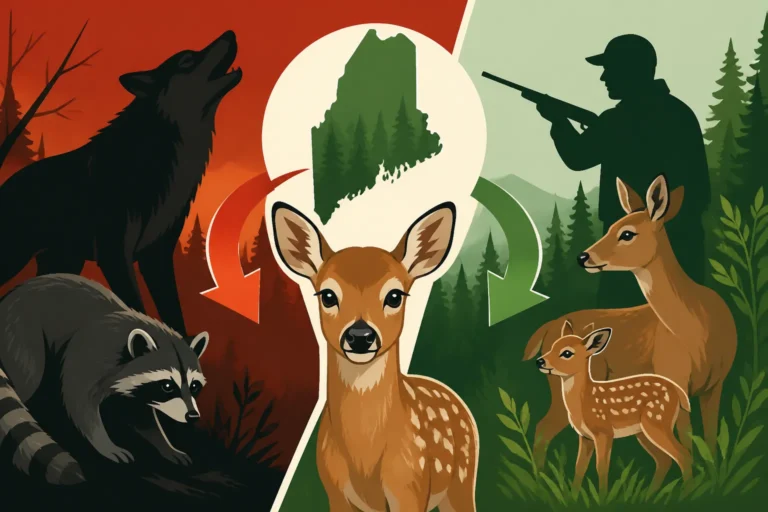
Maine fawn recruitment measures young deer survival through autumn, driving population health, hunting success, and herd stability.
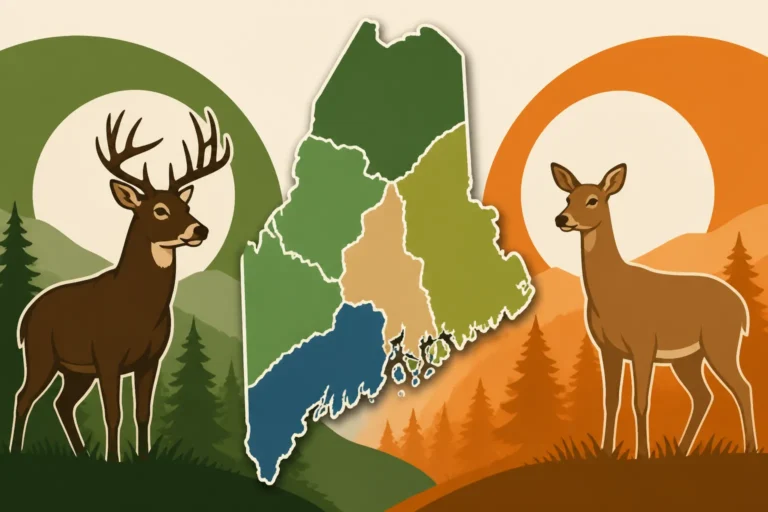
Maine buck-to-doe ratios by region explain whitetail herd health, rut intensity, and hunting success across wildlife districts.
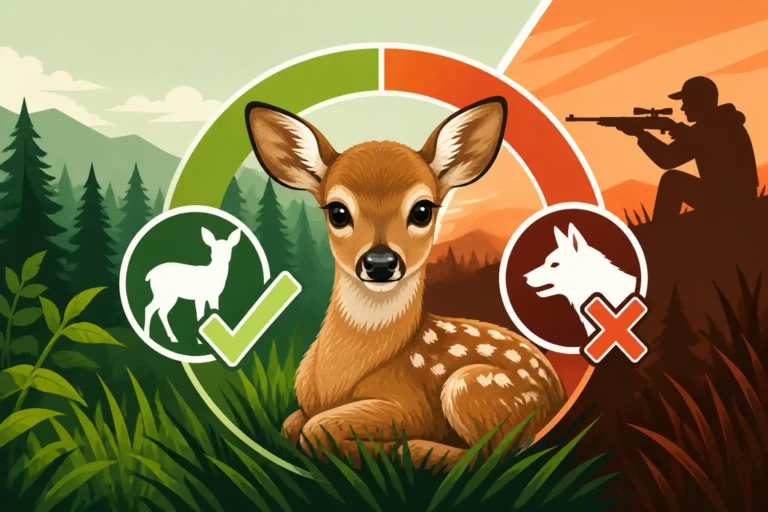
Maine fawn survival rates reveal white-tailed deer herd health, winter impacts, and predator pressures across the state.
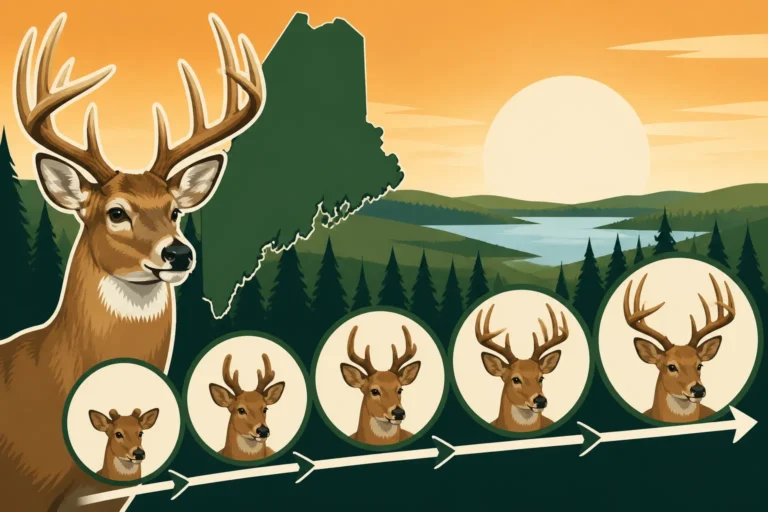
Maine deer antler growth and shedding cycles explained through seasonal phases, from spring velvet development to autumn hardening.
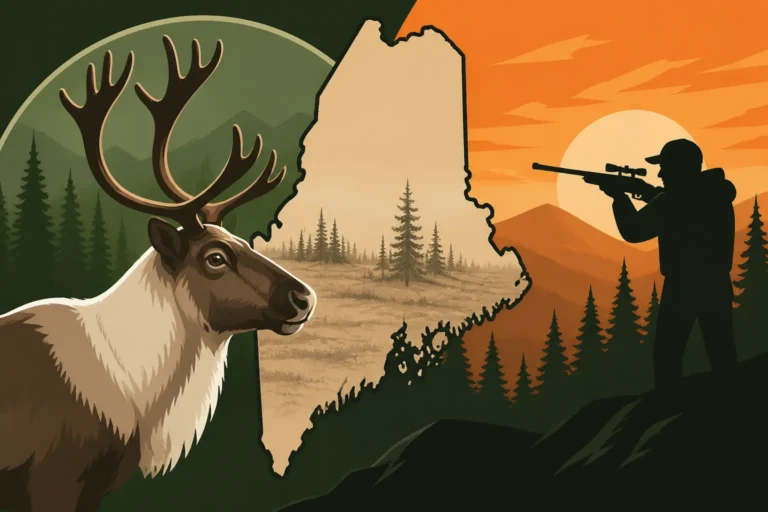
Maine woodland caribou history and extirpation details their former northern wilderness range, specialized boreal habitat, and winter adaptations.
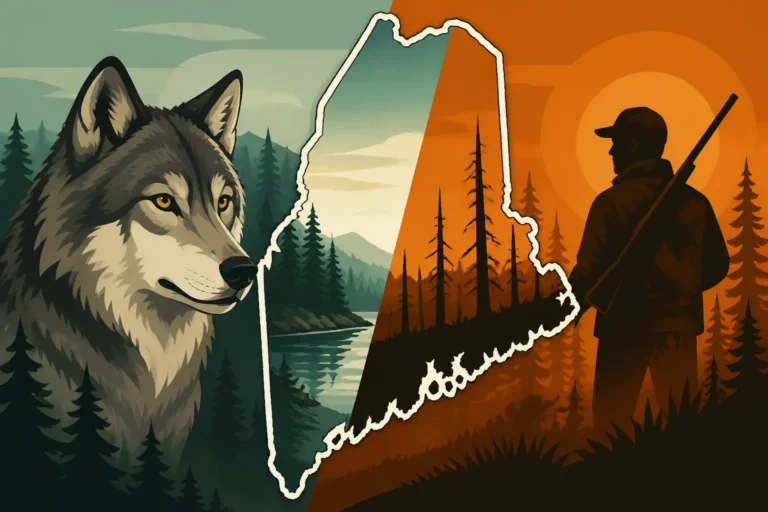
Maine wolf history and the eastern wolf extirpation explain human settlement pressures, indigenous coexistence, and changing New England forest ecosystems.
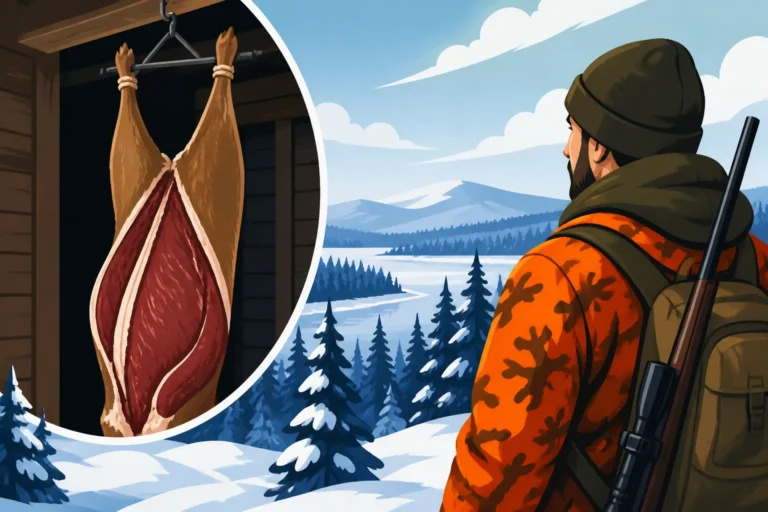
Maine whitetail aging methods use temperatures between 34 and 40 degrees to break down muscle fibers and improve tenderness.
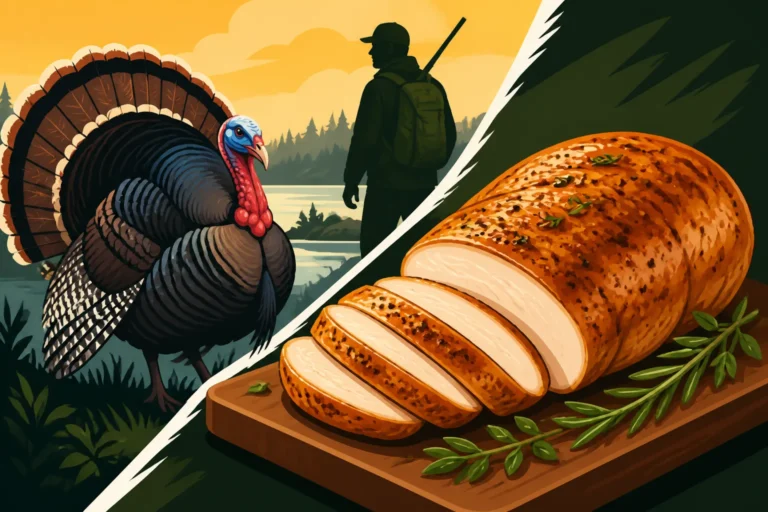
Wild turkey breast brining and rapid cooling methods prevent lean Maine game meat from becoming dry, tough, and disappointing.
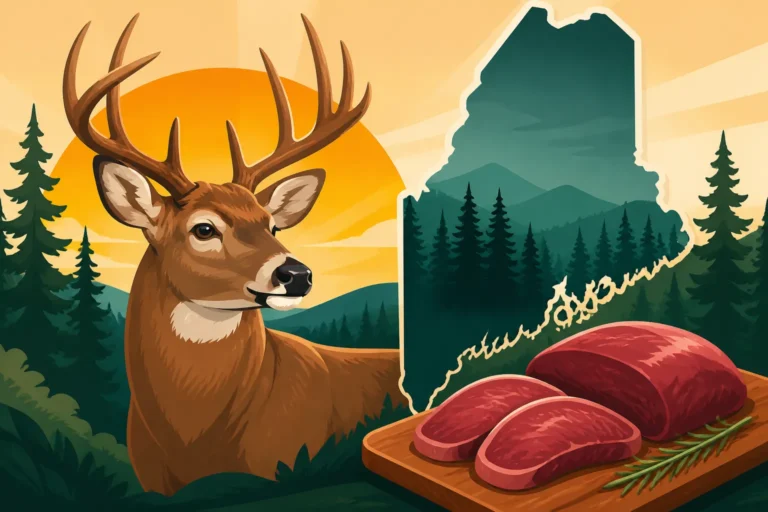
Maine wild game meat options like whitetail deer and moose offer delicious meals with proper field dressing and cooling.
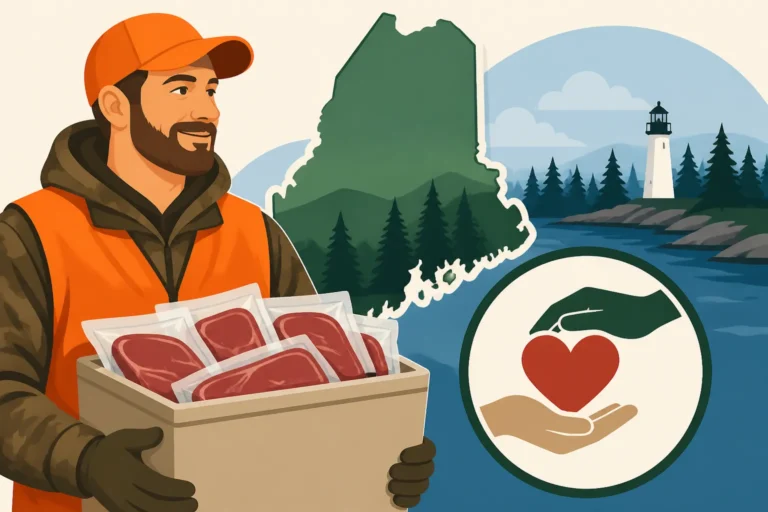
Venison donation in Maine helps successful hunters share surplus wild game with local families experiencing food insecurity.