What Posted Land Means in Maine
One of the trickiest parts of hunting in Maine, especially if you're new to our beautiful state or just haven't been out in a while, is understanding where you can legally step foot. It’s a common frustration to see a prime piece of woods, only to be stopped dead in your tracks by a "Posted" sign. This guide is here to unravel the often-confusing world of posted land in Maine, helping you navigate property lines with confidence and respect, ensuring your hunting experience is both enjoyable and legal.
The Unique Landscape of Maine's Land Access
Maine has a long-standing tradition of open land access, which can be a real blessing for hunters, but it also comes with its own set of nuances. Unlike some states where all private land is assumed closed unless explicitly opened, Maine operates a bit differently. This difference is key to understanding what "posted" really means here.
Maine's Implied Permission Tradition
Picture this: You're driving down a quiet back road, scanning the treelines for deer sign. You see a promising patch of woods, no fences, no gates, just an open invitation from nature. In many other states, you'd assume this was private property and off-limits unless you'd secured permission. But here in Maine, we've historically embraced an "implied permission" tradition. This means that, generally, unless a landowner has taken specific, legal steps to restrict access, you are presumed to have permission to engage in recreational activities like hunting, fishing, trapping, or even just hiking on their undeveloped land.
This tradition is deeply ingrained in our culture. It speaks to a time when vast tracts of land were wilderness, and access was simply a given. While things have changed with increasing development and population density, the spirit of this implied permission still largely holds true for vast swaths of Maine's landscape. It’s a privilege, not a right, and it places a significant responsibility on us, the recreational users, to be good stewards and always respect the land and its owners. This unique aspect is a cornerstone of Maine's Private Land Access Tradition.
The Legal Definition of Posted Land
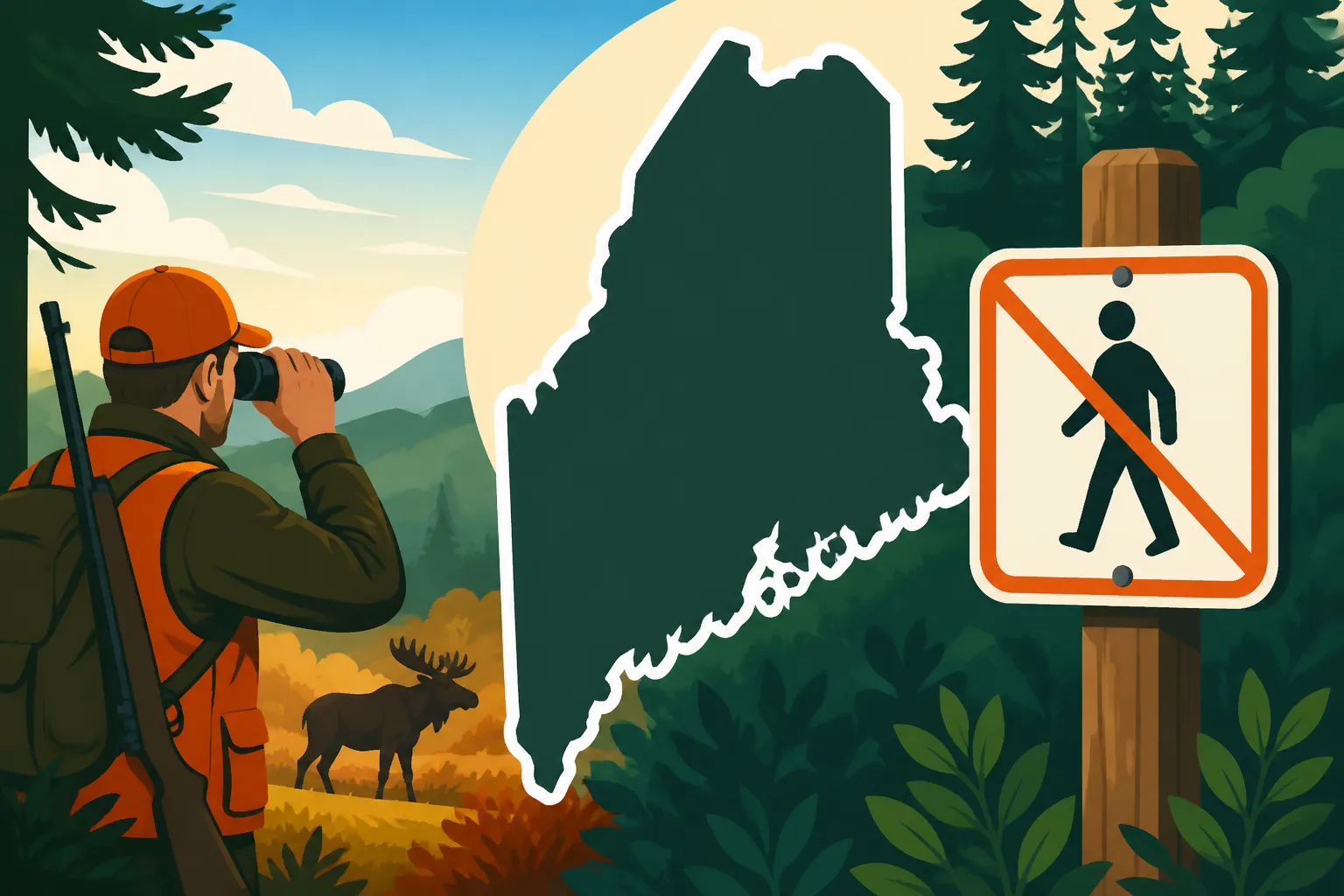
So, if implied permission is the default, what makes land "posted" and thus off-limits? This is where the landowner steps in and explicitly revokes that implied permission. Maine law is very specific about what constitutes legal posting. It's not just a handwritten note tacked to a tree, though you might see those, too. For land to be legally posted, it must meet certain criteria that make the landowner's intent crystal clear.
The law requires signs or notices that are "conspicuous." This generally means they must be at least 4 inches by 6 inches in size, contain the words "No Trespassing" or similar language clearly prohibiting entry, and be placed no more than 100 feet apart. These signs must be maintained, meaning they shouldn't be faded, torn, or obscured by brush. Alternatively, property can be marked with a continuous line of "no trespassing" paint marks. These marks must be fluorescent orange paint, at least one inch wide and eight inches long, placed between three and five feet from the ground, and visible from all points of entry to the property. Just like signs, these marks must not be more than 100 feet apart. The goal is to ensure that anyone entering the property would reasonably know they are entering posted land.
Understanding this legal definition is crucial. It’s the difference between unknowingly meandering onto private property and intentionally disregarding a landowner's wishes. When you encounter land marked in this way, that implied permission is unequivocally gone, and access is explicitly denied without direct permission from the landowner.
Navigating Posted Signs: What You Need to Know
Encountering posted signs can be disheartening, especially when you’ve found promising sign. But knowing exactly what those signs mean and how to react is fundamental to being a responsible hunter in Maine.
Identifying Legally Posted Property
As hunters, our responsibility begins with accurately identifying legally posted property. This isn't just about avoiding trouble; it's about respecting the choices of landowners who are, after all, allowing or disallowing access to their private domain. A legally posted property will have those clear signs or paint marks we just discussed, uniformly spaced and highly visible. You shouldn't have to squint or search for them; they should be obvious at all common points of entry and along the property boundaries.
Beware of relying on assumptions. Just because there's a fence, or a private road, doesn't automatically mean the land is posted. Similarly, an old, faded sign barely visible in the bushes might not legally constitute proper posting, but it certainly indicates a landowner's intent, and it's always best to err on the side of caution. If there's any doubt, assume it's private and seek permission, or simply move on. Remember, the landowner has the burden to post their land legally if they want to prohibit entry, but we have the ethical obligation to heed those warnings. It's important to be familiar with Maine Posted Land Rules to ensure you're always acting within the law.
The Implications for Hunters
The moment you cross a legally posted boundary without permission, you are trespassing, and the implications for hunters can be significant. First and foremost, you could face legal penalties, which might include fines, loss of hunting privileges, or even more severe consequences depending on the specifics of the trespass and any damage incurred. Beyond the legal ramifications, there's the ethical consideration. Disregarding posted land erodes the very foundation of Maine's implied permission tradition. It damages the relationship between hunters and landowners, potentially leading to more land being posted in the future, restricting access for everyone.
Think about a scenario where you're tracking a deer and it crosses onto posted property. What do you do? The law in Maine dictates that even for game retrieval, you need permission to enter posted land. You cannot simply follow your game onto someone else's property, even if you’ve wounded it. This can be incredibly frustrating, especially after putting in the effort to make a good shot. It requires a difficult decision: either you attempt to contact the landowner for permission to retrieve, or you must abandon the pursuit. It highlights the importance of knowing your boundaries before the shot. For specific guidance on this tricky situation, refer to Retrieving Game From Private Land in Maine. It is always better to be proactive and understand where boundaries lie, or have permission secured beforehand, rather than facing this difficult choice in the field.
Seeking Permission on Posted Land
While "posted" generally means "no entry," it doesn't always have to be a permanent barrier. Sometimes, all it takes is a respectful conversation to turn a "no" into a "yes." Learning how to approach landowners is a valuable skill that can unlock incredible hunting opportunities.
The Art of Asking for Permission
Approaching a landowner to ask for permission to hunt, especially on land that is clearly posted, requires a certain touch. It’s not just about asking; it’s about building a relationship and demonstrating respect. Timing is key – don't show up on opening day, camouflage-clad and ready to hunt. Instead, approach them well before the season, perhaps during the off-season. Dress neatly, introduce yourself politely, and state your purpose clearly and concisely.
Start by expressing your understanding and respect for their posted signs. Acknowledge that you know the land is private and that you appreciate them even considering your request. Explain why you're interested in hunting their property (e.g., "I've seen some good deer sign here," or "I'm looking for a safe place to hunt away from crowds"). Be specific about what you want to hunt and when. Offer to share game, help with chores, or simply keep an eye on their property. Leave a clear contact number and assure them you will respect their wishes implicitly. Showing you’re a responsible, ethical individual, not just another hunter looking for a spot, can make all the difference. For more detailed advice, check out Asking a Maine Landowner for Permission.
Written Versus Verbal Permission
Now, when it comes to getting that all-important "yes," how should it be documented? In Maine, verbal permission from a landowner is generally sufficient to legally hunt on their property. If a landowner explicitly tells you, "Yes, you can hunt here," and they are the owner or legal agent, that's your green light. However, in an age where communication can be misunderstood or memories can fade, having something in writing offers an extra layer of protection and clarity for both parties.
While Do You Need Written Permission in Maine? technically states it's not always required, getting written permission can prevent misunderstandings down the road. It can be as simple as an email, a text message, or a signed note stating who has permission, for what activity, and during what timeframe. This written record can be invaluable if a neighbor questions your presence or if there's ever a dispute. It formalizes the agreement and shows your commitment to ethical hunting practices. When you're dealing with larger tracts or hunting with multiple people, written permission is almost always the smarter choice.
Tools and Technology for Land Navigation
In the good old days, hunters relied on paper maps, intuition, and sometimes a lot of guesswork to figure out property lines. Today, thanks to advances in technology, we have powerful tools that can make land navigation much simpler and significantly reduce the risk of accidental trespass.
Using Mapping Apps to Identify Property Boundaries
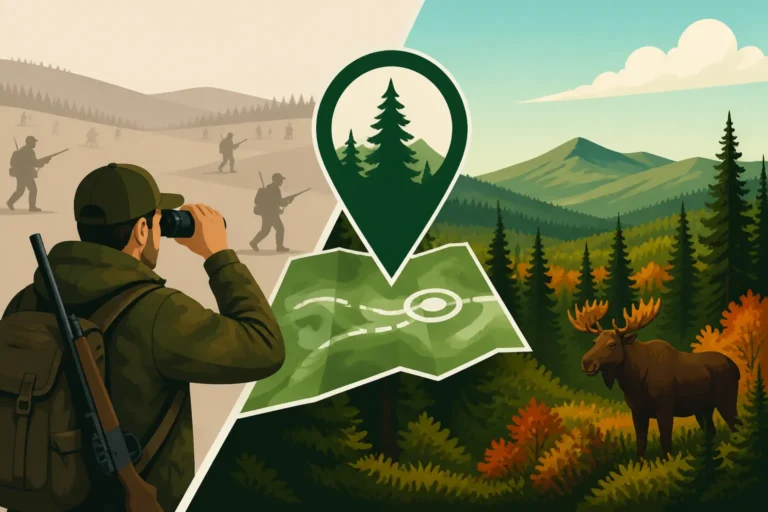
The days of squinting at a brittle, folded paper map in the rain are largely behind us, thank goodness! Modern mapping applications have revolutionized how we approach land navigation, especially when it comes to distinguishing between private and public holdings. Apps like onX Hunt and GoHunt (and other similar services) have become indispensable for countless hunters, offering detailed satellite imagery overlaid with property boundaries, landowner names, and often even contact information.
Imagine scouting a new area from your couch, pinpointing potential bottlenecks, food sources, and bedding areas. Then, on the ground, you can see your exact location in relation to property lines, eliminating doubt about whether that promising-looking ridge is on posted land or open for public access. These apps allow you to mark waypoints, track your movements, and even drop pins to remember where you saw sign. While these tools are incredibly helpful, always remember they are tools, not absolute legal documents. GPS accuracy can vary, and property lines on digital maps are approximations. Use them as powerful guides, but combine them with visual cues on the ground, like actual posted signs or paint marks. For deep dives into how these technologies can assist you, explore Using an App for North Maine Woods Land Status and onX Layers for Maine Land Status. They can truly be game-changers for responsible land access.
Public vs. Private Land: Making the Distinction
Knowing the difference between public and private land is absolutely critical, and it’s not always obvious, particularly in Maine’s vast forested regions. While mapping apps are a huge asset, it's also important to understand the broader categories of land ownership you might encounter. Maine boasts significant acreage of state and federal public lands, which are generally open to hunting. However, even within these areas, there can be specific regulations or zones that restrict hunting. For a comprehensive overview, look into Maine's State and Federal Public Land.
Beyond government-managed public lands, you'll find vast tracts owned by timber companies. Many of these industrial forest lands operate under a similar "implied permission" model, often allowing public access for recreational purposes, though some may charge day-use fees or have specific rules, especially in areas like the North Maine Woods. These areas can sometimes appear identical to private residential or individually-owned woodlots. This is where those mapping apps become vital for quickly checking parcel lines and ownership. Always verify before you venture far, and when in doubt about Finding Maine Property Lines, seek clarification. The goal is to hunt confidently and ethically, knowing you are always in the right place.
Common Scenarios and Misconceptions
Even with the best intentions and tools, Maine's diverse landscape can present tricky situations. Knowing how to react in common scenarios, and dispelling prevalent misconceptions, will make you a more prepared and responsible hunter.
Posted Land Adjacent to Public Hunting Areas
One of the most challenging situations hunters face is when posted private land abuts a public hunting area, like a Wildlife Management Area (WMA) or a large tract of timber company land. The boundary line might be clear on a map, but in the dense woods of Maine, with thick spruce, overgrown clear-cuts, or winding rivers, those lines can be practically invisible on the ground. It’s easy to inadvertently step across a boundary, especially when focused on tracking game or still-hunting through cover.
To avoid accidental trespass, always give boundary lines a wide berth. If your mapping app shows you’re nearing a posted property, try to establish a visual landmark on the public side and maintain a safe buffer zone. Be extra vigilant when moving through thick cover or areas with limited visibility. It's not just about avoiding legal trouble; it’s about respecting the landowner next door, who may not appreciate a hunter, even an accidental one, on their posted land. Setting up too close to a posted boundary can also lead to frustration if game pushes onto the private side, forcing you to end your hunt prematurely.
The Role of Posting in Deer Management
Sometimes, hunters misunderstand why a landowner chooses to post their property. It’s not always about being anti-hunting or unfriendly. While some landowners simply desire privacy or want to limit liability, many also post their land as a form of personal deer management. They might have a specific goal for their property, such as letting young bucks mature, maintaining a certain deer density, or simply wanting to be the sole hunters on their land.
A landowner who posts their property and manages their own deer herd, for instance, might be implementing antler point restrictions voluntarily or choosing to only harvest older does. This can have an interesting ripple effect on surrounding unposted or public lands, potentially influencing deer movement and population dynamics. By respecting their choice to post, even if you don’t agree with it, you contribute to a positive relationship that might, in some cases, lead to permission granted in the future, or at least prevent further land closures for other recreational users.
Here's a quick comparison of Maine's typical land access rules:
| Feature | Implied Permission Land (Unposted) | Legally Posted Land |
|---|---|---|
| Access Assumption | Generally assumed open for recreation (hunting, fishing, etc.) | Assumed closed; explicit permission needed for entry |
| Marking Requirements | No specific marking required for access | Signs (4×6", "No Trespassing", <100ft apart) OR Fluorescent Orange Paint (1×8", 3-5ft high, <100ft apart) |
| Landowner's Burden | Landowner must post to deny access | Landowner has posted to deny access |
| Hunter's Action | Proceed with respect; always be prepared to ask if questioned | Do not enter without explicit permission from landowner |
| Game Retrieval | Generally permitted, but still best to inform landowner if possible | Permission required before entering for retrieval |
| Legal Status of Entry | Legal if implied permission is not revoked | Illegal trespass without permission |
Being a Responsible Hunter in Maine
Ultimately, understanding what posted land means in Maine boils down to one thing: being a responsible hunter. This means more than just following the letter of the law; it means upholding the spirit of our hunting traditions and ensuring future generations have places to hunt.
Respecting Landowner Rights
The cornerstone of Maine’s open land access tradition is mutual respect. As hunters, we are guests on the land, whether it’s explicitly unposted or we've been granted special permission to hunt on posted acreage. Respecting landowner rights means treating their property as if it were your own, or even better. This includes always closing gates behind you, staying on established roads or trails unless otherwise permitted, avoiding damage to crops or property, and certainly not leaving trash or gut piles in highly visible areas.
If you encounter a landowner while on their property, always be courteous and polite, even if they seem initially unwelcoming. Offer to show them your license and any permission you have. Remember, a single negative encounter can lead to a landowner posting their property, impacting not just you, but the entire hunting community. Building positive relationships, one respectful interaction at a time, is how we preserve our hunting heritage. When in doubt, a simple "thank you" goes a long way.
Educating Yourself on Maine Trespass Law
Ignorance of the law is never an excuse, especially when it comes to hunting on private land. Maine’s trespass laws are designed to protect landowners’ rights and ensure responsible recreational use. As hunters, it’s our duty to thoroughly understand these laws before we even step into the woods. This includes not only the specific posting requirements but also the potential penalties for violations.
For detailed legal specifics, you should always consult the official Maine hunting regulations or resources like Maine Trespass and Permission Law. Understanding what constitutes legal trespass, what the penalties are, and how game retrieval on private land is handled are all vital pieces of knowledge. By staying informed, you not only protect yourself from legal trouble but also contribute to a better public image for hunters. Being a well-informed and law-abiding hunter is the best way to ensure that Maine's unique land access traditions continue for years to come.
Disclaimer
This article is for general informational purposes only and does not constitute professional advice. Laws, prices and regulations vary by location and change over time. Consult a qualified professional for guidance on your specific situation.