Maine’s November Firearms Deer Season
The crisp, cold air of November in Maine signals one thing for many of us: it's deer season. But let's be honest, while the thought of chasing whitetails through the frosty woods is exciting, the reality can be daunting. From navigating unpredictable weather shifts to deciphering deer patterns in pressured areas, knowing where to start and how to adapt can feel overwhelming. This comprehensive guide is designed to cut through that complexity, equipping you with field-proven tactics and essential knowledge to make your Maine firearms deer season a successful and memorable one.
Understanding Maine's November Firearms Deer Season Framework
Maine's firearms deer season is more than just a date on the calendar; it's a deeply ingrained tradition and the most anticipated hunting period for both residents and non-residents alike. This stretch of weeks in November brings with it unique challenges and opportunities, requiring hunters to be well-versed in both the law and the lore of the Maine woods.
Season Dates and Duration
Maine's regular firearms deer season typically spans four weeks, starting the last Saturday in October for residents, followed by the main opener the first Saturday in November for all hunters. This extended period is a significant advantage, offering ample time to pursue deer, but it also means adapting to varying conditions as the month progresses from early November warmth to potential late-month snow and bitter cold. The opening Saturday in November is often the busiest day in the woods, with hunters eager to fill their tags, bringing significant hunting pressure to easily accessible areas. One critical date for resident hunters is the specific day designated as the Maine Resident-Only Day, usually the Saturday before the statewide opener. This offers a unique, less-pressured opportunity to scout or hunt before the main influx of hunters. Understanding this phased opening helps in planning your initial hunts to avoid the heaviest crowds or to intentionally utilize the pressure to your advantage by pushing deer.
Legal Firearms and Ammunition
When it comes to legal methods, Maine allows a wide array of firearms for deer hunting during the November season. Centerfire rifles are the overwhelming favorite, with calibers ranging from .243 Winchester up to popular choices like .30-06 Springfield and .308 Winchester, all well-suited for taking down a whitetail cleanly and ethically. Shotguns, especially those chambered in 12 or 20 gauge with slugs, are also legal and highly effective, particularly in denser cover or closer ranges. Muzzleloaders, while having their own dedicated season after firearms, are also legal during the regular firearms season, offering hunters who prefer traditional methods another option.
The emphasis is always on ethical hunting, which means choosing ammunition that can reliably harvest a deer. Expanding bullets, designed for quick energy transfer and internal damage, are paramount. Prohibited firearms include fully automatic weapons, and certain restrictions may apply in specific wildlife management districts (WMDs), particularly those near more populated areas or designated as expanded archery zones, where shotgun-only or even archery-only rules might be in effect. Always consult the current Maine hunting regulations before heading afield to confirm the specific rules for your chosen WMD. Understanding the legal weapons during Maine firearms season is your first step to a compliant hunt.
Licensing and Permits for Firearms Season
Before you even step foot in the woods, having the correct licenses and permits is non-negotiable. For both residents and non-residents, a valid Maine hunting license is the foundation. Residents typically have a few options, including a basic license, or combination licenses that bundle hunting and fishing privileges. Non-residents will find their licenses are generally higher in cost, reflecting the privilege of hunting in the Pine Tree State.
Beyond the base license, the antlerless permit system plays a crucial role in managing Maine's deer population. These "any-deer" permits, allocated through an annual lottery system, allow hunters to harvest an antlerless deer (a doe or fawn) in specific WMDs. Without one of these permits in hand, most hunters are restricted to harvesting only antlered bucks. The Maine Antlerless Permit Districts are designed to control deer numbers where they are high and allow the herd to grow where it's struggling. Drawing an antlerless permit can significantly increase your chances of filling the freezer, as you're not solely focused on finding a buck. Finally, hunter education is a mandatory requirement for most first-time hunters in Maine, ensuring that everyone entering the woods understands safety protocols, wildlife laws, and ethical hunting practices. If you're new to hunting in Maine, securing your hunter education certification is a critical early step.
Scouting and Pre-Season Preparation for November Deer
Success in Maine's November firearms season often hinges on the work you put in long before opening day. The dense forests and varied terrain mean that simply showing up and hoping for the best is rarely a recipe for success. Pre-season scouting, combined with a deep understanding of deer behavior, will give you a significant edge when the orange army descends on the woods.
Reading the Landscape for Deer Sign
Deer are creatures of habit, and their movements leave tell-tale signs on the landscape. Learning to "read" these signs is like deciphering a secret language spoken by the woods. Rubs, where bucks scrape their antlers on trees, are clear indicators of a buck's presence and travel routes, especially during the pre-rut and early rut phases in November. Scrapes, patches of ground pawed bare by deer and often urinated in, serve as communication hubs, telling you that deer are actively scent-checking and marking territory. Pay close attention to fresh sign—bright white rubs or moist scrapes—as older, faded sign might indicate past activity.
Beyond these overt signs, look for less obvious indicators: fresh tracks in soft earth, droppings, and browsed vegetation. Understanding deer movement patterns is key. Deer will travel between bedding areas (dense cover where they feel safe) and feeding areas (oaks, apple orchards, agricultural fields). These travel corridors often follow natural funnels like saddles between ridges, narrow strips of woods between clearings, or along the edges of swamps. Don't just look for a sign, look for a pattern of signs that indicates consistent deer use. Utilizing mapping tools, like those found on GoHunt, can help you overlay these observations with topographical maps to identify potential funnels and bedding areas from an aerial perspective.
Locating Prime Deer Habitat
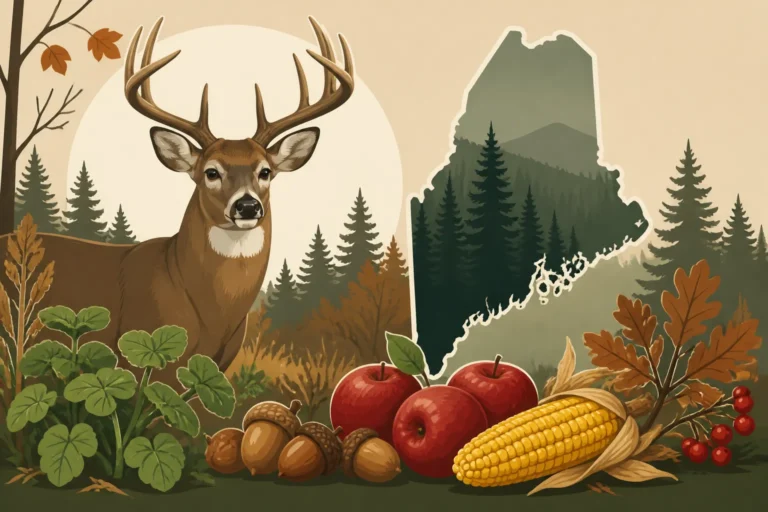
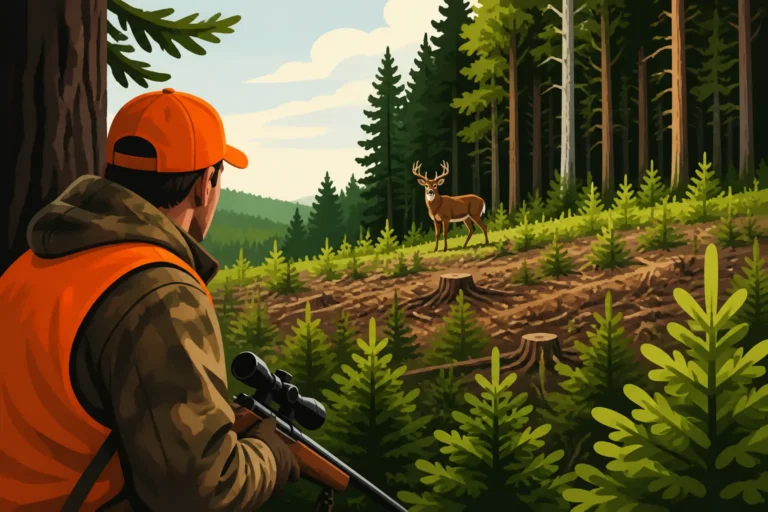
Maine's landscape offers a diverse array of habitats, and knowing which ones deer favor, especially in November, is crucial. Hardwood ridges, particularly those with mature oaks dropping acorns, are classic early-season hotspots. Deer will gorge on acorns, building up fat reserves for winter. As the season progresses and food sources deplete, cedar swamps become incredibly important. These dense, thermal cover havens provide shelter from cold winds and deep snow, often holding large numbers of deer. Clear-cuts, especially those 5-15 years old, offer both browse and thick cover, making them excellent places to find deer seeking refuge and food. Agricultural edges, whether cornfields in Aroostook County or old hay fields in central Maine, can be magnets for deer, particularly at dawn and dusk.
It's also important to consider the role of deer wintering yards (DWYs). These are areas, often dominated by mature conifers like cedar and spruce, that provide critical thermal cover and reduced snow depth. While deer might not be "yarded up" in full force until deep winter, understanding where these critical habitats are located will give you insight into their future movement patterns and late-season refuges. Knowing how to read a North Woods deer yard can be particularly beneficial for understanding deer movements in remote areas.
Understanding Hunting Pressure and Its Impact
The sheer number of hunters in the woods during Maine's November firearms season is arguably the biggest factor influencing deer behavior. Deer are not stupid; they quickly learn to adapt to human presence. This often means they become primarily nocturnal, moving mostly under the cover of darkness, or they seek refuge in the thickest, nastiest cover imaginable. This pressure is a real frustration for many hunters, especially those with limited time off.
To counter this, you need strategies. One approach is to actively seek out ground others walk past. This might mean hiking deeper into public land, looking for forgotten corners of woodlots adjacent to private property, or focusing on terrain that is physically demanding to access. Think steep slopes, dense blowdowns, or the fringes of large swamps. While still-hunting Western Maine mountain slopes can be physically demanding, it often leads to less pressured deer. Another tactic is to use the pressure to your advantage. If you know other hunters will be pushing certain blocks of woods, you can position yourself along escape routes or funnels where deer are likely to be pushed through. This involves a calculated risk but can be incredibly effective when executed safely and strategically. The GoHunt app, with its public and private land mapping layers, can be invaluable for identifying these less-traveled areas and navigating them safely.
Effective Hunting Strategies for Maine's Firearms Season
Once you've done your homework and understand the lay of the land, it's time to put boots on the ground with a solid hunting plan. Maine's diverse terrain and the varying stages of the rut during November mean you need a versatile playbook of tactics.
Stand Hunting and Still-Hunting Tactics
These are the bread and butter of deer hunting for many Mainers, each with its own merits depending on the situation. Stand hunting involves choosing a strategic location, setting up a treestand or ground blind, and patiently waiting for deer to come to you. The key here is location, location, location. You need to identify natural funnels, pinch points, feeding areas, or travel corridors that deer are consistently using. Think about where two types of cover meet, a narrow strip of hardwoods connecting two larger blocks, or a saddle over a ridge. Your stand should be downwind of where you expect deer to approach, and your entry and exit routes should minimize disturbance. A well-placed stand over a scrape line along a logging road can be deadly.
Still-hunting, on the other hand, is a more active, almost meditative approach. It's the art of moving through the woods so slowly and deliberately that you can spot a deer before it spots you. This means taking a few steps, pausing for several minutes to scan, listen, and scrutinize every shadow and branch. You're not just looking for a whole deer, but a horizontal line, an ear flick, or a patch of contrasting color. Still-hunting is particularly effective in dense cover, after a fresh snow, or when you're exploring new territory. It allows you to cover ground and adapt to what you're seeing in real-time. This method is often the go-to for hunting into the December muzzleloader close, as deer are warier and often hold tight.
Deer Drives and Group Hunting
When conditions are tough, or you're hunting expansive blocks of timber, deer drives can be an incredibly effective strategy, especially with a group of hunters. The concept is simple: "drivers" walk through a designated block of woods, pushing deer towards "posters" positioned strategically on the downwind side, usually along escape routes or natural funnels.
Safety is paramount when conducting deer drives with three or four hunters. Everyone involved must be aware of each other's positions, the direction of the drive, and their safe shooting lanes. Communication, whether via two-way radios or pre-determined signals, is vital. Planning effective deer drives requires intimate knowledge of the terrain: where deer are likely to bed, their preferred escape routes, and where the posters can safely and effectively intercept them. A common strategy involves posting a drive around a woodlot, pushing deer out of a dense thicket towards waiting hunters. This isn't just about making noise; it's about a controlled, coordinated effort that moves deer predictably without spooking them into a dead run where accurate shots are difficult.
Leveraging Weather and Rut Conditions
Maine's November weather is notoriously fickle, swinging from Indian Summer days to biting cold and snow. Smart hunters learn to use these changes to their advantage. Cold fronts, especially those that follow a period of mild weather, can kick deer activity into high gear. Deer, sensing the impending drop in temperature, will often move more intensely to feed, making for excellent hunting after a cold front. Similarly, a fresh blanket of snow, particularly a light one, makes tracking easier and quiets your footsteps, improving your still-hunting game.
November is also when the whitetail rut is typically in full swing across much of Maine. The peak of the rut often occurs in early to mid-November, making hunting the rut in early November a prime time for big buck encounters. Bucks are actively cruising, scent-checking, and pursuing does, often letting their guard down in their quest to breed. This increased daytime movement, fueled by hormones, can present incredible opportunities. Understanding how wind and thermals in Maine hill country affect scent dispersal is also critical. Always try to hunt with the wind in your favor, carrying your scent away from where you expect deer to appear. As cold air sinks and warm air rises, thermals will typically pull your scent downhill in the morning and uphill in the evening, a vital consideration in mountainous or hilly terrain.
Gear and Equipment for November Deer Hunting in Maine
Hunting Maine's November firearms season means contending with diverse and often challenging conditions. From rain and freezing temperatures to snow and high winds, your gear needs to be up to the task. Being ill-equipped can quickly turn a memorable hunt into a miserable one.
Essential Clothing and Layering
Staying warm, dry, and visible is paramount. Maine blaze orange requirements mandate that hunters wear at least one article of solid hunter orange clothing (not camouflage orange) visible from all sides. A hunter orange hat and vest are minimums, but many choose to wear more for added safety. Beyond safety, effective layering is key to adapting to Maine's unpredictable November weather. Start with a moisture-wicking base layer to draw sweat away from your skin. Add insulating mid-layers like fleece or down to trap warmth. Finally, a waterproof and windproof outer shell is crucial to protect against rain, snow, and biting winds. Brands like Sitka Gear or First Lite offer excellent layering systems designed for cold, wet conditions.
Don't forget extremities. A warm hat that covers your ears, insulated gloves or mittens (perhaps convertible ones for shooting), and insulated, waterproof boots are non-negotiable. Cold feet can ruin a hunt faster than almost anything else. Remember, you'll likely be sitting for extended periods in potentially frigid temperatures, so over-dressing slightly is better than being under-dressed.
Firearms, Optics, and Ammunition Selection
Your choice of firearm and optics will heavily influence your effectiveness in the field. For most of Maine's deer hunting, a reliable bolt-action rifle chambered in a common, effective deer cartridge like .30-06, .308, .270, or 7mm-08 is an excellent choice. Ensure your rifle is zeroed accurately and that you practice regularly, especially from various field positions. A good quality scope, something from Leupold, Vortex, or Zeiss, with clear glass and reliable turrets, is essential for identifying targets and making precise shots in varying light conditions. Avoid cheap optics that fog easily or lose zero.
Ammunition choice is equally important. Use high-quality, expanding hunting bullets, not target rounds. Bullet construction that provides good weight retention and controlled expansion (like Nosler Partition or AccuBond, Hornady Interlock, or Winchester Power-Point) will ensure quick, humane kills. Carry enough ammunition for your hunt, but don't overpack; a dozen rounds are typically plenty. Consider a sling for comfortable carrying, especially if you plan on still-hunting or covering significant ground.
Navigation, Safety, and Recovery Gear
Beyond your weapon and clothing, a host of other gear will make your hunt safer and more efficient. A reliable GPS unit or a smartphone with a mapping app like GoHunt or onX Hunt is absolutely essential for navigating Maine's vast and often unmarked woods. These apps allow you to mark your vehicle, stand locations, and even blood trails, preventing you from getting lost and aiding in recovery. Always carry a physical map and compass as a backup, and know how to use them, especially in areas with no cell service.
Safety gear includes a basic first-aid kit, a headlamp or flashlight (with extra batteries) for predawn and post-dusk travel, and a survival whistle. For game recovery, a sturdy drag rope or harness is a lifesaver, especially if you're hunting alone. Game bags are useful for protecting meat once field dressed, particularly if temperatures are mild or you have a long drag ahead. And, unfortunately, sometimes you'll need to blood trail after dark in Maine, so having a good light source is absolutely critical. A knife, sharp and sturdy, for field dressing, and possibly a small folding saw for opening the rib cage or clearing brush, will round out your essential recovery kit.
Field Dressing, Tracking, and Tagging Your Maine Buck
The moment of truth—the shot—is only the beginning of a successful hunt. The steps you take immediately after, from tracking to field dressing and legal registration, are just as critical to ensuring a respectful harvest and preserving the meat.
Initial Steps After a Shot
After taking a shot, the most common mistake is rushing in. Patience is a virtue here. If the shot felt good and the deer reacted as if hit hard, give it at least 30 minutes to an hour before beginning to track, especially if it's not a clear pass-through. If you suspect a gut shot, wait even longer—4 to 6 hours, or even until morning if it's late in the day. Rushing a gut-shot deer can push it for miles. Use this waiting period to calm your nerves, replay the shot in your mind, and mentally prepare for the track.
When you begin, systematically search the area where the deer was standing when you shot. Look for hair, bone fragments, or blood. The color and consistency of the blood can tell you a lot about shot placement: bright red, frothy blood indicates a lung hit; darker, reddish-brown blood often points to a liver shot; and greenish-brown, foul-smelling material suggests a gut shot. Mark the last spot you found sign and proceed slowly, examining every leaf, rock, and patch of ground. Tracking a deer in fresh Maine snow is a blessing, making blood trails and tracks much easier to follow, but in dry leaves or pine needles, it becomes a true challenge, requiring keen observation skills.
Field Dressing in Cold Weather
Once you've located your deer, the clock starts ticking to field dress it properly. In Maine's November cold weather, you have a bit more leeway than in warmer climates, but prompt field dressing is still crucial for preserving the meat quality. The goal is to remove the internal organs quickly to allow the carcass to cool down, preventing spoilage.
Start by placing the deer on its back. Make a shallow incision from the breastbone to the pelvis, being careful not to puncture the intestines. Cut around the anus and then carefully remove all internal organs. Some hunters choose to also remove the windpipe and esophagus by cutting them near the chest cavity, which allows for better drainage. Once the organs are out, prop the cavity open with a stick or hang the deer to allow for maximum air circulation and cooling. If you have a long drag ahead, especially out of a cedar swamp, consider quartering the deer if legal in your WMD and you have the tools and experience. This makes extraction significantly easier, though it means more work in the field. Protecting the meat from dirt, leaves, and scavengers like coyotes or crows is also important if you have to leave it for any length of time. Game bags can be invaluable for this purpose.
Registration and Legal Requirements
After the deer is field dressed, the final legal step is registration. In Maine, all harvested deer must be registered within 18 hours of being killed and before the carcass is dismembered or leaves the state. This is a critical legal requirement that helps the Maine Department of Inland Fisheries and Wildlife (MDIFW) manage deer populations.
The good news is that Maine makes this process quite convenient. You can register your deer at one of the many registration stations located throughout the state, often at general stores or sporting goods shops. Many hunters choose to use the Maine hunting app for quick registration, which allows you to submit the required information and receive a confirmation number electronically. Once registered, you'll receive a tag that must be securely attached to the deer and remain with it until processed. Understanding the Maine deer registration requirements and the Maine deer tag transfer rules is essential to ensure you complete your hunt legally and ethically. Proper registration is not just a formality; it's a vital part of conservation efforts in Maine.
Hunting Specific Maine Habitats During Firearms Season
Maine isn't a monolithic landscape; it's a mosaic of diverse habitats, each presenting unique opportunities and challenges for the firearms hunter. Understanding these differences and tailoring your approach to the specific terrain you're hunting can be a game-changer.
Hunting the North Maine Woods Checkpoint Tracts
The North Maine Woods, a vast expanse of privately owned, cooperatively managed timberland, offers some of the most remote and challenging deer hunting in the state. Access to many of these areas is through a system of gated checkpoints, where fees are typically collected for day use or camping. Hunters here often face vast tracts of similar-looking timber, active logging operations, and significant distances from services.
When hunting a North Maine Woods checkpoint tract, focus on understanding the logging patterns. Newer clear-cuts provide browse, while older ones offer dense cover. Logging roads often act as travel corridors for deer, making scrape lines along a logging road excellent spots to set up. Learning to read a North Woods deer yard—recognizing where deer will seek refuge in dense conifers during cold weather—is a critical skill. Funnels between two woodlots, especially if one is dense cover and the other a feeding area, are classic ambush points. Be prepared for self-sufficiency; navigation, vehicle maintenance, and safety are entirely your responsibility in these remote areas.
Hunting Aroostook County Farmland Edges
Up in Aroostook County, the landscape shifts dramatically to rolling farmland, primarily potato and broccoli fields. Here, deer behavior is heavily influenced by agricultural patterns. Deer will bed in nearby woodlots or dense swamps and move into the fields to feed, particularly at dawn and dusk. This makes setting up on an Aroostook farmland edge a highly effective strategy.
When hunting these areas, identify pinch points where deer enter and exit the fields. Often, these are narrow strips of woods, fencerows, or creek bottoms. Hunting a standing apple orchard, if one is present near fields, can also be incredibly productive. Entry routes through a cut cornfield, for example, will show you exactly where deer are moving. Using ground blinds brushed in a blind on a field edge can be very effective, as they offer concealment without requiring you to climb a tree in an open area. Always be mindful of property lines and gain permission if hunting private farmland, as most agricultural land is privately owned.
Hunting Downeast Coastal Cover and Western Mountains
Maine's coastal region, particularly "Downeast," offers a unique blend of spruce-fir forests, blueberry barrens, and rocky coastline. Here, deer often gravitate towards the thicker coastal spruce thickets for cover, and during the fall, the blueberry barrens can be important food sources, especially after a poor acorn year. Hunting Downeast coastal cover often means navigating dense, often wet, terrain. Focus on edges where different habitat types meet, or small, overlooked pockets of cover near more open areas.
In Western Maine, the landscape transforms into rolling hills and rugged mountains. Here, still-hunting Western Maine mountain slopes can be a highly rewarding, albeit physically demanding, tactic. Deer will often bed on south-facing slopes to catch the sun's warmth or seek refuge in dense pockets of conifers in steep draws. Identifying mountain notches or saddles that act as funnels between different drainages can be prime ambush points, especially during the rut when bucks are cruising. Understanding wind and thermals in Maine hill country is paramount here, as air currents will carry your scent up and down slopes with the changing temperatures. Hunting a ridge-top saddle for rutting bucks can be particularly effective in this terrain.
Advanced Tactics and Considerations for Maine Deer
Beyond the foundational strategies, there are nuanced tactics and considerations that can significantly enhance your chances during Maine's challenging firearms season. These involve a deeper understanding of deer communication, bedding habits, and late-season food sources.
Calling Techniques for Firearms Season
While many associate deer calling with archery season, it can be surprisingly effective during the firearms season, particularly when the rut is active. Rattling and grunting Maine bucks can stimulate curiosity or aggression, drawing a buck into range. Aggressive rattling, mimicking two bucks fighting, can challenge a dominant buck or attract a curious younger one. This is especially potent during the peak of the rut in early November.
The volume of your rattling should be adjusted to the cover you're hunting. Rattling volume in thick spruce cover needs to be louder to penetrate the dense foliage, while in more open hardwoods, a lighter touch might be more appropriate. Grunt calls in mature Maine hardwoods can be used to simulate a buck cruising or a doe calling for a buck, often eliciting a response from a deer that might otherwise pass by silently. Fawn bleats can also work, sometimes drawing in does or even curious bucks looking for a doe in distress. The key is to use calls sparingly and realistically, mimicking the sounds deer actually make, and always be ready for a quick shot.
Understanding Deer Bedding Areas
Knowing where Maine bucks bed in big timber is like finding the inner sanctum of their world. These are the places where they feel safest, where they rest, chew their cud, and avoid predators and hunters. Often, these are thick, dense pockets of cover: cedar swamps, conifer thickets on leeward slopes, blowdowns, or even small islands of cover within larger clear-cuts. The common denominator is security. Deer want to be able to see, hear, or smell danger before it gets too close.
Approaching bedding areas requires extreme stealth and careful consideration of wind direction. You almost never want to bust into a bedding area directly. Instead, position yourself downwind of likely bedding locations, especially during the mid-day hours when deer are most likely to be bedded. The goal is to catch deer moving into or out of these areas, or to intercept a cruising buck. The value of undisturbed sanctuaries, areas where hunting pressure is minimal, cannot be overstated. Bucks will gravitate towards these pockets of safety, making them prime targets for those willing to put in the effort to find and hunt them cautiously.
Late-Season Food Sources and Strategy
As November progresses and winter approaches, natural food sources become scarcer, making late-season food sources for Maine whitetails incredibly important. Hard mast like acorns will be mostly gone, but persistent fruits and certain browse remain. Hunting a standing apple orchard, if the fruit is still on the trees or on the ground, can be very productive. Deer will visit these orchards consistently until all the apples are gone. Similarly, agricultural fields that have been harvested, such as cut cornfields, still offer residual grain and browse.
In areas with active timber harvesting, browse from freshly cut limbs can be a major draw. However, one of the most reliable late-season food sources is often green browse: specific types of ferns, evergreen plants, or even new growth in clear-cuts. Finding these pockets of available food and sitting a field edge in late season or a transition area nearby can be incredibly effective. As temperatures plummet, deer need to consume more calories to stay warm, making these concentrated food sources absolute magnets. This is a critical strategy for hunting into the December muzzleloader close, as deer movements will be heavily dictated by caloric needs.
| Strategy | Best Conditions | Why It Works | Considerations |
|---|---|---|---|
| Stand Hunting | Early mornings, late evenings, peak rut, cold fronts | Intercepts deer moving between food/bedding; exploits natural funnels. | Patience required; proper wind direction crucial; comfortable setup for long sits. |
| Still-Hunting | Fresh snow, dense cover, mid-day, windy days | Active searching; covers ground; adapts to deer movement. | Requires extreme stealth; good tracking skills; physically demanding. |
| Deer Drives | Medium to large timber blocks, high pressure areas | Uses hunter numbers to push deer; forces movement. | High safety risk if not coordinated; requires multiple hunters; knowledge of terrain. |
| Rut Calling | Peak rut (early-mid Nov), calm winds | Triggers curiosity/aggression in bucks; mimics deer communication. | Overuse can spook deer; learn realistic sounds; be ready for quick shot. |
| Food Source Ambushes | Late season, hard mast gone, agricultural edges | Deer concentrate on remaining high-calorie foods; predictable movement. | Identify current food sources; scout for fresh sign; adapt to changing availability. |
Disclaimer
Hunting involves inherent risks, including but not limited to injury or death. This guide provides general information and recommendations for hunting in Maine's November firearms deer season. Hunters are solely responsible for understanding and complying with all current Maine Department of Inland Fisheries and Wildlife (MDIFW) regulations, obtaining proper licenses and permits, and practicing safe firearm handling. Always prioritize safety, respect wildlife, and obtain landowner permission when hunting on private property. The information provided herein is not a substitute for professional hunter education or direct consultation with local authorities.