Hunting Bear With Hounds in Maine
The first crisp autumn air often brings with it a specific kind of frustration for bear hunters in Maine: the elusive, nocturnal nature of these incredible animals. If you’ve spent countless hours in a stand over bait or still-hunting through thick timber only to be outsmarted, you know the feeling. This guide is here to shed light on a different, dynamic, and often more successful approach to pursuing black bears in the Pine Tree State: hunting with hounds. We'll dive deep into everything from the regulations and the dogs themselves to the thrilling experience of a chase, helping you understand this unique method and perhaps even inspire your next bear season.
The Unique Thrill and Regulations of Maine Bear Hound Hunting
Hunting black bears with hounds in Maine isn't just a method; it's a deep-rooted tradition, a partnership between human and dog that echoes back through generations. There's a raw, primal energy to it that you won't find in many other forms of hunting. For many, it's the ultimate test of tracking skill, dog handling, and sheer endurance. But like all hunting in Maine, it’s governed by strict regulations designed to ensure fair chase, promote animal welfare, and manage the bear population responsibly.
Why Hound Hunting Stands Apart
What makes hound hunting so different from baiting or still-hunting? It's the active pursuit, the sound of the dogs on a hot track, the anticipation as they close in. Unlike sitting patiently over a bait site, this method involves covering significant ground, often through challenging terrain, following the dogs' progress. The dogs use their incredible sense of smell to pick up a bear's scent trail, whether from a fresh track made that morning or even a bear that passed through hours earlier.
The experience is incredibly immersive. You're not just waiting; you're participating in a chase, listening to the baying and chopping of the hounds, interpreting their barks to understand what's happening. It’s a true team effort, where the dogs are the primary architects of the hunt, and the hunters are there to support, follow, and ultimately, make an ethical harvest. This method offers a high success rate compared to some other methods, largely because the dogs can actively pursue and corner a bear, usually by treeing it or bringing it to bay on the ground, allowing for a controlled shot opportunity.
Understanding Maine's Hound Season Dates
Timing is everything when it comes to any hunting season, and bear hound hunting is no exception. Maine's bear season is cleverly structured to accommodate different methods, and the hound season has its own specific window. Generally, the season for hunting bear with hounds in Maine kicks off in mid-September and typically runs through late October or early November. It's distinct from the earlier baiting season and offers a unique opportunity after some bears might have become wise to bait sites.
It’s absolutely critical to stay updated on the precise dates each year, as they can sometimes shift slightly based on population management goals. The Maine Department of Inland Fisheries and Wildlife (MDIFW) publishes these dates well in advance. Hunters often use resources like the GoHunt platform or the official MDIFW website to verify the exact Maine bear hound season dates before making any plans. This ensures you're operating within legal parameters and maximizes your chances of a successful and legal hunt. Remember, adherence to these dates is paramount, not just for legality, but for respecting the wildlife management efforts that keep Maine's bear population healthy and robust.
Licensing and Permitting for Hound Hunters
Just like any other hunting activity in Maine, there's a specific set of licenses and permits you'll need to participate in a bear hound hunt. First and foremost, you'll need a valid Maine hunting license, which can be either a resident or nonresident license depending on your status. Beyond that, a bear permit is required for all bear hunters, regardless of the method they choose. For those specifically using hounds, there's usually an additional permit or certification required for the use of dogs.
It’s important to understand that if you plan to use your own hounds, you'll likely need to possess a valid "hunting with dogs" permit or similar authorization. If you're going with a Registered Maine Guide who provides the hounds, you typically only need your standard hunting license and bear permit, as the guide holds the necessary dog-related permits. Always double-check the current regulations on the MDIFW website, or consult with your guide if you're booking a trip. The cost for these licenses varies, but a general idea of the expenses can be found by checking the Maine Bear License Cost information provided by the state. Don't forget, if you're a first-time hunter, you'll also need to meet the Maine Hunter Education Requirements before purchasing any licenses.
Training and Preparing Your Bear Hounds
The heart and soul of bear hound hunting are, naturally, the hounds themselves. These aren't just pets; they are highly specialized athletes, bred and trained for generations to perform a very specific and demanding task. The dedication and investment that go into developing a top-tier bear hound team are immense, whether you're training your own or relying on the expertise of a seasoned guide.
The Pedigree and Characteristics of Bear Hounds
When we talk about "bear hounds," we're generally referring to a few specific breeds, or crosses thereof, known for their exceptional scenting ability, stamina, and courage. Breeds like Plott Hounds, Black and Tan Coonhounds, Treeing Walkers, and various curs are common choices. What makes these dogs so effective? It’s a combination of physical attributes and innate drive. They possess powerful noses that can detect faint bear scent over miles of varied terrain, often hours after the bear has passed. Their lean, muscular builds allow them to navigate thick woods, rocky inclines, and swampy bottoms for extended periods.
Beyond the physical, there's a certain mental toughness required. Bear hounds need to be tenacious, unwilling to give up a track, yet also intelligent enough to work together as a pack, adapting to the bear's evasive maneuvers. They must have a strong "treeing instinct"—the desire to hold a bear in a tree (or bay it on the ground) and bark to alert the hunter. It's truly a marvel to watch a well-bred and properly trained pack work; they are athletes and strategists in their own right, each playing a crucial role in the hunt.
The Rigorous Training Regimen
Training a bear hound is a multi-year commitment, beginning when the dogs are young pups and continuing throughout their active hunting lives. It starts with basic obedience and developing a strong bond between dog and handler. Then, the real work begins: scent training. Pups are introduced to bear scent through hides or scat, learning to identify and follow that particular odor. They're often started on "drags" – a bear hide pulled along the ground – to build their confidence and focus.
As they mature, they progress to tracking live bears, often with older, experienced hounds to guide them. This involves countless hours in the woods, running lines, learning to differentiate bear scent from other animals, and developing the endurance needed for long chases. Crucially, hounds must learn to ignore other game like deer or moose, focusing solely on bear. This takes immense patience and consistency from the trainer. Moreover, these dogs are conditioned to the sights and sounds of the hunt, including gunfire, so they remain calm and focused when the moment of truth arrives. It's a continuous process of reinforcement, exposure, and refinement, building a cohesive unit capable of executing complex tasks in demanding environments.
The Role of Technology in Modern Hound Hunting
While the essence of hound hunting is traditional, modern technology plays an increasingly vital role in both training and actual hunts. GPS tracking collars are perhaps the most significant advancement. These collars allow handlers to monitor their dogs' exact location, speed, and direction in real-time, often displayed on a handheld device or even a smartphone app like GoHunt. This isn't just a convenience; it's a critical safety feature, ensuring dogs don't get lost, providing a way to locate them if they become injured, or confirming they're still on a productive track.
Beyond GPS, communication systems for handlers, advanced first-aid kits for dogs, and even specialized vests to protect against scratches and bites are common. Trainers also utilize remote training collars (e-collars) for reinforcement during training, teaching dogs to stay focused and recall when needed. These technological tools don't diminish the skill of the dogs or the hunter; rather, they enhance safety, efficiency, and the overall management of the hunt, allowing hunters to better understand and support their canine partners in the challenging Maine wilderness.
A Day in the Life of a Maine Bear Hound Hunt
Imagine waking before dawn, the air crisp with autumn chill. A bear hound hunt is an adventure from start to finish, requiring preparation, patience, and a willingness to embrace the unexpected. It's not a quick sit in a blind; it's an active, engaging pursuit that demands mental and physical readiness from everyone involved.
From Finding the Track to the Release
The hunt often begins by "looking for a track" – cruising logging roads or trails in areas known for bear activity, often during the pre-dawn hours. A fresh bear track in the dirt or mud is the first sign of potential success. Once a promising track is found, the seasoned hound handler assesses its age, size, and direction of travel. This is where experience truly pays off, as a cold, old track might lead to a long, fruitless chase, while a hot, fresh track signals prime conditions.
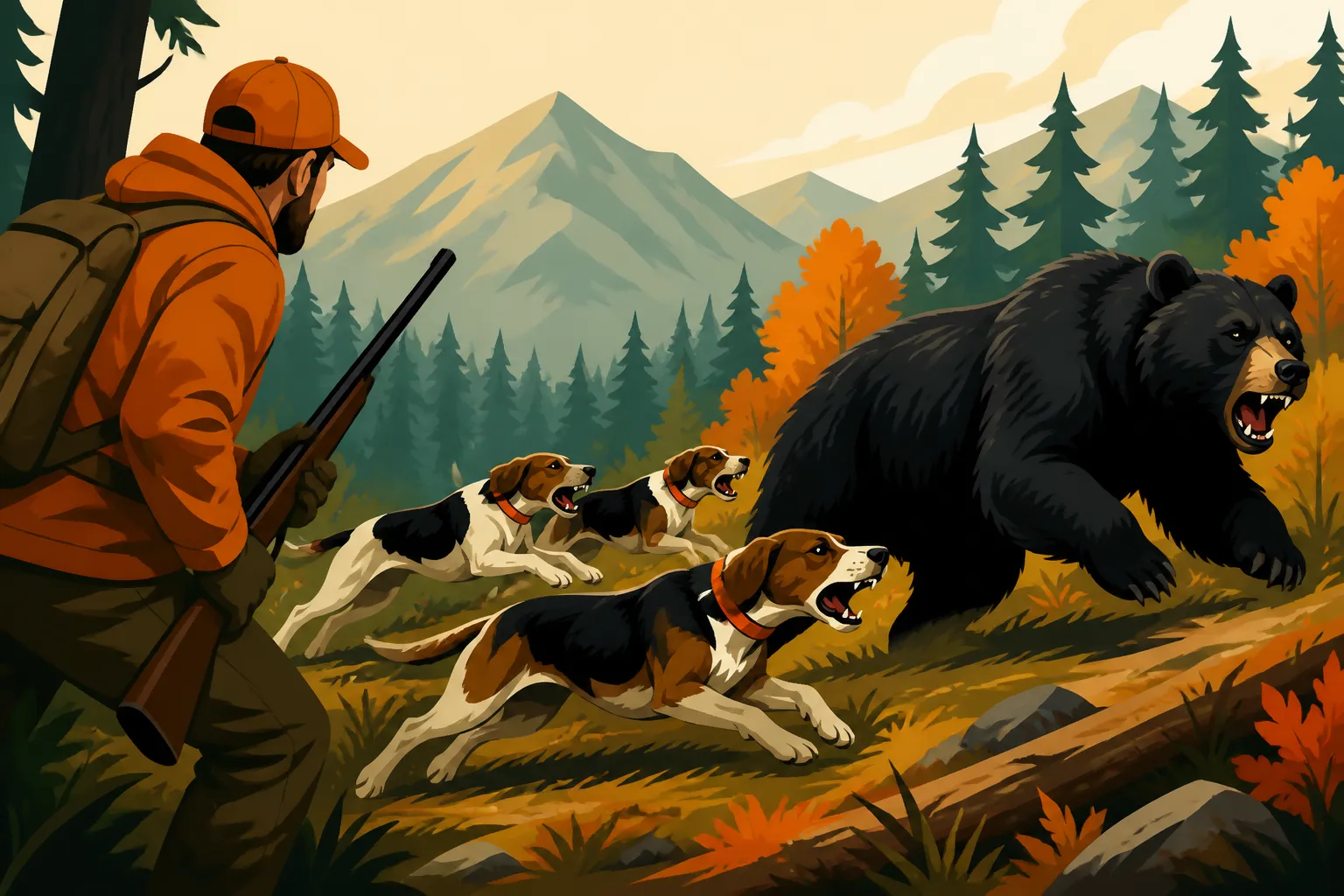
After a suitable track is located, the hounds are carefully released from their boxes, usually one or two at a time, to confirm the scent. You can almost feel the surge of excitement from the dogs as their noses hit the ground. Once they confirm the bear's scent and let out their first excited bawls and chops, the rest of the pack is released. The cacophony of barking is a primal symphony that electrifies the air, signaling the start of the chase. Hunters then follow the dogs, either on foot, ATV, or by vehicle on logging roads, monitoring their progress via GPS.
The Thrill of the Chase and the Bay
The chase itself can be exhilarating and arduous. Bears are incredibly smart and will often try to "trick" the dogs by crossing streams, running through thickets, or even circling back on their own trails. The hounds, however, are relentless. Their barks and howls change as they get closer, becoming more frantic and intense when they "jump" the bear and put it on the run. The sound of the dogs is your primary indicator of what's happening deep in the woods. A steady baying means they're hot on the trail, while a sudden change to a more excited, chopping bark often indicates the bear has treed or come to bay on the ground.
Following the dogs can involve navigating dense spruce thickets, climbing steep ledges, and pushing through swamps – it's often a true wilderness experience. The use of the GoHunt app or other GPS mapping tools can be invaluable here, helping hunters navigate challenging terrain and stay oriented while focusing on the dogs' locations. When the dogs finally tree the bear or have it at bay, the sound is unmistakable – a consistent, excited chorus of barks from a stationary position. This is the moment of truth, and the culmination of all the training and effort.
Ethical Considerations and the Harvest
Reaching the treed or bayed bear is a moment of high tension and careful decision-making. The goal is always a safe, ethical, and humane harvest. Upon arrival, the hunter and guide will assess the situation. Is it a sow with cubs? Is it a legal-sized bear? Is there a clear, safe shot? Judging a Legal Bear From a Sow With Cubs is a critical skill, and guides are expert at this. Maine regulations explicitly protect sows with cubs from being harvested, emphasizing responsible wildlife management. If it's a legal bear and a safe shot presents itself, the hunter will make the shot, aiming for a swift and humane dispatch.
After the harvest, the work truly begins. The bear must be field dressed promptly to cool the meat. This often happens deep in the woods, far from any road, making the task physically demanding. Then comes the challenging part of extracting the bear from the woods, which might involve dragging, packing, or using ATVs on designated trails. It's a testament to the dedication of hound hunters that they embrace this strenuous aspect of the hunt. Finally, the bear must be registered with the MDIFW, either at a local check station or through the online system, completing the legal requirements of the harvest.
Essential Gear and Safety for Hound Hunters
Heading into the vast Maine woods to chase bears with hounds requires more than just enthusiasm; it demands proper equipment and a steadfast commitment to safety. The terrain can be unforgiving, the weather unpredictable, and the activity itself physically demanding. Being well-prepared isn't just about comfort; it's about minimizing risks and ensuring a successful, safe, and enjoyable experience for everyone involved, including the dogs.
Dress for Success: Clothing and Footwear
Your clothing and footwear choices are paramount for a hound hunt. You’ll be moving through dense cover, often in varied weather conditions, so layering is key. Start with moisture-wicking base layers to manage sweat, followed by insulating mid-layers for warmth, and finally a durable, waterproof, and windproof outer shell. Even in October, Maine weather can turn from mild to rainy or snowy in a matter of hours. Bright blaze orange is crucial for safety, especially when multiple hunters are in the woods or when working with guides. Check current Maine Blaze Orange Requirements before you go.
For footwear, invest in high-quality, waterproof hunting boots with excellent ankle support and aggressive traction. You'll be traversing uneven ground, slippery leaves, mud, and potentially snow, so reliable grip is non-negotiable. Many hound hunters also wear tough, briar-proof pants or chaps to protect against thorns, barbed wire, and sharp sticks that can tear through ordinary clothing. Gloves are also essential, offering protection from brush and cold, while a warm hat can prevent significant heat loss.
Navigation, Communication, and Emergency Preparedness
In the vastness of the Maine woods, navigation and communication are critical. While following dogs, it's easy to become disoriented. A reliable GPS unit, like a Garmin InReach or a smartphone loaded with detailed mapping apps such as GoHunt, is indispensable. These tools not only show your location and the dogs' location but can also help you mark key points, navigate back to your vehicle, or call for help in areas without cell service. Don't rely solely on your phone; always carry a backup compass and a physical map, and know how to use them.
Communication within the hunting party is vital. Two-way radios are excellent for staying in touch, especially when the sounds of the chase make verbal communication difficult. For emergencies, a satellite messenger device is a lifesaver, allowing you to send text messages and SOS signals even when out of cell range. Always carry a well-stocked first-aid kit for both humans and dogs, emergency shelter (like a space blanket or tarp), a fire starter, extra food and water, and a powerful flashlight or headlamp. Given the physical nature of the hunt and the potential for long distances from roads, being prepared for an unexpected night in the woods is a smart approach.
Firearms and Other Essential Tools
The choice of firearm for bear hunting with hounds typically leans towards powerful, reliable options suitable for quick, close-range shots. A lever-action rifle in a .45-70 Gov't or .30-30 Win caliber, or a bolt-action in a .30-06 Springfield or .308 Winchester, are common choices, known for their stopping power and maneuverability in dense cover. Shotguns loaded with slugs are also effective. Regardless of your choice, ensure it's sighted in and you're proficient with it. Always carry your firearm safely, adhering to all Maine regulations, and only chamber a round when you are ready to shoot.
Beyond your firearm, a sharp knife for field dressing, a rope for dragging, and game bags for quartering are essential. Many hunters also carry a small saw or hatchet for clearing brush or building a temporary shelter. If you're using your own hounds, specialized gear like dog collars, leads, first aid for dogs, and possibly a tracking antenna are also part of your essential kit. Remember, the goal is always a clean, ethical harvest, and having the right tools on hand contributes significantly to that.
Finding and Working with a Reputable Maine Bear Hound Guide
For many, especially non-residents or those new to the sport, the best way to experience Hunting Bear With Hounds in Maine is by hiring a Registered Maine Guide. These professionals bring unparalleled experience, knowledge, and, most importantly, a well-trained pack of hounds to the table. They navigate the complex regulations, understand bear behavior, and know the local terrain like the back of their hand, turning what could be a daunting venture into a well-managed and thrilling hunt.
The Value of a Registered Maine Guide
Hiring a Registered Maine Guide isn't just about having someone lead you through the woods; it's about tapping into a lifetime of local knowledge and expertise. Guides dedicate years to training their hound packs, learning the habits of bears in their specific operating areas, and understanding the nuances of the terrain. They know which logging roads to check for tracks, how to interpret the dogs' barks, and how to safely approach a treed or bayed bear. This expertise dramatically increases your chances of success and, more importantly, ensures a safe and ethical hunt.
Furthermore, guides handle all the logistical complexities. They have the necessary permits for using hounds, access to prime hunting areas (often through relationships with timber companies), and the equipment needed to track dogs and extract bears. For out-of-state hunters, a guide can also help navigate licensing requirements and other aspects of hunting in an unfamiliar state. In essence, a good guide takes the immense amount of planning and specialized knowledge off your shoulders, allowing you to focus on the pure excitement of the hunt. Many hunters rely on resources like GoHunt or local sporting camp directories to find reputable guides and outfits that specialize in Booking a Bear Hound Hunt.
What to Expect From a Guided Hound Hunt
When you book a guided bear hound hunt, you can expect a comprehensive experience that typically includes accommodations, meals, transportation during the hunt, and, of course, the guide's services and hounds. Most hunts are multiple days, usually 3-5, to allow for varying weather conditions and the unpredictable nature of tracking bears. Each morning will likely begin before dawn, searching for fresh tracks. Once a track is found and the dogs are released, you’ll be immersed in the chase.
A good guide will keep you informed of the dogs' progress, explain what's happening, and prepare you for the moment of truth. They will also handle the necessary field dressing and assistance with bear retrieval. It's important to have clear communication with your guide about your expectations, physical limitations, and any specific preferences you have. Understand that a guided hunt is a partnership; your cooperation and readiness to follow instructions are key to a successful experience. You can also discuss specifics like What a Guided Bear Hunt Costs and what's included in the package before booking.
Tipping Your Guide and Post-Hunt Considerations
Tipping your guide is customary and a widely accepted practice in the hunting industry, reflecting your appreciation for their hard work, expertise, and the service they've provided. The amount can vary, but generally, 10-20% of the hunt's total cost is a good guideline, depending on the quality of the experience, the guide's effort, and whether you harvested an animal. Even if you don't fill your tag, a guide has still put in significant effort and deserves to be compensated for their time and resources. Consider factors like how hard they worked, their patience, their knowledge, and how well they managed the dogs and the overall experience. More details on this can often be found by searching for " Tipping a Maine Hunting Guide".
After a successful hunt, your guide can also assist with recommendations for local meat processors and taxidermists, which is incredibly helpful, especially for non-residents. Make sure you understand the regulations for transporting bear meat and hide if you're traveling across state lines. A guided hunt for bear with hounds in Maine is more than just a hunting trip; it's an unforgettable adventure and an immersion into a rich hunting tradition, often leading to lasting memories and friendships.
Disclaimer
The information provided in this guide is for informational purposes only and is not a substitute for official regulations. Hunting laws and regulations in Maine can change, and it is the responsibility of every hunter to consult the most current rules and laws published by the Maine Department of Inland Fisheries and Wildlife (MDIFW) before participating in any hunting activity. Always prioritize safety, ethical hunting practices, and respect for wildlife and private landowners.