Hunting the Golden Road Corridor
The sheer size of Maine's remote hunting grounds, particularly the legendary Golden Road corridor, can be incredibly intimidating for anyone not intimately familiar with its winding logging roads and diverse land ownership. Many hunters feel overwhelmed trying to figure out where they can legally hunt, how to navigate without cell service, and what game they might even find out there. This guide is designed to demystify hunting the Golden Road, offering practical advice on everything from understanding access rules to employing effective strategies and ensuring your safety in this vast wilderness.
The Golden Road Corridor: Your Gateway to Maine's Deep Woods
The Golden Road isn't just a stretch of gravel; it's an iconic artery slicing through hundreds of thousands of acres of working forest in northern Maine. It represents both incredible access to vast hunting grounds and a unique set of challenges and responsibilities for those who venture upon it. For many, it's the pathway to an authentic North Woods hunting experience.
A History Paved in Timber and Opportunity
This isn't a highway built by the state; the Golden Road is primarily a private industrial road, constructed and maintained by the large timber and paper companies to transport logs from the heart of the forest to the mills. Imagine endless stretches of gravel, often dusty or muddy depending on the weather, winding through a truly wild landscape, far removed from the paved roads and the hustle and bustle of even small towns. Its primary purpose is commercial, and you’ll share it with massive logging trucks that always, and I mean always, have the right of way. But over the decades, it has also become an indispensable route for outdoor enthusiasts, including hunters, seeking to access some of the most remote and productive hunting zones Maine has to offer.
This road is a testament to Maine's unique tradition of private land access, where, unlike many other states, large landowners – predominantly timber companies – have historically allowed public recreational use of their property. This privilege opens up an immense amount of land that would otherwise be completely inaccessible. Understanding that you are a guest on a working landscape, however, is paramount. The land is actively managed, which means you'll see everything from recent clear-cuts to regenerating forests and mature timber stands, creating a dynamic mosaic of habitats that benefit a variety of game species. North Maine Woods Logging Road Access is a concept deeply intertwined with the Golden Road itself.
The sheer scale of the land accessible via the Golden Road can be genuinely overwhelming for a first-timer. We're talking about an area that stretches for miles and is composed of a patchwork of ownership by various timber and paper companies. Knowing where you are, whose land you're on, and respecting the specific guidelines each landowner might have is absolutely critical for responsible hunting and ensuring this cherished access continues. Any abuses can quickly jeopardize the privilege for everyone. This corridor truly serves as a critical entry point for accessing some of Maine's best opportunities for species like moose and deer, which thrive in these expansive, managed forest ecosystems.
Understanding the Unique North Woods Landscape
The landscape along the Golden Road is not static; it's a constantly evolving tapestry shaped by active forest management. As you drive, you'll encounter vast stretches of mature spruce and fir, offering dense cover. These will be interspersed with more recent clear-cuts, which, after a few years, become choked with incredibly thick regenerating growth—a paradise of browse and bedding cover for deer and moose. You'll also see older cuts, perhaps 10 to 20 years post-harvest, where the trees are still relatively small but provide dense security cover and early successional growth, a vital food source. This continuous variety of habitat, driven by sustainable forestry practices, creates an incredibly productive environment for a wide range of game animals, unlike the more uniform old-growth forests found elsewhere.
Water features are also abundant and crucial to understanding game movement here. The Golden Road often parallels or crosses major waterways like the Penobscot River, and countless smaller streams, bogs, and beaver flowages spiderweb throughout the surrounding forest. These wetland areas are absolute magnets for wildlife, offering not just crucial water sources but also unique forage plants and incredibly thick cover. A well-established beaver flowage, for instance, can be an undeniable hotspot for deer, especially during the early morning or late evening hours, or a prime location to call in a bull moose during the peak of the rut. Learning to interpret how these water features integrate with the surrounding timber cuts is a key skill for predicting where game will be and how they will move.
The terrain itself, while generally rolling, presents its own set of challenges. You’ll encounter everything from relatively flat expanses to steep ridges and deep draws, particularly as you venture off the main Golden Road onto the secondary and tertiary logging spurs. These smaller spurs, often less maintained, can quickly become very rough, muddy, or even completely impassable, especially after heavy rain or during the spring thaw (known as "mud season"). Always be prepared for rapidly changing road conditions. Deep woods travel demands a robust vehicle, appropriate gear, and a solid plan. The beauty and allure of the North Woods lie in its wildness, but that wildness certainly demands respect, preparedness, and a healthy dose of caution.
Navigating Land Ownership and Access Along the Golden Road
One of the biggest anxieties for hunters unfamiliar with Maine is understanding where they can legally hunt. The Golden Road corridor, while privately owned, operates under Maine's unique access traditions, making it different from typical public or private lands in other states.
Private, Industrial, and Your Right to Roam
Maine boasts a long-standing and well-regarded tradition of "implied permission" for recreational access to private land. This means that, generally speaking, unless land is clearly marked with "No Trespassing" signs, or it's cultivated land (like a garden or active field, which you won't see much of directly along the Golden Road), or it has structures, you are legally permitted to access it for activities like hunting, fishing, and hiking. This is an immense benefit for hunters, opening up vast areas that would otherwise be off-limits. However, it’s absolutely critical to remember that this is a privilege, not an inherent right, and it can be revoked by landowners if the privilege is abused. Familiarity with Maine's Private Land Access Tradition is essential for ethical hunting here.
The vast majority of the land flanking the Golden Road is owned by large timber companies, such as Irving Woodlands or Sappi, who are actively engaged in forest management. These companies understand and generally support the value of public recreational access, provided it doesn't interfere with their ongoing operations or cause damage to their property. This means adhering to simple, common-sense rules: respect any gates you encounter, stay well clear of active logging sites for your own safety and to avoid interfering with their work, and always behave as a courteous and responsible guest. You’ll frequently see signage from these companies outlining their specific rules or requesting certain behaviors—always read and heed these. A locked gate typically signifies no vehicle access beyond that point, but often foot access is still permitted unless explicitly stated otherwise.
While the implied permission rule is generally robust, it’s always wise to err on the side of caution. If you have any doubt about access, especially on smaller, isolated parcels or near active logging or milling operations, it’s best to try and determine the landowner. This might involve checking local town records or, more practically, using modern mapping tools. For some areas that fall within the broader North Maine Woods system, there might be specific gate fees or check-in requirements, although the main Golden Road itself is typically free for passage. It's also vital to understand Maine's "posted" land rules: a single "No Trespassing" sign legally signifies that the entire property is off-limits, not just the immediate area where the sign is placed.
The Indispensable Role of Mapping Technology
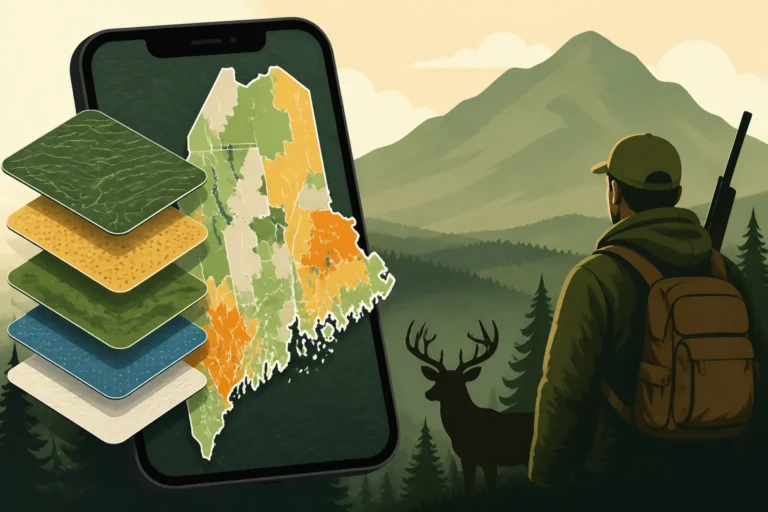
Trying to hunt the Golden Road corridor without robust mapping technology is akin to sailing without a compass—it's incredibly risky and largely impractical given the immense scale and ever-changing landscape. This is precisely where modern GPS applications and high-resolution satellite imagery truly become invaluable. Premium services like onX Hunt and GoHunt offer incredibly detailed digital maps that overlay property boundaries with satellite views, clearly showing logging roads, recent clear-cuts, and subtle topographical features. This allows you to know exactly whose land you're on, precisely where property lines lie, and which intricate network of roads will lead you to your chosen hunting spot. It's a true game-changer for navigating and hunting remote areas. Scouting With the Maine Hunting App has never been easier or more precise.
With an app like onX Hunt loaded onto your smartphone (and critically, with offline maps downloaded before you lose cell service, which will happen frequently), you can identify potential hotspots from the comfort of your home or camp. You can virtually scout for promising habitat features visible in the aerial imagery, such as dense thermal cover, transition zones between old and new growth, or prime feeding areas. Once in the field, you can mark potential access points, plan your routes, and track your movements in real-time. This not only prevents inadvertent trespassing but also provides a clear understanding of the terrain before you even step out of your vehicle. Imagine pinpointing a fresh clear-cut nestled against a mature stand of timber, with a small stream winding through it—that’s a potential magnet for deer or moose, and these apps bring that visibility right to your fingertips.
Beyond merely identifying land ownership, these mapping apps are absolutely critical for general navigation in a vast, confusing network of roads. The maze of logging roads can be incredibly complex, with many older spurs fading into overgrown tracks. A reliable GPS app will keep you oriented, ensure you can find your way back to your truck, and even highlight subtle terrain features like saddles or benches that might funnel game. Investing in one of these premium mapping services is arguably one of the most important pieces of "gear" for a successful Golden Road hunt, second only to your weapon and appropriate clothing. They dramatically reduce the guesswork and anxiety of getting lost, allowing you to focus more intently on the hunt itself.
Respecting the Working Forest Environment
It's paramount to always remember that the Golden Road and the surrounding timberlands are active, working forests. This means you will almost certainly encounter active logging operations, which involve heavy machinery, large, fully loaded logging trucks, and busy work sites. Your absolute priority must be to always yield to logging trucks—these vehicles are enormous, often carrying immense loads, and cannot stop quickly or maneuver easily. Pull over completely to the side of the road, even if it means slowing to a crawl or finding a wide shoulder. Your safety, and the safety of the logging crews, depends on your vigilance and caution. Active logging areas are generally considered off-limits for hunting during working hours, and it's always best to give them a wide berth to avoid accidents or interfering with their livelihood.
"Leave no trace" isn't just a pleasant suggestion here; it is an absolute necessity for maintaining the privilege of access for all of us. Pack out everything you pack in, and if you see litter from others, consider packing that out too. Do not build unauthorized campfires, do not damage property, and strictly adhere to any temporary closures or restrictions posted by the landowners. Remember that these lands are actively managed for long-term timber production, and anything that harms the trees or the forest environment is counterproductive and disrespectful. By consistently being a responsible and respectful recreational user, you play a vital role in ensuring that these fantastic hunting opportunities remain open for future generations of hunters.
Road maintenance is another aspect to be acutely aware of. While the timber companies maintain these roads for their own commercial use, they can be incredibly rough, washboarded, or feature deep potholes that can easily damage your vehicle. Drive defensively, constantly watch for soft shoulders that could lead to a ditch, and always factor in the current road conditions, especially after heavy rains or during the spring thaw. Getting a flat tire or, worse, getting your vehicle stuck in a remote area can quickly transform an exciting hunt into a serious and potentially dangerous predicament. Always be prepared with a good spare tire, a functional jack, and possibly even recovery gear like a winch or heavy-duty tow straps if you intend to venture far off the main drag onto less-used and more challenging spurs.
Game Species and Effective Hunting Strategies
The Golden Road corridor, with its vast and varied habitat, offers prime opportunities for pursuing some of Maine's most sought-after game species. Success hinges on understanding their habits within this unique environment.
Pursuing Deer and Moose in the North Woods
The Golden Road corridor offers fantastic opportunities for both white-tailed deer and moose, Maine's two largest ungulates. For deer, the key to success lies in understanding how they utilize the diverse mosaic of habitats created by ongoing logging operations. Fresh clear-cuts, often just a few years old, provide an incredible abundance of browse and thick, impenetrable cover, making them ideal bedding and nursery areas for fawns. Meanwhile, dense stands of regenerating spruce and fir offer excellent thermal and escape cover, particularly as the colder weather and snows of late fall and early winter set in. Always be on the lookout for deer signs—tracks, scat, rubs, and scrapes—especially along the edges where these different habitat types converge. Natural funnels created by terrain features, transitions between timber stands, or along small creek bottoms are consistently high-percentage spots for intercepting moving deer. Reading Aerial Photos for North Woods Deer can significantly aid in identifying these promising areas before you even set foot on the ground.
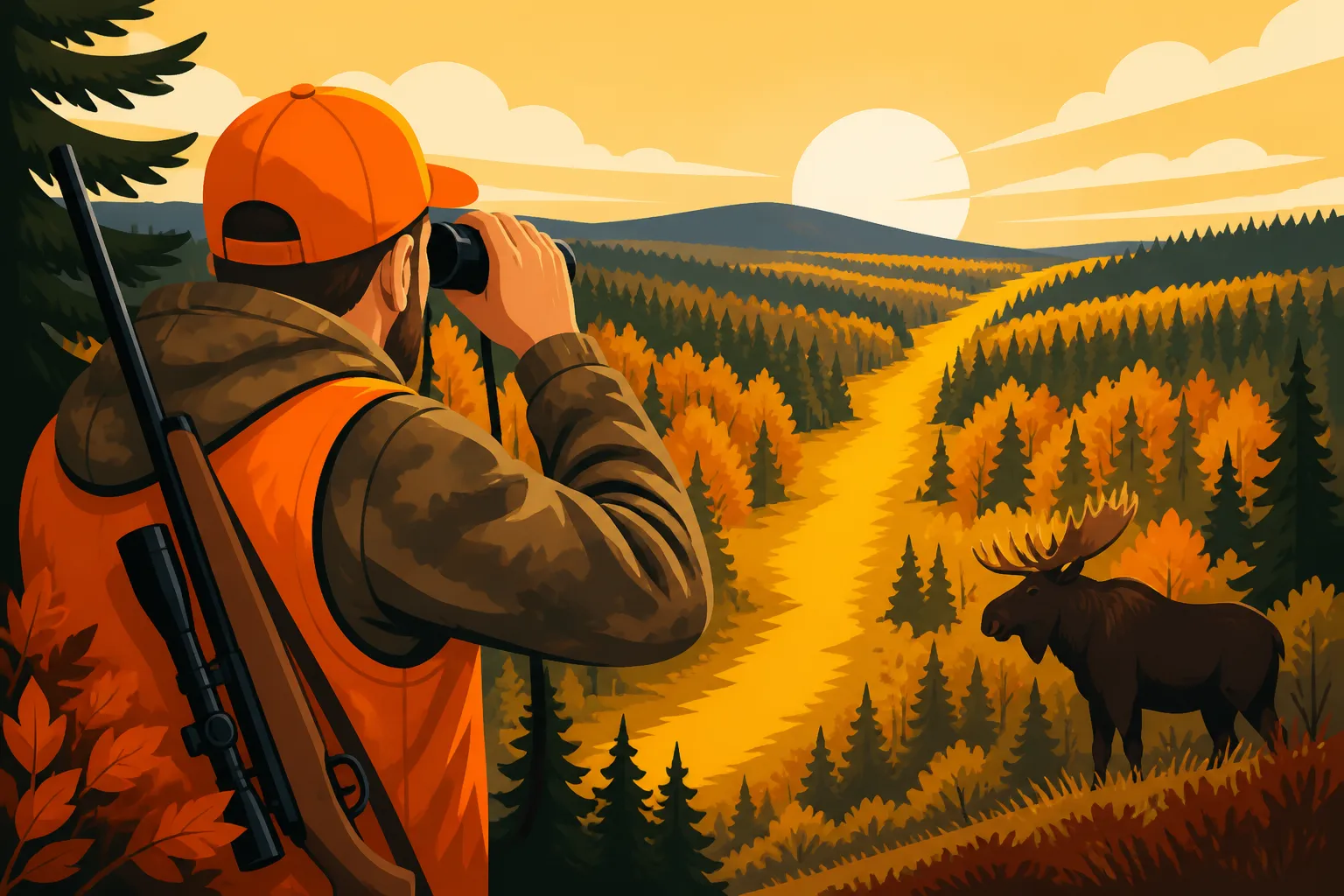
Moose, Maine's iconic large game animal, are also incredibly plentiful in these managed forests. They thrive on the abundant browse found in younger forest stands, and they have a particular fondness for the aquatic vegetation found in bogs, ponds, and slow-moving streams. During the highly anticipated moose season, which is often allocated through a lottery system Applying for a Maine Moose Permit, the Golden Road corridor becomes a focal point for permit holders. Calling can be exceptionally effective during the rut, especially in clear-cuts or along the edges of swamps where a bull might respond aggressively to a cow call or the sound of antlers raking brush. Focus your efforts on areas that present a good mix of water sources, thick cover, and young, nutritious growth. Moose Hunting Maine's North Woods truly represents the epitome of a North Woods adventure in this region.
Still-hunting, a method of moving incredibly slowly and deliberately through the woods, stopping frequently to scan your surroundings, is a highly effective tactic in the often-thick cover found in this area. Move at a snail's pace, pausing for minutes at a time, searching for horizontal lines, unusual colors, or sudden movements in an otherwise vertical world. For deer, consider establishing a portable stand or ground blind overlooking a natural funnel, a well-used game trail, or a known bedding area, especially if you've done your scouting and found fresh, consistent sign. Remember that the woods here can be incredibly dense, making visibility challenging, so adapting your hunting style to the immediate environment is absolutely key. Pay very close attention to wind direction and the swirling thermals that can occur in hilly terrain, as an unfavorable wind can quickly betray your presence to even the most unsuspecting game.
Bear, Turkey, and Small Game Abundance
Black bears are incredibly abundant throughout the Golden Road corridor, drawn by the diverse and ever-present food sources found in these rich forests. Seasonal staples like berries, acorns, and beechnuts are critical, and the disturbed ground and diverse vegetation of clear-cuts can provide excellent foraging opportunities. Bear hunting in Maine often involves either baiting or hunting with hounds, both of which are popular and highly effective methods. If you choose to hunt over bait, extensive scouting for natural food sources and a deep understanding of bear travel patterns in the area become even more critical for successful placement. For those opting for a spot-and-stalk or still-hunt for bear, focusing on dense cover near water sources or known feeding areas is often your best strategy. Black Bears in Maine offers a comprehensive overview of these opportunities and tactics.
While not as widely distributed across Maine as deer or moose, wild turkeys have significantly expanded their range in recent decades, and you can absolutely find them in suitable pockets along the Golden Road, particularly where there are areas of more open hardwoods or occasional agricultural interfaces (though true agriculture is less common directly on the Golden Road itself). Fall turkey hunting, with its often generous bag limits in specific Wildlife Management Districts (WMDs), can be an incredibly rewarding experience. Look for turkeys dusting along logging roads or feeding in any old, abandoned apple orchards or Mast (acorn/beech) producing hardwoods you might discover. Hunting Maine's Generous Fall Turkey Season could prove invaluable if you locate turkey sign.
Small game, such as ruffed grouse and snowshoe hare, are also plentiful throughout the Golden Road corridor and offer fantastic opportunities for a different kind of hunt or simply to fill some downtime. Ruffed grouse thrive in the young, regenerating aspen and birch stands that are common in clear-cuts and along the edges of logging roads. Walking these old logging roads and covering the edges where different timber types meet will almost certainly result in flushing some birds. Snowshoe hare, on the other hand, absolutely love the thick spruce and fir thickets, especially those areas with plenty of fallen timber that provides excellent cover. A good beagle can transform hare hunting into an absolute blast, providing endless entertainment and some tasty table fare. For more in-depth information on these pursuits, consult Upland Bird and Small Game Hunting in Maine.
Strategic Considerations for Success
The sheer scale of the North Woods environment means that simply "finding the spot" takes far more than just luck; it demands dedicated scouting, both remotely and on the ground. You shouldn't expect to just pull over anywhere along the Golden Road and immediately find abundant game. Instead, leverage your mapping applications like onX Hunt and high-resolution satellite imagery to identify promising areas before you even leave your home. Look for convergences of different habitat types, old logging decks that have grown over, saddles between ridges, or benches on hillsides that might serve as natural travel corridors. Once you’re on the ground, focus relentlessly on finding fresh sign and learn to interpret what it tells you. Are the deer primarily browsing in the regenerating clear-cuts, or are they consistently hitting a specific mast crop like acorns or beechnuts in a mature hardwood stand?
Flexibility is another absolutely critical element for success here. The Golden Road corridor is a dynamic environment. A prime hunting area one year might be an active logging site the next, or a recent clear-cut might be too young or too overgrown to hold significant game. Be prepared to adapt your plans on the fly, explore new areas, and be willing to walk significantly further than you might be accustomed to in more accessible hunting grounds. Getting off the main Golden Road and venturing deep into the secondary and tertiary logging spurs is often where you'll discover less-pressured game. This means being physically prepared for strenuous hiking and having a robust, multi-layered navigation plan. While Hunting a Logging Road Edge might be a good starting point, don't limit yourself to just the easiest access.
Finally, embrace the solitude and the inherent challenges that come with hunting in this vast landscape. Hunting the Golden Road isn't for those seeking a quick, effortless hunt. It’s about a deep immersion in a truly wild, expansive environment. The rewards, however, are immeasurable: the unique opportunity to pursue trophy animals in a genuinely wild setting, far from crowded hunting camps and busy public lands. It's an experience that will rigorously test your skills, deepen your connection to the unparalleled Maine wilderness, and create lasting memories.
Planning Your Golden Road Adventure: Logistics and Safety
A successful and safe hunt along the Golden Road demands meticulous planning. The remote nature of this region means self-reliance is key, and every detail, from navigation to vehicle preparedness, matters immensely.
Essential Mapping, Communication, and Gear
As we've emphasized throughout, reliable navigation is not just important; it is absolutely paramount when hunting the Golden Road corridor. A dedicated GPS unit or a smartphone equipped with a premium hunting app like onX Hunt or GoHunt, and crucially, with all necessary offline maps downloaded before you lose cell service (which is a guarantee in many areas), is non-negotiable. Do not rely on your phone's standard maps or online access. Beyond digital tools, always carry a traditional compass and a detailed paper map, such as a DeLorme Maine Atlas and Gazetteer, as a vital backup. Knowing how to use these traditional tools can literally save your life if your electronics fail or run out of battery. For more specific guidance, consider Using an App for North Maine Woods Land Status.
Communication in these truly remote areas is incredibly tricky. A satellite communication device, such as a Garmin inReach or a Zoleo, is not just recommended, it's virtually essential. These devices allow you to send and receive text messages, track your location, and most importantly, send a verifiable SOS signal to emergency services, even when you have absolutely no cell service. This isn't merely a convenience; it's a critical safety tool when you are miles from the nearest town, paved road, or any potential assistance. Always, without exception, let someone responsible know your detailed itinerary, including precisely where you plan to hunt and when you expect to return.
Beyond your primary hunting gear, think deeply about survival essentials. A comprehensive first-aid kit, extra layers of clothing (Maine weather can change dramatically and rapidly), reliable fire-starting materials, a powerful headlamp or two, plenty of water, and high-energy, non-perishable food are all absolutely critical. A small, packable saw or an axe can prove invaluable for clearing downed trees if you venture down less-used logging spurs. Remember, you could easily be hours from any form of assistance, so maintaining a high degree of self-sufficiency is absolutely paramount for a safe and successful trip.
| Feature | onX Hunt / GoHunt (Digital App) | DeLorme Atlas (Paper Map) |
|---|---|---|
| Land Ownership | Detailed property lines, owner names, color-coded ownership | Limited, typically shows major public/private distinctions |
| Road Network | Extensive logging roads, trails, satellite imagery verification | Good for main roads, less detail on tertiary spurs, static |
| Topography | Contour lines, 3D terrain view (digital), elevation profiles | Contour lines (static 2D) |
| Real-time Tracking | Yes, tracks movement, allows marking waypoints | No, manual plotting required |
| Offline Access | Yes, requires pre-downloading maps for no-service areas | Always available (no battery needed) |
| Cell Service Needs | No service needed after offline maps downloaded | None |
| Durability | Dependent on device, battery life, weather protection | Tear-resistant, waterproof options available |
| Cost | Subscription fee | One-time purchase |
| Scouting Potential | High; view habitat, cuts, water features remotely | Moderate; requires more interpretation |
| Ease of Update | Regular updates to roads and land info (with subscription) | Static, requires new edition for updates |
Vehicle Preparedness and Road Etiquette
Your vehicle is more than just transportation; it's your lifeline to and from the remote hunting grounds of the Golden Road corridor. A high-clearance 4×4 truck is not just recommended, it’s practically mandatory, especially if your plans include exploring beyond the main Golden Road onto the often-rougher secondary and tertiary logging spurs. Before you head out, meticulously inspect your tires, ensuring they are in excellent condition, and always carry a full-size spare, a reliable tire repair kit, and a portable air compressor. A winch or a robust set of recovery straps could be a very wise investment if you genuinely intend to push into the most challenging and less-traveled areas.
Fuel is another critical consideration that should not be overlooked. Gas stations are exceedingly few and far between once you leave the larger gateway towns like Millinocket or Ashland. Plan your fuel needs with extreme care, and seriously consider carrying extra gas cans, especially for longer trips or if you anticipate doing a significant amount of driving on the intricate network of spurs. Running out of gas deep in the woods is a predicament that can quickly escalate into a serious and frustrating situation that you absolutely want to avoid.
As previously mentioned, road etiquette is absolutely crucial for safe travel on these private roads. Logging trucks, without exception, always have the right of way. Drive slowly and defensively, paying particular attention around blind corners, over crests of hills, and on narrow sections where visibility is limited. Dust can also be a significant issue on dry days, so maintain ample space between your vehicle and others. These roads are not designed for high speeds or aggressive driving; they are working arteries, and maintaining a respectful, safe speed is paramount. You will frequently encounter active graders and other maintenance crews; be courteous, patient, and give them plenty of room to work.
Responsible Hunting Practices and Local Considerations
Always, without exception, carry your valid Maine Hunting Licenses and What They Cost and any necessary permits, such as a moose permit if you're lucky enough to draw one. Be ready to present these documents to law enforcement, game wardens, or landowners upon request. Beyond simply having them, thoroughly understand the specific regulations for the Wildlife Management District (WMD) you are hunting in, as seasons, bag limits, and specific rules (like those for Maine's Antlerless Permit System) can and do vary significantly. Never assume that statewide general rules apply everywhere without first checking the specific WMD regulations.
Maintain the highest respect for private property, even with Maine's incredibly generous implied permission tradition. If you encounter clearly marked "Posted" signs, honor them without question. If you happen to harvest game that crosses onto posted land, you are legally obligated to contact the landowner immediately for permission to retrieve it. Transparency, honesty, and respect go an incredibly long way in maintaining positive relationships with landowners and preserving access for all hunters.
Finally, fully embrace the unique spirit of the North Woods. It is a place of incredible, raw beauty, often challenging hunts, and profound solitude. Be prepared for anything, respect the land and its owners implicitly, and cherish the extraordinary opportunity to hunt in one of the last truly wild places in the Eastern United States. A well-planned, well-prepared, and ethically executed hunt along the Golden Road can undoubtedly create indelible memories that will last a lifetime.
Disclaimer
This article is for general informational purposes only and does not constitute professional advice. Laws, prices and regulations vary by location and change over time. Consult a qualified professional for guidance on your specific situation.