Hunting a Coastal Spruce Thicket
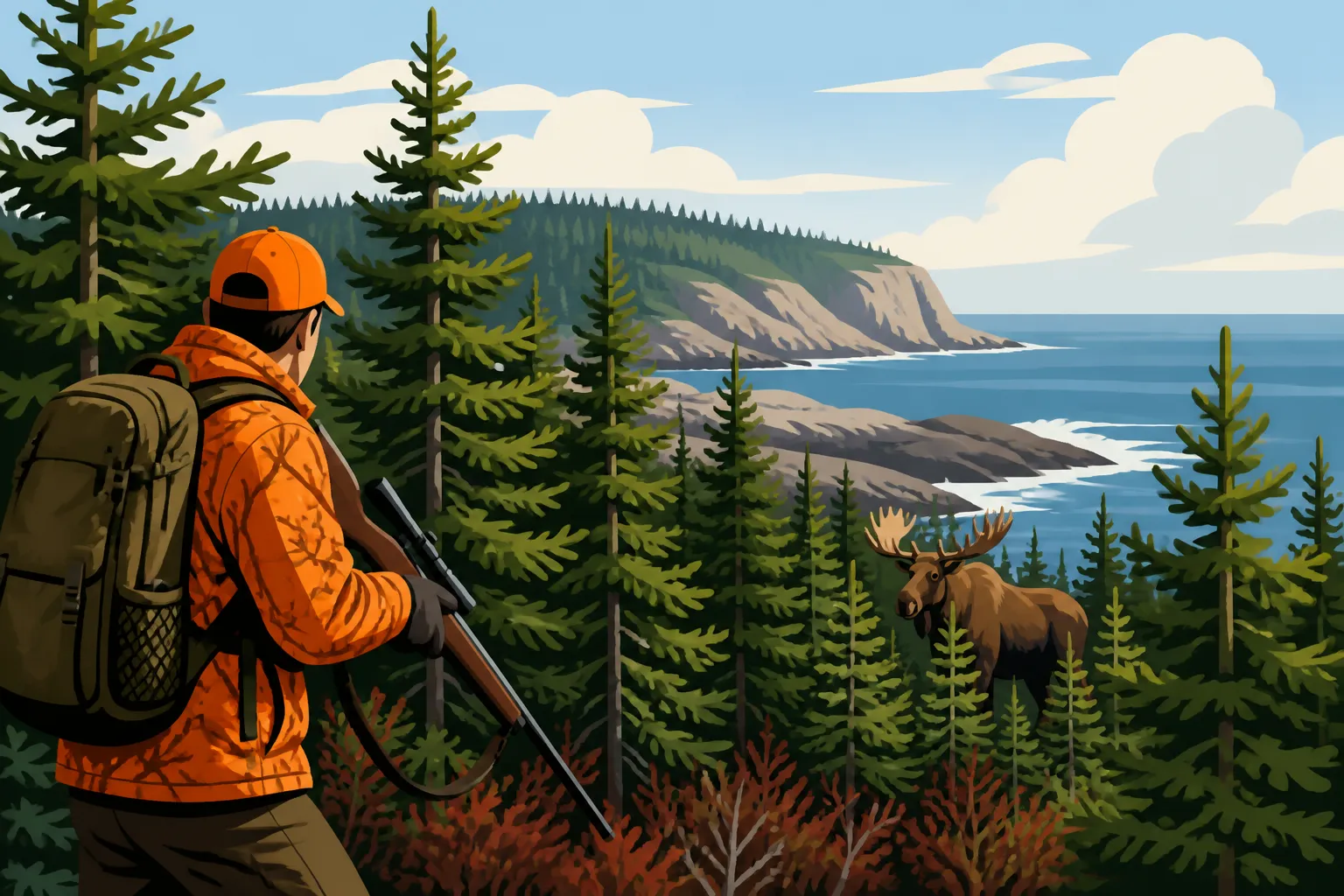
The thought of hunting Maine often conjures images of vast North Woods timber or rolling agricultural fields. But for many, the dense, wind-swept spruce thickets hugging our rugged coastline are just a nuisance, a tangle of branches making travel a nightmare. What many overlook, however, is that these seemingly impenetrable coastal spruce thickets offer incredible, often overlooked, hunting opportunities for elusive whitetail deer, especially for those willing to embrace the challenge. This guide will walk you through understanding, scouting, and effectively hunting these unique, demanding, yet incredibly rewarding environments.
The Unique Appeal and Challenges of Coastal Spruce Thickets
Maine's coastline is a tapestry of rocky shores, salt marshes, and, crucially, dense stands of spruce and fir that grow right down to the high-tide line. These coastal thickets are a world apart from the more open hardwood forests or mixed growth inland. They present a distinctive set of advantages and hurdles that shape how deer live and how hunters must adapt.
Why Deer Choose the Thicket
It might seem counterintuitive for a deer to choose such a dense, dark, and often wet environment, but these coastal spruce thickets offer a sanctuary that's hard to beat. First and foremost, they provide incredible thermal cover. When those biting northwesterly winds whip off the Atlantic, the interwoven branches of spruce and fir create a natural windbreak, trapping warmth and sheltering deer from the harshest elements. In winter, this dense canopy also intercepts snow, reducing snow depth on the forest floor and making travel easier for deer. It’s like their own natural fort against the notorious Maine weather.
Beyond shelter, these thickets offer unparalleled security cover. A deer can simply melt away into the green labyrinth, becoming virtually invisible just a few yards from an open trail. This makes them ideal bedding areas, places where deer feel safe from predators, including human hunters. The deer here aren't just passing through; they're living here, often content to spend their entire lives within a surprisingly small range if the cover and food sources allow. While generalized population estimates might suggest higher deer densities elsewhere, you'll find that these thickets hold a disproportionately high number of deer for their apparent size, especially mature bucks seeking refuge from pressure. For more on how deer populations are distributed, consider checking out Deer Density by Maine Region.
The Terrain and Vegetation of the Coast
Hunting these areas means facing a unique blend of terrain and vegetation. The ground can be incredibly varied, shifting from rocky outcroppings and ledges to boggy, waterlogged depressions and marshy edges where the forest meets the sea. Fallen trees, often a result of coastal storms and strong winds, crisscross the forest floor, creating a natural obstacle course that makes silent travel nearly impossible. The undergrowth isn't just a scattering of saplings; it's often a dense mat of evergreen seedlings, hobblebush, and wild rose, all laced together with thorny briars. Imagine pushing through a giant, green Brillo pad, and you're getting close to the experience.
The dominant trees are typically red spruce and balsam fir, growing so close together that their branches intertwine, blocking out sunlight and creating a perpetually dim, almost claustrophobic environment. This density impacts visibility dramatically. A deer can be just 20 yards away, and you might only catch a fleeting glimpse of an ear or a patch of hide. Hunters must adjust their expectations for shot distances and be prepared for very close-quarters encounters. This stark difference in habitat compared to inland forests demands a completely different approach, one that prioritizes stealth, patience, and a deep understanding of how deer use such challenging cover.
Essential Scouting and Gear for Coastal Success
Success in coastal spruce thickets doesn't just happen; it's earned through diligent preparation and the right tools. Trying to hunt these areas unprepared is a recipe for frustration, or worse, getting thoroughly lost.
Pre-Season Reconnaissance
Before you even step foot in the woods, spend significant time studying maps. Modern hunting apps like onX Hunt are invaluable here. Look for subtle changes in topography – slight ridges, small knolls, or dry fingers that might offer easier travel for deer (and for you). Identify potential pinch points where dense cover funnels deer movement into narrower corridors. These might be natural clearings, old logging roads swallowed by regrowth, or even hard-packed deer trails that offer a momentary break in the thicket.
Don't just look at the green blobs on a map; zoom in on aerial imagery. Sometimes, you can spot subtle differences in vegetation density, small pockets of hardwoods mixed in, or even old stone walls that create linear breaks in the cover. Use these tools to identify access points, whether it’s a faint game trail from a nearby blueberry barren or an old path leading from a coastal road. Pay attention to water features, too. Deer often use the edges of salt marshes or tidal creeks as travel corridors, as the adjacent cover provides immediate escape. You can learn a lot from mapping tools, even before you lace up your boots. For a broader perspective on leveraging technology, read Scouting With the Maine Hunting App and Reading Aerial Photos for North Woods Deer.
Clothing and Equipment: Built for the Bush
The coastal spruce thicket demands specific gear. Forget your quiet, open-woods hunting clothes; here, durability and waterproofness are paramount.
Clothing:
- Outerwear: Opt for tough, brush-resistant fabrics that can withstand constant snagging on spruce branches and thorns. Quietness is important, but durability is king. You'll be pushing through, not just walking.
- Layers: Coastal weather is famously unpredictable. Layers are crucial to adapt to shifting winds, rain, or even unexpected sunshine.
- Waterproofs: A waterproof outer shell and pants are non-negotiable. You'll encounter damp branches, wet ground, and sudden coastal showers.
- Footwear: High-quality, waterproof boots with excellent ankle support are essential. You'll be navigating uneven, often slippery, and boggy terrain. Look for boots that are insulated but not overly bulky, allowing for agile movement.
Essential Gear:
- Navigation: While onX Hunt on your phone is excellent, a backup GPS unit and a physical compass and map are smart. It’s incredibly easy to become disoriented in the homogeneous, dense cover where landmarks are scarce. Mark your entry point and significant waypoints.
- Headlamp: Even for a midday hunt, a powerful headlamp is a must. The thick canopy creates perpetual gloom, and if you have to track a deer or stay out late, you'll appreciate the light.
- Cutting Tools: A good pair of pruning shears or a small folding saw can be invaluable for clearing shooting lanes from a stand or blind, or for making your way through particularly stubborn patches.
- Optics: While long-range glassing isn't a primary tactic, a compact binocular can help identify deer parts in the shadows or confirm a blood trail.
- Game Cart/Sled: Recovering a deer from these thickets can be brutal. A small, collapsible game cart or a heavy-duty sled could save your back, though navigating fallen trees will still be a challenge.
- First-Aid: Always carry a well-stocked first-aid kit. Scrapes, cuts, and twisted ankles are common in this unforgiving terrain.
Strategies for Hunting Maine's Coastal Spruce
Once you're properly equipped and have a basic understanding of the terrain, it's time to put some hunting strategies into action. This isn't wide-open country; it's intimate, slow-paced, and requires a different kind of stealth.
Still-Hunting the Edges and Openings
Still-hunting is perhaps the most effective tactic in these dense environments. This means moving incredibly slowly, taking a step or two, then pausing for several minutes to scan, listen, and observe. Your eyes should be trained to pick out patterns that break the natural lines of the forest—a horizontal line of a deer's back, the curve of an antler, the subtle flick of an ear. Don't focus on seeing the whole deer; often, you'll only catch a small piece.
Utilize the wind to your advantage, always trying to move into or cross-wind of where you expect deer to be. The coastal winds can be notoriously swirling and unpredictable, but a general understanding of the prevailing direction is crucial. When hunting near the ocean, the thermal effect of land and sea can create interesting air currents. What might be a steady breeze inland can become a chaotic swirl right on the shore. Keep this in mind, and perhaps plan your approach from downwind of any potential bedding areas. Wind and Thermals in Maine Hill Country offers a good foundation for understanding how air currents work, even if adapted to the coast.
Focus your attention on the edges of the thickets where they meet more open areas—like old clearings, power lines, blueberry barrens, or even the sparse strip of grass along the immediate shoreline. Deer will often stage in the security of the thicket before stepping out to feed, or they will travel just inside the dense cover parallel to the edge. These transition zones are high-traffic areas. Remember, you're not trying to cover miles; you're trying to cover yards with extreme care and observation. For an excellent primer on this patient approach, read Still-Hunting Downeast Coastal Cover.
Setting Up Ambush Points
While still-hunting is productive, sometimes the best strategy is to let the deer come to you. Identifying natural funnels or pinch points is key. These are areas where the dense cover forces deer movement into a concentrated lane. This could be a narrow strip of dry ground between two boggy areas, a slight rise in elevation, or even a well-worn game trail that leads through a slightly less dense section of the thicket. Look for fresh sign: rubs, scrapes, and abundant tracks.
Given the extreme density, ground blinds often make more sense than tree stands. It's difficult to find a tree sturdy enough and with enough clearance for a tree stand, let alone clear adequate shooting lanes. A well-brushed-in ground blind, placed strategically along a known travel corridor or overlooking a subtle opening, can be incredibly effective. Make sure your blind blends perfectly with the surroundings, utilizing natural cover like fallen trees or dense evergreen boughs. Entry and exit routes to your blind are critical; you want to get in and out without spooking deer in the area. Using a Ground Blind on Posted-Free Land provides excellent tips for maximizing the effectiveness of ground blinds. This is often the kind of "ground others walk past" that yields big rewards, as mentioned in Finding Ground Others Walk Past.
Understanding Coastal Deer Behavior
Coastal deer can sometimes behave a little differently than their inland cousins. Their proximity to the ocean means they're accustomed to different sounds and smells – the constant roar of the surf, the salty air, the cries of gulls. This might make them slightly less reactive to some human sounds, but their senses are still incredibly sharp.
One unique factor can be the tide. While deer aren't likely to be swimming, low tide can expose new feeding areas along the shoreline or make travel easier across muddy flats. Conversely, high tide might push them further into the thickets. Observe patterns if you're hunting very close to the water. Also, consider the effect of storms. While deer will hunker down during a severe storm, the days immediately following can see increased movement as they resume feeding and activity.
Scent control remains paramount, perhaps even more so with the swirling coastal winds. Pay attention to how the wind is moving the scent from your body. Even a slight breeze can carry your scent surprisingly far, especially across open water or marshland. Use scent-eliminating sprays, wash clothes in scent-free detergent, and store them properly.
Safety and Ethical Considerations in Dense Coastal Cover
Hunting these challenging environments is incredibly rewarding, but it also comes with increased responsibilities regarding safety and ethical practices. The very nature of the dense cover and remote locations can amplify potential risks.
Navigation and Communication
Getting lost in a coastal spruce thicket is not a hypothetical scenario; it's a very real possibility. The uniform nature of the trees, the lack of distinct landmarks, and the often-overcast skies can quickly disorient even experienced woodsmen. This is where your detailed pre-season mapping and reliable navigation tools truly shine. Always have onX Hunt loaded with offline maps, a fully charged phone, and a separate GPS unit with fresh batteries. Carry a compass and a physical map as a last resort, and know how to use them.
Before heading out, tell someone exactly where you're going and when you expect to return. Give them a detailed route plan and your intended hunting area. If you're hunting alone, this is absolutely non-negotiable. Cell service can be spotty along parts of the Maine coast, so don't rely solely on your phone for communication in an emergency. Consider carrying a satellite messenger device for true peace of mind, especially if you venture deep into less-traveled areas. Familiarize yourself with Maine Public Land Hunting Hours to ensure you're always within legal hunting times, and carry a powerful whistle to signal for help if needed.
Game Recovery Challenges
Shooting a deer in a dense spruce thicket presents a unique challenge for recovery. Visibility is often limited, and a blood trail can quickly disappear in a mat of spruce needles, fallen leaves, or boggy ground. Even a short track can feel like an endless maze.
If you make a shot, give the deer plenty of time before beginning your search. In thick cover, a mortally wounded deer may not run far before bedding down, but if pushed too soon, it can easily travel a long distance and become almost impossible to find. Mark your shot location meticulously with flagging tape or by lining up natural objects. When you begin tracking, move slowly and deliberately. Look for any sign – not just blood, but disturbed leaves, bent branches, hair, or even a faint drag mark. If the blood trail becomes sparse, expand your search in concentric circles from the last confirmed sign. If daylight is fading, make a mental note of your location, mark the last blood, and retreat to return in the morning with fresh eyes and perhaps some additional help. For specific advice on challenging recovery scenarios, refer to Blood Trailing After Dark in Maine.
Respecting Coastal Land and Wildlife
Much of Maine's coastline, even the undeveloped sections, is a mix of private land, conserved areas, and small public parcels. It's crucial to know exactly where you are and to have explicit permission if you're on private property. Maine has an implied permission law for many activities, but hunting on posted land without permission is a clear violation, and even on unposted land, it's always best to ask. Reviewing What Maine Trespass Law Requires will clarify your responsibilities. Utilize your GoHunt or onX Hunt app to clearly identify property lines and landowner information. Be a good steward of the land; pack out everything you pack in, and leave no trace of your presence.
Additionally, be mindful of the unique ecosystems you're hunting in. Coastal zones can be home to sensitive bird nesting areas, rare plants, and other protected wildlife. Familiarize yourself with any local restrictions or special regulations that might apply to specific coastal parcels. Ethical hunting in these areas means not only following game laws but also being a responsible and respectful visitor to Maine's beautiful and rugged coastline.
| Aspect | Pros of Hunting Coastal Spruce Thickets | Cons of Hunting Coastal Spruce Thickets |
|---|---|---|
| Deer Activity | Excellent thermal & security cover, deer less pressured | Extremely limited visibility, deer are masters of disappearing |
| Terrain/Access | Often close to roads/trails, potential for overlooked areas | Dense, tangled, boggy, rocky, difficult to traverse silently |
| Weather | Thickets provide shelter from wind/snow | Coastal weather is highly unpredictable, can be harsh/wet |
| Recovery | Deer may not run far due to dense cover | Blood trailing is incredibly difficult, easy to lose trail |
| Stand Hunting | Good for ground blinds in natural funnels | Difficult to find suitable trees for stands, limited shooting lanes |
| Scouting | Can identify key pinch points with aerial maps (onX Hunt) | Hard to scout on foot due to dense cover, limited visibility |
| Reward | Opportunity for less pressured, mature deer | Physically demanding, requires patience and specialized tactics |
Disclaimer
This article is for general informational purposes only and does not constitute professional advice. Laws, prices and regulations vary by location and change over time. Consult a qualified professional for guidance on your specific situation.