Camping Rules Inside North Maine Woods
Planning a trip into the vast expanse of the North Maine Woods can feel a bit daunting, especially when it comes to understanding all the specific rules and regulations that govern everything from entry to where you can set up camp. Many folks get confused by the unique blend of private land access and structured management. This guide aims to clear up the mystery around camping in the NMW, ensuring you have all the information you need for a smooth, enjoyable, and compliant outdoor experience.
Understanding the North Maine Woods System
The North Maine Woods (NMW) isn't your typical state park or national forest; it's a vast tract of privately owned timberland, managed cooperatively by landowners to provide public access for recreation while sustaining commercial forestry operations. This unique model means the rules are a bit different from what you might be used to, and understanding this foundational difference is key to a successful trip. It’s a working forest, not just a playground, so respecting the landowners' rules and the ongoing operations is paramount.
Gates and Access Points
Entry into the North Maine Woods is primarily controlled through a system of staffed checkpoints, often referred to as "gates." These aren't just simple barriers; they are points where you check in, pay your fees, and receive important information about current conditions, fire restrictions, and any temporary closures. Think of them as your first point of contact with the NMW management. You’ll be asked about your destination, expected duration, and party size. It’s a good idea to have this information ready, along with your vehicle details. This system allows for better management of visitor impact and also provides a safety net, as staff know roughly who is in the woods. For more details on entry, check out The North Maine Woods Gate System.
The Fee Structure
The North Maine Woods operates on a user-fee system, which is how they maintain roads, manage campsites, and provide services. These fees are crucial for keeping this incredible resource accessible. There are typically different fee structures depending on whether you're a Maine resident or a nonresident, and whether you're just passing through for a day or staying overnight. Day-use fees cover single-day entry, while overnight camping incurs additional charges. It’s not uncommon for folks to be surprised by the fees, especially nonresidents, but remember that these contributions directly support the maintenance of the infrastructure you'll be using. Be sure to understand North Maine Woods Day-Use Fees if you're only planning a quick trip.
Types of Camping and Associated Rules
Camping in the North Maine Woods offers a spectrum of experiences, from basic primitive sites to more developed campgrounds. Knowing the distinctions and the rules for each is vital. This isn't a "pitch your tent anywhere" kind of place, unless you're in very specific, designated situations.
Developed Campsites
Many popular areas within the NMW feature developed campsites. These sites are typically found near lakes, rivers, or along main logging roads. They usually come with a picnic table, a fire ring, and often a pit privy nearby. While still rustic, they offer a few more amenities and a designated spot to set up camp, which is a real comfort after a long day of exploring. These sites are maintained by NMW staff, and their use is included in your North Maine Woods Camping Fees. You can't just pick one, however; they operate on a first-come, first-served basis, so arriving earlier in the day, especially on weekends or during popular seasons, can increase your chances of securing a spot.
When you're at a developed site, it's crucial to leave it cleaner than you found it. This means packing out all your trash, ensuring your campfire is completely extinguished, and generally being a good neighbor. While these sites offer more convenience, they also see more traffic, making mindful use even more important for preserving the experience for everyone.
Primitive and Backcountry Camping
For those seeking a more solitary experience, the NMW does offer opportunities for primitive or backcountry camping, though these are often much more restricted and require a deeper understanding of the rules. Generally, primitive camping away from designated sites is allowed only in certain areas or under specific conditions, often requiring prior permission or being limited to specific waterways. This might mean camping on a remote lake shore or along a lesser-used logging road where no official site exists. This type of camping truly embodies the "Leave No Trace" ethos.
It’s imperative to confirm where primitive camping is permitted before heading out. Don't assume that because it looks like undeveloped forest, you can just set up shop. This is where tools like onX Hunt or GoHunt can be incredibly valuable. Using their layers to identify different land ownership and management zones can help you understand where these rules apply. Always consult the NMW staff at the gate or their official maps for definitive guidance. Dispersed camping (camping anywhere) is generally not the norm in the NMW outside of very specific, approved contexts.
Camping Along the Allagash Wilderness Waterway
The Allagash Wilderness Waterway (AWW) is a distinct entity within the broader North Maine Woods, managed by the Bureau of Parks and Lands. While it's physically located within the NMW, it has its own set of specific rules and regulations for camping. Along the AWW, camping is strictly limited to designated campsites, which are well-marked and maintained. These sites are typically equipped with a fire ring, a picnic table, and often a composting privy. They are spaced out along the waterway to minimize impact and provide a true wilderness experience.
To camp on the AWW, you must register at one of the northern or southern ranger stations, or at specific points along the waterway like the Churchill Dam Gate. There are fees associated with AWW use and camping, separate from the general NMW fees you might pay to enter the larger area. It’s crucial to understand these distinct regulations if your trip involves paddling or staying on the Allagash. For those exploring this famous canoe route, reading up on Camping Along the Allagash Wilderness Waterway and Allagash Waterway Camping Fees is a must.
Specific Regulations and Best Practices for NMW Campers
To truly enjoy your time in the North Maine Woods and ensure its preservation, adherence to specific regulations and adopting best practices are essential. These rules aren't just arbitrary; they are designed to protect the natural environment, minimize human impact, and ensure public safety within a working forest.
Campfire Regulations
Campfires are a quintessential part of the Maine outdoor experience, but they come with significant responsibility. Fire danger can vary dramatically with weather conditions, and wildfires in the vast timberlands of the NMW can be catastrophic. Therefore, strict campfire regulations are in place. Always use existing fire rings where available. If you're in an approved primitive camping area where no ring exists, you might be permitted to build a small, contained fire, but this must be done with extreme caution. Never leave a fire unattended, even for a moment, and always have water readily available to extinguish it.
Before you even light a match, check for current fire restrictions or bans. NMW staff at the gates will have the most up-to-date information. In dry conditions, open fires may be completely prohibited, and you might need to rely on a camp stove for cooking. When extinguishing your fire, use the "drown, stir, and feel" method: drown the fire with water, stir the ashes to ensure all embers are wet, and then feel the area with your bare hand to confirm it's cold to the touch. This simple practice prevents countless potential disasters.
Waste Management and "Pack It Out"
The "Pack It In, Pack It Out" principle is paramount in the North Maine Woods. There are no trash services in the backcountry or at most primitive sites. Anything you bring into the woods with you must leave with you, including all food scraps, wrappers, cans, and bottles. Even biodegradable items like orange peels or apple cores should be packed out, as they take a long time to decompose in a natural environment and can attract wildlife.
Human waste also needs careful management. At developed sites with pit privies, use them. If you're in a primitive setting without facilities, you must dispose of human waste properly. This means digging a "cathole" at least 6-8 inches deep and at least 200 feet (about 70 paces) away from water sources, campsites, and trails. Bury the waste and cover the cathole. Pack out all toilet paper and hygiene products. This might seem like a small detail, but improper waste disposal can contaminate water sources and spread disease, impacting both wildlife and other users.
Water Sources and Potability
While the North Maine Woods is rich with lakes, rivers, and streams, it's crucial to understand that not all natural water sources are safe for drinking directly. Surface water can contain bacteria, viruses, and parasites that can cause serious illness. Always treat any water you intend to drink or use for cooking. This can be done through boiling, using a reliable water filter, or chemical purification tablets.
Even seemingly pristine mountain streams can be contaminated, especially if there are beaver or other animal populations upstream. Carrying sufficient potable water for your immediate needs is always a good idea, but planning for how you will replenish and treat water for a multi-day trip is essential. Don't risk your health by drinking untreated water; a giardia infection can ruin a trip and then some.
Wildlife Encounters and Food Storage
The NMW is wild country, home to black bears, moose, coyotes, and various other wildlife. Proper food storage is not just a recommendation; it's a critical safety measure and a requirement to prevent habituating animals to human food. Bears, in particular, have an incredible sense of smell and will be drawn to any available food source. A habituated bear is a dangerous bear, often leading to unfortunate outcomes for both the animal and future campers.
All food, scented items (like toothpaste, deodorant, and bug spray), and even cooking utensils should be stored securely when not in immediate use. This means in bear-resistant containers, hung from a tree using a bear bag system at least 10 feet off the ground and 4 feet from the trunk, or locked in a hard-sided vehicle out of sight. Never keep food or scented items in your tent. Cook away from your sleeping area to reduce odors around your tent. Being vigilant about food storage protects both you and the wildlife.
Planning Your North Maine Woods Camping Trip
Effective planning is the cornerstone of a successful and stress-free camping trip in the North Maine Woods. Given the remote nature of much of the area and its unique management system, a little foresight goes a long way.
Maps and Navigation
Even with modern technology, a good old-fashioned paper map and compass are indispensable tools for navigating the NMW. GPS devices and smartphone apps are excellent aids, but batteries die, and signals can be spotty in remote areas. Always carry a physical map (such as those provided by NMW or detailed DeLorme atlases) and know how to use it. Many logging roads aren't signed, and it's easy to get turned around, especially if you venture off the main arteries.
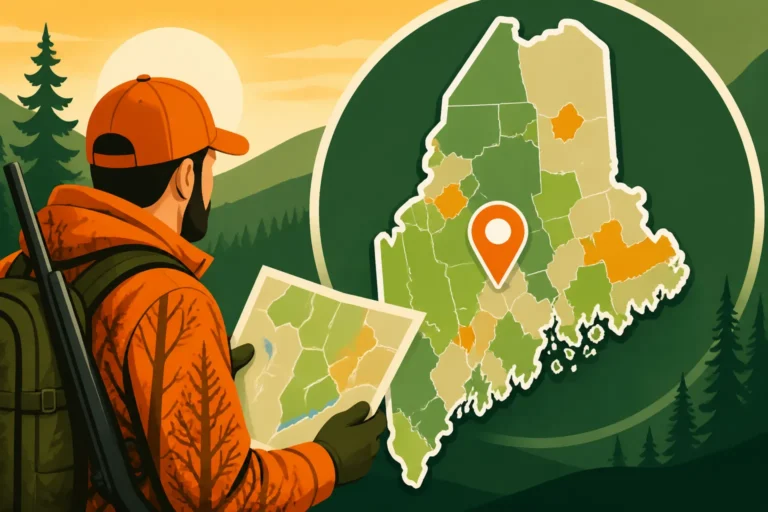
Digital mapping apps can significantly enhance your navigational capabilities. onX Layers for Maine Land Status are particularly helpful, showing property boundaries, logging roads, and even identifying areas like WMA lands or Public Reserved Lands that might have different rules. Similarly, GoHunt's mapping features can provide crucial insights into terrain and access points. These tools, when used in conjunction with traditional methods, give you a comprehensive view of the landscape and help you stay oriented. Before you leave home, download offline maps to your devices, as cell service is virtually nonexistent in much of the NMW.
Essential Gear for NMW Camping
Beyond your basic camping setup (tent, sleeping bag, cooking gear), there are a few items that are particularly important for a North Maine Woods adventure:
- Insect Repellent: Mosquitos and black flies can be intense, especially in early summer. Pack plenty of strong repellent and consider head nets.
- First-Aid Kit: A comprehensive kit is a must, given the distance from immediate medical help. Include items for cuts, scrapes, blisters, insect bites, and any personal medications.
- Appropriate Clothing: Maine weather can be unpredictable. Layering is key, and waterproof outerwear is essential, even in summer. Nights can be cool, even in July.
- Trash Bags: Plenty of sturdy trash bags for packing out all your waste.
- Emergency Supplies: A headlamp with extra batteries, a whistle, fire starter, and a small emergency shelter.
- Communication Device: A satellite messenger or personal locator beacon (PLB) is highly recommended for emergencies, as cell service is unreliable.
- Extra Fuel: For your vehicle, especially if exploring deep into the woods. Gas stations are few and far between once you pass the gates.
Considerations for Multi-Day Trips
If you're planning an extended stay, perhaps for a hunting trip or a longer paddling excursion, you'll want to apply for a Hunting a North Maine Woods Multi-Day Permit or access permit. These permits streamline the entry process and ensure the NMW staff are aware of your longer presence in the area. When planning such a trip, consider the seasonal changes; late spring brings black flies, summer can be warm but also buggy, fall offers spectacular foliage and cooler temperatures, and winter presents significant challenges with snow and extreme cold.
It's also wise to check the NMW website or call ahead for any specific advisories. Logging operations are ongoing throughout the year, and certain roads or areas might be temporarily closed or have heavy truck traffic. Being aware of these conditions before you go can help you plan your routes and avoid unexpected delays or unsafe situations.
Navigating NMW Road and Vehicle Rules
The network of logging roads throughout the North Maine Woods is extensive, but it's important to remember these are primarily private industrial roads, not public highways. While they allow recreational access, they are actively used by heavy logging trucks, which always have the right-of-way. These trucks are often massive, travel at surprising speeds, and kick up a lot of dust. Always drive defensively, keep your headlights on, and pull over safely to the side when you see or hear a truck approaching.
Speed limits are often posted and should be respected, both for safety and to reduce dust on these unpaved roads. Vehicle Rules on Maine Public Land also apply within the NMW, even though it's private land. ATVs and UTVs have specific designated trail systems and are generally not allowed on main hauling roads unless otherwise marked. Always check current regulations regarding ATV use, as these can change. Disrespecting road rules or driving recklessly can lead to fines, loss of access privileges, or even serious accidents. Remember, you're a guest on these lands.
Disclaimer
This article is for general informational purposes only and does not constitute professional advice. Laws, prices and regulations vary by location and change over time. Consult a qualified professional for guidance on your specific situation.