Maine Late-Season Antlerless Rules
The chill of late fall in Maine can make a hunter feel like the season is wrapping up, but for those in the know, the closing weeks of the year present a fantastic opportunity, especially for harvesting antlerless deer. However, trying to figure out the exact rules for late-season antlerless hunting can feel like untangling a fishing line after a major snag – it's complicated and easy to get frustrated. This guide is designed to cut through the confusion, providing a comprehensive look at Maine's specific regulations, permit requirements, and effective strategies for targeting antlerless deer as winter approaches.
Understanding Maine's Late-Season Antlerless Opportunities
As the vibrant foliage gives way to barren branches and the first dusting of snow blankets the landscape, many deer hunters might pack away their gear, thinking the prime opportunities have passed. But for those who endure the colder temperatures, Maine offers unique chances to tag an antlerless deer during the latter parts of the season. These opportunities are not universal across the state; they are carefully managed by the Maine Department of Inland Fisheries and Wildlife (MDIFW) to control deer populations in specific areas. It’s a chance to extend your time afield, test your late-season skills, and fill your freezer when others have called it quits.
Defining "Late Season" for Deer Hunters
In Maine, the "late season" for deer primarily refers to the muzzleloader season, which typically follows the close of the regular firearms season. While the general firearms season usually runs for four weeks in November, the muzzleloader season often extends through the first two weeks of December in many Wildlife Management Districts (WMDs). This is a critical distinction because it's during this extended period that many of the specific antlerless rules come into play. It's not just about what weapon you're using; it's also about where and when you're allowed to harvest certain types of deer. Historically, these extended seasons have been a boon for hunters aiming to manage local deer herds, especially in areas where populations are thriving and need to be kept in check.
Beyond the muzzleloader season, some expanded archery zones even stretch into mid-December, offering a truly prolonged hunting window for archers. These zones, often found closer to population centers, have different rules regarding antlerless deer, sometimes allowing their harvest without a specific permit if you're hunting in the right area. It's vital to check the current year's hunting law book or the MDIFW website, as dates and specific regulations can shift annually. Relying on last year's knowledge can lead to disappointment, or worse, a violation. Understanding these nuances is the first step to truly maximizing your late-season potential.
The Antlerless Permit System Overview
The backbone of late-season antlerless hunting in Maine is the antlerless permit system, often referred to as "Any-Deer Permits." Unlike a general deer license, which typically allows a hunter to take one antlered buck statewide, an Any-Deer Permit authorizes the harvest of an antlerless deer (a doe or a fawn) within a specific WMD. These permits are allocated through a lottery system and are not available in every WMD every year. The number of permits issued for each WMD is directly tied to the MDIFW's deer management objectives for that particular district, aiming to balance population health, habitat carrying capacity, and agricultural damage concerns.
Receiving an Any-Deer Permit means you have the green light to harvest an antlerless deer in your assigned WMD during any legal deer season (archery, firearms, or muzzleloader) in which you are licensed to hunt, provided that season is open in your WMD. However, it's crucial to remember that these permits are WMD-specific. If you draw a permit for WMD 17, you can only use it to tag an antlerless deer in WMD 17, regardless of where you might have your primary hunting grounds. For hunters who didn't draw an Any-Deer Permit, there are still some limited opportunities to harvest antlerless deer, particularly in certain WMDs during the muzzleloader season, where antlerless deer may be taken without a permit. These specific WMDs are often areas with higher deer densities where population reduction is a priority.
Securing Your Antlerless Permit and Eligibility
The dream of a late-season hunt for an antlerless deer often hinges on obtaining the necessary permit. The process can feel like a game of chance, but understanding how it works significantly improves your planning. For many, drawing an Any-Deer Permit is the golden ticket, but even without one, certain opportunities exist. It's all about knowing the system and staying informed.
Applying for the Coveted Antlerless Tag
The primary way to secure an antlerless tag is by applying for the Any-Deer Permit lottery. This application process usually opens in the summer, with deadlines typically in August. It's a relatively straightforward online application through the MDIFW website, where you select your top WMD choices. Many hunters, myself included, spend time poring over maps and harvest data to select the WMDs they believe offer the best chance of drawing a permit or the best hunting opportunities. Tools like GoHunt can be incredibly useful here, allowing you to overlay WMD boundaries with land ownership and habitat data, helping you make informed decisions about your application.
The draw results are usually announced in September, well before the firearms season begins. If you're one of the lucky recipients, your permit will be available digitally or by mail. Keep in mind that applying for an Any-Deer Permit is separate from buying your general hunting license, which you'll also need. For those who prioritize antlerless harvest, applying for a Maine Antlerless Permit System is a no-brainer, and understanding the Maine Antlerless Permit Draw Odds by District can help tailor your application strategy.
Even if you don't draw an Any-Deer Permit, don't despair! Maine offers specific WMDs where antlerless deer can be taken without a permit during the muzzleloader season. These are typically WMDs with robust deer populations where the MDIFW aims to increase doe harvest to control herd growth. This means if you have a muzzleloader license and are hunting in one of these designated WMDs during the muzzleloader season, you can legally harvest an antlerless deer without an additional Any-Deer Permit. This is a significant opportunity that often gets overlooked by hunters who assume an Any-Deer Permit is the only way to take a doe.
Understanding WMD Specifics and Permit Allocations
Maine is divided into 29 Wildlife Management Districts (WMDs), and the rules for antlerless hunting, especially in the late season, can vary wildly between them. The MDIFW uses these districts to manage deer populations on a localized basis, taking into account habitat, winter severity, and herd health. This means that while WMD 1 might have a very low deer density and no antlerless permits issued, WMD 23 in Southern Maine might have a high density and issue thousands of permits, or even allow antlerless harvest without a permit during muzzleloader season. You can generally find the exact allocation numbers and rules for Which WMDs Allow Antlerless Without a Permit in the annual hunting law book or on the MDIFW website.
For the late season, particularly during the muzzleloader hunt, knowing your WMD is paramount. Some WMDs have an extended muzzleloader season, while others do not. This directly impacts your late-season antlerless opportunities. Using a mapping application like GoHunt can help you visualize WMD boundaries clearly, ensuring you're always hunting within the correct district for your permit or the specific antlerless regulations. It's not uncommon for hunters to have multiple WMDs they can access, so being aware of the specific rules for each one is essential.
| WMD Number | Antlerless Permit Required (General Season) | Antlerless Harvest Allowed (Muzzleloader Season) | Typical Duration of Muzzleloader Season |
|---|---|---|---|
| 1-6 | Yes (Few Permits Allocated) | Any-Deer Permit Required | Limited (often 1 week) |
| 7-10 | Yes (Moderate Permits) | Any-Deer Permit Required | Standard (approx. 2 weeks) |
| 11-14 | Yes (Moderate Permits) | Any-Deer Permit Required | Standard (approx. 2 weeks) |
| 15-18 | Yes (Higher Permits) | Antlerless without permit in specific areas | Standard (approx. 2 weeks) |
| 19-29 | Yes (Highest Permits) | Antlerless without permit in most areas | Extended (up to 2 weeks, check dates) |
Note: This table provides a generalized overview. Always consult the current year's Maine hunting law book for precise dates, WMD-specific permit requirements, and regulations, as they are subject to change annually based on MDIFW population assessments.
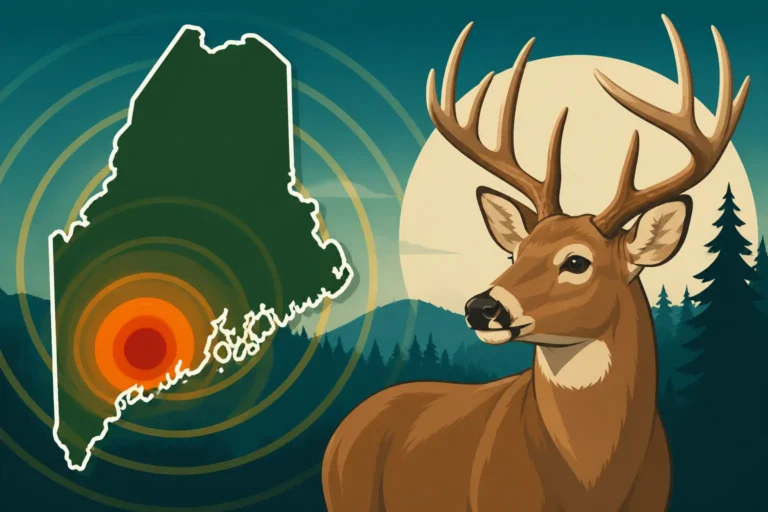
This table illustrates the general trend: the further south you go in Maine, the more opportunities there are for antlerless harvest. This is directly related to deer densities. The more remote, northern WMDs (like 1-6) often have harsher winters and lower deer populations, leading to fewer antlerless permits and stricter harvest rules. Conversely, the WMDs in southern and central Maine (19-29) often have milder winters, better habitat, and higher deer numbers, thus more liberal antlerless hunting opportunities. Before you ever head afield, verify your chosen WMD's specific rules for Maine Muzzleloader Season Dates by WMD.
Strategies for Success in Late-Season Antlerless Hunting
Harvesting an antlerless deer in the late season requires a shift in tactics from the early archery or peak rut firearms seasons. The woods are quieter, the weather is colder, and deer behavior changes significantly. Success often comes down to adapting to these conditions and focusing on the core needs of the deer: food, cover, and warmth. It's a challenging but rewarding time to be in the Maine woods.
Key Considerations for Cold-Weather Hunting
The biggest challenge in late-season hunting is undoubtedly the weather. Bitter cold, snow, and freezing rain can make long sits unbearable if you're not properly prepared. Layering is absolutely critical. Think wool and synthetic base layers, insulating mid-layers, and a waterproof/windproof outer shell. Your extremities will be the first to get cold, so invest in high-quality insulated boots, gloves, and a warm hat. Hand warmers and foot warmers are not luxuries; they are necessities that can extend your hunt by hours. Many a hunter has called it a day early because their feet were numb, missing out on that crucial last hour of daylight.
Beyond staying warm, the cold also affects deer behavior. Deer become incredibly efficient at conserving energy. This means they'll often move less and seek out areas that offer both food and thermal cover. Their activity patterns might shift to the warmest parts of the day, making midday hunting more productive than during the peak rut. You might not see the same frantic chasing and sparring activity of bucks, but rather quiet, methodical browsing by does and fawns. Adapting your sitting strategy to these conditions, especially during the Cold-Weather Sitting Strategy in Maine, will dramatically increase your chances. This means perhaps moving your stand to a more sheltered location, or focusing your efforts during the warmest hours when deer are more likely to be up and feeding.
Locating Late-Season Food and Cover
As natural food sources diminish with colder temperatures and snow cover, deer become increasingly reliant on specific late-season forage. Identifying these food sources is paramount. In areas with agriculture, this often means focusing on unharvested or recently harvested agricultural fields, such as corn or soybean fields, where deer can find residual grains. In timbered areas, look for mast crops that might still be available, like beechnuts or hard-to-reach acorns, although these can be scarce after a poor mast year. Regenerating clear-cuts also offer browse, as do areas with persistent green browse like conifer saplings. Using a mapping app like GoHunt to scout for these features, especially standing timber near open fields or dense cedar swamps, can save you countless hours.
Thermal cover is equally important. When temperatures plummet and snow piles up, deer seek shelter to conserve body heat. Dense stands of conifers, especially cedar swamps or thick spruce and fir stands, become natural magnets. These areas block the wind and trap what little warmth the sun provides, offering crucial refuge. Deer will often bed down in these areas, emerging only to feed. Therefore, hunting the edges of these cover types, particularly where they transition to a late-season food source, can be incredibly productive. Understanding Maine Deer Wintering Yards Explained will give you a significant advantage in identifying these critical habitats. Scouting for active deer sign around these areas—tracks, droppings, and browsed vegetation—is key to pinpointing their preferred travel corridors and feeding spots during the coldest weeks. The more you can pattern their need for food and shelter, the better your chances of intercepting an antlerless deer in the late season.
Disclaimer
This guide is intended for informational purposes only and does not supersede official hunting regulations. Always consult the current year's Maine Department of Inland Fisheries and Wildlife (MDIFW) hunting law book and any specific permit conditions before heading afield. Hunting laws and regulations are subject to change.