How Turkeys Were Restored to Maine
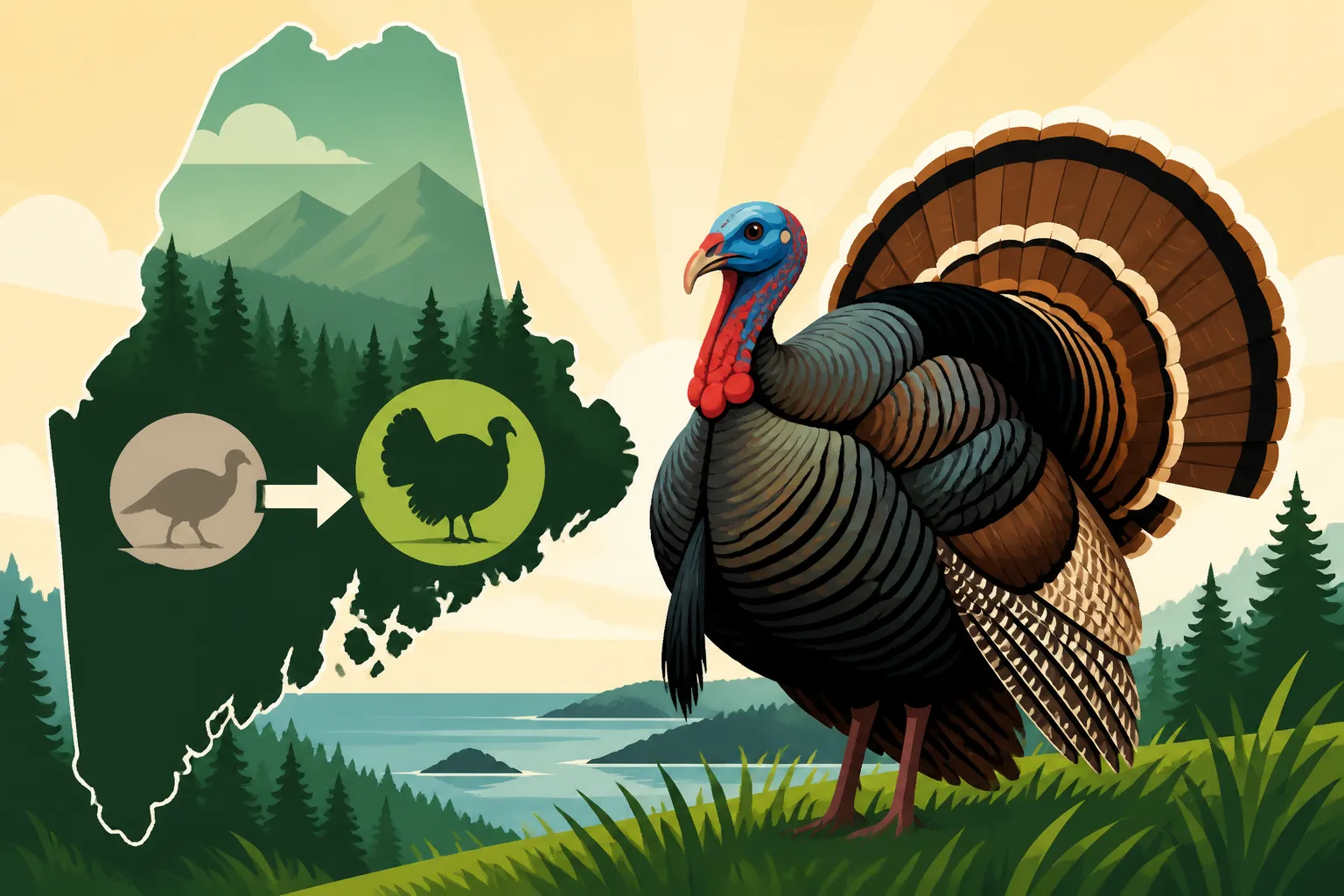
It's easy to take for granted the sight and sound of a wild turkey flock strutting through a Maine field or gobbling from a spring roost, especially if you're a newer hunter. But believe it or not, these majestic birds weren't always a part of our landscape. For a long time, Maine was devoid of wild turkeys, leaving a real void for those who longed to chase them. This guide is all about unraveling the incredible journey of how wild turkeys made their triumphant return to our state, transforming our woodlands and offering a whole new dimension to Maine's hunting tradition.
The Long Absence: Why Turkeys Disappeared from Maine
Before we can appreciate the comeback, we need to understand the disappearance. It wasn't some sudden, mysterious event; rather, it was a slow, grinding process that mirrored what happened across much of the Northeast. The landscape, the economy, and the way people lived all played a role in pushing the wild turkey out of Maine.
Historical Landscape Changes and Deforestation
Imagine Maine hundreds of years ago. While not entirely pristine, it was a dramatically different place. Vast expanses of mature forest covered much of the state, providing ample, diverse habitat for a variety of wildlife, including wild turkeys. These birds thrived in a mosaic of mature woods, open understories, and scattered clearings. However, the arrival of European settlers brought with it a relentless drive to clear land. Forests were felled for agriculture, timber, and fuel at an astonishing rate, especially in southern and central Maine.
This large-scale deforestation didn't just remove trees; it shattered the continuous habitat that turkeys needed to survive and flourish. The landscape became fragmented, dotted with small farms and settlements, leaving turkeys without the vast, interconnected woodlands they relied on for food, cover, and breeding. It stripped away their winter shelter, their reliable mast crop food sources, and their safe havens from predators. The changes were so profound that by the mid-1800s, the once-common wild turkey had vanished entirely from the state, becoming a ghost of Maine's past wildlife.
Unregulated Market Hunting and Subsistence Pressure
Coupled with habitat loss was the immense pressure of unregulated hunting. In the early days of settlement, hunting wasn't just a sport; it was often a matter of survival. Wild game, including turkeys, provided a crucial source of protein for families. As towns grew and markets developed, the commercial hunting of wild turkeys became a lucrative business. Market hunters would kill birds by the dozens, sometimes hundreds, for sale in urban centers. There were no bag limits, no seasons, and no ethical considerations about sustainable harvest.
This relentless, year-round pursuit, often utilizing traps and snares in addition to firearms, decimated turkey populations. The birds, being relatively large and predictable in their patterns, were easy targets for those determined to supply the burgeoning markets. While subsistence hunting had always been a part of human life, the rise of commercial hunting, without any state-level wildlife management or conservation laws, simply proved too much for the already struggling turkey populations. Between the clear-cutting of their homes and the constant pressure of the gun and trap, the wild turkey simply couldn't withstand the assault, leading to its complete extirpation from Maine.
The Seeds of Revival: Early Attempts and Lessons Learned
The idea of bringing turkeys back to Maine wasn't a new one, but the path to success was anything but straightforward. It took decades of observation, careful planning, and learning from past mistakes to finally pave the way for a successful reintroduction.
Failed Stocking Efforts and Misconceptions
Before the scientific understanding of wildlife management matured, many early efforts to restore game species involved simply releasing pen-raised birds. It seemed logical, right? Grow some turkeys in captivity, turn them loose, and voilà! Instant wild population. However, history proved this approach to be a significant failure for wild turkeys in Maine, as it did in many other states. These domesticated or semi-domesticated birds lacked the crucial survival instincts of true wild turkeys. They didn't know how to forage effectively for natural foods, were often naive to predators, and struggled to adapt to the harsh New England winters.
Between the late 1800s and the mid-1900s, there were several attempts to introduce various strains of game farm turkeys into Maine. These birds were often weak, susceptible to disease, and genetically ill-equipped for the rigors of the wild. They either perished quickly from predation, starvation, or succumbed to diseases for which they had no natural immunity. These early failures, though frustrating at the time, were invaluable. They taught wildlife biologists a critical lesson: successful turkey restoration wouldn't come from releasing farm birds, but from reintroducing truly wild, healthy turkeys from established populations.
Observing Successes in Neighboring States
While Maine was grappling with its failed attempts, a new and promising strategy was emerging in other parts of the country, particularly in states like New York, Pennsylvania, and even neighboring Vermont and New Hampshire. These states had managed to bring back their wild turkey populations not by pen-raising birds, but by a technique known as "trap and transfer." This involved capturing wild turkeys from healthy, abundant populations and relocating them to suitable new habitats.
Maine wildlife biologists watched these programs with keen interest. They saw that these transplanted wild birds, already adapted to surviving in the wild, were far more resilient and successful in establishing new breeding populations. This approach, while logistically challenging, offered the blueprint for what would eventually become Maine's own successful restoration program. It highlighted the importance of selecting the right birds—genetically robust, truly wild specimens—and releasing them into carefully chosen habitats that offered both food and cover. This critical observation shifted the focus from breeding birds in pens to sourcing them from existing wild strongholds, marking a pivotal turning point in Maine's turkey story.
The Triumphant Return: Maine's Trap and Transfer Program
The lessons learned and the successes observed elsewhere finally coalesced into a focused, deliberate effort by the Maine Department of Inland Fisheries and Wildlife (MDIFW). This wasn't just about releasing birds; it was a strategic campaign to bring back an iconic species.
Sourcing and Relocating Wild Turkeys
The core of Maine's turkey restoration began in the winter of 1976-1977. The MDIFW knew that the key was to get truly wild birds, and they looked to states with robust populations, primarily Vermont and New York. These states, having already gone through their own successful restoration programs, were willing to help Maine by allowing MDIFW biologists to capture a limited number of their wild turkeys.
The method of choice was the rocket net, a non-lethal trapping technique that allowed biologists to capture entire flocks of turkeys simultaneously. Imagine the scene: a team of biologists, hunkered down in the bitter cold of winter, baiting an area with corn, waiting for a flock to gather. Then, at just the right moment, launching nets over the unsuspecting birds. It was an intensive, labor-of-love operation. Once captured, the turkeys were quickly processed, checked for health, banded, and placed in specialized transport boxes. The goal was always to minimize stress and get them to their new homes in Maine as quickly and safely as possible. This meticulous process was the backbone of every successful trap-and-transfer effort, ensuring the birds arrived ready to thrive.
Strategic Release Sites and Initial Success
The selection of release sites was just as crucial as the capture process. Biologists didn't just scatter birds randomly; they meticulously identified specific locations that offered the best chance of survival and reproduction. These early sites were primarily in southwestern Maine, particularly around the York County and Cumberland County regions, because these areas offered a mix of mature hardwood forests, agricultural lands (for winter food sources like waste grain), and adequate cover from predators. The initial releases, which began in earnest in 1977, involved relatively small numbers of birds, usually between 10 to 30 turkeys per site.
The first release consisted of nine hens and one gobbler from Vermont, set free in York County. Over the next several years, additional turkeys were brought in, primarily from New York, and released into other carefully chosen spots in southern Maine. These initial releases were nerve-wracking for the biologists, but the birds quickly demonstrated their adaptability. They found food, established roosts, and most importantly, they started breeding. The success of these initial releases laid the foundation for expanding the program, eventually leading to secondary trap-and-transfer efforts within Maine, using the offspring of these original transplants to populate new areas further north and east. This strategy of self-sustaining expansion was a testament to the hard work and foresight of the MDIFW.
Building a Future: Habitat, Management, and Expansion
The successful reintroduction was only the first step. To ensure a lasting wild turkey population, ongoing habitat management, careful season setting, and public engagement became paramount. This phase of the restoration was about making sure the turkeys were here to stay.
The Role of Habitat and Landowner Cooperation
Once wild turkeys had a foothold, maintaining and improving their habitat became a continuous effort. Wild turkeys thrive in diverse landscapes, needing mature hardwoods for mast crops (acorns, beechnuts), open fields for brooding and foraging, and dense cover for roosting and protection. Forest management practices that promote diverse age classes of trees, along with maintaining natural clearings and agricultural fields, directly benefit turkey populations. Landowners, both private and commercial, play a crucial role in this. Their decisions on logging, farming, and general land use directly impact the availability of food and cover for turkeys.
The MDIFW actively works with private landowners, timber companies, and conservation organizations to promote practices beneficial to turkeys. This might involve encouraging specific timber harvest methods, suggesting the planting of food plots, or preserving key wintering areas. The spirit of cooperation among landowners, who often welcome turkeys onto their properties, has been vital. They are often the first to notice changes in turkey numbers and can be important partners in monitoring the health of local flocks. Without this ongoing commitment to diverse habitat, the long-term success of the restoration would be in jeopardy, highlighting the critical link between land stewardship and thriving wildlife.
Establishing Hunting Seasons and Management Zones
As the turkey population grew, the MDIFW could finally consider opening a hunting season – a true marker of a species' successful return and sustainable population. However, this wasn't done haphazardly. Maine adopted a phased approach, starting with a very conservative spring season in 1986, initially in only a few southern WMDs (Wildlife Management Districts). This initial season was strictly controlled, allowing hunters to take only one bearded bird (typically a gobbler or jake) and only during the morning hours. This cautious approach ensured that the breeding hens were protected, allowing the population to continue to expand.
Over the years, as turkey numbers steadily climbed and expanded into new regions, the MDIFW gradually expanded both the geographic scope of the hunting season and the bag limits. Today, almost the entire state is open to spring turkey hunting, and many WMDs offer a two-bearded-bird limit. Additionally, a fall turkey season has been established in much of the state, with varying bag limits depending on the WMD, including some "five-bird" districts where hunter opportunity is greatest. This careful, science-based management, constantly informed by population surveys and harvest data, ensures that hunting remains a sustainable activity and an integral part of modern turkey management. Hunters are encouraged to utilize resources like the GoHunt app to check current WMD boundaries and specific regulations. To learn more about how these limits affect you, check out our guide on Maine's WMD-Based Turkey Bag Limits.
Population Growth and Geographic Expansion
The trap and transfer program, combined with proactive habitat management and regulated hunting, led to an incredible success story. From those initial few dozen birds, Maine's wild turkey population exploded. By the early 2000s, wild turkeys were not only firmly re-established in southern Maine but had begun to naturally expand their range northward and eastward. MDIFW biologists also conducted additional trap-and-transfer operations within Maine, relocating birds from high-density areas to new, suitable habitats that hadn't yet been colonized, accelerating their spread.
Today, wild turkeys are found in all 16 counties of Maine, from the coastal plains to the northern reaches of Aroostook County, though densities are generally higher in the southern and central parts of the state. The population is robust and resilient, a far cry from the empty forests of two centuries ago. This widespread distribution means that more Maine residents and non-residents alike have the opportunity to experience the thrill of chasing a gobbler or observing a flock in the wild. This expansion is a direct result of decades of dedicated conservation efforts and a testament to the wild turkey's remarkable ability to thrive when given the chance. For detailed information on where these populations are thriving, consider referencing Maine Turkey Population Trends.
The Modern Maine Turkey Hunter: Opportunities and Tactics
With the wild turkey firmly established, a vibrant hunting culture has emerged, offering unique challenges and rewards for those who pursue them. It's a testament to the success of the restoration efforts.
Spring Turkey Hunting: The Gobbler's Call
Spring turkey hunting in Maine is, for many, the ultimate experience. It’s a pursuit steeped in tradition, relying heavily on calling, stealth, and a deep understanding of turkey behavior during the breeding season. The spring season, typically running from late April through May, targets adult male turkeys, or gobblers, identifiable by their prominent beard. Hunters wake before dawn, heading into the woods hoping to intercept a gobbler as it flies down from its roost. The magic happens when a hunter's imitation of a hen's calls coaxes a wary gobbler within shotgun or archery range.
This type of hunting requires patience and often a lot of scouting beforehand. Knowing where birds roost, where they feed, and their travel corridors can make all the difference. Many hunters utilize decoys, often a hen or jake, to visually entice a gobbler to commit. The challenges are many: pressured birds that hang up just out of range, silent gobblers, or unexpected interruptions from other wildlife. But the reward—a big tom strutting into view, gobbling his intentions—is unparalleled. If you're planning your first spring hunt, be sure to read up on Spring Turkey Hunting in Maine.
Fall Turkey Hunting: Flock Dynamics and Different Strategies
While spring hunting focuses on the breeding behavior of gobblers, fall turkey hunting offers a completely different challenge and dynamic. The fall season is typically longer and often allows for the harvest of any wild turkey, male or female, depending on the WMD and specific regulations. The strategy shifts from mimicking breeding calls to breaking up a flock and then calling the scattered birds back together. This tactic, known as "flock breaking," involves finding a flock, rushing in to scatter them, and then quietly waiting for them to start yelping and putting to re-group. The individual yelps of lonely birds can be highly effective at drawing them back to your position.
Fall hunting often revolves around food sources, as turkeys spend their days foraging. Hardwood ridges with abundant mast crops, fields of waste grain, or even areas with lush greens can be prime spots. It's a more social hunt, with birds often traveling in larger groups. This makes for a different type of excitement and requires a nuanced understanding of flock communication. Whether you're chasing a single bird or a whole flock, fall turkey hunting provides ample opportunity for those who love to be in the woods. For more on this, consider our guide on Hunting Maine's Generous Fall Turkey Season.
| Key Milestones in Maine's Wild Turkey Restoration |
|---|
| Pre-1800s |
| Mid-1800s |
| Early-Mid 1900s |
| 1976-1977 |
| 1977 |
| 1978-Early 1980s |
| 1986 |
| 1990s – Present |
The Future of Turkeys in Maine
The story of wild turkeys in Maine is a true conservation success, but it's not a static one. The MDIFW continues to monitor turkey populations, track harvest data, and adjust management strategies as needed. Challenges remain, such as habitat fragmentation in rapidly developing areas, localized issues with predation, and the ever-present impact of harsh Maine winters, especially on northern populations. However, the robust and widespread nature of the current turkey population speaks volumes about their resilience and the effectiveness of decades of dedicated work.
For hunters, this means continued opportunities to pursue these magnificent birds. The availability of resources like the GoHunt platform also empowers hunters with maps and data to effectively plan their hunts, understand land boundaries, and stay up-to-date on regulations. The success of the turkey restoration also serves as a powerful reminder of what can be achieved through sound wildlife management, inter-state cooperation, and the dedication of passionate conservationists and hunters. The gobble echoing through a Maine spring woodlot is more than just a sound; it's a living testament to a species brought back from the brink, enriching our outdoor heritage for generations to come. Understanding Maine Turkey Harvest Numbers by WMD is critical for future management.
Disclaimer
Please remember that hunting regulations, seasons, and licensing requirements can change. Always consult the official Maine Department of Inland Fisheries and Wildlife (MDIFW) website or their current hunting law book before planning any hunting trip. This article is for informational purposes only and should not be considered legal advice.