Maine Woodcock Singing Ground Surveys
It can be incredibly frustrating to try and understand the health of our beloved game species, especially when you hear whispers about population changes but don't quite grasp how wildlife biologists actually know what's going on. For those of us who cherish the American woodcock, a bird whose quirky flight and secretive nature make it a true challenge and joy to pursue, these concerns hit home. This guide is here to demystify one of the most crucial tools Maine uses to monitor this unique migratory bird: the Singing Ground Survey, offering a deep dive into what it is, how it works, and why it matters so much for woodcock conservation and hunting traditions here in Maine.
Understanding the American Woodcock in Maine
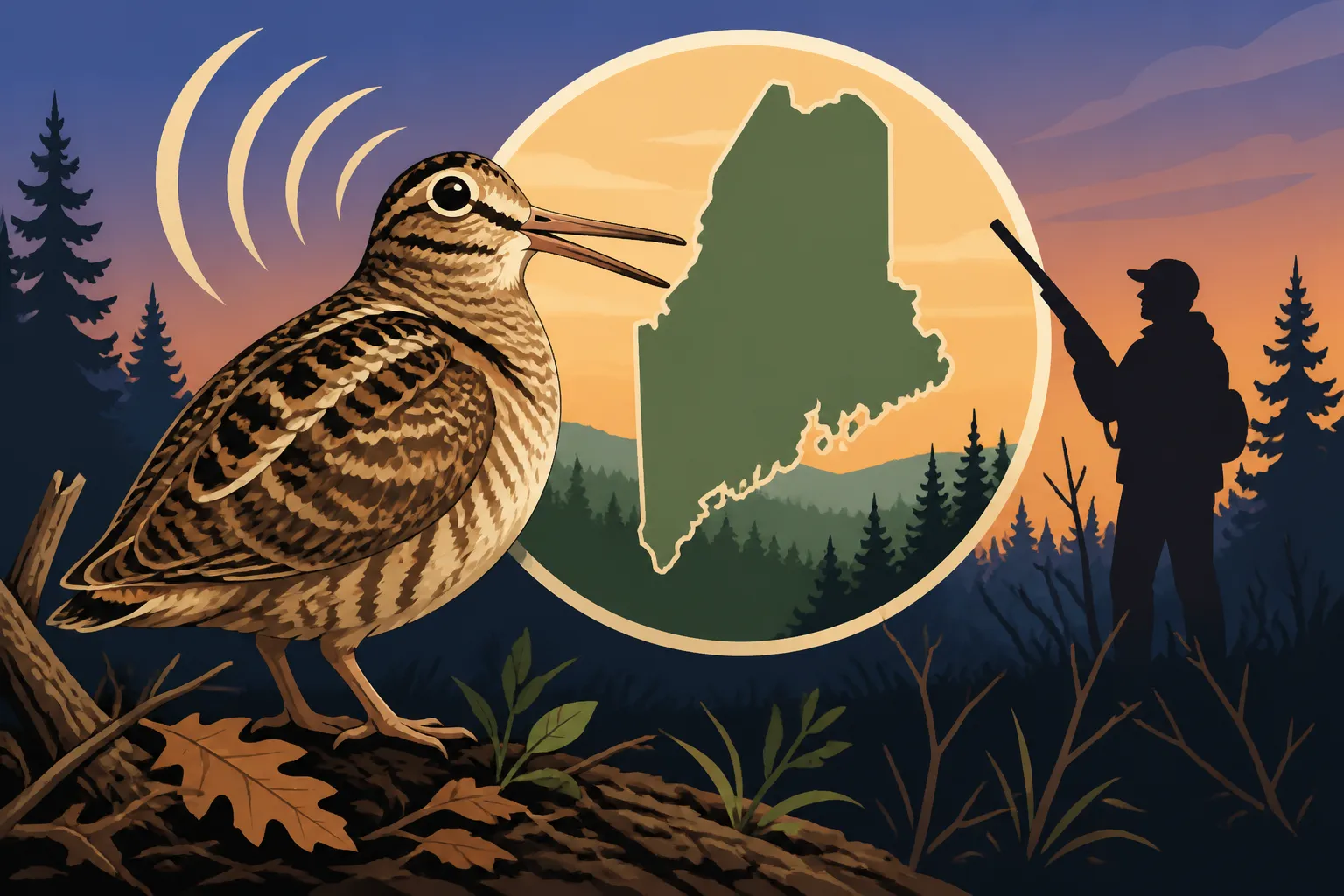
The American woodcock, often affectionately called the "timberdoodle," is a bird that captures the hearts of many Maine upland hunters. Its erratic, spiraling courtship flight at dusk, accompanied by a distinctive peent call, is a sure sign of spring arriving in our woodlands. But beyond their charm, woodcock represent a vital link in our ecological chain and a traditional quarry that demands careful management.
Why Woodcock Are Special Migrants
These fascinating birds are true globetrotters, undertaking impressive migrations twice a year. Maine serves as a critical breeding ground for woodcock, particularly in the central and northern parts of the state. After spending our spring and summer raising their young here, they embark on a journey south to wintering grounds in the southeastern United States. This migratory lifestyle means their populations are influenced by conditions across a vast geographical area, from their breeding habitat in Maine to their wintering grounds, and all the stopover points in between. It's a complex puzzle, and understanding their movements is key to effective conservation.
Their unique migration patterns mean that conservation efforts in one state can have ripple effects far beyond its borders. Maine's role isn't just about managing the birds while they're nesting here; it's about contributing to the broader health of the Atlantic Flyway population. This shared responsibility makes the data gathered in Maine's surveys all the more important for the species as a whole.
Preferred Habitat and Lifecycle in Maine
Woodcock are creatures of young, regenerating forests, particularly those with a mosaic of dense alders, young aspen, and moist soil for probing with their long bills. In Maine, you'll often find them favoring overgrown fields, old clear-cuts, and the edges of beaver flowages. These areas provide the perfect blend of cover for nesting, abundant invertebrates for food, and open ground for their courtship displays. As many of us know, finding the perfect "covert" is half the fun of Woodcock Hunting Maine Covert Country.
Their lifecycle here begins almost immediately upon their return in early spring. Males establish their "singing grounds"—small, open clearings where they perform their elaborate aerial displays to attract mates. Females lay clutches of eggs, usually 3-4, directly on the forest floor, relying on their incredible camouflage to protect them. The chicks are precocial, meaning they can walk and feed themselves shortly after hatching, though the hen remains vigilant, brooding and guiding them through the dense cover until they fledge.
The Importance of Singing Grounds
The term "singing ground" isn't just poetic; it's the cornerstone of how we count woodcock. These specific open areas are where male woodcock congregate to perform their evening courtship rituals. Biologists have learned that these displays are consistent and predictable, making them ideal for standardized surveys. Imagine a tiny stage set each night where the males put on their show, allowing researchers to systematically record their presence and activity.
Without these distinct and predictable singing grounds, counting a secretive, camouflaged bird like the woodcock would be an almost impossible task. The very nature of their breeding behavior provides a window into their population dynamics that other species don't readily offer. It’s why understanding and preserving these small, open clearings within their preferred habitat is so critical, not just for the birds themselves, but for our ability to effectively manage them.
What Are Singing Ground Surveys?
The American Woodcock Singing Ground Survey is a standardized, long-running monitoring program that provides essential data on woodcock breeding populations across their entire range in North America, including right here in Maine. It's not just a casual count; it's a rigorously designed scientific effort.
The History and Purpose of the Survey
The Singing Ground Survey was initiated way back in 1968 by the U.S. Fish and Wildlife Service, in cooperation with state wildlife agencies like the Maine Department of Inland Fisheries and Wildlife (MDIFW) and Canadian provinces. The primary purpose was, and remains, to monitor annual changes in the breeding population of American woodcock. Before these surveys, our understanding of woodcock numbers was largely anecdotal, making effective management a guessing game.
This nationwide effort allows biologists to detect trends—whether populations are increasing, decreasing, or remaining stable—and to understand regional differences. This data is absolutely crucial for making informed decisions about hunting seasons, bag limits, and habitat conservation strategies, ensuring the sustainability of the species for future generations of both birds and hunters. It's about taking the guesswork out of conservation and grounding our management in solid science.
How the Surveys Are Conducted
The surveys are conducted annually during the breeding season, typically from mid-April to mid-May, aligning with the peak of male woodcock courtship activity. Volunteer observers, often wildlife biologists, game wardens, or dedicated citizen scientists, drive along predetermined routes at dusk. Each route consists of 10 listening stops, spaced out in areas known to be suitable woodcock habitat. At each stop, the observer listens for two minutes, recording every "peent" call and every "singing flight" they hear.
This standardized methodology is key. By using the same routes, the same listening protocols, and conducting the surveys at the same time of year, researchers can minimize variables and produce comparable data year after year. The quiet of dusk is chosen because that's when the male woodcock are most active in their displays, making detection reliable. It's a testament to dedicated individuals willing to spend their evenings listening to the sounds of spring. Many of us rely on scouting tools like GoHunt to analyze terrain and potential woodcock habitat, but nothing beats an ear to the ground during these critical survey periods.
The Data Collected and Its Significance
The raw data collected from each route includes the number of peents heard and the number of aerial displays observed at each stop. This information is then compiled and analyzed at both the state and regional levels. What might seem like simple counts quickly become powerful indicators of population health.
- Population Indices: By comparing the average number of birds heard per route year after year, biologists can establish population indices. These indices don't give an exact total number of woodcock, but they accurately reflect whether the population is trending up or down.
- Trend Analysis: Long-term trend analysis, spanning decades, allows wildlife managers to identify consistent patterns. Are woodcock populations facing sustained declines, or are fluctuations within a normal range?
- Geographic Variation: The surveys reveal that woodcock populations aren't uniform across their range. Some regions might show stable numbers, while others experience declines or increases, prompting more localized habitat work or adjustments to management strategies.
This data directly informs decisions about Maine Small Game Season Rules and hunting regulations, ensuring that we can continue to enjoy the sport while protecting the species.
The Role of Maine in National Woodcock Conservation
Maine is a vital piece of the larger woodcock conservation puzzle. Its expansive forests and diverse habitats provide critical breeding grounds for a significant portion of the Atlantic Flyway population, making our state's contributions to the Singing Ground Surveys profoundly important.
Maine's Place on the Atlantic Flyway
The Atlantic Flyway is one of four major migratory bird routes in North America, stretching from the Arctic to the Caribbean and South America. For the American woodcock, Maine represents one of the most important northern breeding strongholds within this flyway. Birds hatched and raised in Maine will join others from New England and eastern Canada on their southward migration.
This means that conservation efforts in Maine directly impact the overall health of the woodcock population across the entire eastern seaboard. Habitat loss or degradation in our state can have far-reaching consequences for hunters and birdwatchers in states thousands of miles away. It's a stark reminder that wildlife management is a truly interconnected endeavor, requiring cooperation across state and international borders. Maine's participation in these surveys is foundational to this larger, collaborative effort.
Collaborating with Federal Agencies
The Maine Department of Inland Fisheries and Wildlife (MDIFW) works hand-in-hand with federal partners like the U.S. Fish and Wildlife Service to execute and interpret these surveys. This collaboration ensures that Maine's data is collected using consistent national standards, making it comparable to data from other states and provinces. This pooling of information is crucial for developing a comprehensive picture of woodcock status across their range.
Beyond just the surveys, this partnership extends to habitat management and research initiatives. Federal funding and expertise often support state-level projects aimed at creating and maintaining the early successional habitats that woodcock thrive in. It's a powerful synergy that benefits wildlife far more than any single agency could achieve on its own.
The Atlantic Woodcock Council and Its Efforts
The Atlantic Woodcock Council is a multi-jurisdictional group comprised of wildlife managers and researchers from state and federal agencies across the eastern U.S. and Canada. This council plays a pivotal role in coordinating woodcock research, monitoring, and management efforts. The data from Maine's Singing Ground Surveys feeds directly into the council's analyses, helping them formulate regional and flyway-wide management plans.
The council uses the combined survey data to develop population objectives, assess habitat needs, and recommend adaptive management strategies. Their work is a prime example of how scientific data translates into tangible conservation actions, ensuring that the unique characteristics of the woodcock, including their specific habitat requirements and migratory patterns, are considered in all management decisions.
Interpreting Survey Results and Population Trends
When we look at the results of the Maine Woodcock Singing Ground Surveys, it's not just about a single year's numbers. It’s about discerning patterns over time, understanding the complex factors at play, and using that knowledge to guide our actions.
Understanding Population Fluctuations
Wildlife populations, including woodcock, naturally fluctuate from year to year due to a variety of factors. A particularly harsh winter, a localized drought, or even changes in predator populations can all cause short-term dips or spikes in numbers. What biologists are truly looking for are statistically significant trends that persist over multiple years, indicating a broader shift in the population.
For example, a slight decrease in counts for one or two years might just be normal variation, but a consistent decline over a decade would raise serious alarms. It's like checking your own health; one bad day doesn't mean a terminal illness, but persistent symptoms warrant a closer look. These surveys provide the long-term perspective needed to differentiate between normal "wiggles" and concerning trends.
Factors Influencing Woodcock Numbers
Several critical factors can influence woodcock populations in Maine and across their range. The biggest challenge has consistently been habitat loss and degradation. Woodcock rely on young, regenerating forests, and as our landscapes mature, or are converted to development, this crucial habitat disappears. Forest management practices that promote diverse age classes of timber are vital to maintain these birds.
Here's a quick look at other influencing factors:
| Factor | Impact on Woodcock Populations | How it's Monitored/Addressed |
|---|---|---|
| Habitat Availability | Declining early-successional habitat leads to long-term population drops | Forest management, habitat restoration projects |
| Weather Events | Severe winters on wintering grounds, late spring freezes during nesting | Annual survey data compared with weather records |
| Predation | Localized impacts from increased predator populations (e.g., coyotes) | Research on predator dynamics, general wildlife management |
| Pesticide Use | Potential reduction in invertebrate food sources due to broad-spectrum use | Environmental monitoring, research on food web impacts |
| Hunting Pressure | Regulated by bag limits and season lengths based on survey data | Maine Woodcock Harvest Numbers are tracked and hunting seasons are adjusted. |
As you can see, the picture is complex. Understanding these factors helps us interpret the survey data more accurately and prioritize conservation actions. Hunters themselves play a role in helping manage the population, and MDIFW uses a combination of data from these surveys and harvest reports to set appropriate limits.
Long-Term Trends and Future Outlook
Historically, woodcock populations experienced significant declines from the 1960s through the 1990s, largely attributed to the maturation of forests and the resulting loss of young forest habitat. More recently, data has shown a stabilization, and even slight increases in some areas, thanks to renewed focus on habitat creation through active forest management, especially on lands managed by timber companies and through programs like the Wildlife Management Areas.
The future outlook for woodcock in Maine depends heavily on continued efforts to create and maintain their preferred habitat. As more private landowners and timber companies adopt sustainable forestry practices that include regenerating clear-cuts and managing for diverse forest age classes, the prospects for woodcock improve. The data from the Singing Ground Surveys will continue to be our compass, guiding these crucial efforts to ensure that the timberdoodle remains a vibrant part of Maine's woodlands.
How Hunters and Landowners Can Help
The health of Maine's woodcock population isn't solely the responsibility of wildlife biologists and state agencies. Hunters and private landowners have a significant role to play in supporting these unique birds, whether through direct habitat work, citizen science, or ethical practices in the field.
Supporting Habitat Management
For woodcock, "habitat management" often means creating or maintaining young, regenerating forestland. If you own land, even a small parcel, consider consulting with a forester about practices that benefit early successional species. This could involve selective cutting, brush hogging, or promoting certain tree species like aspen and alder. Resources are available through MDIFW and other conservation organizations to help landowners understand how to create woodcock-friendly environments.
Even if you don't own land, you can support organizations that actively manage habitat. Many conservation groups, including those focused on Upland Bird and Small Game Hunting in Maine, work tirelessly to acquire and manage lands specifically for early successional wildlife. Your membership or donation can directly contribute to ensuring future generations of woodcock have a place to thrive. This proactive approach to land stewardship is perhaps the most impactful way to secure the future of the species.
Participating in Citizen Science
The Singing Ground Surveys rely on dedicated volunteers, and you could be one of them! MDIFW often seeks individuals interested in contributing to these important data collection efforts. While the primary routes are usually covered by professionals, there are sometimes opportunities for interested and trained volunteers to assist, or even to start informal monitoring in areas they frequent. Check with your local MDIFW office for information on how you might get involved.
Beyond formal surveys, any observation you make in the field—such as noting the presence of woodcock in a particular area, or observing migration patterns like When Woodcock Migrate Through Maine—can be valuable. Apps and platforms like eBird allow you to log your sightings, contributing to a larger dataset that helps researchers understand species distribution and movements. Every pair of eyes and ears in the field contributes to the bigger picture. When planning your hunting trips, tools like GoHunt can help you scout and locate potential habitat, making your outdoor pursuits even more informed.
Ethical Hunting Practices
As hunters, we are often the front-line conservationists, and upholding ethical hunting practices is paramount. For woodcock, this means understanding and respecting bag limits, season dates, and hunting regulations. It also means being mindful of the unique behavior of the bird. Hunting woodcock often involves Running Pointing Dogs on Maine Woodcock, and ensuring your dogs are well-trained and that you're hunting safely and responsibly is key.
Another aspect of ethical hunting is supporting agencies that conduct these surveys and manage wildlife. Your hunting license fees directly fund conservation efforts, including the very surveys discussed here. By being a responsible hunter and advocating for sound wildlife management, you become an integral part of the long-term success of woodcock populations in Maine. Whether you're hunting in Best Maine Counties for Woodcock or a new covert, always prioritize ethical behavior.
Disclaimer
This article is for general informational purposes only and does not constitute professional advice. Laws, prices and regulations vary by location and change over time. Consult a qualified professional for guidance on your specific situation.