Maine Boone and Crockett Whitetails
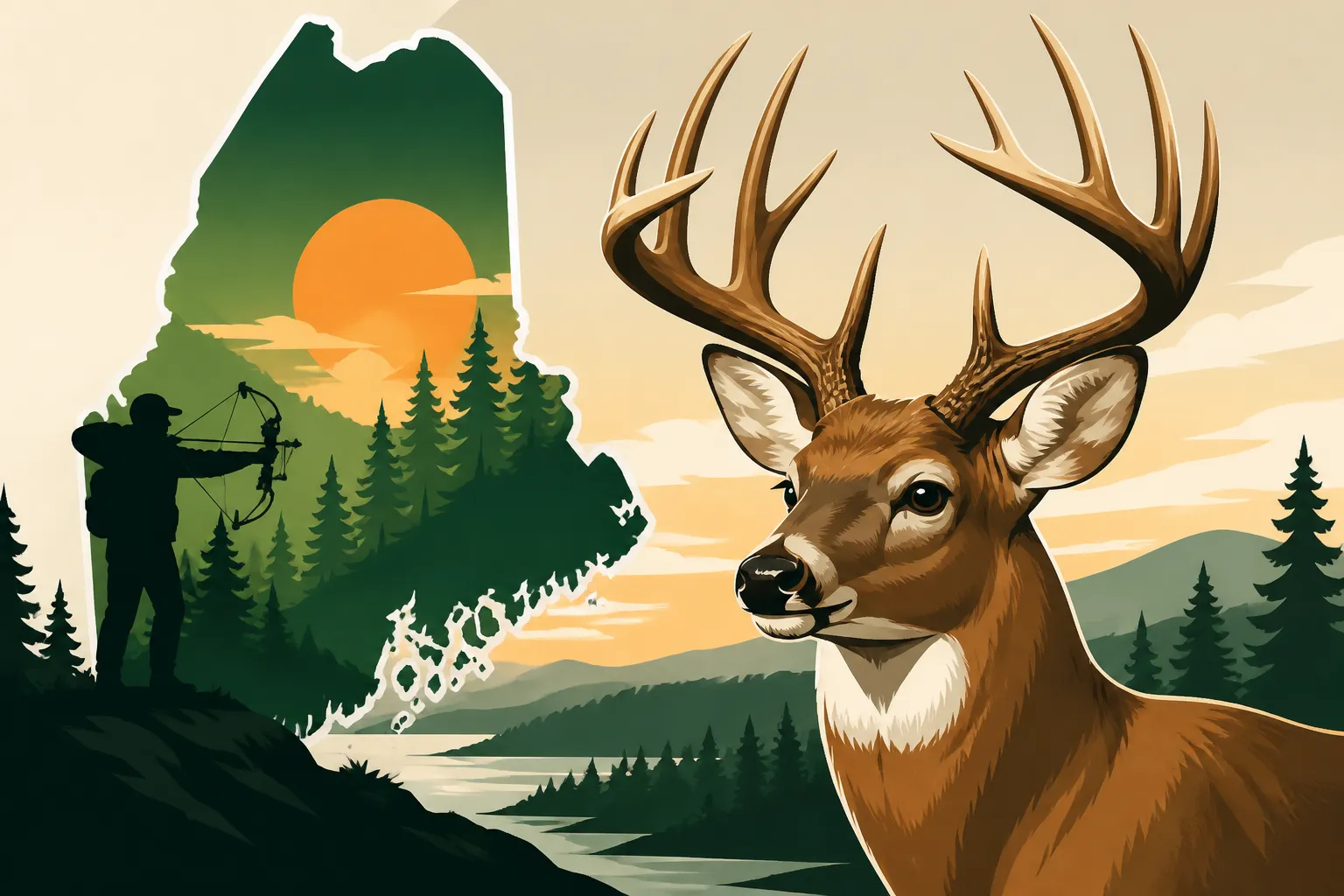
The dream of tagging a Boone and Crockett whitetail in Maine is one that burns bright for many hunters, yet it’s a rare and challenging accomplishment. It's easy to get discouraged when you see monster bucks pouring out of states like Iowa or Kansas, leading you to believe that a true giant in the pine tree state is little more than a fantasy. But let me tell you, while Maine doesn't boast the sheer numbers of record-book animals some other places do, the potential is absolutely there for a seasoned woodsman or a lucky newcomer to punch a tag on a buck that will make the record books. This guide will walk you through what it truly takes to find, hunt, and register one of Maine's legendary Boone and Crockett whitetails.
Understanding Boone and Crockett Standards for Whitetails
Before we dive into the nitty-gritty of hunting these elusive giants, it's really important to understand what makes a deer "Boone and Crockett" worthy in the first place. It's not just about a big rack; there are very specific measurements and a rigorous scoring system involved.
What Qualifies as a B&C Whitetail?
The Boone and Crockett Club has a standardized system for measuring and scoring big game antlers, horns, and skulls. For whitetail deer, bucks are categorized into two main groups: typical and non-typical.
- Typical Whitetail: These are bucks with antlers that are largely symmetrical, with points growing mostly off the main beam in a conventional pattern. The minimum net score for a typical whitetail to make the All-Time record book is 170 inches. For entry into the Awards book, which is updated every three years, the minimum is 160 inches.
- Non-Typical Whitetail: These bucks have antlers with irregular points, drop tines, or unusual growth that deviates from the normal symmetrical pattern. These "non-typical" points are often what make a rack look truly wild and impressive. The minimum net score for a non-typical whitetail to make the All-Time record book is 195 inches, and 185 inches for the Awards book.
The scoring process is meticulous. Official B&C scorers measure various aspects like the length of main beams, the length of all points, circumferences between points, and the greatest spread. Deductions are made for differences in symmetry between the right and left antlers for typical racks, which is why the "net score" is so important. It can be a little disheartening to see a gorgeous buck with a huge gross score get deductions, but that's the nature of the game.
The Rarity of Maine B&C Bucks
Let's be real: Maine isn't known for pumping out B&C bucks like some of the Midwest states. You hear stories, and you see photos, but they're few and far between compared to places with richer soils and different deer management histories. Why is this the case? Maine's landscape, while beautiful and wild, often presents challenges for growing truly giant antlers. We have expansive forests, but the soil quality in many areas isn't as mineral-rich as prime agricultural land. Our deer densities are also lower in much of the state compared to those agricultural hubs, particularly when you compare Northern Maine Deer Density to regions further south or west.
Furthermore, harsh winters can be incredibly tough on our deer. A severe winter can set antler growth back significantly, as deer burn through fat reserves just to survive. This impacts a buck's ability to put energy into growing massive antlers the following spring. Despite these hurdles, Maine does produce truly impressive bucks. It just takes a combination of prime genetics, excellent nutrition, ample age, and a bit of luck to find one. The fact that these bucks are rarer makes harvesting one all the more special.
Key Measurements for Scoring
Understanding the basics of scoring can help you appreciate what makes a potential B&C buck. When an official scorer looks at a rack, they're not just eyeballing it; they're taking precise measurements.
- Main Beam Length: This is measured from the burr, following the outer curve of the beam to its tip. A long main beam provides a great foundation for a high score.
- Length of Points: Every measurable point (a projection at least one inch long from the main beam or another point) is measured. The more points, and the longer they are, the better the score.
- Circumferences (Mass): These are taken at various points along the main beam to gauge the antler's thickness or mass. Good mass carries a lot of score.
- Inside Spread: This is the widest measurement between the main beams, and it's a significant component of the score.
For typical racks, the goal is symmetry. For non-typical, anything goes! Those crazy drop tines, extra points off a main beam, or even a third beam can add significant inches to a non-typical score. It's a fascinating system that really highlights the unique beauty of each buck's headgear.
Factors Influencing Big Buck Growth in Maine
So, what exactly allows a deer to grow into a B&C caliber animal here in Maine? It’s not a simple answer, but rather a perfect storm of several critical elements converging over time.
Genetics and Age
Let's start with the basics: genetics. Just like people, deer inherit traits from their parents. Some deer herds simply have the genetic potential to grow bigger antlers than others. While we can't really control the genetics of wild deer in Maine, it's a known fact that certain areas consistently produce larger-bodied, larger-antlered deer. These are often the areas where deer have lived relatively unmolested for generations.
But even with fantastic genetics, a buck won't grow a record-book rack overnight. Age is paramount. Most B&C bucks are at least 4.5 years old, and often much older, sometimes 6.5 years or more. Think about it: a young buck is putting most of its energy into growing its body. It needs to get bigger and stronger to survive breeding season and harsh winters. Only once a buck reaches physical maturity does it begin to channel maximum energy into antler growth. That means, to have a shot at a true giant, we as hunters often need to be willing to pass on younger, smaller-racked bucks, allowing them to reach their full potential. This is often easier said than done, especially when you've been sitting for hours in the cold!
Nutrition and Habitat Quality
Maine might be known for its vast woods, but not all woods are created equal when it comes to deer nutrition. Deer need a consistent supply of high-quality forage rich in protein, minerals, and carbohydrates to grow large bodies and impressive antlers. Areas with diverse habitat, including healthy regenerating timber cuts, clearings, and agricultural fields, provide a much better diet than mature, closed-canopy forests with sparse undergrowth.
Take, for instance, agricultural areas in central or Aroostook County Farmland. Deer in these regions often have access to corn, alfalfa, and various other crops that provide a much richer diet than what's typically found in a deep spruce forest. Even in forested areas, places that have recently been logged can be a goldmine. The sunlight hitting the forest floor after a cut stimulates new growth of forbs, browse, and soft mast (like berries) that deer absolutely thrive on. Access to a variety of natural food sources, coupled with consistent water, makes a huge difference. GoHunt and similar mapping tools can be invaluable here, helping you identify these prime habitat areas by showing you current and past timber harvest activity and land use.
Winter Severity and Impact
This is a big one for Maine deer. Our winters can be brutal, and they directly impact antler growth. A mild winter means deer don't have to expend as much energy just staying warm and finding food. They come out of winter in better condition, with more reserves to put into antler development. Conversely, a severe winter, especially one with deep, persistent snow, forces deer into wintering yards where they simply try to survive. How Deep Snow Affects Maine Deer Survival is a critical factor. They burn through their fat stores, and when spring finally arrives, their bodies are focused on recovering lost weight and regaining strength, not on growing massive antlers.
This is why you might see fluctuations in average antler size year to year, especially in northern Maine. A string of mild winters can lead to a boom in antler quality, while a couple of tough winters in a row can bring those numbers down. It's a constant battle against Mother Nature, and our deer are resilient, but even they have their limits. Understanding these cycles can help you predict potential "big buck" years.
Where and How Maine Hunters Encounter B&C Whitetails
The hunt for a B&C whitetail in Maine isn't for the faint of heart. It requires dedication, a deep understanding of deer behavior, and often, an acceptance that success might not come every season.
Historical Hotbeds and Current Trends
Historically, some of the biggest bucks in Maine have come from areas with a combination of good nutrition, lower deer density (meaning less competition for resources), and limited hunting pressure. The "Big Woods" of northern Maine has always held a certain mystique, and indeed, some truly enormous deer have been taken there over the years. However, these are often isolated pockets, and finding them requires immense effort.
Today, while the North Woods still produces giants, many hunters are finding incredible potential in southern and central Maine, particularly in areas near agriculture and where there's a patchwork of private land. These regions often have richer soils, milder winters, and a better food supply. This is where Why Southern Maine Grows Bigger Bucks really comes into play. You might not have the vast, unbroken wilderness, but you often have a higher deer density and better access to sustained, high-quality forage. The key is finding pockets of mature bucks that have managed to elude hunters for years, often on smaller, overlooked parcels of land or thick swamps that hunters avoid.
Hunting Strategies for Trophy Bucks
Hunting a B&C buck is a different ballgame than just filling any deer tag. It requires a significant shift in mindset and strategy.
- Patience is Key: You might pass on dozens of smaller bucks. It takes discipline and a clear mental picture of what you're truly after.
- Extensive Scouting: This can't be stressed enough. Long before the season opens, you need to be out there. Scouting With the Maine Hunting App can help you analyze aerial photos, topo maps, and property boundaries to identify potential bedding areas, feeding zones, and travel corridors. Look for old rubs, massive scrapes, and large tracks. Reading Aerial Photos for North Woods Deer allows you to identify remote clear cuts or dense cover where a mature buck might be hiding.
- Focus on Mature Deer Sign: Don't just look for any deer sign. Look for big deer sign. Larger tracks, higher rubs on trees, and scrapes that are actively being worked indicate a mature buck is in the area. Learning to differentiate these from smaller deer sign is crucial. Finding Sign in Big North Woods Timber can teach you what to look for specifically in dense forest.
- Hunt the Rut: The breeding season, typically peaking in early November during When the Maine Rut Peaks, is when big bucks are most vulnerable. They're moving more, often during daylight hours, in search of does. This is an excellent time to try calling or rattling techniques, or to set up on a known travel corridor like a Hunting a Ridge-Top Saddle for Rutting Bucks.
- Pressure Management: Big bucks become big by avoiding hunters. Look for areas with less pressure. That might mean walking further, finding private land with limited access, or hunting those thick, nasty cedar swamps that other hunters avoid.
The Role of E-Scouting and Technology
In today's hunting world, technology can give you a serious edge in the pursuit of a B&C buck. E-scouting, using tools like GoHunt, allows you to "walk" hundreds of acres from your couch. You can analyze terrain, identify potential pinch points, locate clearings, and even mark potential stand locations. These platforms often have public and private land layers, timber harvest data, and satellite imagery that can reveal hidden pockets.
Combine this with trail cameras, and you're building a powerful intel network. Placing cameras in strategic locations, like along suspected travel routes or near known food sources, can give you confirmation that a mature buck is indeed in the area. It helps you understand his patterns, his preferred travel times, and even gives you an idea of his antler development. The more information you gather, the more targeted your hunting efforts can be, increasing your chances of an encounter with that once-in-a-lifetime animal.
The Journey from Woods to Record Book
So, you've done the work, put in the hours, and finally, you've harvested a buck that you believe might be B&C caliber. The journey isn't over yet! There are important steps to take to ensure your trophy is properly handled and, if it measures up, officially entered into the record books.
Field Dressing and Initial Care
The moment you tag a potential trophy, the clock starts ticking for proper care. First and foremost, you need to properly field dress your deer as quickly and cleanly as possible to begin the cooling process. This is especially true in Maine's often cold hunting seasons. Check out Field Dressing a Deer in Cold Weather for detailed steps. You want to preserve the meat, of course, but for a trophy, you also want to protect the cape and antlers.
- Protect the Cape: If you plan to mount the deer, be careful with your cuts when field dressing. Leave plenty of cape material behind the front legs. Avoid cutting too far up the neck if you're unsure where the taxidermist will want to make their cut.
- Protect the Antlers: Be mindful when dragging or transporting the deer. Don't let the antlers get banged up, chipped, or broken. Wrap them in something soft if you have to drag them through rough terrain.
- Cool Down: Get the deer cooled down as soon as possible. In cold Maine weather, hanging it in a garage or shed might suffice, but if temperatures are mild, you'll need to get it to a processor or packed with ice quickly.
Official Measurement and Entry Process
Once you've got your buck out of the woods and properly cared for, the next exciting step is getting it officially measured.
- Drying Period: The antlers need to undergo a mandatory 60-day drying period from the date of harvest. This allows the antlers to stabilize and prevents shrinkage after the official measurement. Don't rush this part!
- Contact an Official Measurer: The Boone and Crockett Club has a network of official measurers across the country. You'll need to locate one in Maine or a nearby state. They are trained and certified to perform the meticulous measurements required. You can often find a list of official measurers on the B&C website.
- The Measurement: The measurer will carefully go through the entire scoring process, taking all the required measurements. They will determine if your buck qualifies as typical or non-typical and calculate the gross and net scores.
- Submission: If your buck meets the minimum requirements for the Awards or All-Time books, the measurer will help you with the submission paperwork. This usually includes photos of the rack, a hunter's affidavit, and a fair chase statement.
Remember, the goal is to get an accurate, fair measurement. Be patient and respectful with the measurer; they are volunteers dedicated to preserving fair chase and accurate record keeping. You can learn more about previous entries and the general criteria through the Maine Deer Record Book.
Celebrating the Achievement
Harvesting a B&C whitetail in Maine is a monumental achievement. It's the culmination of years of dedication, countless hours in the woods, enduring harsh weather, and often, a touch of pure luck. Whether your buck makes the All-Time book, the Awards book, or even just becomes a cherished memory in your camp, it's a testament to the quality of Maine's deer herd and your skills as a hunter.
It's about more than just numbers on a score sheet. It's about the story, the hunt, the respect for the animal, and the challenge of pursuing such an elusive creature in one of the most rugged hunting environments in the country. Many hunters spend their entire lives chasing this dream, and few realize it. If you do, it’s an experience that will stay with you forever, a true highlight in any hunter's journey in the Maine woods.
| Category | Typical Minimum (All-Time) | Typical Minimum (Awards) | Non-Typical Minimum (All-Time) | Non-Typical Minimum (Awards) |
|---|---|---|---|---|
| Whitetail | 170 inches | 160 inches | 195 inches | 185 inches |
Disclaimer
This article is for general informational purposes only and does not constitute professional advice. Laws, prices and regulations vary by location and change over time. Consult a qualified professional for guidance on your specific situation.