Maine Duck Harvest Numbers
It's always exciting, and sometimes a little nerve-wracking, to look at those duck harvest numbers each year. For us waterfowl enthusiasts in Maine, these figures aren't just dry statistics; they represent the pulse of the flyway, the health of our marshes and coastal waters, and the potential for incredible days afield. This guide will walk you through what Maine's duck harvest numbers truly mean, where they come from, and how you can interpret them to better understand the world of waterfowl hunting in our great state.
The Story Behind Maine's Duck Harvest Data
Understanding Maine's duck harvest isn't just about tallying up ducks. It's about recognizing the intricate systems that bring these migratory birds to our state and the dedicated efforts to track their journeys. These numbers tell a story, albeit one often painted with broad strokes, about population health, habitat conditions, and the impact of hunting pressure. It’s a complex picture, and grasping the methodology behind it can offer a deeper appreciation for the resource we cherish.
How Harvest Numbers Are Collected and Reported
The collection of migratory bird harvest data is a massive undertaking, primarily spearheaded by federal agencies in cooperation with state wildlife departments. It's a multi-faceted approach, relying on hunter participation and scientific surveys to gather comprehensive, albeit estimated, information. This data then forms the bedrock for management decisions, from setting season lengths to establishing bag limits.
One of the cornerstones of this data collection is the Migratory Bird Harvest Information Program (HIP). If you've ever purchased a Maine migratory bird hunting permit, you've likely participated in HIP without even realizing it. Hunters are required to register with HIP annually, providing information about the species they intend to hunt. This registration creates a pool of hunters from which a subsample is then selected to participate in a more detailed harvest survey. These selected hunters receive questionnaires asking about their hunting activity and the number of birds they harvested by species. Additionally, another critical component involves wing and tail surveys, where hunters voluntarily submit wings or tails from harvested birds. These samples allow biologists to determine species, age, and sex ratios, providing invaluable biological insights into the harvested population. All of these pieces come together to create a picture of the overall harvest. Maine Migratory Bird Certification is a crucial step in this process for every waterfowl hunter.
Why These Numbers Matter to Maine Hunters
For the dedicated Maine duck hunter, these harvest numbers are far more than just figures on a page; they are a direct reflection of the resource we treasure and the hunting opportunities we look forward to each year. These statistics directly influence crucial management decisions, like how long our seasons run, what our daily bag limits are, and which species might require closer monitoring. A consistently low harvest for a particular species, for example, might signal a need for more conservative regulations in future seasons, or it could prompt further research into breeding success or migratory bottlenecks far from Maine.
Beyond the regulatory implications, harvest numbers offer a glimpse into the health of continental duck populations. They can indicate whether breeding grounds in the prairies and boreal forests had a productive year, or if habitat conditions along the Atlantic Flyway were favorable during migration. For instance, a strong harvest of mallards or black ducks in Maine often aligns with robust populations observed further north, giving us a sense of optimism. Conversely, a noticeable dip can spark concern and encourage us to redouble our conservation efforts. Ultimately, these numbers empower us as hunters to be better stewards of the resource, informing our understanding of the broader ecological picture and ensuring sustainable hunting for generations to come. Having proper Maine Federal Duck Stamp Requirement met contributes directly to these conservation efforts.
General Trends in Maine's Waterfowl Harvest
Maine's diverse landscape and extensive coastline offer a unique blend of waterfowl hunting opportunities, which in turn influences our harvest trends. From the rugged shores where sea ducks brave the Atlantic swells to the quiet inland marshes and beaver flowages, each environment hosts different species and presents distinct hunting challenges. This geographical diversity means that general trends in Maine’s duck harvest often reflect these two distinct hunting traditions: the coastal pursuit of diving ducks and the inland quest for dabblers.
Coastal vs. Inland Duck Harvest Dynamics
When we talk about duck harvest in Maine, it’s truly a tale of two distinct worlds: the salty tang of the coast and the crisp air of our inland waters. Along Maine's vast coastline, especially down in Downeast or along the rocky mid-coast, the harvest is dominated by hardy sea ducks. We're talking about species like eiders, scoters, and long-tailed ducks, birds perfectly adapted to the harsh marine environment. Hunters pursuing these birds often do so from specialized boats or layout blinds, braving the elements for a chance at these unique birds. The success here often hinges on weather, tide, and the sheer number of birds wintering along our shores, which can fluctuate year to year based on breeding success far to the north and ice conditions further south. If you're looking for specifics on where these birds are, it's worth checking out resources focused on Eiders on the Maine Coast or Scoters on the Maine Coast.
In contrast, venture inland, and the duck hunting landscape shifts dramatically. Here, our focus turns to dabbling ducks like mallards, black ducks, and wood ducks, alongside various species of divers, all drawn to the abundant freshwater marshes, rivers, and beaver flowages. These hunts are often characterized by decoy spreads in quiet backwaters, jump-shooting along meandering streams, or sitting patiently in natural blinds. The harvest in these areas is heavily influenced by local water levels, available food sources, and crucially, the timing of cold fronts that push new birds down from Canada. A late freeze-up can mean extended hunting opportunities, while an early deep freeze can quickly send birds packing further south. Understanding the nuances of hunting a beaver flowage for early season deer might even help you recognize prime duck habitat in the early season, as both species use similar food and cover.
Factors Affecting Annual Fluctuations
The dance of annual duck harvest numbers is influenced by a complex ballet of environmental factors, most of which are far beyond the control of any single hunter or even state wildlife agency. It’s a yearly ebb and flow, making each season unique and keeping us on our toes. These fluctuations are what make waterfowl hunting both challenging and incredibly rewarding, as no two years are ever quite the same. The birds are migratory, after all, and their journey is dictated by forces that ripple across the entire continent.
One of the most significant influences comes from the distant breeding grounds, primarily in the prairie potholes and boreal forests of Canada and the northern U.S. states. A wet spring in these regions generally leads to excellent habitat conditions, higher duckling survival rates, and ultimately, a larger fall flight. Conversely, drought conditions can severely reduce breeding success, leading to fewer birds heading south. Once the birds begin their migration, weather patterns become paramount. Early, severe cold fronts can push large numbers of ducks into Maine quickly, potentially leading to a concentrated, strong harvest. However, a mild fall might see birds lingering further north, passing through Maine in smaller, more spread-out waves, or even overflying us if conditions are too warm. Local habitat conditions also play a crucial role. Water levels in marshes, the availability of natural food sources like wild rice or acorns, and even the presence of stable ice on coastal waters can all dictate where birds choose to stop, feed, and remain, directly impacting where hunters find success. Hunter effort is another variable; if more hunters are out, and conditions are favorable, harvest numbers might see an uptick. All these elements intertwine, creating the mosaic of harvest data we see each year, making us forever students of the weather and the wild.
Interpreting Harvest Data for Your Next Hunt
Understanding the raw numbers is one thing, but translating them into actionable insights for your next duck hunt is where the real art lies. While we don't have a crystal ball to predict the exact flight path of every green-winged teal, looking at historical data and general trends can give us a significant edge. It helps us anticipate what might be coming, where to focus our scouting efforts, and ultimately, how to increase our chances of success. It’s about being informed and prepared, rather than just hoping for the best.
Species-Specific Insights and Local Hotspots
Harvest data, when viewed through a species-specific lens, can offer incredibly valuable insights, even if we're only looking at general trends. If, over several seasons, the harvest for black ducks shows a consistently strong performance in, say, Washington County, it suggests that region likely offers prime habitat or experiences consistent migration patterns for that particular species. This kind of information can help hunters identify potential hotspots for specific ducks they're targeting. Maybe you're really keen on wood ducks; historical data might point you towards specific river systems or forested beaver ponds that consistently produce good numbers, rather than just casting a wide net. Tools and apps that consolidate and map various hunting data, even if it's general ecological information or habitat types, can be incredibly useful here. While GoHunt is widely known for its big game applications, the underlying principles of habitat analysis and understanding game movement it promotes are equally vital for waterfowl. Using such platforms to identify areas with consistent water sources, diverse vegetation, or proximity to larger bodies of water can guide your scouting and increase your chances of finding those elusive birds. It really emphasizes the value of local knowledge and persistent scouting.
It’s crucial to remember that while broad harvest numbers give us a general idea, true success often comes from on-the-ground observation. A species might show a good harvest statewide, but if you’re not in the specific marsh or coastal area they’re frequenting, your personal harvest might tell a different story. This is why coupling official data with your own scouting efforts is paramount. Talk to other hunters, observe flight patterns, look for fresh sign, and pay attention to specific habitat features. For example, knowing that Maine's Place on the Atlantic Flyway brings a variety of ducks through, means you need to hone in on where specific species might stop. A rise in the harvest of a particular diving duck might indicate a strong local population, or perhaps just a bottleneck in a particular tidal creek that funnels birds past a well-positioned blind. Always think about what the numbers don't explicitly tell you and fill in those gaps with your boots-on-the-ground reconnaissance.
The Role of Conservation and Habitat Work
It’s easy to get caught up in the excitement of hunting season, chasing those elusive birds, and focusing on the daily bag limits. But behind every successful harvest, and every duck that wings its way across a Maine sky, is a profound and ongoing commitment to conservation and habitat work. The very health of the duck populations we hunt, and by extension, the annual harvest numbers, are direct reflections of these tireless efforts. Without healthy wetlands, clean water, and robust breeding grounds, our duck hunting traditions simply wouldn't exist.
Organizations like Ducks Unlimited, along with state and federal agencies, are constantly engaged in projects to preserve, restore, and enhance wetland habitats across the continent, including right here in Maine. These efforts range from creating new impoundments to restoring natural floodplains and managing water levels to maximize food sources for migrating birds. Every dollar spent on a federal duck stamp, every membership fee paid to a conservation group, and every hour volunteered for habitat work directly contributes to the sustainability of these migratory species. When we see healthy harvest numbers, it's not just luck; it's a testament to decades of strategic conservation, ensuring that ducks have the places they need to breed, feed, and rest along their incredible journeys. We can all do our part, whether it's supporting these groups, practicing ethical hunting, or even just keeping our local waterways clean. This ongoing commitment is what ensures that future generations of Maine hunters will also have the opportunity to experience the thrill of a flock of ducks cupped and committed over the decoys. For those interested in goose numbers, it's a similar story, as highlighted in Maine Duck and Goose Bag Limits.
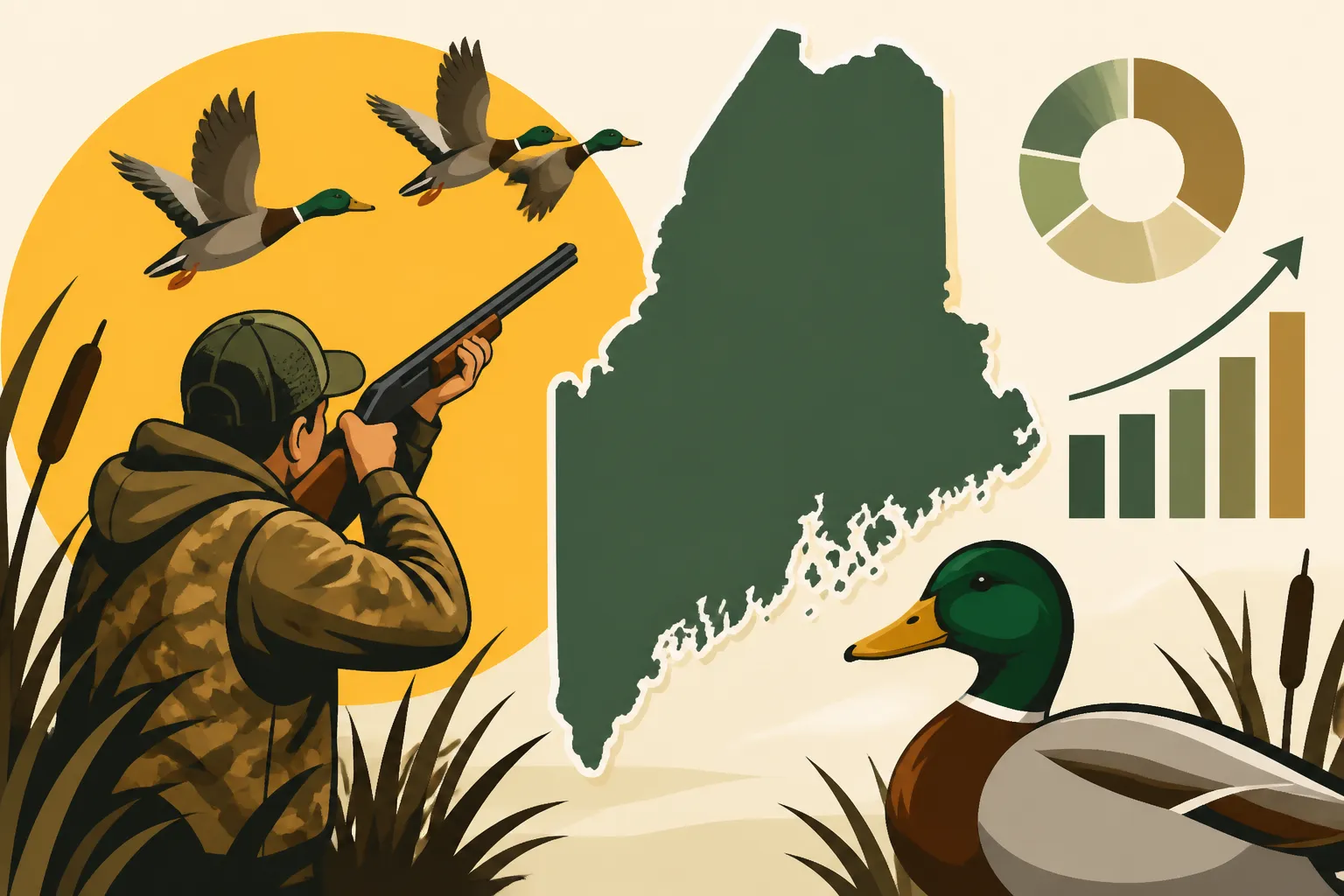
Here's a look at how different duck categories generally contribute to Maine's overall harvest and the primary influences on their numbers:
| Duck Category | Primary Species (Examples) | Typical Habitat in Maine | Key Influences on Harvest Numbers |
|---|---|---|---|
| Dabbling Ducks | Mallard, Black Duck, Wood Duck, Teal | Inland marshes, rivers, beaver flowages, small ponds | Northern breeding ground success, local water levels, cold fronts |
| Diving Ducks | Ring-necked Duck, Bluebill, Goldeneye | Larger inland lakes, estuaries, protected coastal bays | Northern breeding ground success, migration timing, ice formation |
| Sea Ducks | Common Eider, Scoter, Long-tailed Duck | Open coastal waters, rocky shorelines, coastal bays | Far northern breeding success, ocean conditions, severity of winter |
Disclaimer
This article is for general informational purposes only and does not constitute professional advice. Laws, prices and regulations vary by location and change over time. Consult a qualified professional for guidance on your specific situation.