Maine Deer Wintering Yards Explained
For anyone who’s spent a bone-chilling Maine winter in the woods, you know the struggle is real for our deer herd. The deep snow, bitter cold, and driving winds can be relentless, and without proper refuge, deer simply wouldn't make it. This comprehensive guide will explain exactly what Maine deer wintering yards are, why they're so vital to the survival of our whitetails, and how these critical habitats are identified and managed.
Understanding Maine's Deer Wintering Yards: A Lifeline for Whitetails
Imagine being a deer in the depths of a Maine winter. Every step through deep snow expends precious energy, the biting wind saps your body heat, and food is scarce. It’s a harsh reality that has shaped the very behavior and survival strategies of white-tailed deer in our state. This is where deer wintering yards, often called "deer yards" or "DWAs" (Deer Wintering Areas), become an absolute lifeline. These aren't just random patches of woods; they are specific, vital habitats that offer deer a chance to survive the toughest months of the year.
What Exactly is a Deer Wintering Yard?
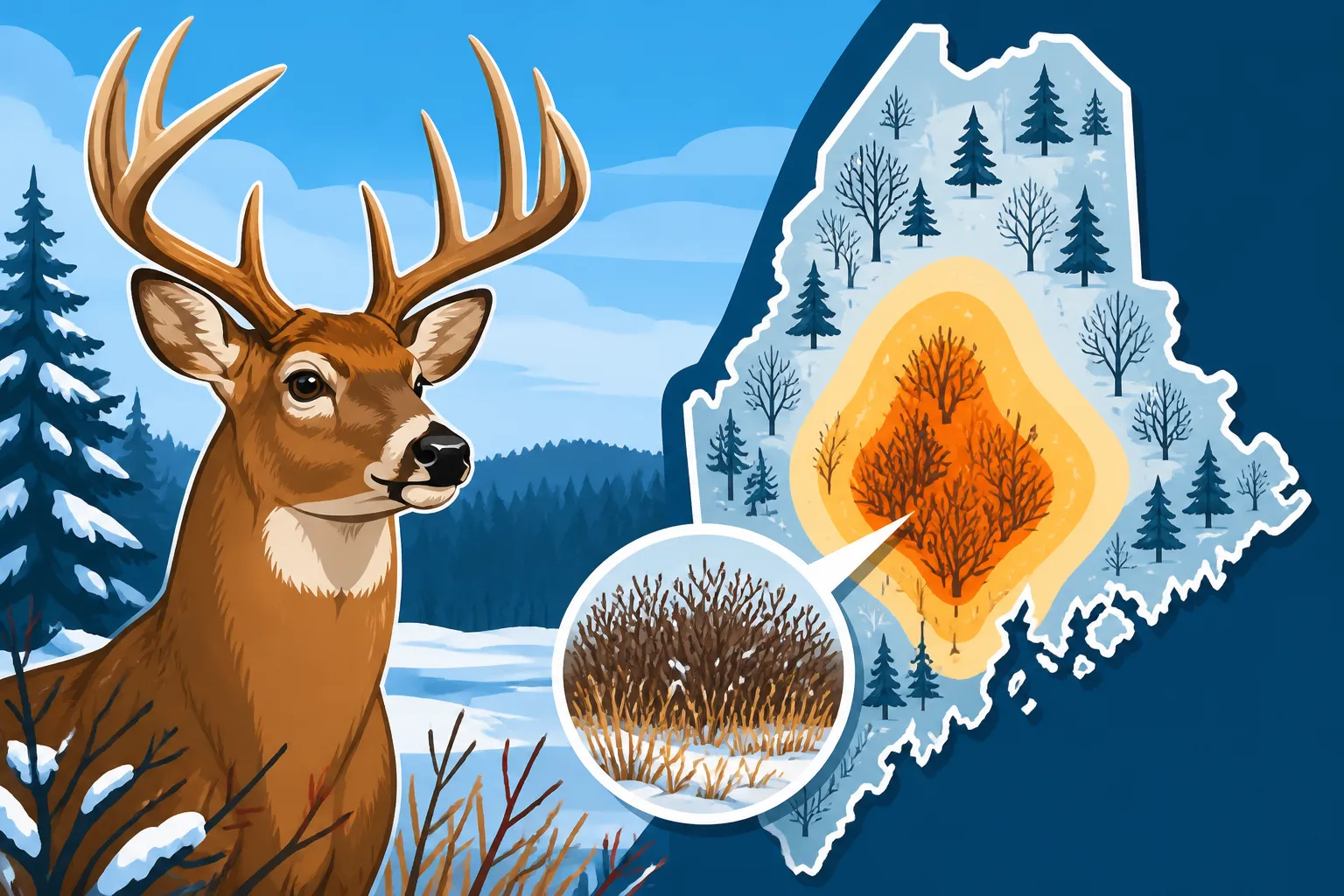
At its core, a deer wintering yard is an area where deer congregate during periods of deep snow and severe cold. They're typically characterized by dense coniferous cover – think thick stands of spruce, fir, hemlock, or cedar. This dense canopy acts like a natural umbrella, intercepting snowfall before it reaches the ground. The result? Shallower snow depths that make movement easier and conserve vital energy. But it's not just about snow; these thick conifers also provide crucial thermal cover, shielding deer from brutal winds and radiating warmth, which helps them retain body heat in freezing temperatures. Without these sheltered havens, our deer herd, especially in the northern parts of the state where snow can pile up for months, would face drastically reduced survival rates.
The Historical Significance and Natural Selection
Deer have been utilizing these specific habitats for millennia, long before any of us ever strapped on a pair of snowshoes or carried a rifle. It's an ingrained survival strategy honed by generations. During periods of heavy snowfall, deer will migrate, sometimes many miles, from their dispersed summer and fall ranges to these concentrated wintering areas. This migration is driven by instinct and necessity. Those deer that historically failed to find or utilize these yards simply didn't survive to pass on their genes. This natural selection has solidified the importance of DWYs as a critical component of the Maine whitetail's annual cycle. You might even find yourself Hunting a Cedar Swamp Deer Yard if you understand how these areas function in the late season.
The Critical Role of Thermal Cover in Maine Winters
When we talk about deer wintering yards, the concept of "thermal cover" is paramount. It's more than just a buzzword; it's the difference between life and death for a deer facing down a brutal January cold snap. Maine winters can be unforgiving, with temperatures plunging well below zero and wind chills making it feel even colder. The right type of cover acts as a natural insulator, allowing deer to conserve the energy they desperately need for survival.
How Dense Conifers Provide Insulation
Imagine standing in a wide-open field on a sub-zero day with the wind whipping. Now picture stepping into a dense stand of white cedars where the snow is only knee-deep and the wind barely whispers. That's the difference thermal cover makes for a deer. Dense stands of evergreens, particularly spruce, fir, and hemlock, with their interlocking branches that extend almost to the ground, create a microclimate. This canopy traps warm air, minimizes heat loss from convection (wind chill), and intercepts snowfall, keeping the ground relatively clear. The tighter the canopy, the better the thermal protection. This is especially important when considering How Deep Snow Affects Maine Deer Survival, as less energy expended on moving through snow means more energy available to stay warm.
Wind Breaks and Radiant Heat Retention
Beyond just intercepting snow and trapping warmer air, the dense conifer cover acts as an incredibly effective windbreak. Wind is one of the biggest factors in heat loss for any mammal, and for deer, constantly battling a freezing gale can be fatal. The dense structure of a good wintering yard breaks up the wind, creating calm pockets where deer can bed down, rest, and digest their meager winter forage without the constant drain of fighting wind chill. Furthermore, the dark, evergreen needles and branches absorb what little sunlight there is, and this radiant heat can subtly warm the immediate surroundings, offering a slight but significant advantage over exposed areas. This combination of factors explains why deer will choose these specific areas over seemingly similar adjacent timber.
Identifying Productive Wintering Yards on the Landscape
So, how do you find these crucial havens? Identifying productive deer wintering yards requires a keen eye for habitat, an understanding of deer behavior, and a bit of detective work, often starting long before the snow flies. It's a skill that can greatly improve your chances of success during the late season and even inform your scouting for the following year.
Key Characteristics of Prime DWY Habitat
When you're looking for a wintering yard, you're primarily looking for dense, mature coniferous cover. Here are some tell-tale signs:
- Species Composition: Look for stands dominated by cedar (especially northern white cedar), hemlock, spruce, or fir. Mixed stands with a high percentage of these evergreens can also be good. Cedar, in particular, is a favored browse species during winter, offering both food and cover.
- Canopy Closure: A good DWY will have a very dense canopy that blocks out most of the sky. This is what helps intercept snow and reduce wind. If you can see a lot of blue sky through the branches, it’s probably not dense enough to be prime winter cover.
- Aspect and Topography: Deer often prefer south-facing slopes, as these catch more sunlight and tend to melt off snow faster. However, in extremely dense yards, aspect might be less critical than the sheer density of the cover itself. Flat, low-lying cedar swamps are classic wintering areas in many parts of Maine, particularly where they offer pockets of browse.
- Sign, Even in Summer: You can often spot signs of past wintering activity even in the summer or fall. Look for heavily browsed cedar saplings, flattened beds under dense trees, and distinct "deer trails" or runways that remain even after the snow melts, often forming networks through the thickest cover. These trails become deeply worn as deer repeatedly use the same travel corridors within the yard. You can use tools like GoHunt to analyze satellite imagery, looking for those dark, dense evergreen patches, and then cross-reference with topography.
Using Technology and On-the-Ground Scouting
Modern mapping applications are incredible resources for identifying potential DWYs. Layers that show tree species or canopy density can highlight those dark, evergreen blocks on a map. Combining this with topographical maps to find south-facing slopes or low-lying swampy areas can give you a great starting point.
When you're on the ground, especially in early winter before the snow gets too deep, you can confirm these spots. Look for tracks entering and exiting these dense areas, and pay attention to how snow depth changes as you move from open hardwoods into thick conifers. You'll literally feel the temperature rise and the wind drop as you enter a good yard. This is a crucial skill for Reading a North Woods Deer Yard. Many successful hunters use digital mapping platforms like GoHunt not just for boundaries, but for visualizing the forest composition and identifying these critical areas before they ever step foot in the woods. This helps narrow down vast landscapes and focus scouting efforts effectively.
| Characteristic | Prime Deer Wintering Yard | Typical Winter Woods (Hardwoods/Mixed) |
|---|---|---|
| Dominant Cover | Dense coniferous (cedar, spruce, fir, hemlock) | Deciduous hardwoods, open mixed woods |
| Canopy Closure | Very high (70-90% or more), blocking sunlight and snow | Low to moderate (20-60%), allowing significant snow and light |
| Snow Depth | Significantly shallower, compressed by canopy | Deep, fluffy, uncompressed |
| Thermal Protection | Excellent (reduced wind, trapped warmth, radiant absorption) | Poor (high wind exposure, rapid heat loss) |
| Food Source | Browseable conifers (cedar, hemlock) present; sometimes residual hardwood browse at edges | Scattered, often high-up browse; hard mast buried in snow |
| Deer Activity | Concentrated trails, numerous beds, heavy browsing | Scattered tracks, transient movement |
Hunting Strategies and Ethical Considerations Around DWYs
Understanding deer wintering yards isn't just about finding where the deer are; it's about understanding how they survive and how we, as ethical hunters, can interact with these areas responsibly. While deer yards can be magnets for late-season deer, hunting them requires a thoughtful approach to ensure the long-term health of the herd.
Late-Season Tactics Near Wintering Yards
Hunting the edges of wintering yards can be incredibly effective, especially during the later portions of Maine's November Firearms Deer Season or when you're Hunting Into the December Muzzleloader Close. Deer will often move out of the densest cover during warmer parts of the day, or just before dark, to access Late-Season Food Sources for Maine Whitetails like woody browse or remaining acorns. Setting up a stand or ground blind on the downwind edge of a known yard, especially if it transitions into a cutover, regenerating hardwoods, or a standing apple orchard, can put you in a prime position. Patience is key, as deer movement around these areas is often slow and deliberate. Consider a Cold-Weather Sitting Strategy in Maine to stay comfortable and vigilant. Using tools like GoHunt to understand property boundaries and public land access around potential yards is also critical for ethical and legal hunting.
Minimizing Disturbance: An Ethical Imperative
It's crucial to remember that wintering yards are survival habitats. Every ounce of energy a deer expends fleeing a perceived threat is an ounce it can't use to stay warm or digest food. Repeated disturbance can stress deer to the point of starvation, especially during periods of extreme cold and deep snow. For this reason, many hunters advocate for minimal intrusion into the core of these yards.
- Avoid Pushing Deer: Resist the temptation to push deer out of the densest cover. This can scatter them into less protected areas where they are more vulnerable to the elements and predators.
- Hunt the Perimeters: Focus your efforts on the fringes or transition zones where deer are naturally moving in and out to feed.
- Know When to Retreat: If you track a deer into a dense, active wintering yard and conditions are severe, sometimes the most ethical choice is to back out and return another day when conditions improve, or to find a different strategy that doesn't push the animals further.
- Respect the Sanctuary: Think of the core of a deer yard as a sanctuary. While hunting is a management tool, it must be balanced with the survival needs of the animals. We also need to be mindful of regulations regarding Maine Public Land Hunting Hours and any specific rules for Wildlife Management Areas that might contain DWAs.
Protecting These Vital Sanctuaries for Future Generations
The future of Maine's deer herd, particularly in our harsher northern and western regions, is intrinsically linked to the health and availability of quality deer wintering yards. As habitat changes due to development, logging practices, and climate shifts, understanding and actively managing these areas becomes more important than ever.
The Impact of Habitat Loss and Fragmentation
Historically, vast tracts of unfragmented conifer forest provided ample wintering habitat. However, as Maine's landscape evolves, these areas face increasing threats. Residential development, new roads, and certain logging practices can fragment existing yards, reduce their overall size, or compromise their thermal integrity. When a large, continuous block of dense evergreens is broken up into smaller, isolated patches, it reduces the effectiveness of the thermal cover and can make it harder for deer to migrate and utilize these areas efficiently. Northern Maine Deer Density is particularly sensitive to these changes, as severe winters can wipe out deer populations without adequate cover.
Conservation Efforts and Sustainable Forestry
Maine's Department of Inland Fisheries and Wildlife (MDIFW) recognizes the critical importance of deer wintering areas and works with landowners, logging companies, and conservation groups to protect and manage them. This often involves:
- Identifying and Mapping DWAs: Extensive mapping efforts help pinpoint where these critical habitats exist.
- Implementing Best Management Practices: This includes guidelines for timber harvesting within and adjacent to deer yards, encouraging selective cutting that maintains a dense canopy, or deferring harvest during critical winter months.
- Conservation Easements: Land trusts and other organizations often acquire conservation easements that protect these areas from development and ensure sustainable forestry practices.
- Educating Landowners: Working with private landowners, who control a significant portion of Maine's forestland, is key to ensuring the future of these habitats.
As hunters and outdoor enthusiasts, we also have a role to play. By supporting organizations that protect critical wildlife habitat, practicing responsible hunting, and understanding the needs of our deer, we contribute to the health of the herd. When you're out Scouting With the Maine Hunting App or similar tools, pay attention to those dark green blocks – they represent life-saving habitat for our whitetails. Protecting these wintering yards ensures that future generations will have the opportunity to experience the challenges and rewards of hunting Maine's robust deer herd.
Disclaimer
This article is for general informational purposes only and does not constitute professional advice. Laws, prices and regulations vary by location and change over time. Consult a qualified professional for guidance on your specific situation.