Maine’s Eastern Coyote Origins
The rustle of leaves, a flash of gray-brown movement, and then that unmistakable howl echoing across a starlit Maine landscape – the eastern coyote has become an indelible part of our wild environment. But for many, the presence of these intelligent, adaptable predators raises questions: where did they come from? How did they become such a dominant force in our ecosystem when they weren't historically here? This guide dives deep into the fascinating journey of Maine's eastern coyote, tracing its surprising origins and exploring its unique characteristics.
The Historical Absence of Coyotes in Maine
Before we can truly understand the arrival and proliferation of the eastern coyote, it's crucial to grasp what Maine's predator landscape looked like for centuries, even millennia, before their presence. Our forests and farmlands weren't always home to these canids; rather, they were dominated by other, now much rarer, species.
Pre-Colonial Predator Landscape
Imagine Maine's vast, untamed wilderness before European settlement. The top predator here wasn't the coyote, but the majestic eastern timber wolf. These larger, true wolves roamed the deep woods, playing a vital role in regulating deer, moose, and other large herbivore populations. Alongside them, the elusive bobcat stalked smaller game, and the powerful black bear foraged across the landscape. Bears, while omnivorous, are certainly a significant predator, especially of deer fawns. The ecosystem was a delicate balance, with these native carnivores at the apex, shaping the behavior and numbers of their prey. There simply wasn't an ecological niche left open for a mid-sized canid like the coyote as we know it today.
Early Settler Accounts and Wildlife Changes
As European settlers pushed deeper into Maine, their presence brought dramatic shifts to the natural world. Forests were cleared for agriculture, settlements expanded, and perhaps most significantly, predator control became a widespread practice. Wolves, often viewed as a threat to livestock and even humans (though attacks were rare), were systematically hunted, trapped, and poisoned. Bounties were common, and by the late 19th and early 20th centuries, the eastern timber wolf was extirpated from Maine and much of the Northeast. This created a massive void in the ecosystem, removing the very animal that would have naturally competed with or even suppressed a burgeoning coyote population. The landscape was changing, leaving open a pathway for a new predator to emerge.
The Western Coyote's Journey East
With the removal of the dominant wolf, the stage was set for a new chapter in Maine's wildlife history. The coyote, a species native to the American West, began an incredible eastward expansion, slowly but surely colonizing new territories.
The Void Left by Wolves
The extirpation of the eastern timber wolf from Maine and neighboring states left a significant ecological vacuum. Large prey animals, particularly white-tailed deer, no longer faced the same intense predation pressure from a top-tier carnivore. While bears and bobcats were still present, they didn't fill the same specialized role as the social, pack-hunting wolves. This imbalance meant an abundant food source was available, and crucially, there was no longer a resident large canid to aggressively defend territories against newcomers. It was an open invitation, though an unintended one, for another adaptable predator to move in and exploit these newly available resources.
Northeastern Migration Pathways
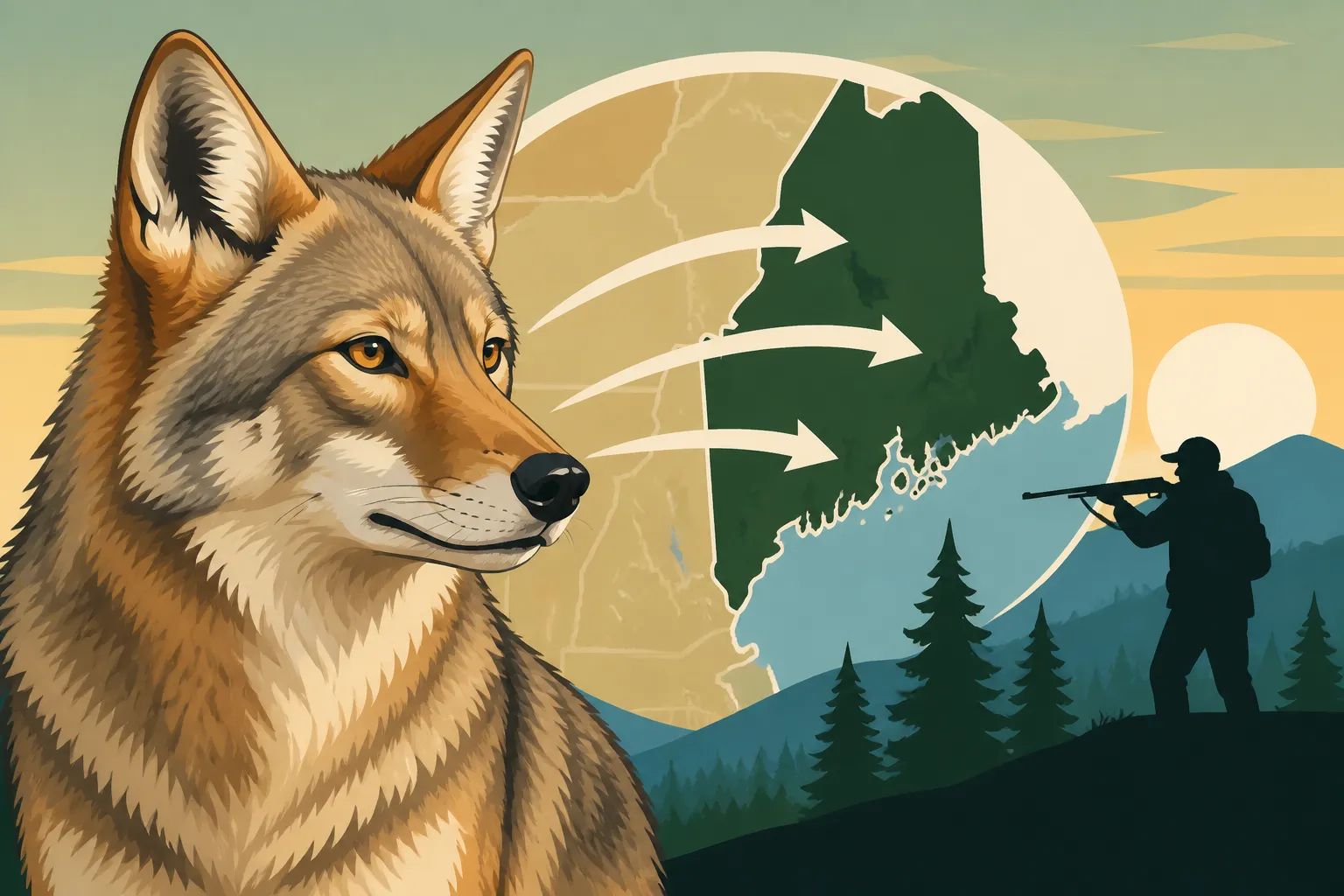
The western coyote's journey eastward was not a direct, linear path. Instead, it was a gradual, opportunistic expansion driven by both available habitat and the absence of competition. Coyotes originated in the arid and semi-arid regions of North America, but their adaptability allowed them to thrive in diverse environments. As human development fragmented forests and created more edge habitats, coyotes found new pathways. Their migration route into the Northeast is believed to have largely followed a northern trajectory, moving through Ontario and Quebec in Canada, where they began to interbreed with residual wolf populations. This northern route allowed them to skirt denser human populations to the south initially, finding refuge and ample game in the less developed northern forests. By the mid-20th century, sightings were becoming more frequent in northern New England, indicating a firm foothold had been established.
Initial Sightings and Expansion
Reports of coyotes in Maine began trickling in during the late 1960s and early 1970s. These initial sightings were often met with curiosity, and sometimes confusion, as many assumed them to be domestic dogs or unusually large foxes. However, as the population grew, it became clear that a new species had arrived. The expansion was relatively rapid once they gained a foothold. Their remarkable reproductive rates and ability to exploit a wide range of food sources, from small rodents and rabbits to deer fawns and even carrion, allowed them to quickly colonize new areas. They spread throughout the state, from the deep woods of the North Maine Woods to the more suburban fringes of southern Maine. This rapid expansion highlighted their incredible resilience and adaptability, demonstrating their capacity to thrive in a state with diverse landscapes. Modern tools like the GoHunt app can even help hunters identify likely coyote travel corridors and habitat features by overlaying mapping layers on aerial photography, showing just how integrated these animals have become.
Genetic Transformation: The "Coywolf" Phenomenon
One of the most intriguing aspects of Maine's eastern coyote is that it's not a pure western coyote. During their long eastward migration, these animals encountered and interbred with other canid species, resulting in a unique genetic makeup.
Hybridization with Wolves and Domestic Dogs
As coyotes moved through Canada, they began to encounter remnant populations of eastern wolves. It wasn't a one-off event; this interbreeding likely occurred over multiple generations, resulting in a significant introgression of wolf genes into the coyote population. This genetic exchange wasn't limited to wolves; some evidence also suggests interbreeding with domestic dogs, particularly as coyotes moved closer to human settlements. This "hybridization" is a key factor in understanding the differences between a western coyote and the animal we see in Maine today. It's a testament to the fluid nature of species boundaries when environmental pressures and opportunities align. This genetic mixing created a "super-coyote," an animal better equipped for the challenges of the eastern landscape.
Genetic Markers of the Eastern Coyote
Scientific studies employing DNA analysis have revealed the complex genetic heritage of the eastern coyote. What we commonly refer to as the eastern coyote or "coywolf" is typically about 60-80% coyote, 10-25% wolf (primarily eastern wolf or red wolf, which also had eastern wolf ancestry), and sometimes a small percentage of domestic dog. These genetic markers are not just interesting biological footnotes; they explain the physical and behavioral characteristics that set our eastern coyotes apart. Researchers can trace these genetic contributions, showing how different segments of DNA from various ancestors contribute to the overall makeup of an individual animal. This detailed understanding helps us explain why our Maine coyotes are often larger and more adaptable than their western counterparts.
Physical and Behavioral Adaptations from Hybridization
The genetic cocktail of the eastern coyote has led to noticeable differences from its purely western ancestor. Maine's coyotes are generally larger, often weighing 35-50 pounds, with some individuals exceeding 60 pounds, significantly heavier than the typical 20-30 pound western coyote. They also tend to have broader skulls, longer legs, and larger teeth – physical traits inherited from their wolf ancestors.
These physical adaptations translate into behavioral advantages. The increased size and strength allow them to take down larger prey, such as adult deer, more effectively than western coyotes. While still primarily solitary or hunting in small family groups, eastern coyotes sometimes exhibit more wolf-like pack behaviors when hunting large game, which is essential for successfully preying on deer in Maine's deep snow. Their enhanced adaptability, a blend of coyote cunning, wolf strength, and perhaps even dog-like tolerance for human proximity, has made them incredibly successful colonizers of diverse habitats, from vast timberlands to suburban woodlots.
Here's a quick look at how the eastern coyote generally compares to its ancestors:
| Feature | Western Coyote | Eastern Coyote (Coywolf) | Gray Wolf (Eastern Wolf Ancestry) |
|---|---|---|---|
| Average Weight | 20-35 lbs | 35-55 lbs (up to 65+ lbs) | 60-100+ lbs |
| Height | Smaller, more slender | Taller, more muscular | Tallest, most robust |
| Dietary Focus | Small mammals, carrion | Medium to large mammals (deer), small mammals, vegetation, carrion | Large ungulates (deer, moose) |
| Social Structure | Solitary or small family groups | Solitary to small packs (often family units) | Highly social, established packs |
| Vocalizations | High-pitched yips, howls, barks | Deeper, more varied howls, yips, barks | Deep, resonant howls, growls |
| Range | Western North America | Eastern North America | Primarily northern wilderness areas |
Adapting to the Maine Landscape
The arrival of the eastern coyote in Maine wasn't just a matter of showing up; it was a testament to their incredible ability to adapt and thrive in a completely new environment. From what they eat to where they live and how they multiply, these animals quickly found their niche.
Diet and Prey Adaptations
Maine offers a smorgasbord of potential food sources for a versatile predator, and the eastern coyote has learned to exploit nearly all of them. While smaller rodents like voles, mice, and snowshoe hare remain a staple, especially in winter, the larger size and collaborative hunting tactics inherited from their wolf ancestry allow them to successfully target white-tailed deer. This is particularly true during the harsh Maine winters when deer are stressed and vulnerable, or when fawns are born in the spring. They are opportunistic hunters, and their diet can also include wild turkeys, ruffed grouse, and even fallen fruit and berries when available. Scavenging on roadkill and animal carcasses left by other predators or hunters also forms a significant part of their sustenance, especially during lean times. Understanding this broad diet spectrum helps explain why their populations have been so successful. Hunters tracking deer in fresh Maine snow might often come across coyote tracks as well, indicating shared hunting grounds.
Habitat Utilization in Maine
One of the most striking aspects of the eastern coyote's success is its ability to utilize a vast array of habitats across Maine. They are not confined to deep, unbroken wilderness, nor are they strictly creatures of the agricultural landscape. Instead, they thrive in a mix of both. You can find them roaming the remote logging roads of the North Maine Woods, stalking the edges of Aroostook County farmland, or even slipping through the suburban woodlots that border more populated areas. They utilize dense conifer stands for cover, open hardwood forests for hunting, and even old fields and clear-cuts for foraging. This incredible adaptability allows them to coexist, often unseen, even near human development, making them a truly ubiquitous presence throughout the state. Scouting with the Maine Hunting App or reading aerial photos for North Woods deer can sometimes reveal patterns of cover and travel routes that coyotes would also favor.
Reproduction and Population Growth
The eastern coyote's impressive population growth in Maine is largely attributed to its efficient reproductive strategy. Unlike many larger predators, coyotes reach sexual maturity relatively early, often at one year of age. They typically breed in late winter, with pups born in spring, usually numbering 4-8 in a litter, though litter sizes can vary depending on food availability. Both parents participate in raising the young, and often, older offspring from previous years may stay with the pack to help care for new pups, a behavior somewhat reminiscent of wolf pack dynamics. This cooperative breeding structure increases pup survival rates. Furthermore, their ability to adjust litter size based on available resources means they can bounce back quickly from population setbacks, ensuring their continued presence and spread across the Maine landscape.
Ecological Impact and Management Challenges
The eastern coyote's rise to prominence in Maine has not been without significant ecological consequences and ongoing management complexities. Their presence affects everything from prey populations to human interactions.
Impact on Deer and Other Game Species
Maine's white-tailed deer population is undeniably impacted by the presence of eastern coyotes. While coyotes don't typically cause a population crash on their own, they are significant predators of fawns and can take adult deer, especially those weakened by harsh winters or injury. This predation, when combined with severe winter weather and limited food resources, can contribute to localized deer population declines, particularly in northern Maine where deer densities are already lower. The debate over Maine Predator Impact on Fawn Recruitment is ongoing among wildlife biologists and hunters. Besides deer, coyotes also prey on wild turkeys, especially eggs and poults, and other small game like snowshoe hares and ruffed grouse. Their widespread presence means they are a constant pressure on various game species, influencing harvest numbers and management strategies.
Livestock Predation and Human-Coyote Conflict
While coyotes mostly prey on wild animals, their opportunistic nature and increasing presence near human settlements inevitably lead to conflicts. Livestock predation, particularly on sheep, poultry, and young calves, can be a serious concern for farmers in Maine. Homeowners in more suburban areas sometimes report coyotes preying on domestic pets, especially cats and small dogs left unsupervised outdoors. This brings coyotes into direct conflict with human interests, leading to negative perceptions and a desire for control measures. Mitigating these conflicts often involves a combination of deterrents, such as secure fencing, guard animals, and responsible pet ownership, alongside regulated hunting and trapping.
Management Strategies and Hunting Opportunities
Managing a highly adaptable and widespread species like the eastern coyote is a complex task for wildlife agencies. Maine's approach generally relies on regulated hunting and trapping seasons to help control populations and reduce conflicts. There are year-round hunting seasons for coyotes, and specific rules apply, such as the Maine Coyote Hunting Season Rules. This provides opportunities for hunters to pursue coyotes, whether through calling, trapping, or incidental harvests during other big game seasons. Night hunting for coyotes is also permitted under specific conditions, as detailed in the Night Hunting Rules for Maine Coyotes, offering a unique challenge for dedicated predator hunters. The goal isn't eradication, which is largely considered impossible given their adaptability and reproductive capacity, but rather to manage their numbers to minimize negative impacts on prey species and human interests. Many hunters enjoy the challenge of Coyote Calling Maine Farm Country, using various calls to bring these wary canids into range. Furthermore, using tools like GoHunt, hunters can scout potential coyote territories, identifying open fields or dense cover where these animals might travel or den, increasing their chances of success.
Disclaimer
This article is for general informational purposes only and does not constitute professional advice. Laws, prices and regulations vary by location and change over time. Consult a qualified professional for guidance on your specific situation.