Best Maine Counties for Grouse
Finding the absolute sweet spot for grouse hunting in Maine can feel like chasing a ghost in the woods, especially when you're looking at a map of such a vast, wild state. It's not always about where there are grouse, but where there's a consistent abundance, good access, and the type of cover that makes for a truly rewarding hunt. This guide is here to help you cut through the guesswork and point you toward the counties that consistently deliver for ruffed grouse hunters in Maine, along with the strategies to make the most of your time afield.
Understanding Maine Grouse Habitat
Before we dive into specific counties, let's talk about what makes a piece of Maine woods prime ruffed grouse country. These birds are creatures of transition, thriving in specific types of young, regenerating forest. It’s not just any patch of trees; it's a dynamic environment that offers both food and sanctuary.
Good grouse cover isn't usually mature, old-growth timber, though they'll use the edges. Instead, think about areas with a dense understory. We're talking about thick stands of aspen (popple), birch, cherry, and alder. These areas provide critical concealment from predators, both aerial and terrestrial. The more stems per acre, the better. Young, regenerating forest, often found in the wake of timber harvesting or natural disturbances like old field succession, is the gold standard. These thickets provide vital escape cover. When a grouse flushes, it wants to put as many branches between itself and a perceived threat as possible, making for those challenging, heart-pounding shots that define grouse hunting.
Beyond just cover, food sources are equally important. Grouse are opportunistic eaters, and their diet changes with the seasons. In the early fall, they'll feast on berries like partridgeberry, raspberries, and even wild grapes. As the season progresses, they shift to the buds and catkins of aspen and birch. Alder catkins are also a favorite. The ideal grouse habitat weaves these food sources seamlessly into the dense cover, providing everything a bird needs to survive and thrive within a small home range. Maine, with its history of timber management and vast tracts of regenerating woodlands, is inherently well-suited to provide this kind of diverse, mosaic habitat. Understanding these basic habitat requirements will fundamentally change how you read the landscape, whether you're using an app like GoHunt to scout aerial imagery or simply driving a logging road, looking for likely spots.
Top Counties for Ruffed Grouse in Maine
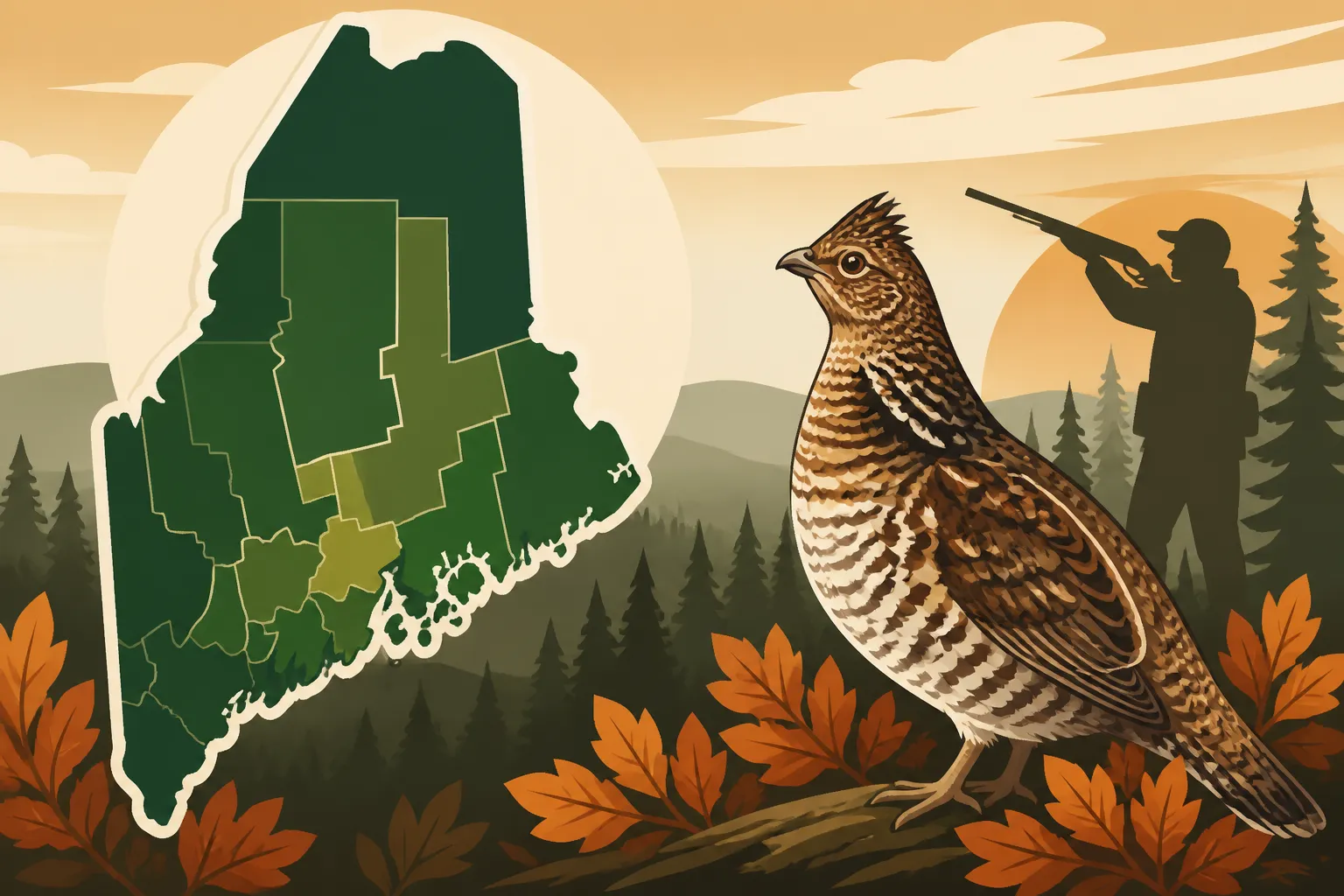
While you can find ruffed grouse in virtually every county in Maine, some areas simply offer more consistent action, more expansive habitat, and better access. These aren't just "good" counties; they are often considered the best because of their sheer acreage of suitable habitat and the lower overall hunting pressure in some remote sections.
Aroostook County: The Timberland Mecca
Aroostook County, often called "The County" by Mainers, stands out as a top-tier destination for grouse hunters. It's the largest county in Maine and the second largest county east of the Mississippi River, offering an absolutely immense amount of prime habitat. Much of Aroostook is characterized by vast tracts of industrial timberland, interspersed with potato fields and other agricultural lands. This combination is a grouse hunter's dream.
The timber companies actively manage their forests, leading to a constant supply of regenerating clear-cuts and young forest stands. These areas, particularly where poplar and birch are coming back strong, are magnets for grouse. The network of logging roads in Aroostook is extensive, providing incredible access for hunters on foot or with ATVs (where permitted). You can spend days exploring different roads, each turn potentially leading to another flush. Hunting Aroostook County Farmland also offers unique opportunities along field edges where cover meets agricultural plots. The sheer scale of the landscape means that even during peak hunting weekends, it's often possible to find ground that hasn't been heavily pressured, offering a truly wild hunting experience.
Washington County: Downeast Wildness
Head downeast to Washington County, and you'll find a different, yet equally productive, type of grouse country. Known for its rugged coastline, vast blueberry barrens, and expansive forests, Washington County offers a more remote, wilder feel than some other parts of the state. While the timber management here might be different from Aroostook, there's still plenty of regenerating cover.
The blueberry barrens, particularly those that are not actively managed or have edges where trees are encroaching, can hold grouse. More importantly, the county boasts extensive spruce and fir forests, which, when harvested, leave behind regenerating hardwoods and mixed woods perfect for grouse. These areas can be a bit thicker and more challenging to navigate than the wide-open logging roads of Aroostook, but the reward is often a less pressured bird. Hunters willing to put in the effort to walk away from main access points will often find great success. Hunting Downeast Blueberry Barrens can provide specific insights into leveraging these unique habitats.
Somerset and Penobscot Counties: Central Maine Opportunities
Moving into central Maine, Somerset and Penobscot counties offer excellent grouse hunting opportunities, often more accessible to those traveling from southern parts of the state or outside Maine. These counties represent a transition zone, blending vast timberlands with more developed areas and agricultural landscapes.
Somerset County, like Aroostook, contains significant portions of working forest. The western parts of the county, particularly around the Moosehead Lake region, offer expansive, remote timberlands where logging activity creates fresh grouse habitat. Access here is often through a mix of public roads and private timber company lands, similar to the North Maine Woods, which sometimes involves gate fees but offers unparalleled access to wilderness areas. Penobscot County, with Bangor as its hub, offers a diverse landscape ranging from coastal plain features to inland forests. You'll find good grouse cover around the edges of agricultural fields, along river systems, and in regenerating timber stands, particularly away from the more densely populated areas.
Both Somerset and Penobscot counties provide a balanced experience, often with a mix of easily accessible roads and more challenging, walk-in cover, allowing hunters to choose their adventure based on their fitness and preference.
Here’s a quick overview of some of Maine’s top grouse counties:
| County Name | Primary Habitat Characteristics | Access (General) | Hunting Pressure (General) | Proximity to Amenities |
|---|---|---|---|---|
| Aroostook | Vast timberlands, regenerating clear-cuts, potato fields | Extensive logging roads (private/public) | Low to Moderate | Moderate |
| Washington | Spruce/fir forests, blueberry barrens, mixed hardwoods | Remote logging roads, some public land | Low | Low |
| Somerset | Industrial timberlands, mixed woods, agricultural edges | Logging roads, some gated areas | Moderate | Moderate |
| Penobscot | Mixed forests, agricultural interfaces, river bottoms | Public roads, private timberlands | Moderate | High |
| Franklin | Western mountains, mature and regenerating hardwoods | Fewer roads, more challenging terrain | Low to Moderate | Low |
| Oxford | Western mountains, diverse forests | Mix of roads and remote areas | Moderate | Moderate |
Strategies for Hunting Grouse in These Counties
Once you've picked your county, or even just a general region, the real fun begins: figuring out how to actually find those birds. Maine grouse can be elusive, but with the right tactics and understanding of their behavior, you can increase your odds significantly.
Focusing on Logging Roads and Edges
This is the quintessential Maine grouse hunt. Logging roads, whether active haul roads or old, overgrown ones, are absolute magnets for ruffed grouse. They offer several advantages: ease of travel, edges where young growth meets older timber, and exposed ground for grit. Grouse Hunting a Logging Road Edge is a tactic as old as time for a reason.
When walking logging roads, especially overgrown ones, pay close attention to the edges. Where the sunlight penetrates and encourages the growth of berries, young hardwoods, and thick underbrush, you're likely to find birds. Listen for drumming in the spring (though you'll be hunting in fall, it tells you where they are present) and watch for droppings or feather piles. Walk slowly, scanning ahead, and be ready for a flush. A good bird dog, like a Setter or a Pointer, can cover more ground and pinpoint birds you might walk past, making the experience even more productive. Early morning and late afternoon are often the best times, as birds are more active feeding along these edges.
Alder Runs and Old Fields
Beyond logging roads, don't overlook alder runs and old reverting fields. Alder thickets, often found along stream beds, beaver flowages, or in low-lying areas, are classic woodcock cover, but grouse love them too. These dense, moist environments provide abundant food sources (alder catkins are a favorite) and incredible cover. Walking through a thick alder run can be grueling work, but when a grouse explodes out of the tangle, it's truly exhilarating.
Old fields that are slowly being reclaimed by forest are another prime spot. As these fields grow up in young pioneer species like aspen, birch, and various shrubs, they become excellent feeding and loafing areas. Look for the transition zones where the field meets mature timber; these edges often concentrate birds. These areas might require a bit more bushwhacking than a logging road, but the payoff can be worth the effort. Woodcock Hunting an Alder Run at Dusk outlines strategies for similar cover types.
Leveraging Mapping Tools and Apps
In today's hunting world, mapping technology is an absolute game-changer, especially in a vast state like Maine. Tools like GoHunt can provide invaluable insights before you even step foot in the woods. Use these apps to analyze aerial photos and identify key habitat features:
- Recent clear-cuts: Look for areas with light green, fuzzy textures indicating young, regenerating forest.
- Alder swamps/wetlands: These often appear as dark green, dense linear features.
- Logging road networks: GoHunt allows you to see the spiderweb of roads and plan your routes.
- Property lines: Crucially, verify ownership to ensure you're hunting legally. Maine has a strong tradition of private land access, but it's important to know if land is posted.
By scouting virtually, you can narrow down your target areas, mark potential hot spots, and get a better understanding of the terrain. This saves you valuable hunting time and gas, allowing you to focus your efforts on the most promising cover. When you're in the field, GoHunt's GPS capabilities will help you navigate, track your progress, and mark where you've had flushes.
Timing Your Hunt
The timing of your hunt within the season can also influence your success. Early in the season (September/October), grouse are often found closer to berry bushes and softer cover. They might be more dispersed. As the season progresses and colder weather sets in (November/December), they tend to concentrate in denser thermal cover, such as thick conifers or the deepest alder runs, and shift their diet to tree buds. Maine Small Game Season Rules generally cover these timeframes. The challenge increases as leaves fall, making birds easier to see but also making them more wary. Late-season hunting can be fantastic after a fresh snow, as tracks can reveal recent bird activity.
Accessing Grouse Country and Beyond
Maine offers a unique blend of land access, from vast stretches of private timberland with implied permission to various public lands. Knowing how to navigate these is key to a successful grouse hunt.
North Maine Woods Access
Many of Maine's best grouse counties, particularly Aroostook and parts of Somerset, overlap with what's known as the North Maine Woods (NMW). This is a vast, privately owned, working forest that operates under a unique gate system. While the land is privately owned, it's traditionally open to public recreation, often for a reasonable fee at checkpoints. The North Maine Woods Gate System is something every hunter needs to understand if they plan to venture into these remote areas.
You'll encounter gates and checkpoints where you'll pay a day-use or multi-day fee. This fee helps maintain the roads and facilities. While it's an added cost, it provides access to millions of acres of prime, lightly hunted timberland. Always be prepared with cash, as not all gates accept cards. Understand the specific rules for the area you're entering, as some roads may be closed to recreational vehicles during active logging operations. Respecting these rules ensures continued access for all. For non-residents, understanding North Maine Woods Day-Use Fees is essential for budgeting your trip.
Maine's Private Land Access Tradition
One of the most remarkable aspects of hunting in Maine is its long-standing tradition of implied permission on private land. This means that, unless a property is explicitly posted with "No Trespassing" signs or the owner has directly told you otherwise, you are generally allowed to hunt. However, this tradition is a privilege, not a right, and it relies heavily on hunter responsibility.
Always know where you are. Use mapping tools like GoHunt to clearly identify property lines and check for "Posted" signs. If you see signs, respect them. Even better, if you can identify the landowner, consider Asking a Maine Landowner for Permission directly. A simple knock on the door, a polite request, and an offer to share game can open up amazing opportunities and build goodwill. Most Maine landowners are incredibly hospitable to respectful hunters. This tradition is a cornerstone of Maine's Private Land Access Tradition and helps maintain access for future generations.
Essential Gear and Dog Work
Beyond your shotgun and shells, a few key items will enhance your grouse hunting experience:
- Blaze Orange: Maine has strict blaze orange requirements during certain seasons, especially during the firearms deer season. Always check current regulations, but wearing blaze orange is a smart safety practice regardless, making you visible to other hunters.
- Navigation Tools: A GPS unit or a reliable hunting app on your phone (like GoHunt, with downloaded offline maps) is crucial. It's easy to get turned around in the vast timberlands, especially when focused on a dog or a bird flush.
- Comfortable Boots: You'll be doing a lot of walking, often on uneven terrain or through wet cover. Waterproof, comfortable boots are a must.
- Bird Dog: While not essential, a well-trained bird dog can elevate your grouse hunting to an entirely different level. They can cover more ground, find birds you would never see, and retrieve downed game in thick cover, significantly increasing your success and enjoyment.
In these prime Maine counties, the opportunity for a truly wild grouse hunt is abundant. By understanding the habitat, targeting the right areas, and employing effective strategies, you're well on your way to enjoying some of the best upland bird hunting the Northeast has to offer.
Disclaimer
This article is for general informational purposes only and does not constitute professional advice. Laws, prices and regulations vary by location and change over time. Consult a qualified professional for guidance on your specific situation.