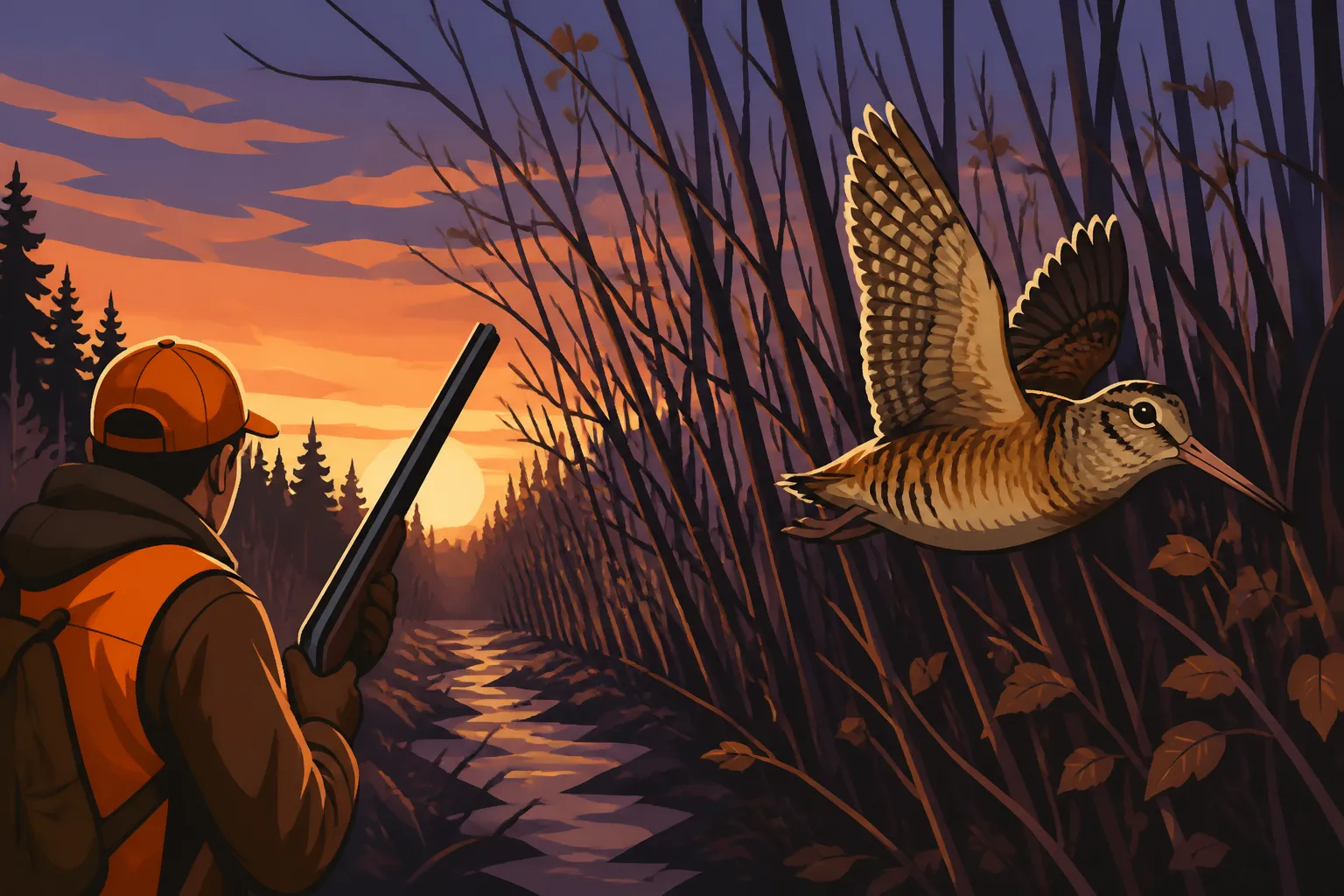
Woodcock Hunting an Alder Run at Dusk
The final hour of daylight can feel like a fleeting, almost magical window for woodcock hunters in Maine. You've been walking the alder runs all day, perhaps seeing a few birds, but as the sun dips low, a new energy settles into the covers. The frustration often comes when you know the birds are there, suddenly active, but the fading light makes clean shots and quick retrieves a real challenge. This guide will walk you through the nuances of woodcock hunting at dusk in Maine's iconic alder runs, helping you capitalize on those prime moments safely and effectively.
Why Dusk is Prime Time for Woodcock in Alder Runs
There's something about that last bit of light that just electrifies woodcock coverts. After a day spent loafing and digesting in thicker cover, the timberdoodles seem to come alive, driven by instinct to feed before bedding down for the night. For us hunters, understanding this shift is key to maximizing our chances during those precious moments.
Understanding Woodcock Behavior at Last Light
Woodcock, often called timberdoodles, are primarily crepuscular, meaning they are most active during dawn and dusk. As the sun begins its slow descent, the air cools, and the ground, especially in the damp, rich soil of an alder run, becomes a prime feeding ground for their favorite meal: earthworms. During the midday lull, woodcock might be scattered in dense patches of young hardwoods, regenerating clearcuts, or the thickest parts of spruce-fir bogs, seeking refuge from predators and resting. But as evening approaches, they often move to more open, yet still damp, edges of these covers, or directly into the alders themselves, where probing for worms is easier.
You'll notice an increase in their activity, sometimes hearing their distinctive peent calls overhead as they perform their aerial courtship displays (though these are more common in spring, some pre-migratory displays can occur). More often, you'll simply find your dog getting birdier, with more scent in the air as the birds move about. They might be more willing to hold tight, or they might flush a bit wilder, trying to get to their evening roost. This is where a sharp eye and a quick reaction come into play. These birds are preparing for the night, and that makes them predictable in their habitat choices, if you know where to look.
The Unique Challenges and Rewards of Dusk Hunting
Hunting woodcock in fading light is a double-edged sword, full of distinct challenges but equally rich rewards. The primary challenge, naturally, is visibility. Distinguishing a rapidly flushing woodcock against a darkening backdrop of alders and evergreens requires sharp reflexes and often means taking a shot only when the bird presents clearly and safely. Shooting into a silhouette is never a good idea, and at dusk, that risk increases exponentially. Your dog, too, becomes harder to see, making communication and keeping track of their whereabouts more difficult, even with the aid of bells or beeper collars. Retrieving a downed bird in the gloom can also be a significant hurdle, as a tiny woodcock can vanish into the underbrush with remarkable speed.
However, the rewards are often worth the effort. Dusk can bring unpressured birds, as many hunters have already packed it in for the day. These birds might be more focused on feeding and less wary than those flushed repeatedly throughout the midday. The atmosphere itself is also incredibly special – the quiet settling over the woods, the distinct chill in the air, the anticipation as your dog locks up on point just as the last light fades to grey. It's a truly immersive experience that connects you deeply with the rhythm of nature. Often, these late-day flushes lead to some of the most memorable retrieves and a profound sense of satisfaction as you walk out of the woods under a sky full of stars. This late-day opportunity is part of what makes Upland Bird and Small Game Hunting in Maine so unique.
Identifying Productive Alder Runs for Evening Hunts
Not all alder runs are created equal, especially when you're targeting those prime dusk hours. The key is to find spots that offer both rich feeding grounds and a sense of security for the birds as they transition into their nightly routine.
Key Habitat Indicators for Dusk Feeding Areas
When scouting for ideal evening woodcock cover, think like a worm. Woodcock love soft, moist soil that allows their long bills to probe for invertebrates. Alder runs that are adjacent to boggy areas, slow-moving streams, or beaver flowages are often goldmines. Look for areas with a mix of young, dense alders and perhaps some scattered poplars or young birches. These provide both overhead cover and the ideal ground conditions. The presence of other moist-soil plants like sedges and ferns can also be a good indicator.
Beyond the plant life, keep an eye out for actual woodcock sign. Their distinctive "borings"—small, pencil-sized holes in the mud or soft earth—are a dead giveaway that birds are actively feeding there. White splashes of droppings, known as "chalk," on leaves or low branches also confirm recent woodcock presence. A good tip is to look for these signs in areas that might be slightly elevated from the wettest parts of the run, providing just enough drainage to prevent standing water but still retaining plenty of moisture. If you can find a cover that's consistently showing fresh sign late in the day, you’ve hit upon a hotspot. Mapping tools, like those offered by GoHunt, can be incredibly helpful for identifying these specific topographical features and wet areas before you even set foot in the woods.
Scouting Strategies for Evening Woodcock Cover
Effective scouting doesn't always mean trudging through every alder thicket. In fact, for dusk hunting, strategic reconnaissance can save you a lot of time and effort. Start by pouring over aerial photos on mapping apps. Look for those tell-tale serpentine lines of alders hugging stream beds, the dark green patches indicating wetland areas, or the edges of young timber cuts where alders thrive. Identify potential access points and consider how the land lies in relation to known roosting coverts – often thicker, slightly drier woods.
During the day, you might find yourself Woodcock Hunting Maine Covert Country in a variety of spots, but as evening approaches, you'll want to pivot to those damp, worm-rich alder bottoms. Another effective strategy is to pay attention to where you've flushed birds throughout the day. If you find a few woodcock in a relatively open alder run mid-afternoon, it's a good bet that more birds will move into similar habitat as dusk approaches. Don't be afraid to revisit a promising spot you hunted earlier in the week, as migratory birds, particularly during the fall, can replenish covers overnight. You can also research Maine Woodcock Season Dates and historic harvest data to pinpoint general areas known for good woodcock concentrations.
Tactics for Successfully Hunting Woodcock in Low Light
Hunting in low light requires a more deliberate, safety-conscious approach than midday hunting. Every step, every command to your dog, and every shot opportunity needs careful consideration.
Working Your Dog Effectively at Dusk
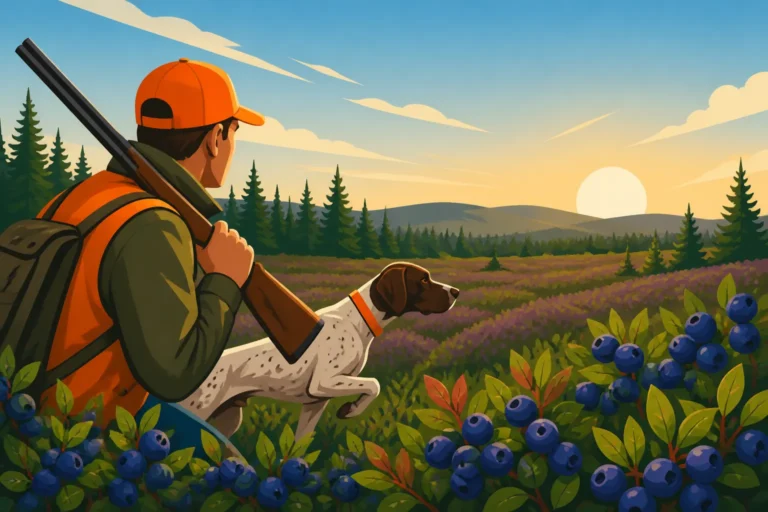
Your dog is your most valuable asset during a dusk woodcock hunt, but the reduced visibility demands a slightly different strategy. First and foremost, safety is paramount. Make sure your dog is wearing blaze orange, and consider adding a light-up collar or a GPS e-collar with a light feature. Brands like GoHunt's mapping system can often integrate with compatible GPS collars, allowing you to track your dog's exact location even when you can't see them. A bell on their collar is also non-negotiable, providing an auditory cue of their movement.
Work your dog slower and closer than you might during brighter hours. You want them to thoroughly investigate every bit of cover, and you need to be close enough to respond quickly to a point or a flush. Verbal commands become even more critical when visual cues are limited. Keep your whistle handy. When your dog goes on point, approach cautiously and deliberately. Before you move in, take a moment to scan the area for potential hazards and note the likely escape routes of the bird. If the bird flushes, your dog's ability to remain steady on point and then quickly relocate and retrieve the downed bird will be invaluable. This is where solid training, like that emphasized in Running Pointing Dogs on Maine Woodcock, really pays off.
Shot Opportunities and Safety Considerations
Low light dramatically shrinks your margin for error. The most important rule for dusk hunting is simple: if in doubt, don't shoot. You must be absolutely certain of your target, what's beyond it, and that no other hunters or dogs are in the line of fire. Woodcock often flush vertically, then zig-zag through the cover. At dusk, this can make them incredibly hard to track. Wait for a clear presentation against the sky or a patch of lighter background if possible. Avoid shooting into dark thickets where the bird is barely visible, as this increases the risk of wounding a bird you cannot recover, or worse, an accidental shot.
Use an open choke (Skeet or Improved Cylinder) and smaller shot sizes (7.5 or 8) for woodcock, as they are typically close-quarters shots and delicate birds. A shorter barrel shotgun can also be an advantage in tight alder runs.
Here's a quick reference for typical woodcock shotgun setups:
| Gauge | Shot Size | Choke Recommendation | Common Use Case |
|---|---|---|---|
| 12 Gauge | 7.5, 8 | Skeet, Improved Cyl. | Versatile, common, good pattern density |
| 20 Gauge | 7.5, 8 | Skeet, Improved Cyl. | Lighter, less recoil, excellent for woodcock |
| 28 Gauge | 8, 9 | Skeet, Improved Cyl. | Lightest, very effective at close range |
| .410 Bore | 8, 9 | Full, Modified | Challenging, for expert shooters, very light |
Always be mindful of where your hunting partners are. If hunting alone, tell someone your exact location and expected return time. The peaceful quiet of dusk can quickly turn disorienting if you lose your bearings.
Retrieving Birds in Dim Light
A clean retrieve is critical at any time, but especially at dusk. A downed woodcock can be notoriously difficult to find due to its incredible camouflage. When a bird falls, immediately mark its location as precisely as possible. Pick out a prominent tree, a specific patch of brush, or even a unique rock near the fall. Every second counts before the light fades completely.
If your dog is a reliable retriever, trust them. Encourage them with enthusiastic commands and help them home in on the scent. If your dog struggles or if you're hunting without one, switch on your headlamp immediately. A wide, bright beam is essential. Systematically grid search the area around your marked fall. Even a small piece of chalk or a single feather can give away the bird's location. Don't give up quickly; a thoroughly searched area is less likely to hold a lost bird. Carrying a small, lightweight game bag or vest with a blood-proof liner will also help keep your harvested birds clean and secure as you make your way out of the darkening cover.
Essential Gear for Dusk Woodcock Hunts
Having the right gear makes a world of difference when the light starts to fade. It’s not just about comfort, but about safety and success.
Shotguns, Ammo, and Chokes for Close-Quarters Shooting
For woodcock, speed and maneuverability are more important than heavy hitting power. As mentioned earlier, a fast-swinging, open-choked shotgun is ideal. Many seasoned woodcock hunters favor lighter gauges like 20-gauge or even 28-gauge for their nimbleness in tight alder thickets. Load up with shotshells packed with 7.5 or 8 shot. Some hunters even prefer 9 shot, especially for the smallest timberdoodles, as it increases the pellet count and creates a denser pattern at close range. The objective is to produce a pattern that effectively covers the relatively small target profile of a woodcock without over-penetrating or destroying too much meat.
Consider a shotgun with a shorter barrel, typically 26 inches or less. This makes navigating dense alders much easier and allows for faster target acquisition when a bird flushes just feet away. A good quality, reliable side-by-side or over-under shotgun is often favored for its balance and quick follow-up shot capability. Semi-automatics are also popular, offering less recoil and quick reloads. Whatever your choice, ensure it's well-maintained and you're comfortable and proficient with it. For general guidance on what's permissible, you can always consult Maine Small Game Season Rules.
Lighting and Navigation Tools
As dusk deepens into darkness, effective lighting and navigation become absolutely critical. A high-quality headlamp is non-negotiable. Look for one with adjustable brightness settings, a red-light option (to preserve night vision), and a long battery life. Consider carrying a spare headlamp or a powerful handheld flashlight as a backup. Modern LED headlamps are incredibly bright and can illuminate your path and aid in retrieves.
For navigation, a reliable GPS unit or a smartphone with a robust mapping app like GoHunt is essential. Download offline maps of your hunting area beforehand, as cell service can be spotty in many of Maine's remote covers. Mark your vehicle's location and any key points of interest, like a particularly productive alder run or a tricky stream crossing. A compass and paper map are also excellent backups, especially if you're hunting in truly wild areas like those covered in Hunting the Allagash Wilderness Waterway Corridor. Knowing your location and being able to find your way out safely is paramount.
Apparel and Dog Gear
Appropriate apparel for both you and your dog is crucial for safety and comfort in those waning hours. For yourself, blaze orange is not just a recommendation; it's a legal requirement during certain seasons in Maine, especially during the overlap with firearms deer season. Even if it's not legally mandated, wear it generously. A blaze orange hat, vest, and even a patch on your back can significantly increase your visibility to other hunters, and sometimes even helps you spot your dog. Dress in layers, as evening temperatures can drop quickly, and choose waterproof or water-resistant outer layers to contend with the dampness of alder runs.
For your canine hunting partner, blaze orange is equally important. Many dog vests and collars come in high-visibility orange. As discussed, a bell is mandatory for auditory tracking, and a light-up or GPS-enabled e-collar can be a lifesaver for visual tracking in low light. Always ensure your dog's e-collar batteries are fully charged before heading out. Investing in quality gear for both yourself and your dog ensures that those magical dusk hours remain safe, productive, and memorable.
Disclaimer
Hunting is an inherently risky activity. This guide provides general information and recommendations for woodcock hunting in Maine. Hunters must always adhere to all local, state, and federal hunting laws and regulations. Prioritize safety, respect private property, and consider taking a Maine Hunter Education Requirements course if you are new to hunting or need a refresher. Conditions in the field can change rapidly, and personal responsibility for safety and ethical hunting practices always rests with the individual hunter.