Hunting Downeast Blueberry Barrens
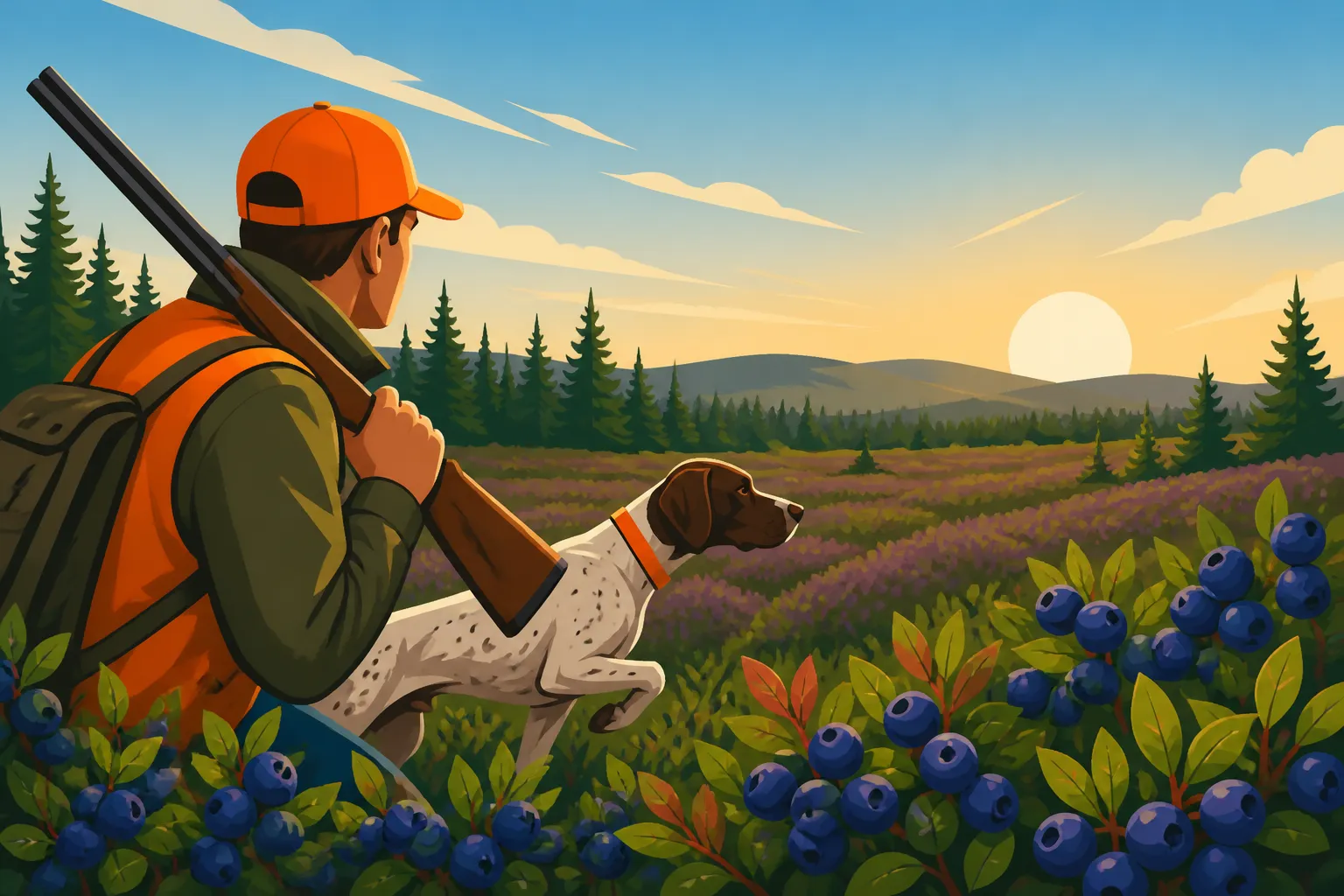
Hunting Downeast Maine's vast blueberry barrens can feel like looking for a needle in a haystack, or more accurately, a deer in a sea of low-growing plants. The sheer scale and deceptively uniform appearance of these landscapes often leave hunters feeling overwhelmed, unsure where to focus their efforts. This guide aims to break down the unique challenges and rewarding strategies for successfully pursuing whitetails in the iconic Downeast blueberry country.
Understanding the Unique Environment of Downeast Blueberry Barrens
The blueberry barrens of Downeast Maine are truly a one-of-a-kind hunting environment. We're not talking about small, manicured fields; these are enormous tracts, often thousands of acres, that form a mosaic of lowbush blueberries, interspersed with islands of thicker highbush blueberries, spruce and fir thickets, alder swamps, and scattered deciduous trees. This isn't your typical big woods hunting, nor is it strictly agricultural land. It's a blend that demands a very specific approach.
The Barrens Ecosystem and Deer Habitat
What makes the barrens so unique for deer hunting is their dynamic nature. These areas are actively managed for commercial blueberry production, which means they undergo a rotation of burning, mowing, and spraying. This management creates varying stages of regrowth, which in turn influences how deer use the landscape. You'll find sections freshly burned or mowed, offering little cover but potentially attracting deer later in the season for browse. Other sections might be mature, dense lowbush growth providing food and some cover, while still others are choked with highbush blueberries or young spruce, creating excellent bedding and escape routes.
Deer are creatures of edge and cover, and while the barrens might seem open, they are full of subtle edges. The transition zones where the blueberry fields meet a spruce forest, a dense alder run, or even an old logging road are prime areas. These often overlooked pockets of denser vegetation within the vastness are critical deer sanctuaries. They provide thermal cover from the harsh Maine wind, escape cover from predators (including hunters!), and often better browse than the actively managed blueberry fields themselves, especially once the berries are gone. It's a game of finding those islands and fingers of cover that break up the seemingly endless expanse of lowbush.
Seasonal Changes and Deer Food Sources
The availability of food in the barrens changes dramatically throughout the hunting season, heavily influencing deer movement. In late summer and early fall, the ripe blueberries themselves are a significant attractant. Deer, like bears, will gorge on these high-energy fruits. However, once the commercial harvest begins and cooler temperatures arrive, the blueberries become less of a primary food source.
As the season progresses into October and November, deer shift their diet. They'll browse on the tender shoots of highbush blueberries, various woody stems along the edges of the barrens, and any acorns or beech nuts that might be present in the adjacent hardwoods. Old apple trees, often found near abandoned homesteads within or bordering the barrens, become magnetic food plots. Understanding these seasonal shifts in diet is crucial. During the firearms season, especially, you might find deer moving from thick bedding cover in the woods to browse on exposed blueberry fields under the cover of darkness, retreating to safety before first light. When scouting, pay close attention to signs of deer activity around these alternative food sources. This knowledge helps when considering a strategic approach to Hunting Downeast Coastal Cover.
Deer Movement and Behavior in the Barrens
Hunting the Downeast blueberry barrens successfully hinges on truly understanding how deer navigate and utilize such an expansive and often exposed landscape. It's not about finding a single rub line or scrape, but rather recognizing patterns of movement across a broad canvas.
Navigating the Open Landscape
Deer in the barrens tend to be incredibly wary. With less vertical cover, they rely heavily on their sense of smell and hearing, and they'll often move under the cover of darkness or during low-light conditions. When they do move during the day, it's typically along the edges of thicker cover, through depressions, or in areas where taller vegetation offers some concealment. They know they're exposed in the wide-open spaces, and they act accordingly.
One key behavioral aspect is how deer use the subtle contours of the land. Even a small rise or swale in the barrens can provide enough visual break to make a deer feel secure. They'll often bed down just over the crest of a slight hill, where they can see what's approaching from below while remaining hidden. Using a tool like the GoHunt app with its detailed topographical layers can help you identify these subtle features that might not be obvious from ground level. This careful analysis of topography and cover can be vital for Finding Sign in Big North Woods Timber and applying it to barren country.
Bedding and Feeding Patterns
Deer in the barrens rarely bed right out in the middle of a wide-open field, especially during daylight hours in hunting season. Their bedding areas are almost always associated with the thickest cover available. This often means the dense spruce and fir stands that punctuate the barrens, thick alder swamps, or the very fringes of the mature timber blocks that border the blueberry fields. These spots provide both concealment and thermal protection.
Their feeding patterns are often directly related to these bedding areas. In the mornings and evenings, deer will typically move from the security of their bedding cover out into the blueberry fields or to other browse areas to feed. This movement is usually short and direct, following the path of least resistance or greatest concealment. Understanding Where Maine Bucks Bed in Big Timber and how they transition from those areas into the more open barrens is paramount. During the rut, however, bucks might make bolder movements, cruising the edges of cover in search of does, sometimes even crossing more open ground. This creates a small window of opportunity that seasoned hunters watch for.
Tactics for Successfully Hunting Blueberry Barrens
Successfully hunting Downeast blueberry barrens requires a patient, adaptable, and often physically demanding approach. It's less about traditional tree stand hunting and more about observation, understanding wind, and smart movement.
The Power of Glassing and Scouting
Given the expansive nature of the barrens, quality optics are your absolute best friend. Forget trying to walk every acre; you'll burn yourself out and likely spook more deer than you see. Instead, find elevated vantage points – a small knob, an old gravel pit, or the edge of a timber stand – and spend significant time glassing. A good pair of binoculars, 10×42 or 12×50, is essential, and a spotting scope can be incredibly valuable for covering vast distances.
Start your glassing sessions at first light and continue through mid-morning, and again from mid-afternoon until last light. Pay close attention to the edges of cover, small islands of highbush, and any depressions where deer might be feeding or traveling. This is where pre-season scouting truly shines. Use mapping tools, like the GoHunt app, to identify potential travel corridors, small cover pockets, and access points. Layering aerial photos over topographic maps can reveal subtle features that hold deer, a skill that's transferable when Reading Aerial Photos for North Woods Deer in more traditional timber settings. Look for old roads, utility corridors, or even subtle changes in vegetation height that deer might favor. This is also where you can look for evidence of Scrape Lines Along a Logging Road or other subtle sign.
Strategic Stand and Ground Blind Placement
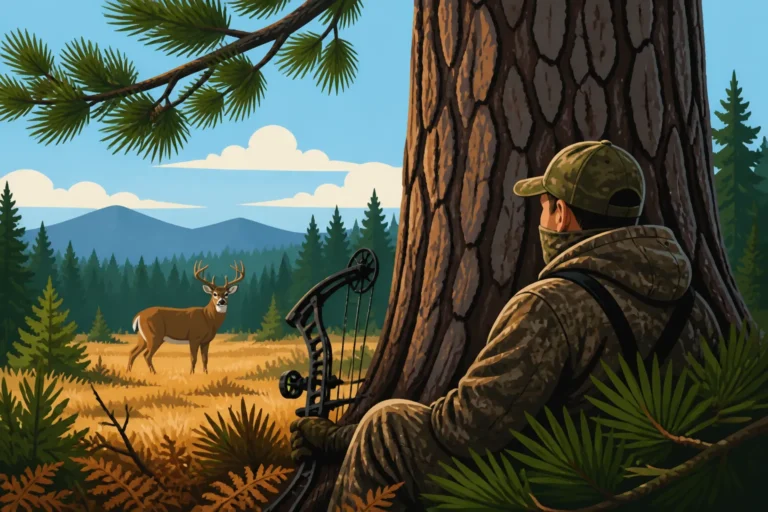
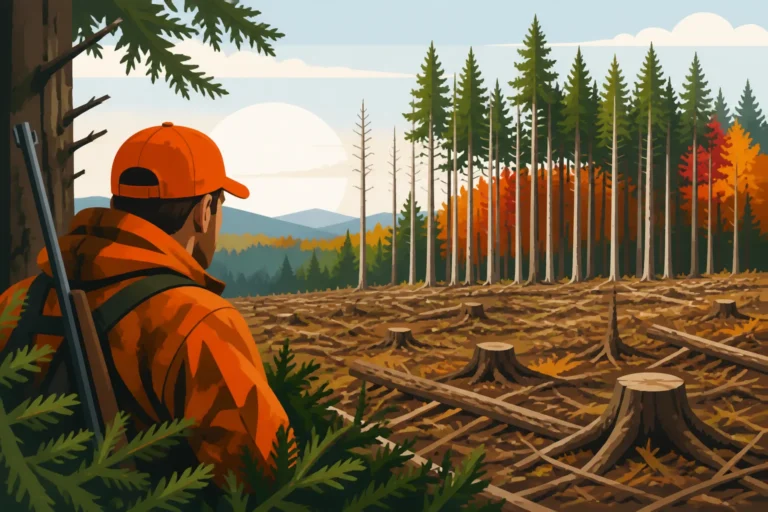
Traditional tree stands can be hard to place effectively in many parts of the barrens due to the lack of mature trees. However, if you can find a sturdy, well-situated tree along a travel corridor or overlooking a prime feeding area, it can be deadly. Focus on the transition zones – where a clear-cut meets timber, or a dense thicket funnels deer movement.
More often, ground blinds are the superior choice. The low-growing vegetation offers natural concealment for a pop-up blind, or you can brush in a natural blind using spruce boughs or other available cover. Position your blind to take advantage of prevailing winds and to cover key travel routes between bedding and feeding areas. A ground blind offers excellent concealment in this open country and is often the best option, especially when considering Using a Ground Blind on Posted-Free Land where permanent stands might be less feasible. Remember to set up well in advance of the season to allow deer to get used to its presence, and always position it for maximum visibility without sacrificing concealment.
Still Hunting and Spot-and-Stalk
For many experienced barren hunters, still hunting and spot-and-stalk are the primary methods. This involves moving slowly, often just a few steps at a time, constantly scanning ahead and to the sides. The key is to use the wind to your advantage and to utilize every bit of available cover. The lowbush blueberries themselves can be noisy to walk through, so pick your steps carefully.
When spot-and-stalk hunting, patience is crucial. Once you've glassed a deer, especially if it's bedded, take your time planning your approach. Consider wind direction, available cover, and the deer's potential escape routes. This can be one of the most exciting and challenging ways to hunt deer. It's a skill that translates well to other open country hunting, such as Still-Hunting Aroostook County Farmland, where long-range visibility and careful movement are paramount. You might walk for hours and only see a glimpse, but that one glimpse could be your opportunity.
Understanding Wind and Thermals
In the open barrens, wind and thermals are not just important; they are absolutely critical. Without the buffering effect of tall timber, the wind can swirl unpredictably, and thermals can be heavily influenced by the sun's position and the cooling or warming of the ground. Always hunt with the wind in your favor. A deer in the barrens will smell you long before it sees you if the wind is wrong.
Pay attention to forecasted wind directions and use scent control religiously. In the mornings, as the sun warms the ground, thermals will typically rise. In the evenings, as the air cools, they will fall. However, in vast open areas like the barrens, these patterns can be less predictable than in dense forests or Wind and Thermals in Maine Hill Country. Always be aware of even subtle shifts in wind direction, as a slight change can carry your scent directly to a wary whitetail. Use a small wind checker often to confirm your wind direction.
| Scouting Method | Best for Barrens | Pros | Cons |
|---|---|---|---|
| Glassing | Yes, essential for large, open areas | Covers vast ground quickly; minimizes disturbance; good for wary deer | Requires high-quality optics; often need elevated vantage points |
| Foot Scouting | Yes, for detailed sign and cover pockets | Finds fresh sign, subtle terrain features, and tight cover | Time-consuming; can spook deer; physically demanding |
| Aerial Photos/Maps | Yes, critical for identifying subtle features | Reveals cover, contours, access, and potential funnels | Doesn't show fresh sign; ground-truthing is always necessary |
| Trail Cameras | Limited utility in wide open; better at edges | Confirms deer presence, travel times, and specific individuals | Theft risk; requires physical presence to check; few good tree options |
Gear and Preparation for Barrens Hunting
Hunting the blueberry barrens is an adventure that demands specific gear and thorough preparation. The landscape can be unforgiving, so coming prepared is not just good practice, it's essential for safety and success.
Essential Gear for the Barrens Hunter
Beyond your rifle or bow, several items are non-negotiable for a barren hunt. As mentioned, high-quality optics are paramount. A good pair of binoculars (10x or 12x) and possibly a spotting scope will allow you to pick apart distant cover and spot deer that would otherwise go unnoticed.
Navigation is also critical. The vast, often repetitive landscape of the barrens can be disorienting. A reliable GPS unit or a smartphone with a robust mapping app like GoHunt is a must-have. Download offline maps before you head out, as cell service can be spotty. Mark your vehicle, important landmarks, and any sign you find. This foresight is also handy when you're preparing for a longer trip to a place like Hunting a North Maine Woods Checkpoint Tract. Always carry a physical compass and map as a backup.
Dress in layers designed for active hunting, as you'll likely be doing a lot of walking and glassing. Quiet, durable fabrics are important. Blaze orange requirements are strict in Maine during firearms season, so make sure you're wearing the legally mandated amount, which you can read more about in How Much Blaze Orange Maine Requires. Waterproof boots are a must, as low areas can be boggy and morning dew can soak quickly. Carry plenty of water, high-energy snacks, a first-aid kit, and a headlamp – you never know when a retrieval might take you into the dark.
Physical Conditioning and Safety
Hunting the barrens, especially if you plan to still hunt or spot-and-stalk, is physically demanding. You'll be covering a lot of ground, often through uneven terrain and dense low-growing vegetation that can trip you up. Getting in shape before the season will significantly improve your endurance and your chances of success.
Safety should always be your top priority. Besides the obvious firearm safety rules, be mindful of your surroundings. While not as remote as the deep North Woods, some barren areas can still be quite isolated. Always let someone know where you're going and when you expect to return. Be aware of other hunters, especially if you're driving deer or setting up on edges near roads. Maine's general hunting laws are important for everyone, and taking a refresher course in Maine Hunter Education Requirements is always a good idea, even for seasoned hunters.
The Challenge of Game Retrieval
One often-overlooked aspect of hunting the barrens is game retrieval. If you're fortunate enough to harvest a deer, getting it out can be a significant challenge. The dense lowbush, boggy sections, and sheer distance to a road can make dragging a deer incredibly difficult. Consider carrying a quality deer cart if the terrain allows, or at least a sturdy drag rope. If you're hunting with a partner or group, planning your retrieval route ahead of time is wise. Remember, getting your animal out efficiently and safely is part of the hunt.
Final Thoughts on Downeast Barrens Hunting
Hunting Downeast Maine's blueberry barrens is truly a unique experience, offering both frustration and immense reward. It's a landscape that challenges hunters to think differently, to be patient, and to hone their skills in observation and strategic movement. While it might seem daunting at first glance, the solitude and the opportunity to outwit a wary barren whitetail make it an incredibly fulfilling pursuit. With the right preparation, the right gear, and a deep understanding of this special ecosystem, you'll be well on your way to a successful hunt in the heart of Maine's blueberry country.
Disclaimer
The information provided in this guide is for informational purposes only and is not a substitute for professional advice. Always consult official Maine Department of Inland Fisheries & Wildlife regulations before hunting, as laws and seasons can change. Hunt safely, ethically, and responsibly.