Maine Ruffed Grouse Population Cycles
Maine ruffed grouse population cycles explain recurring bird number fluctuations, revealing why numbers peak and decline over an eight to eleven year period.
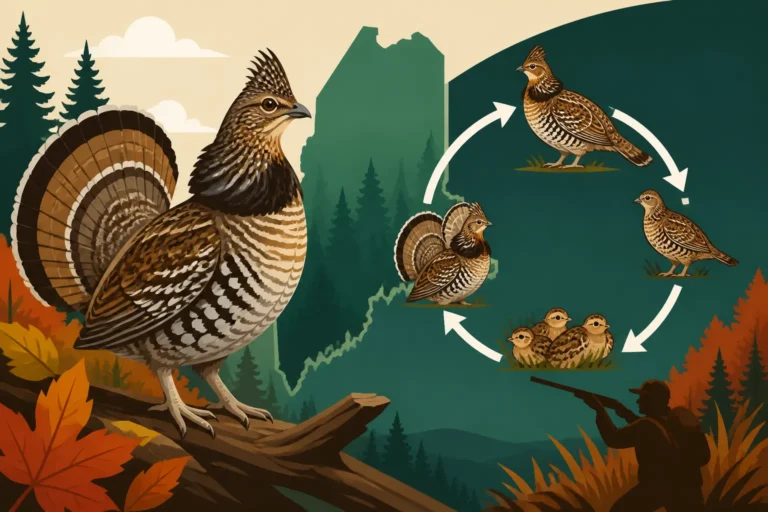
Maine ruffed grouse population cycles explain recurring bird number fluctuations, revealing why numbers peak and decline over an eight to eleven year period.
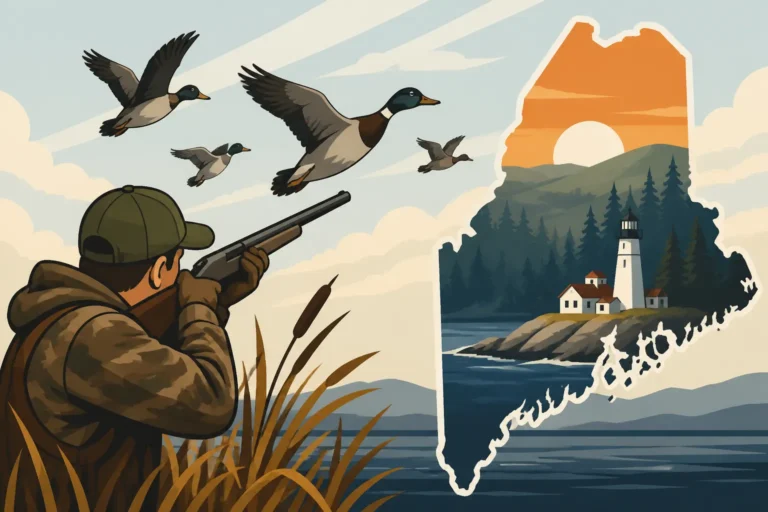
Maine holds a vital position on the Atlantic Flyway, serving as a critical resting point and wintering ground for millions of birds.

Long-tailed ducks wintering off Maine migrate from the Arctic tundra to dive over two hundred feet deep for marine food.

Surf scoters, white-winged scoters, and black scoters on the Maine coast explained through species habits and coastal feeding patterns.
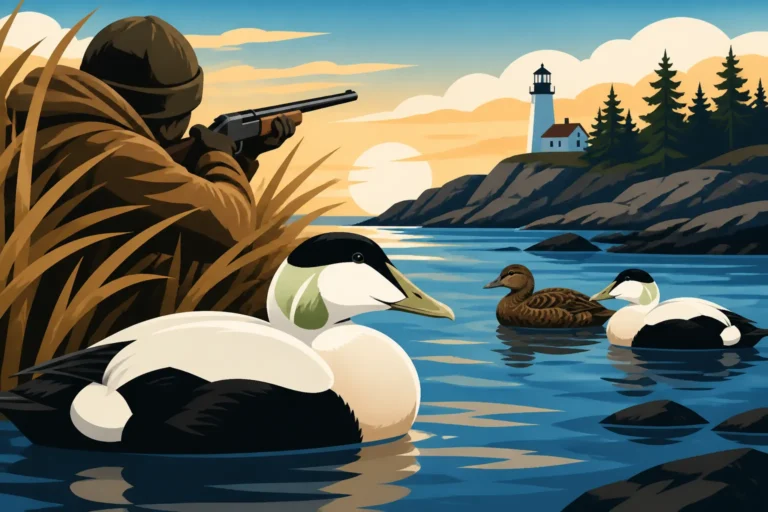
Maine common eider population status, biology, coastal habitat preferences, and hunting regulations along the Atlantic coast.
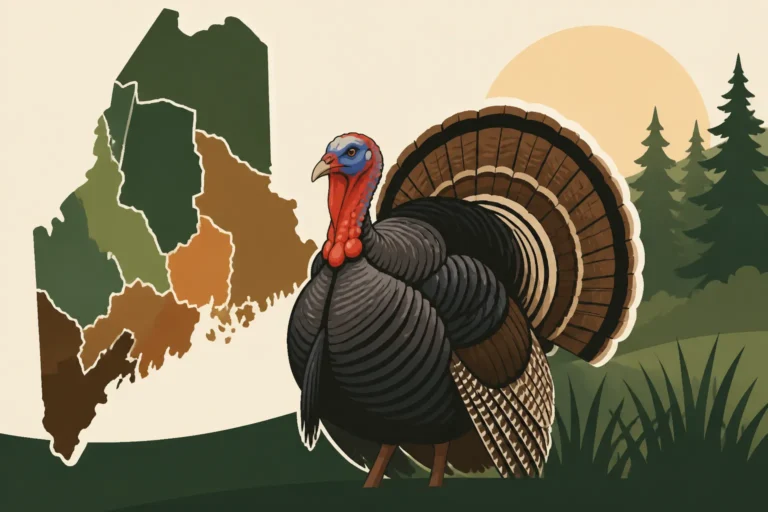
Maine turkey harvest numbers by Wildlife Management District help hunters interpret data and regulations across twenty nine districts.
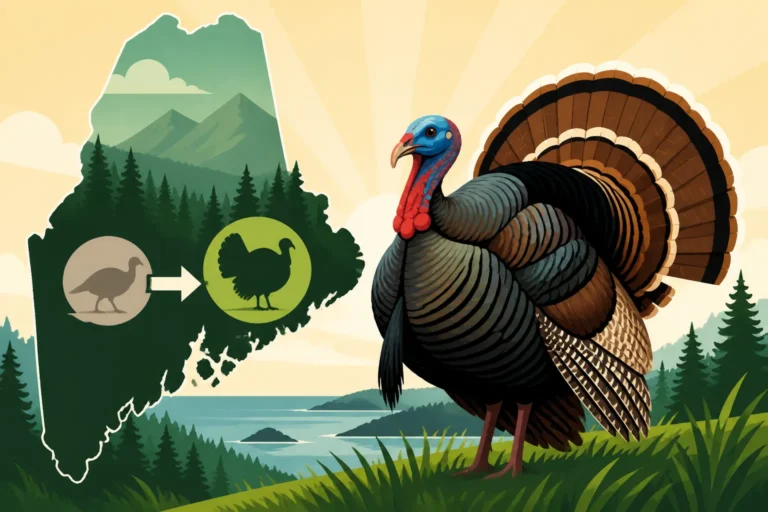
Wild turkey restoration in Maine followed centuries of deforestation and unregulated market hunting that eliminated the birds.
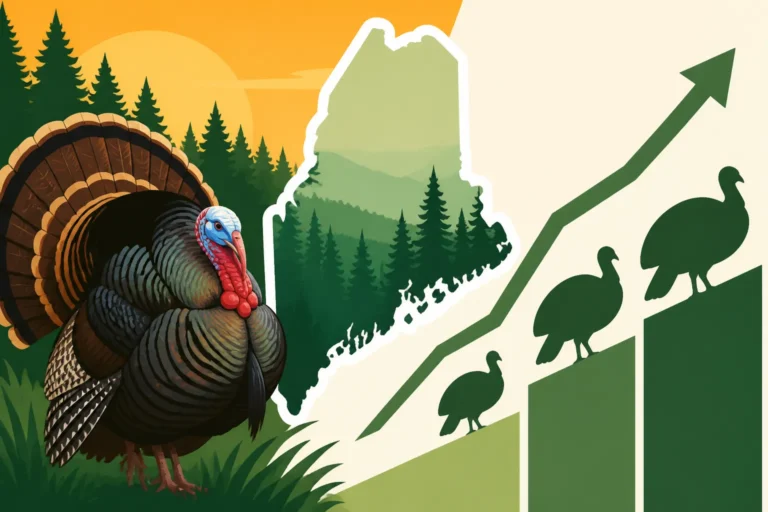
Maine turkey population trends show a remarkable wildlife comeback driven by historical trap and transfer conservation efforts.
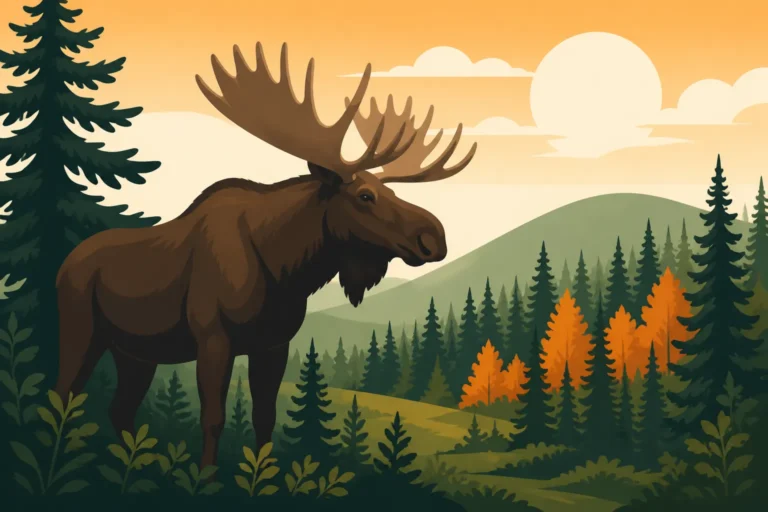
Maine moose habitat consists of regenerating timber stands and wetlands where these animals feed on woody plants and aquatic vegetation.
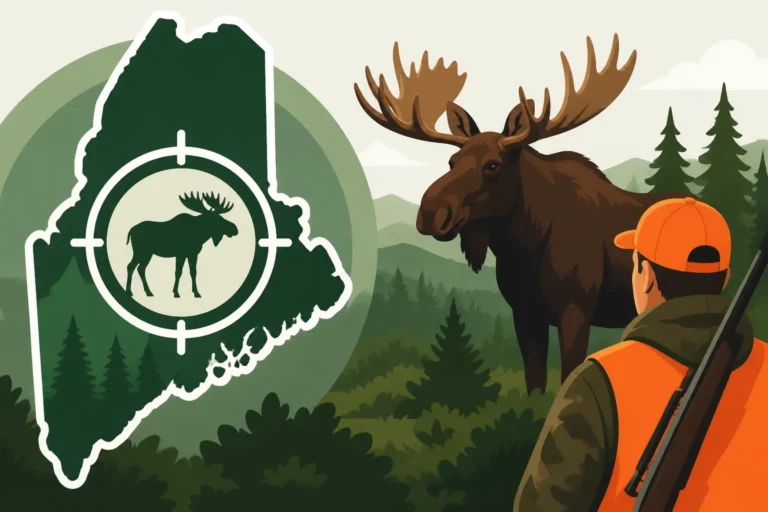
Maine’s moose density reduction study examines how winter tick parasites cause severe anemia, hair loss, and high mortality in calves.