Scoters on the Maine Coast
For many waterfowlers in Maine, the thought of chasing ducks often conjures images of mallards in marshes or black ducks on a rising tide in a coastal estuary. But there's a whole different world out there on the rugged Atlantic, a challenging and exhilarating pursuit targeting scoters. These aren't your typical puddle ducks; they're hardy sea ducks that thrive in the open ocean, offering a hunt that tests both your gear and your grit. This comprehensive guide will help you understand the unique world of scoter hunting along the stunning, sometimes unforgiving, Maine coast.
Understanding Maine's Scoter Species and Their Habits
Hunting scoters isn't just about showing up with a shotgun; it's about deeply understanding the birds themselves. These aren't farm pond fowl; they've adapted to the harsh realities of the open Atlantic, and knowing their individual quirks is key to success.
The Different Scoter Species You'll Encounter
When you're out on the Maine coast, you're primarily looking for three distinct species of scoters, each with its own characteristics that make them unique. Identifying them quickly, especially in the chaos of a strong coastal wind, is a skill born of experience.
Surf Scoter
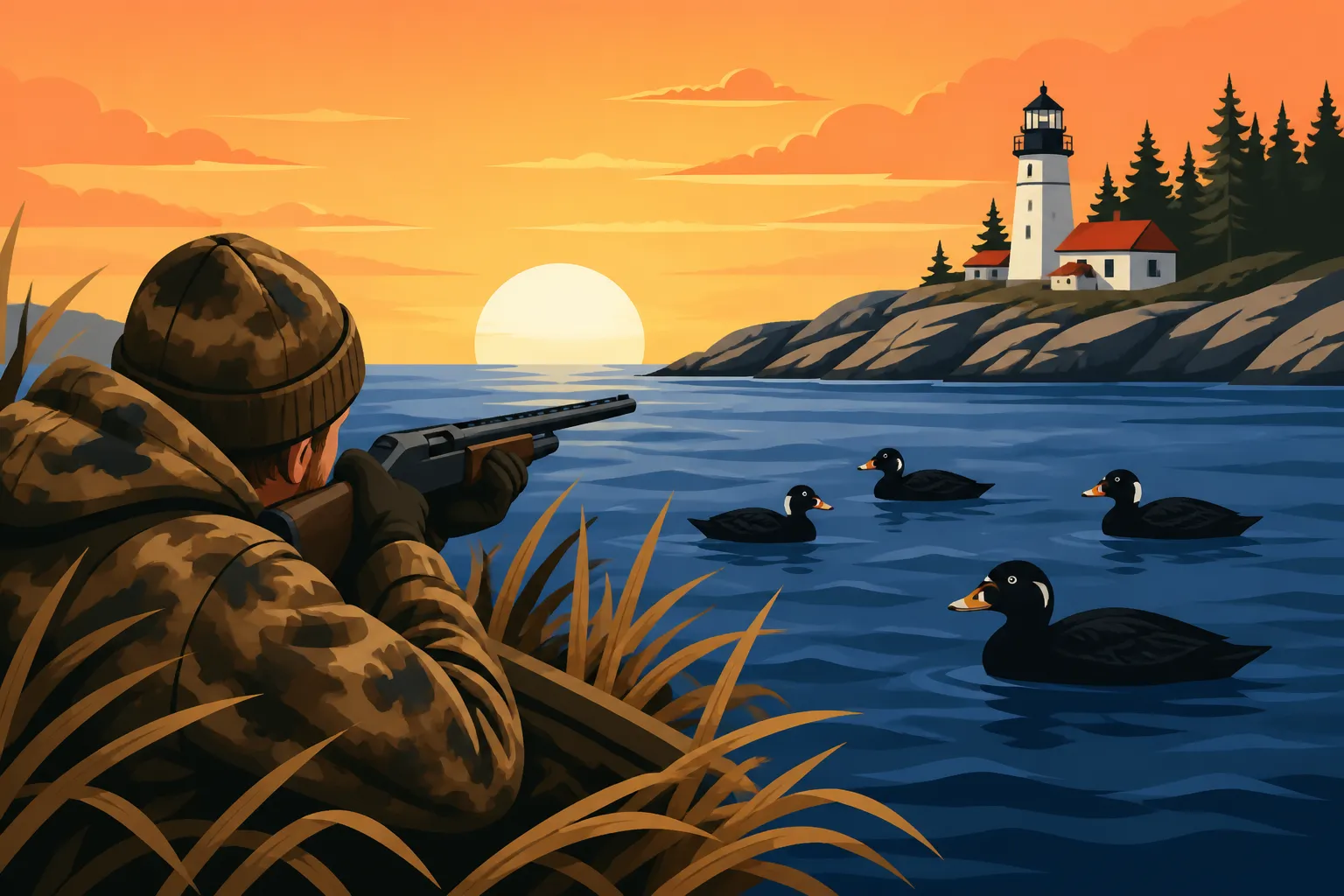
Often called "skunk heads" due to the distinctive white patches on their black heads (males), surf scoters are perhaps the most recognizable of the bunch. The males are a striking jet black with a large, colorful bill that features patches of orange, yellow, and white. Females are duller, often brownish with two white spots on the side of their head. These birds are strong fliers and divers, primarily feeding on mussels, clams, and other invertebrates found on the ocean floor, often in water that's 10-30 feet deep. You'll frequently find them near rocky ledges and mussel beds, diving in unison to feast. Their flight is fast and direct, often in tight flocks, especially when coming into a decoy spread.
White-winged Scoter
True to their name, white-winged scoters are distinguished by a prominent white speculum on their secondary flight feathers, visible in flight and sometimes as a small patch when resting on the water. Males are sleek black with a small, comma-shaped white patch under the eye and a swollen orange and black bill. Females are similar but browner, with less pronounced facial patches. These birds are slightly larger than surf scoters and often frequent similar habitats, though they might venture into slightly deeper water or areas with more varied bottom compositions. They are also voracious eaters of shellfish and crustaceans. When hunting, their white wing patches can be a dead giveaway, even at a distance, making them a little easier to identify on the wing, especially when compared to their black scoter cousins.
Black Scoter
The smallest and often considered the most streamlined of the scoters, the black scoter (sometimes called "common scoter") is characterized by its entirely black plumage in males, with a bright yellow knob on an otherwise black bill. Females are brownish with pale cheeks that contrast with a dark crown. Black scoters prefer shallower coastal waters and tend to feed on a wider variety of prey, including small fish, marine worms, and insects, in addition to shellfish. They are known for their tight, fast-flying formations, often skimming just above the waves. Their all-dark appearance can make them challenging to pick out against a dark sea, but their distinctive flight pattern and the yellow on the drake's bill are key identifiers.
Typical Scoter Behavior on the Coast
Understanding how scoters move and behave in their natural environment is absolutely crucial for planning a successful hunt. They aren't random; they follow patterns dictated by food, weather, and safety.
Feeding Patterns and Locations
Scoters are primarily bottom feeders, and their daily routines revolve around finding and consuming marine invertebrates. This means they're often concentrated around mussel beds, clam flats, and rocky ledges where these food sources are abundant. They'll dive in unison, often disappearing beneath the waves for 30-60 seconds before resurfacing, sometimes quite a distance from where they went down. The tide plays a huge role here; certain feeding grounds become accessible or more productive at specific tidal stages. For instance, a dropping tide might expose clam flats, while a high tide could bring them over deeper mussel beds. You'll often see them "rafting" in large groups, sometimes hundreds strong, in areas where food is plentiful. Observing these rafts from a distance, perhaps with a good pair of binoculars, can reveal critical insights into their preferred feeding depths and times.
Flocking Behavior and Social Dynamics
Unlike some puddle ducks that might scatter widely, scoters are highly social birds, often traveling and feeding in tight flocks. These flocks can range from a dozen birds to hundreds, especially during migration or when concentrated in prime wintering areas. They communicate with guttural calls, particularly the males, which can sometimes be heard over the waves. When flying, their formations are typically direct and purposeful, often in long lines or V-shapes, maintaining a consistent altitude just above the waves. They are wary birds, and once they've been shot at, they'll remember and adjust their flight paths, making subsequent hunts in the same area more challenging. This means a clean, efficient approach with minimal disturbance is paramount for consistent success.
Flight Patterns and Speed
Scoters are incredibly powerful and fast flyers, built for traversing vast stretches of open ocean. Their wings beat rapidly, and they can cover ground at impressive speeds. When approaching decoys, they often make wide arcs, circling the spread to inspect it before committing. Their flight path is typically low over the water, using the waves and contours of the coastline for concealment. When a flock decides to commit, they can drop in quickly, often coming in hot and fast, making for challenging pass shooting or quick decoying shots. Understanding how they approach and depart an area is vital. Are they flying into the wind or downwind? Are they hugging a specific shoreline or cutting across open water? These observations, often made during early morning scouting trips, will inform your blind placement and decoy spread setup.
Prime Habitat for Scoters Along the Maine Coast
Maine's extensive and diverse coastline offers a mosaic of habitats, and not all of it is equally attractive to scoters. Knowing where these birds prefer to be is half the battle won.
Identifying Productive Coastal Waters
Scoters aren't random visitors to the coast; they're creatures of habit, gravitating towards specific features that meet their needs for food and safety.
Rocky Ledges, Mussel Beds, and Intertidal Zones
The rugged, rocky coastline of Maine is a scoter paradise. These birds absolutely thrive in areas with submerged rocky ledges and expansive mussel beds. Mussels and other shellfish are their primary food source, and these structures provide both a stable substrate for shellfish growth and a degree of shelter from strong currents. Intertidal zones, particularly those with abundant clam flats, also draw scoters, especially at different tide stages. Picture a classic Downeast cove, peppered with granite outcroppings and dark, nutrient-rich water — that's prime scoter country. They'll often feed close to shore, sometimes within shotgun range of an accessible point or island, making these locations highly sought after by hunters. When looking at marine charts or using tools like GoHunt for scouting, identify areas marked with "rock," "ledge," or "shellfish beds" to pinpoint potential hotspots.
Sheltered Coves Versus Open Water
While scoters are truly sea ducks, capable of handling rough seas, they often utilize both open water and more sheltered coves depending on weather conditions and feeding opportunities. On calm days, they might be scattered widely across open bay waters, diving for food. However, when the infamous Maine nor'easters kick up, driving strong winds and heavy swells, scoters will often seek refuge in more protected coves, harbors, and the lee side of islands. These calmer waters still offer access to food but provide a crucial break from the relentless pounding of the open ocean. A savvy hunter will pay close attention to the marine forecast; a day that's too rough for open water might just concentrate birds into a more manageable, sheltered area, offering a prime opportunity. Knowing where to go for Hunting Scoters From a Sea Duck Boat in these varying conditions is key to consistent success.
Influence of Tides and Currents
The ebb and flow of Maine's powerful tides are perhaps the single most critical factor influencing scoter movements and feeding. A particular mussel bed might be entirely unproductive at high tide because it's too deep, but as the tide drops, bringing it within optimal diving depth, scoters will move in. Conversely, a rising tide might push birds off shallower feeding grounds and into deeper water. Strong currents can also concentrate food or create "rip lines" that scoters will follow. Studying tide charts for your chosen hunting area is non-negotiable. Many experienced sea duck hunters will plan their entire hunt around a specific tidal swing, knowing precisely when and where the birds will be feeding. This is particularly important for decoying, as currents can make maintaining a tight spread a real challenge.
Seasonal Movements and Concentrations
Maine's position on the Atlantic Flyway makes it a crucial wintering ground for scoters, and their presence is highly seasonal.
Arrivals and Departures of Migratory Flocks
Scoters are migratory birds, breeding in the Arctic and subarctic regions of Canada and Alaska before heading south for the winter. Along the Maine coast, you'll start to see increasing numbers of scoters in the fall, typically from late September through October, as they make their way down the Atlantic Flyway. These early season birds might be more transient, but as the water cools, more and more will settle into their wintering grounds. The peak of their presence is generally from November through March, before they begin their northward migration again in April and May. The early fall can offer some fast-action hunts as new birds arrive, but the colder mid-winter months often see the largest concentrations of birds that have settled in for the long haul.
Wintering Grounds and Strongholds
Maine's deep, cold coastal waters, rich in shellfish, provide ideal wintering habitat for scoters. Certain areas become well-known strongholds where thousands of birds can congregate throughout the colder months. These are typically large bays, estuaries, and offshore islands that offer consistent food sources and protection from severe weather. Harpswell Sound, Casco Bay, Muscongus Bay, and the waters around Mount Desert Island are just a few examples of areas where scoters can be found in significant numbers. Identifying these strongholds, often through a combination of local knowledge and scouting, is essential for consistent success. These are the places where you'll find the largest rafts of birds and the most consistent opportunities. Remember that while there are many birds, they are still wary, and pressured areas will make them even more challenging.
Impact of Weather on Distribution
Weather dictates everything in sea duck hunting. Wind, particularly, plays a massive role in scoter distribution. Strong winds can make open water inaccessible or unsafe for hunters, but as mentioned, they can also push scoters into more sheltered areas. Freezing temperatures will lock up freshwater sources and shallow bays, forcing birds into deeper, saline coastal waters that remain unfrozen. Heavy snow or ice can also impact visibility and make travel challenging, but often leads to highly concentrated birds once conditions clear. A good scoter hunter is constantly monitoring marine forecasts, not just for safety, but to predict where the birds will be and where the most viable hunting opportunities will arise. This dynamic relationship between weather and bird movement is one of the most exciting and challenging aspects of hunting Sea Duck Hunting the Maine Coast.
Essential Gear and Tactics for Hunting Maine Scoters
Chasing scoters isn't like hunting an inland pond. It requires specialized gear and tactics designed for the harsh coastal environment and the unique behavior of these tough birds.
Decoy Spreads and Calling Strategies
Decoying sea ducks is an art form, and it's quite different from setting up for puddle ducks or geese.
Types of Decoys
For scoters, durability is paramount. You need tough-skinned, heavy-duty decoys that can withstand saltwater, sharp rocks, and heavy currents. Standard plastic duck decoys simply won't cut it. Many serious sea duck hunters use specialized foam-filled plastic decoys, often from brands like Avery or Rig'Em Right, that are designed to be unsinkable and handle abuse. You'll need a mix of species, but mostly scoters, perhaps with a few long-tailed ducks or eiders to add realism. Size matters too; larger, more visible decoys tend to draw birds better in the vastness of the ocean. Most serious hunters will deploy at least a dozen, often two or three dozen, for a productive spread.
Effective Spread Patterns
Unlike inland hunts where tight, small spreads are common, sea duck spreads are typically much larger and designed to be seen from a distance. Long lines are a popular choice, extending perhaps 50-100 yards out from the blind, creating a visible "string" of birds. A J-hook or U-shaped spread, with a landing zone in the curve, is also highly effective. The key is to create a realistic-looking raft of birds that suggests safety and feeding, with an open "pocket" where incoming birds can comfortably land. Always set your decoys so they are visible from the direction you expect birds to approach, usually into the wind. Considering how to arrange your spread for Decoying Eiders Off the Maine Coast can also give you ideas, as their preferences are similar to scoters in many ways.
Calling Techniques
Scoters are not typically "talked in" with aggressive calling like mallards. Their calls are generally guttural grunts and croaks. While some hunters use a specialized scoter call, it's usually used subtly, sparingly, and primarily to get the attention of distant birds or to reassure circling ones. The visual appeal of your decoy spread and the natural look of your setup are far more important than calling. Too much aggressive calling can often spook wary scoters. Focus on realism in your spread, good concealment, and patience.
Shotgun and Ammunition Considerations
When the birds commit, you'll need the right tools to bring them down effectively and ethically.
Recommended Gauges and Shot Sizes
For scoters, a 12-gauge shotgun is the overwhelming favorite, providing the necessary power and pattern density for these tough birds. While 20-gauge can work in experienced hands, the 12-gauge 3-inch or even 3.5-inch magnum offers a significant advantage. Steel shot is legally mandated for waterfowl, and for scoters, you'll want something with plenty of knockdown power. Shot sizes like BB, BBB, or even T for larger scoters are common. These larger pellets retain energy well over distance and can penetrate the thick feathering of a sea duck. The use of a shooting app like GoHunt can help you calculate effective range and shot patterns with different loads.
Choke Preferences for Sea Duck Hunting
Given the often long-range shots and the need for tight patterns on fast-flying, tough birds, a modified or improved modified choke is generally a good starting point for scoters. Some hunters even opt for a full choke, especially when pass shooting or expecting birds at the edge of range. The goal is to maximize the number of pellets on target while maintaining a reasonably dense pattern. Experiment with different chokes and ammunition combinations at the pattern board before heading out to understand your gun's capabilities.
The Importance of Corrosive-Resistant Ammunition
The saltwater environment is brutal on firearms. Ammunition designed for waterfowl often features corrosion-resistant primers and hull coatings. Even with such ammunition, it's vital to clean your shotgun thoroughly after every trip, especially after exposure to salt spray or submersion. Neglecting this will quickly lead to rust and potentially malfunction. Invest in quality ammunition designed for marine environments to ensure reliability when it counts.
Layout Boats, Blinds, and Safety
Hunting scoters often means being out in challenging conditions, so your platform and safety gear are paramount.
Different Types of Sea Duck Boats
The workhorse of sea duck hunting is often a rugged, stable skiff, typically 16-20 feet, capable of handling choppy water and carrying heavy loads of decoys and gear. Layout boats, specialized low-profile craft designed for hiding among decoys, are also popular, especially for hunting open water. These require a larger "tender" boat to transport the layout boat, decoys, and hunters to the hunting grounds. Whatever your choice, stability, seaworthiness, and reliability are key. A good sea duck boat is a significant investment, but it's one that pays dividends in safety and access. Consider Hunting Scoters From a Sea Duck Boat carefully when making your choice.
Constructing Natural Blinds on Shore or Ledges
When hunting from shore or a rocky ledge, effective concealment is crucial. Scoters have excellent eyesight. Utilize natural features like dense spruce thickets, rock outcroppings, or even large driftwood piles. Build blinds that blend seamlessly into the environment, using local vegetation like seaweed, evergreen boughs, or marsh grasses. Ensure your blind provides a low profile and enough room for comfortable shooting. Many hunters also use camouflage netting to break up their outline. The goal is to disappear into the landscape, allowing the decoys to do their work drawing the birds in.
Critical Safety Gear
Safety is not negotiable on the Maine coast. The ocean is unforgiving. Always wear a U.S. Coast Guard-approved Personal Flotation Device (PFD) or have one readily accessible. A VHF marine radio is essential for communication, as cell service can be spotty or nonexistent in many coastal areas. Carry a GPS unit or reliable navigation app (like GoHunt, which often includes marine charts) to avoid getting lost in fog or darkness. Multiple anchors, sufficient anchor line, and a spare paddle are also crucial. Always check the marine weather forecast before heading out, and if in doubt, stay home. It's better to miss a hunt than to risk your life. Maine's waters can turn from calm to treacherous in a matter of minutes.
Navigating Regulations and Ethical Considerations
Maine has specific regulations for sea duck hunting, and adherence is critical for both legality and conservation. Ignorance of the law is no excuse.
Maine's Sea Duck Season Dates and Bag Limits
Understanding the specific dates and bag limits is your first responsibility as a hunter. These can vary slightly year to year and are designed to manage the population sustainably.
Specific Dates for Scoters
Maine's sea duck season often has specific dates, sometimes including split seasons, that are designed to coincide with migration patterns and ensure sustainable harvest. Generally, the sea duck season runs from early October through late January or early February. However, it's critical to consult the most current Maine Department of Inland Fisheries & Wildlife (MDIFW) waterfowl hunting guide each year, as dates can shift. These guides provide the definitive legal framework. For a deeper dive, you can often find information on Maine Sea Duck Season and Zones and Maine Sea Duck Coastal Zone Line which define where and when you can hunt these hardy birds.
Individual Species Bag Limits
While there's a general sea duck bag limit, there are also often specific sub-limits for individual species. For scoters, the daily bag limit is typically set at 5 birds, with no more than 4 of any single species of scoter (Black, Surf, or White-winged). This means you could, for instance, shoot 4 surf scoters and 1 white-winged scoter, but not 5 surf scoters. The possession limit is usually three times the daily bag limit. These specific rules are in place to ensure that no single species is over-harvested. Always double-check the current Maine Scoter Daily Limit and the overall Maine Sea Duck Bag Limit before heading out.
The Maine Sea Duck Season and Zones
Maine’s coastline is divided into specific hunting zones, and understanding these boundaries is crucial. The Coastal Zone is generally the area most relevant for sea ducks. These zones help the state manage hunting pressure and ensure compliance with federal migratory bird treaties. Familiarize yourself with these zones and any specific rules that might apply to them. Maps detailing the exact boundaries are usually available in the official hunting guide or on the MDIFW website.
Licensing and Certification Requirements
Before you even think about setting foot in a boat, make sure all your paperwork is in order.
State and Federal Licenses
First and foremost, you'll need a valid Maine hunting license. If you're a nonresident, you'll need a nonresident license. Beyond that, for migratory waterfowl, you'll need a state migratory waterfowl permit. These are relatively inexpensive but absolutely mandatory. Without these, any migratory bird harvest is illegal.
Federal Duck Stamp and HIP Certification
In addition to state licenses, anyone 16 years of age or older hunting migratory waterfowl in the U.S. is required to purchase and carry a valid Federal Migratory Bird Hunting and Conservation Stamp, commonly known as the Federal Duck Stamp. This stamp is a critical piece of conservation funding. You'll also need to complete the Harvest Information Program (HIP) certification. This is a quick process, usually done when you purchase your license, which collects information about your hunting activities to aid in migratory bird management. Be sure to understand the Maine Federal Duck Stamp Requirement and Maine HIP Certification for Bird Hunters to avoid any issues.
Importance of Carrying Documentation
Always carry proof of all your licenses, stamps, and certifications when hunting. A Maine game warden can and will ask to see them. Many hunters now carry digital versions on their phones, but it's wise to have physical copies or at least laminated proof of purchase, especially in areas where cell service is unreliable. A simple check of your documentation is often the first interaction you'll have with law enforcement in the field, so ensure everything is in order.
Respecting the Resource and Other Users
Ethical hunting goes beyond legal compliance; it's about stewardship and courtesy.
Responsible Shooting Practices
This means knowing your effective range and not taking shots that are too far. Wounding birds and not being able to retrieve them is a disservice to the resource and other hunters. Wait for birds to commit to the decoys and be within a responsible range before shooting. Practicing at a skeet or trap range can greatly improve your shooting skills for these fast-flying targets. Only shoot at clearly identified legal birds.
Retrieving Downed Birds Promptly
Scoters are incredibly tough birds, and even a well-placed shot can result in a cripple that dives and swims. Always use a good retriever dog if possible. If not, mark your downed bird carefully and retrieve it immediately. Strong currents can carry birds away surprisingly quickly, and a lost bird is a wasted bird. This is particularly important when hunting from a boat in choppy seas, where visibility can be limited.
Navigating Conflicts with Other Boaters, Fishermen, and Landowners
The Maine coast is a busy place, shared by commercial fishermen, recreational boaters, kayakers, and coastal residents. Be respectful of others. Maintain safe distances from occupied areas, fishing gear, and private property. Always be aware of no-hunting zones, such as around harbors or populated areas. If you're hunting near private land, make sure you have permission or are clearly outside posted boundaries. A little courtesy goes a long way in ensuring continued access for all hunters. Good public relations are vital for the future of hunting in Maine.
Planning Your Maine Scoter Hunting Trip
A successful scoter hunt involves meticulous planning, from scouting locations to understanding the nuances of coastal weather.
Choosing a Location and Access Points
Maine's coast stretches for thousands of miles, but not all of it is equally good for scoters, nor is it all equally accessible.
Specific Coastal Towns Known for Scoters
Certain areas along the Maine coast have a reputation for consistent scoter action. Towns like Phippsburg, Scarborough, Port Clyde, Stonington, and sections of the Downeast coast (like those in Washington County) are known for their proximity to productive sea duck habitat. These areas often have good public boat launches and sometimes even local guides who specialize in sea duck hunts. Researching these specific towns can give you a head start in finding prime hunting grounds. The wealth of information available through online forums or scouting apps can be incredibly valuable in narrowing down your search, especially if you're unfamiliar with the area.
Public Boat Launches and Access Areas
Access is everything in coastal hunting. Identify public boat launches that are suitable for your vessel and can handle tidal fluctuations. Many smaller coastal towns have municipal ramps, but some might be more challenging to use at low tide. Consult marine charts and local resources to find suitable launch points. Also, be aware of parking availability, especially during peak hunting seasons. Some launches might require a fee, so factor that into your trip planning. If you're planning a trip with a guide, they will handle the access, as they know all the best spots and launches. Consider Booking a Maine Sea Duck Charter if you want to eliminate the guesswork.
Considerations for Private Land Access
While most scoter hunting occurs on the water, accessing some shorelines for setting up a blind or retrieving birds might require crossing private land. Maine has a long tradition of implied permission on unposted private land for recreational activities, but it's always best practice to seek explicit permission if you know you'll be accessing private property. Look for posted signs; they clearly indicate where hunting is prohibited. Even without signs, be respectful of property owners and avoid disturbing their peace. A good rule of thumb is, when in doubt, ask.
Weather, Tides, and Safety Planning
These are the elements that can make or break a sea duck hunt – and they demand your utmost respect.
Understanding Marine Forecasts
Before every trip, you must check the marine weather forecast. Pay close attention to wind speed and direction, wave height, and precipitation. A 10-knot wind can quickly become a 20-knot wind with white caps, making hunting unsafe and uncomfortable. Fog can roll in fast on the Maine coast, reducing visibility to zero in minutes. Websites and apps that provide real-time marine forecasts, like those from the National Weather Service (NOAA), are indispensable. Never take chances with bad weather. If the forecast looks marginal, reschedule.
Interpreting Tide Charts for Optimal Hunting
As discussed, tides are paramount for scoter hunting. Obtain a tide chart for your specific hunting location and study it. Identify when the high and low tides occur and how the currents will behave during your planned hunt. Some spots are only productive at a specific stage of the tide, while others might be entirely inaccessible during certain tidal swings. Understanding the tidal window is crucial for knowing when to set out, when to adjust your spread, and when to call it a day. This information is readily available online and in local bait shops and marinas. Many hunters also use apps that integrate tide data with mapping features.
Emergency Preparedness and Communication
Always have an emergency plan. Tell someone where you're going and when you expect to return. Carry a fully charged cell phone (in a waterproof case) and a VHF marine radio. Ensure your boat has all required safety equipment, including navigation lights, a horn or whistle, and spare fuel. A first-aid kit, emergency blankets, and a way to start a fire are also wise additions. Cold water immersion is a serious risk in Maine, even in the fall. Dress in layers, wear waterproof outerwear, and consider a survival suit or float coat for extreme conditions. The Maine coast is beautiful but demands respect and thorough preparation.
Disclaimer
All information provided in this guide is for informational purposes only. Hunting regulations, seasons, and bag limits are subject to change. It is the responsibility of every hunter to consult the most current Maine Department of Inland Fisheries & Wildlife (MDIFW) regulations and all applicable federal laws before engaging in any hunting activities. Safety should always be your top priority when hunting, especially on the water.