Snowshoe Hare Hunting Deep Snow Cover
Snowshoe hare hunting in deep Maine snow requires specialized gear, tracking packed trails, and targeting thick conifer stands.
Close the distance.
Archery, muzzleloader, and firearm techniques — calling, stand placement, still-hunting, spot-and-stalk, and the weapon rules that change at the state line.

Snowshoe hare hunting in deep Maine snow requires specialized gear, tracking packed trails, and targeting thick conifer stands.
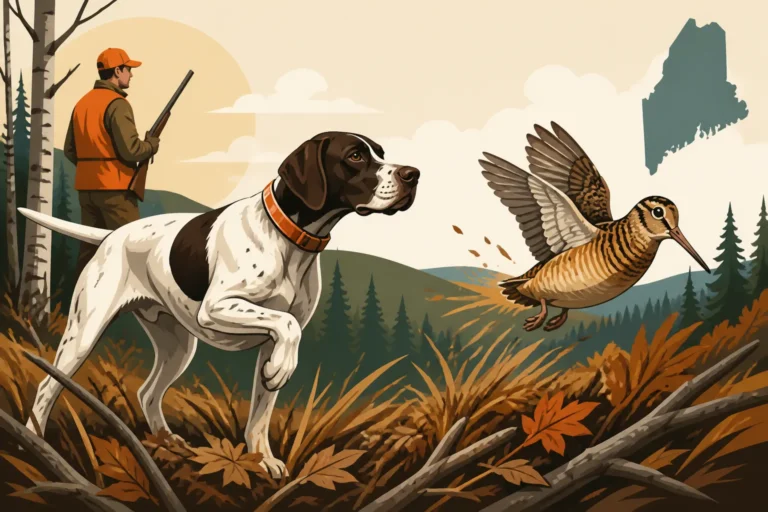
Pointing dogs help hunters locate camouflaged woodcock in dense Maine covers, enabling controlled flushes and successful retrievals.
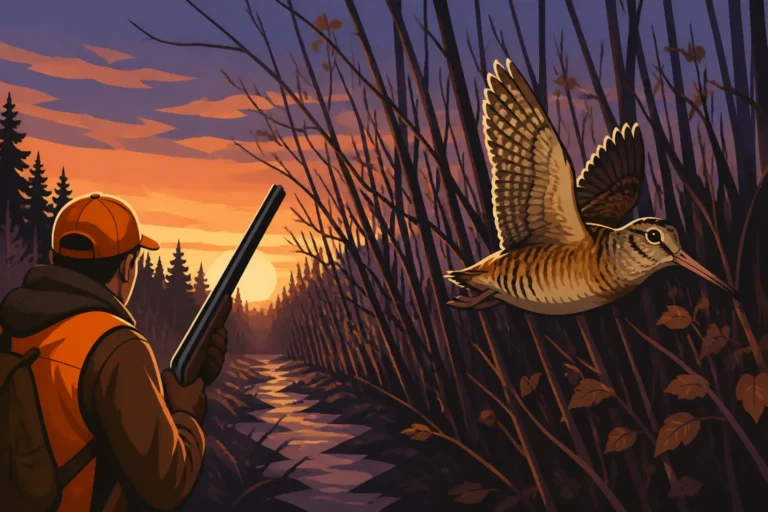
Maine woodcock hunting at dusk explains why timberdoodles become active in alder runs during the final hour of daylight.
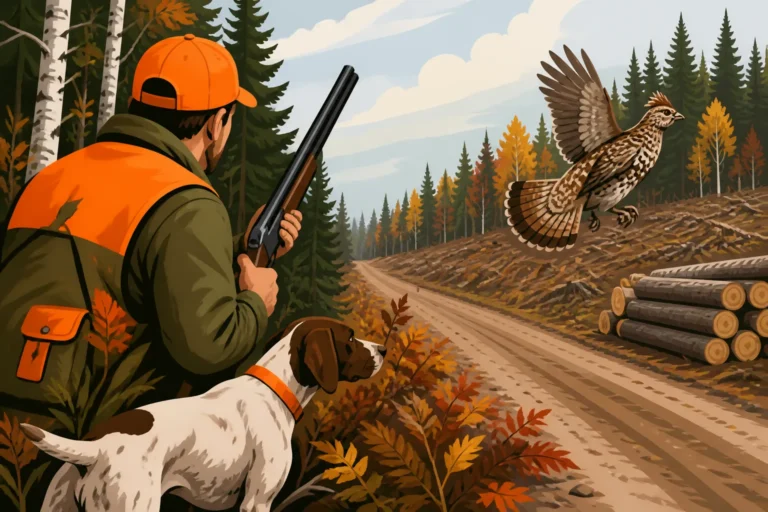
Ruffed grouse hunting along Maine logging road edges explains how diverse habitat and easy travel help hunters find birds.
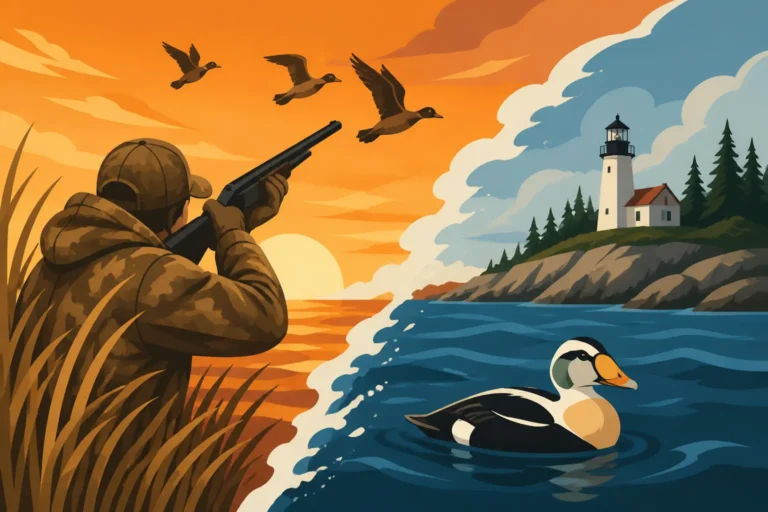
Maine sea duck hunting regulations and the split season structure explained for eider, scoter, and long-tailed duck hunters.

Coastal ledges in Maine attract common eiders, scoters, and long-tailed ducks with food and shelter, dictating morning flight patterns.
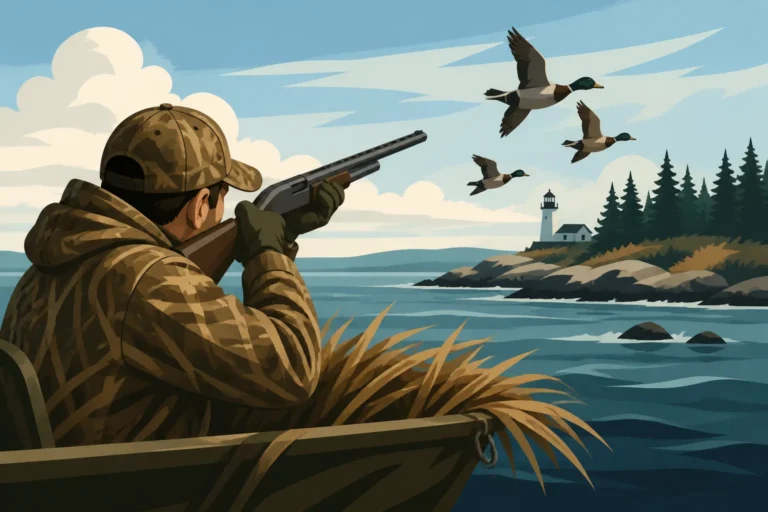
Layout boat hunting along the Maine coast uses a low profile craft and a tender boat to target offshore sea ducks.
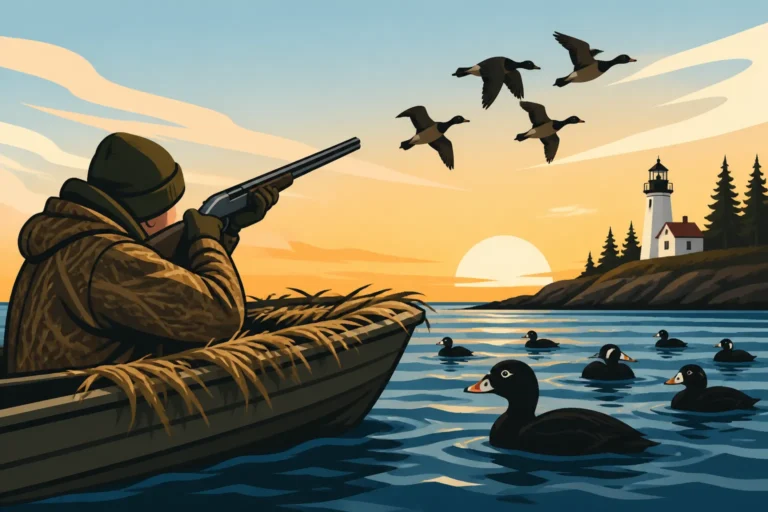
Hunting scoters from a boat in Maine involves identifying three species and finding coastal feeding habitats near ledges and shoals.
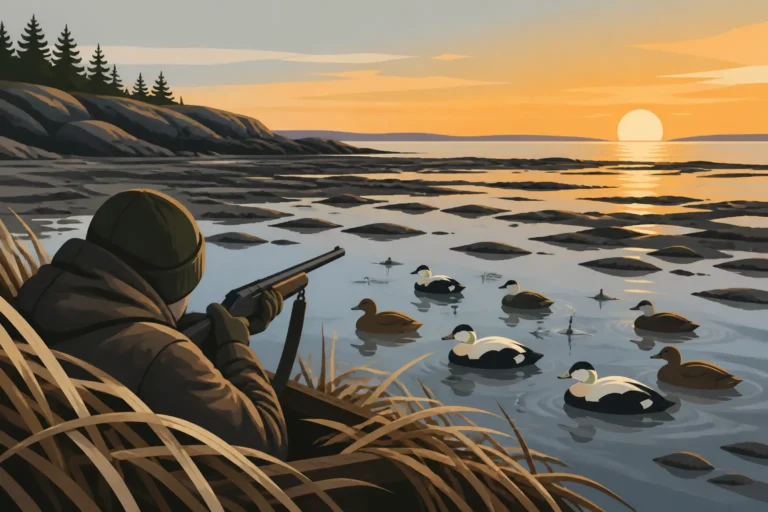
Decoying eiders on Maine’s coast during a falling tide explains how tidal currents and feeding behaviors improve hunting success.
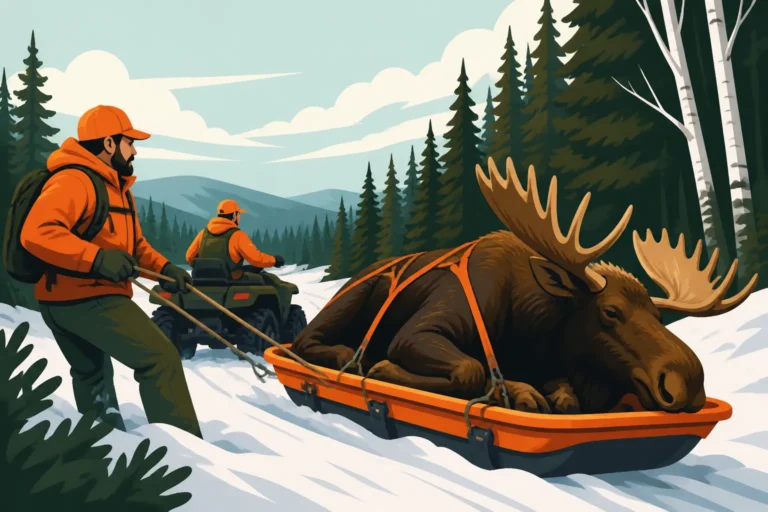
Moving a moose out of the woods starts with fast field dressing, propping the cavity open and skinning promptly, since heat is the biggest threat to the meat.