Entry Routes Through a Cut Cornfield
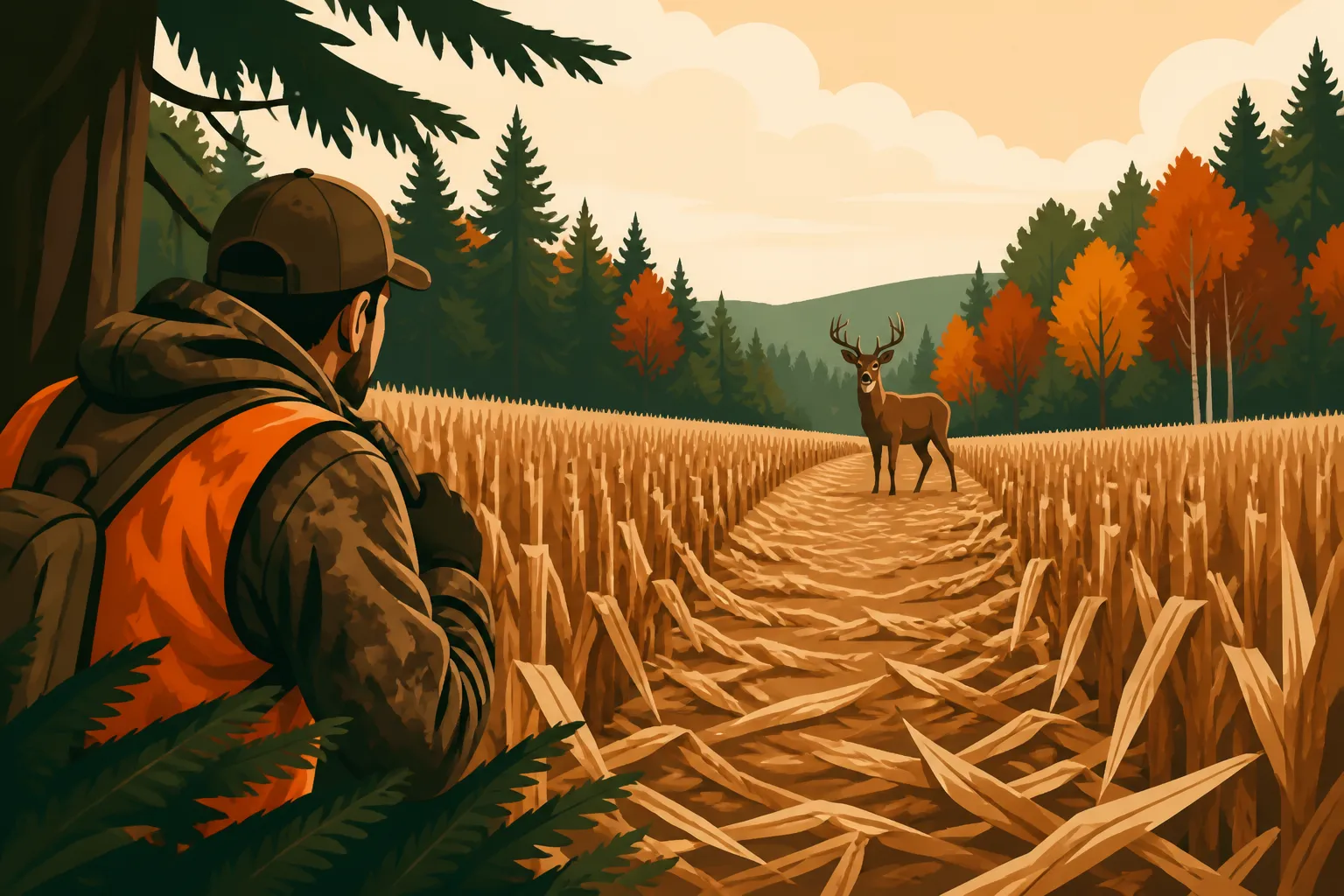
Staring at a vast expanse of a freshly cut cornfield, you know it's a deer magnet, full of residual kernels and offering critical cover, but getting into position without alarming every whitetail in the zip code often feels like a stealth mission impossible. That sinking feeling of blowing deer out of a field before you even settle in is something every hunter dreads. This guide is all about equipping you with the knowledge to identify and execute the most effective entry routes, turning those daunting cornfields into productive hunting grounds here in Maine.
Understanding Deer Behavior in Cut Cornfields
Cut cornfields are absolute havens for deer, especially as the season progresses here in Maine and other food sources dwindle. It's not just the leftover food, though that's a huge draw. It's the unique combination of sustenance and security that makes these fields so irresistible to whitetails.
Why Cut Cornfields Attract Deer
Once the combines roll through, they don't get every single kernel, leaving a scattering of high-energy food that deer will gorge on. This residual corn is like an open buffet. But beyond the immediate food source, the remaining stalks and stubble provide surprising amounts of cover. In a landscape where foliage is thinning out rapidly, especially in the late archery or muzzleloader seasons, even knee-high stubble offers a visual barrier that makes deer feel secure. They'll bed down right in the middle of these fields, especially if there's a slight depression or a thicker patch of stalks that offers an extra layer of concealment.
Think about a crisp November morning in central Maine; the sun is just starting to peek over the horizon, and deer are still out there, picking through the fallen corn. They're trying to pack on calories before the real cold hits. These fields also serve as vital thermal cover. While not as dense as a cedar swamp, the stalks can break the wind and help retain some ground warmth, making them more comfortable bedding areas than open hardwood ridges on a blustery day. It's this combination of readily available, energy-rich food and immediate, albeit sparse, cover that makes cut cornfields such a consistent draw for Maine's whitetails.
Deer Movement Patterns in and Around Corn
Deer don't just wander aimlessly through a cornfield; they often have established travel patterns. The most common routes are along the edges, especially where the field borders a woodline, a fencerow, or a thicket. These edges provide a sense of security, allowing them to move between feeding and bedding areas with an escape route always close by. You'll often find distinct trails running parallel to the woods line, leading to and from the field. It’s a classic deer movement pattern, and understanding it is key to effective hunting.
However, deer also utilize the interior of these fields. They might follow the remaining rows of stubble, using the slight elevation changes and visual breaks as they move deeper into the field to bed or access a specific patch of corn. Sometimes, you'll see a distinct trail leading directly from a woodline, cutting diagonally across the field to another cover patch or a known bedding area. If the field is particularly large, deer might bed right in the center, only emerging at the edges during low light. Knowing these patterns, whether it's edge travel or interior movements, is crucial for planning your approach. You can find more insights on "Reading Maine Mud for Fresh Deer Movement" to help you interpret these subtle signs in the field.
Scouting Your Cut Cornfield for Optimal Entry
Successful hunting in a cut cornfield isn't just about showing up; it's about smart scouting. Before you ever step foot in your hunting clothes, you need to understand the lay of the land, what the deer are doing, and how the wind will affect your approach. Skipping this step is a sure way to alert every deer to your presence.
Identifying Key Funnels and Pinch Points
The first step in scouting a cut cornfield is to identify where deer are most likely to enter, exit, or travel through. This means looking for funnels and pinch points. A "funnel" could be a narrow strip of woods that connects two larger timber blocks bordering the corn, or a hedgerow extending into the field. Deer prefer to move through these constricted areas because they offer more cover and a predictable path. A "pinch point" might be where a thicket or a piece of heavy brush pushes deer traffic into a narrower corridor along the field edge.
Walk the field edges, looking for worn trails, fresh tracks, rubs, and scrapes. These are undeniable signs of deer activity. Pay close attention to corners where the woods meet the field, or where a creek cuts into the field. These natural breaks in the terrain often concentrate deer movement. Using aerial maps from tools like GoHunt can be a game-changer for visualizing potential travel corridors, ditches, and woodlines before you even set foot on the ground. You can identify those subtle elevation changes or brush lines that might not be obvious from the road, helping you predict where deer might be funneled. This digital scouting can save you hours of on-the-ground work and significantly increase your odds, much like when "Hunting a Funnel Between Two Woodlots" which applies principles of concentrating deer movement.
Wind Direction and Thermal Considerations
This is arguably the most critical factor when planning your entry. Deer possess an incredible sense of smell, and a single whiff of human scent will send them scattering. Before every hunt, check the wind forecast. You absolutely must approach the field from a direction that keeps your scent blowing away from where you expect deer to be. This means understanding not just the prevailing wind, but also localized thermals.
In the morning, as the sun warms the ground, thermals tend to rise. In the evening, as the air cools, thermals drop. This can cause your scent to travel differently than the prevailing wind might suggest, especially in fields with subtle elevation changes. If you're hunting a field in a slight valley, morning thermals might pull your scent uphill, while evening thermals push it down into the valley. GoHunt's detailed topographic maps can help you visualize these subtle terrain features that influence air currents. Always plan your approach and your stand location to ensure your scent cone is never blowing into the feeding or bedding areas. This meticulous attention to "Wind and Thermals in Maine Hill Country" is essential, even in flatter cornfields, to avoid detection.
Strategic Entry Routes for Success
Once you've done your homework and understand the deer patterns and wind dynamics, it's time to choose your entry route. This isn't a one-size-fits-all situation; the best route depends on the specific field, the wind, and where you expect the deer to be.
The Edge Approach: Staying Hidden on the Perimeter
The edge approach is often the safest and most common strategy for entering a cut cornfield. This involves moving silently along the very perimeter of the field, using natural cover to conceal your movement. Look for existing fencerows, drainage ditches, logging roads that run parallel to the field, or the actual woodline itself. The goal is to stay just inside or alongside a cover strip that shields you from the deer's view within the corn.
If there's a dense woodline, hugging the treeline allows you to move quietly under the canopy, using the trunks and branches for visual break-up. If a ditch runs along the edge, using its depression can hide your silhouette. Remember to move slowly, deliberately, and quietly. Every rustle of leaves or crunch of a twig can carry a long way in the quiet of dawn or dusk. This method is particularly effective when you anticipate deer feeding or bedding closer to the field's perimeter, or when the wind dictates a specific side of the field for your approach. You could consider "Hanging a Stand on a Private Land Field Edge" as part of this strategy, ensuring you have a clear shot while remaining concealed.
The Interior Approach: Using Residual Stubble as Cover
Sometimes, the best way in is directly through the field itself. This "interior approach" is less commonly used but can be incredibly effective when executed properly, especially if you know deer are bedding deep within the field or if the wind makes an edge approach impossible. The key is to use the remaining corn stubble and rows as your cover. Even knee-high stalks, when coupled with slow, deliberate movement, can hide your presence.
Identify the tallest, densest patches of stubble and plan a route that uses these as visual screens. Walk directly in the rows, allowing the remaining stalks to break up your silhouette. This is where patience truly becomes a virtue. You need to move at a snail's pace, pausing frequently to scan the field ahead. Listen for deer moving, and be prepared to freeze at a moment's notice. This method demands extreme stealth, as noise can travel far in a wide-open field. The ground can be crunchy with dry stalks, so wear soft-soled boots and lift your feet rather than dragging them. If there's a slight rise or knoll in the middle of the field, using it to your advantage for cover or to gain a better vantage point before moving further can be beneficial. It's a calculated risk, but when successful, it puts you right in the deer's living room.
Specialized Entry: Waterways and Depressions
Nature often provides the best entry routes if you know where to look. Waterways like small creeks, drainage ditches, or even dry streambeds that cut through or run alongside a cornfield can offer fantastic, low-profile access. These natural depressions inherently provide excellent visual cover, allowing you to move below the deer's line of sight.
Imagine a small creek bottom, winding its way through the middle of a large cornfield. Deer often use these very features as travel corridors themselves, so you might be walking right into their pathways. Move slowly and quietly through these areas, paying close attention to the wind, as thermals can sometimes swirl unpredictably in depressions. Another specialized route might involve using subtle ground undulations. If a field isn't perfectly flat, look for the lowest points, the natural dips and swales. These can offer just enough cover to break up your outline as you move through. Sometimes, a forgotten, overgrown fencerow or a small, abandoned logging road can serve a similar purpose, providing a slightly elevated or depressed path with more cover than the surrounding open field. Knowing how to adapt to these natural features is a sign of a seasoned hunter.
Post-Entry Tactics and Ethical Considerations
Getting into the cornfield is just the first part of the equation. What you do once you're in position, and how you handle the aftermath of a shot, are just as critical for a successful and ethical hunt.
Setting Up Your Stand or Blind
Once you've used your chosen entry route to get into the field, the next step is to set up your stand or blind. If you're using a treestand, this usually means finding a suitable tree on the field edge that offers good concealment and shooting lanes into the corn. Look for trees that are already part of a dense fencerow or a cluster of hardwoods, allowing you to blend in. The ideal spot will give you a clear view of the trails you identified during scouting, but without sky-lighting your silhouette. Remember, deer are constantly scanning their surroundings.
If you opt for a ground blind, especially when "Using a Ground Blind on Posted-Free Land" where trees might be scarce, careful placement and brushing-in are paramount. Set up your blind well in advance if possible, giving deer time to get accustomed to its presence. Otherwise, choose a spot where natural features like a brush pile, tall weeds, or an existing ditch can help conceal it. Make sure your shooting lanes are clear and you have a solid backdrop to break up your outline. Always consider the wind for your stand or blind placement, ensuring your scent is carried away from feeding or bedding areas throughout the duration of your sit.
Retrieving Your Deer From a Cut Cornfield
So, you've made a good shot, and your deer has run into the cut corn. This is where the real work begins, and it can be surprisingly challenging. Unlike a deer that drops in open woods, a cut cornfield can quickly swallow up a downed animal, making blood trailing incredibly difficult. The stubble and residual leaves might soak up or obscure blood, and the consistent rows can disorient you.
Your first step, as always, is to give the deer time. If you're confident in your shot placement, wait at least 30-60 minutes for a gut shot, or 15-30 minutes for a lung shot. When you begin tracking, meticulously follow the path the deer took, looking for any sign: disturbed stubble, broken stalks, hair, and, of course, blood. Mark the last spot you saw the deer, and then every speck of blood, with flagging tape or brightly colored toilet paper. If you lose the trail, start a grid search, slowly walking back and forth across the area the deer entered, expanding your search pattern. Don't be afraid to enlist the help of a trusted friend or fellow hunter. In Maine, you might even consider using a tracking dog if legal and necessary, especially if the weather is turning or night is falling. Knowing "Blood Trailing After Dark in Maine" strategies can be invaluable, but ideally, you want to retrieve your deer in daylight to avoid unnecessary complications and ensure an ethical recovery.
| Entry Route Type | Pros | Cons | Best Use Case |
|---|---|---|---|
| Edge Approach | Maximum cover from woodlines, fencerows, or ditches; less disturbing. | Can be predictable for deer; limited visibility into the field; longer walk to center. | Deer feeding near edges, wind favorable for perimeter approach. |
| Interior Approach | Direct route to deep-bedded deer; can offer surprise factor. | Very high risk of spooking deer; demands extreme stealth; easy to get disoriented. | Deer bedding deep, specific known interior travel, desperate measures. |
| Waterway/Depression | Excellent natural concealment; often used by deer themselves; quiet. | Can be muddy, wet, or difficult footing; thermals can be unpredictable. | Fields with significant creeks/ditches, strong natural contours. |
Disclaimer
Hunting involves inherent risks. Always prioritize safety, adhere to all local, state, and federal hunting regulations, and obtain proper licenses and permits before engaging in any hunting activity. The information provided in this article is for educational purposes only and should not replace professional guidance or personal experience.