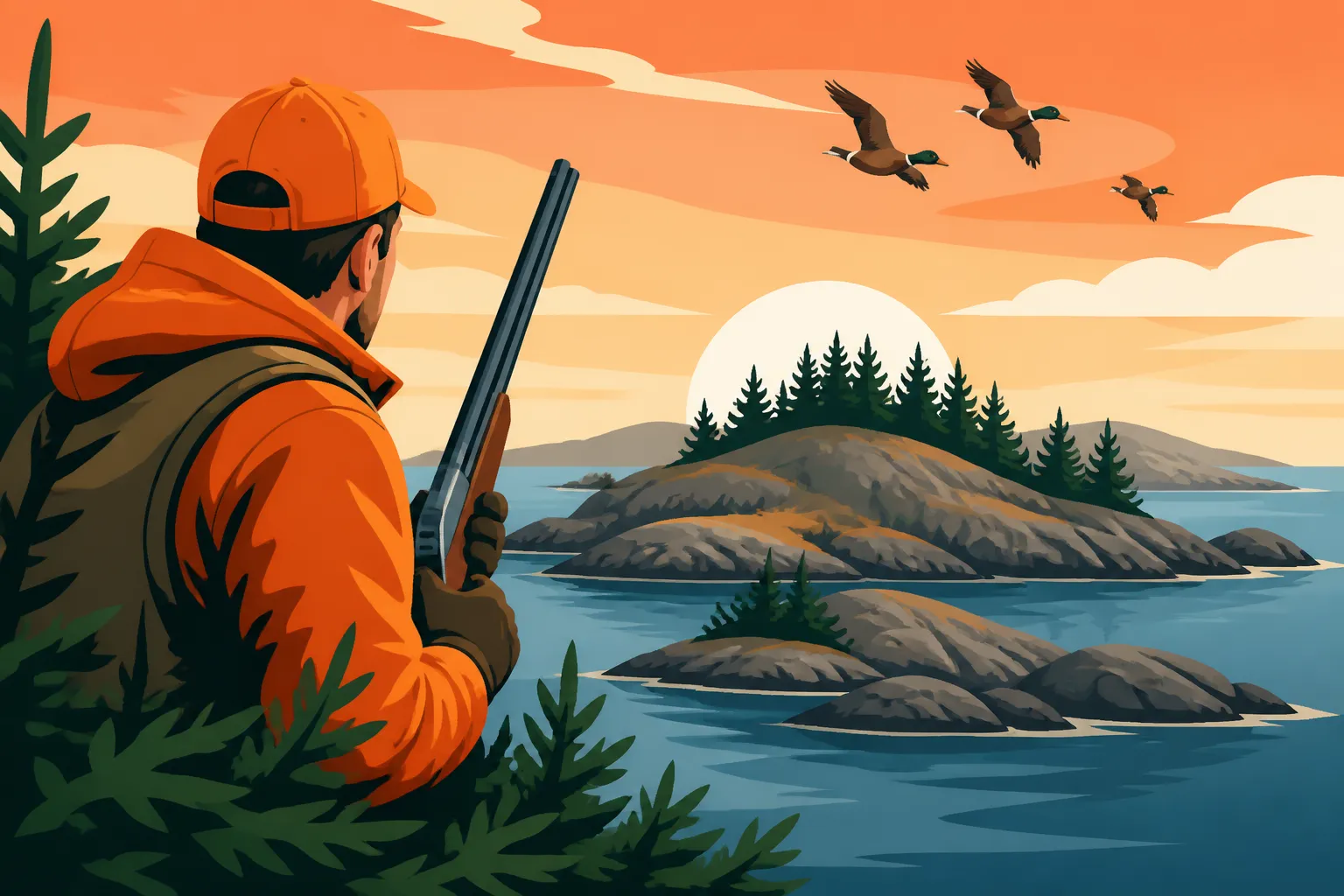
Hunting Maine Coastal Islands Refuge Land
Hunting Maine's vast and diverse landscape is a cherished tradition, but if you're picturing sprawling woodlands or open farmlands, you might be overlooking one of its most unique and challenging opportunities: the scattered islands and coastal parcels managed by the Maine Coastal Islands National Wildlife Refuge. Many hunters assume these areas are entirely off-limits or too difficult to access, leading to missed chances for incredible sea duck and other specialized hunting experiences. This guide is here to demystify hunting Maine Coastal Islands Refuge Land, helping you understand the regulations, navigate the waters, and discover a truly distinctive pursuit.
Understanding Maine Coastal Islands National Wildlife Refuge (MCINWR)
When we talk about the Maine Coastal Islands National Wildlife Refuge, it's important to shake off any preconceived notions of a single, large tract of public land you can simply drive to. This isn't like a vast national forest or a single, contained wildlife management area. Instead, the MCINWR is a fascinating, intricate mosaic of over 50 islands and several mainland parcels, all stretched along 250 miles of Maine's rugged coastline, from York County all the way up to Washington County. Imagine a scattering of jewels, each with its own character and rules, designed to protect some of the most vital seabird and wading bird nesting colonies in the Northeast.
The Unique Nature of Coastal Island Refuges
The very dispersed nature of the MCINWR is what makes it so unique, and honestly, a bit intimidating for the uninitiated. You're not looking for one entrance sign; you're looking for specific islands or coastal bits that fall under refuge management. These islands vary wildly in size, from tiny rock outcrops barely larger than a boat to larger, forested islands that feel like miniature versions of the mainland. What unites them is their critical importance as habitat for a staggering array of wildlife, particularly migratory birds. This focus on avian life means that human activities, especially hunting, are often highly regulated to ensure minimal disturbance to sensitive species, particularly during nesting seasons. It's a privilege to access these places, and it comes with a responsibility to understand and respect their primary purpose.
Access is often the biggest hurdle and the initial source of frustration for hunters. You can't just drive a truck onto most of these hunting areas. The vast majority require boat access, which immediately adds layers of planning and consideration. Are you comfortable operating a boat in potentially rough ocean conditions? Do you have the right vessel for the specific island you're eyeing? These are not minor questions, and they highlight the distinct challenges and rewards of hunting in such an environment.
General Rules and Regulations for MCINWR
Because MCINWR lands are federal property, federal regulations are the first layer of rules you need to understand, always in conjunction with Maine state hunting laws. It's a "federal first, then state" approach. This means that even if Maine law permits hunting a certain species, the refuge might have stricter rules, or outright prohibit it, on specific islands or at specific times. The overarching mission of the National Wildlife Refuge System is wildlife conservation, so any recreational activity, including hunting, must be compatible with that mission.
The most critical thing to grasp is that rules are not universal across all refuge units. An island managed primarily for nesting terns, for example, might be completely closed to public entry for much of the year, or only allow very limited access. Another island might be open for waterfowl hunting during specific seasons, while a third might prohibit all hunting. This variability can be incredibly frustrating if you're used to more uniform state land rules. This means your homework needs to be very precise. You absolutely must consult the specific refuge regulations and maps for the exact island or parcel you intend to hunt. These are usually available on the U.S. Fish & Wildlife Service website for the Maine Coastal Islands NWR. Skipping this step is not just risky; it's a recipe for accidentally violating regulations and potentially facing fines. Always check the current year's regulations before you even consider launching your boat.
Species and Seasons: What You Can Hunt (and What You Can't)
Hunting on Maine Coastal Islands Refuge Land is primarily about waterfowl, and more specifically, sea ducks. If your heart is set on pursuing deer, moose, or even most upland birds, these islands are generally not the place to do it. The refuge's mission, the island's isolated nature, and the specific regulations steer hunters towards migratory birds, where the impact on the ecosystem can be carefully managed.
Waterfowl Opportunities on Coastal Islands
For the dedicated waterfowl hunter, especially those with a passion for sea ducks, the MCINWR can offer world-class opportunities. The rocky ledges, exposed coastlines, and sheltered coves provide ideal habitat for a variety of species that spend their winters along the Maine coast. The "big three" sea ducks – eiders, scoters (black, surf, and white-winged), and long-tailed ducks (formerly oldsquaw) – are the primary draw. These aren't your typical marsh birds; they're hardy, often colorful, and challenging to hunt, requiring specialized tactics and gear.
Hunting sea ducks in this environment is an experience unto itself. Imagine watching a flock of eiders bomb into your decoys against a backdrop of crashing waves, or calling a group of scoters as they zip by low over the water. It’s rugged, it’s wild, and it’s deeply satisfying when everything comes together. These coastal islands often serve as important staging and feeding areas, making them prime locations during the migration and wintering periods. If you've ever dreamt of pursuing these unique birds, the MCINWR provides a unique access point. For more in-depth knowledge on this specific pursuit, check out Sea Duck Hunting the Maine Coast.
Upland and Other Game Potential (or Lack Thereof)
Let's be realistic: if you're dreaming of bagging a whitetail buck or flushing a ruffed grouse on an MCINWR island, you're likely to be disappointed. The vast majority of these islands are simply too small, too isolated, or lack the appropriate habitat to support populations of larger game animals like deer or moose. While some of the larger, mainland refuge parcels or coastal peninsula units might offer very limited opportunities for species like snowshoe hare or red squirrel, these are exceptions rather than the rule.
The focus of the refuge system is on preserving migratory bird habitat, and often, that means minimizing human impact, especially on ground-nesting birds or sensitive ecosystems. Therefore, many islands might have strict prohibitions on activities that could disturb these areas, or simply not be suitable for upland game hunting. Always, always check the specific island's regulations. Don't assume that because a refuge is technically "public land," you can hunt anything you'd normally pursue on state-owned land. Your expectations need to be tempered by the specific ecological purpose of these unique areas.
Navigating Season Dates and Bag Limits
Season dates and bag limits for hunting on MCINWR lands are determined by a combination of federal and state regulations. For migratory waterfowl, the U.S. Fish & Wildlife Service establishes a framework of dates, which the Maine Department of Inland Fisheries and Wildlife then uses to set specific state seasons and bag limits. The key here is that any specific refuge unit can then impose further restrictions. For instance, the federal framework might allow hunting from September to January, and Maine might set its season within those dates, but a specific refuge island might only be open for a two-week window in December to protect sensitive areas.
Bag limits, especially for sea ducks, can also be complex, with aggregate limits across different species. It's not uncommon to have a daily bag that combines various types of scoters, for example, or a separate limit for eiders. You absolutely must carry a current Maine hunting license, a federal duck stamp, and be HIP certified to hunt migratory birds. Maine HIP Certification for Bird Hunters and Maine Federal Duck Stamp Requirement are good places to review those requirements. Double-checking the specific refuge's current annual brochure or website is non-negotiable before you head out. These details change year to year, and ignorance of the rules is never an excuse.
Accessing Maine Coastal Islands for Hunting
The biggest differentiator when hunting Maine Coastal Islands Refuge Land compared to most other public hunting areas is the question of access. Forget driving your truck down a logging road; here, your vehicle is a boat, and your road is the ocean. This presents both incredible opportunities for solitude and unique challenges that demand respect for the marine environment.
The Challenge of Water Access
Unless you're targeting one of the rare mainland parcels, getting to most MCINWR hunting areas requires a boat. This isn't just about owning a boat; it's about owning the right boat and having the skills to operate it safely in coastal Maine waters. For hunting sea ducks, you might be heading out in conditions that would send fair-weather boaters running for cover. Small skiffs are great for getting into shallow coves, but they might not handle the chop of a blustery November day safely. Larger, ocean-going vessels offer more stability but can be harder to maneuver close to ledges or small islands.
Maine's coast is infamous for its dramatic tides, hidden rocks, and sudden weather changes. Tides can fluctuate by 10 to 12 feet in many areas, exposing vast mudflats or covering submerged ledges in a matter of hours. Understanding tide charts is absolutely crucial for safe navigation, boat launching, and even knowing when your decoys will be in the water. Public boat launches are scattered along the coast in towns like Phippsburg, Port Clyde, and Milbridge, but always check their accessibility for your vessel and the weather conditions on your intended route. A few guides offer sea duck charters, often operating out of places like Phippsburg or Spruce Head, which can be an excellent way to experience this unique hunting without the personal boat investment. If you're considering this, check out Booking a Maine Sea Duck Charter.
Permissions and Special Considerations
Beyond your general hunting license, there might be specific permits required by the refuge itself for certain islands or activities. It’s not uncommon for federal refuges to have a permitting system for hunting, especially in areas with limited capacity or particularly sensitive ecosystems. This helps them manage hunter numbers and ensure compliance with their conservation goals. This is another reason why consulting the official MCINWR website or contacting the refuge office directly is so important. Don't assume that if it's open for state hunting, it's automatically open and accessible on refuge land.
Another significant consideration is the intermingling of private and public land. Many coastal islands, or mainland parcels near the coast, are a patchwork of private ownership, state lands, and federal refuge lands. This is where modern mapping technology becomes your best friend. Tools like onX Hunt or GoHunt offer detailed property line overlays that are invaluable. Imagine setting up on a prime ledge only to realize half your decoy spread is inadvertently on private property where hunting isn't allowed. Using these apps on your phone or tablet can prevent accidental trespass and ensure you're always within legal hunting boundaries. It's a small investment that can save you a lot of grief (and potentially a fine!).
Planning Your Island Adventure
A successful hunt on a coastal island involves meticulous planning, almost like a small expedition. Beyond your hunting gear, you need to consider marine essentials. Are your decoys durable enough for saltwater and rocky shorelines? Do you have enough rope and anchors to secure your boat in a rising tide or a strong current? Are you bringing enough food, fresh water, and extra layers of clothing to account for sudden weather shifts? Emergency communication, like a VHF radio or satellite messenger, is non-negotiable, as cell service can be spotty or nonexistent offshore.
Tides are not just for navigation; they're integral to your hunting strategy. A rising tide might push birds closer to shore, while a falling tide could expose new feeding grounds. Knowing how to read a tide chart and understanding its local impact will directly influence your setup. Furthermore, coastal weather is notoriously fickle. A forecast for light breezes can quickly turn into a gale, and fog can roll in unexpectedly, reducing visibility to zero in minutes. Always have a backup plan, be willing to cancel or turn back if conditions deteriorate, and err on the side of caution. No bird is worth risking your life over.
Essential Gear and Safety on the Coast
Hunting the Maine coast, particularly on remote islands, isn't just a different experience; it demands a different set of gear and an unwavering commitment to safety. The harsh marine environment is unforgiving, and being unprepared can turn an exciting adventure into a dangerous ordeal.
Specialized Equipment for Sea Duck Hunting
Forget your typical marsh decoys; sea duck hunting requires tough, heavy-duty decoys built to withstand waves, currents, and salt spray. Eider, scoter, and long-tailed duck decoys are larger, often weighted heavily, and designed to ride realistically in rough water. You'll need plenty of anchor line and sturdy weights to keep them from drifting away. When thinking about your setup, you'll want to review resources like Decoying Eiders Off the Maine Coast to get a good sense of what's involved.
Your blind, if you even use one, will likely be a natural feature – a pile of rocks, a spruce thicket, or a layout blind tucked onto a ledge. Camouflage should blend with the rocky, often dark, coastal environment. Clothing is paramount: layers are crucial, with a waterproof and windproof outer shell being absolutely essential. Even on a seemingly mild day, the combination of wind, spray, and cold water can quickly lead to hypothermia. As for your shotgun, corrosion resistance is a huge plus. Saltwater is brutal on metal. And for ammunition, larger shot sizes, like BB or #2 steel shot, are common for the hardy, thick-feathered sea ducks. Don't forget a good, waterproof decoy bag and plenty of robust line for retrieving birds from choppy water.
Marine Safety is Paramount
This cannot be stressed enough: marine safety is paramount. When you're miles offshore, the nearest help can be hours away. Every person on your boat must have a properly fitting life jacket. Beyond that, consider flares, a sound-producing device (like a horn or whistle), and a reliable means of communication. A VHF marine radio is superior to a cell phone offshore, as it can reach the Coast Guard and other boats even when cell towers are out of range. A GPS is essential for navigation, especially in fog or at night. Always carry an anchor with enough rode (rope) to hold your boat in various conditions.
Before every trip, tell someone where you're going and when you expect to return – file a float plan. The cold water itself is a major hazard; immersion in Maine's coastal waters, even in late summer, can lead to hypothermia in minutes. Dress for the water temperature, not just the air temperature. Knowing basic first aid and having a well-stocked marine first aid kit is also wise. Understanding the local navigation markers, reading marine charts, and being aware of commercial fishing gear (lobster buoys, gillnets) are all part of being a responsible and safe coastal hunter.
Respecting the Environment and Other Users
Hunting on refuge land comes with an inherent responsibility to be an excellent steward of the environment and a respectful user of shared public spaces. The "Leave No Trace" principles are critical here: pack out everything you pack in, and then some. This includes spent shell casings, any trash, and even leftover food scraps. The islands are often pristine, and it's our duty to keep them that way.
Remember that these islands are also popular for other activities. Birdwatchers, kayakers, recreational boaters, and photographers all share these beautiful spaces. Be courteous and mindful of their presence. Avoid disturbing non-game wildlife, especially large concentrations of nesting or resting seabirds, unless they are your intended game and you are legally pursuing them. Many refuge islands have specific areas that are completely closed to entry to protect sensitive nesting colonies. Always be aware of these closures. Hunting within the MCINWR is a privilege, and conducting yourself with integrity ensures these opportunities remain available for future generations.
Strategic Hunting Considerations for Coastal Islands
Beyond the gear and safety, successful hunting on Maine's coastal islands hinges on strategic thinking, a deep understanding of the environment, and a flexible approach. The ocean is dynamic, and what worked yesterday might not work today.
Scouting and Reconnaissance
Effective scouting is paramount when hunting the MCINWR. Because access can be difficult and conditions change so rapidly, doing your homework before you even launch the boat can significantly increase your odds. Modern mapping tools are incredibly helpful here. As mentioned, onX Hunt can show you the precise boundaries of refuge land versus private parcels, which is critical for staying legal. It can also help you identify submerged ledges, shallow water areas, and potential boat landing spots. GoHunt offers similar capabilities, often with aerial photography that can reveal critical details like sandbars, deep channels, and current flows that might attract or hold birds.
Beyond digital maps, pre-season scouting trips (without weapons or disturbing birds) can be invaluable. Observe bird flight paths, common feeding areas, and where birds rest during different tides. You might see a specific ledge that holds birds on a rising tide, or a sheltered cove where they congregate in rough weather. Looking for mussel beds or other food sources at low tide can also indicate prime feeding grounds. Remember that you are scouting for migratory birds; their patterns can shift based on weather and food availability, so recent observations are always best. To get a better handle on this, consider Reading a Ledge for a Morning Sea Duck Flight.
Understanding Tides and Currents
Tides and currents are not just navigation hazards; they are integral to sea duck hunting strategy. Sea ducks feed primarily on mussels, crabs, and other marine invertebrates found in the intertidal zone and shallow waters.
- Impact on feeding: A falling tide might expose mussel beds, concentrating birds in certain areas, while a rising tide might cover those same beds, causing birds to move to other locations or simply rest. The movement of water itself, in the form of currents, can also concentrate food sources or create "rip lines" that ducks follow.
- Impact on decoy spreads: Setting decoys effectively means understanding how the current will affect their natural movement. Decoys set against the current often look more realistic. However, strong currents can drag decoys or make them difficult to retrieve.
- Impact on access: As noted, tides dramatically affect boat access to islands and ledges. What might be an easy landing at high tide could be an impassable mudflat or a treacherous rock garden at low tide. Plan your hunt around the tide cycle for both safety and effectiveness. A great resource for timing this just right is Decoying Eiders on a Falling Tide.
Dealing with Maine's Coastal Weather
Maine's coastal weather is legendary for its sudden changes and severity. Hunters accustomed to inland conditions might be surprised by how quickly good weather can turn dangerous offshore.
- Fog: Coastal fog can roll in with astonishing speed and density, reducing visibility to mere feet. This is incredibly disorienting and can make navigation, even with GPS, very challenging. Always have a compass and chart as a backup.
- Wind: Wind can be your friend, providing cover and movement for your decoys, but too much wind makes hunting nearly impossible and boating downright dangerous. High winds generate large waves and can make accurate shooting a futile exercise. Always monitor marine forecasts, not just land forecasts.
- Cold: Even when the air temperature seems moderate, the wind chill over open water and the constant exposure can lead to rapid heat loss. Proper layering, with high-quality waterproof and windproof outer shells, is non-negotiable.
Always have a "weather window" in mind for your trip. If the forecast looks marginal, be prepared to reschedule. Having backup locations further inland or a plan for alternate activities is a wise move, as the ocean dictates your schedule, not the other way around.
Summary of Maine Coastal Islands Refuge Land Hunting Opportunities
| Feature | Description | Key Considerations |
|---|---|---|
| Primary Game | Sea Ducks (Eiders, Scoters, Long-tailed Ducks) | Limited to no opportunity for deer, moose, or most upland species. |
| Access | Almost exclusively by boat; often requires ocean-worthy vessel. | Tides, currents, weather are critical factors. Public launches available in coastal towns. |
| Regulations | Federal refuge rules supersede state law; rules vary significantly by individual island/parcel. | Must check specific MCINWR regulations annually; federal stamp and HIP certification needed. |
| Challenges | Marine safety, complex navigation, unpredictable weather, specific refuge permits, private land adjacency. | Requires specialized gear, marine experience, and meticulous planning. |
| Rewards | Unique hunting experience, solitude, stunning coastal scenery, pursuing hardy and distinct waterfowl species. | A truly immersive and challenging hunt for the prepared and adventurous. |
| Scouting | Essential for success; utilize mapping apps like onX Hunt / GoHunt; pre-season observation trips recommended. | Identify bird patterns, feeding areas, navigation hazards. |
Disclaimer
This article is for general informational purposes only and does not constitute professional advice. Laws, prices and regulations vary by location and change over time. Consult a qualified professional for guidance on your specific situation.