How Many Acres of Private Land Maine Opens to Hunters
It’s a common frustration for hunters across the country: finding a place to hunt. Posted signs, crowded public land, or simply not knowing where to go can make even seasoned folks feel like they’re hitting a brick wall. But here in Maine, the landscape for hunters is remarkably different, with millions of acres of privately owned land traditionally open for responsible recreation, offering a unique opportunity that many other states just can't match. This guide will walk you through the nuances of accessing Maine's vast private lands, helping you understand how much is available and how to ensure you're hunting ethically and legally.
The Unique Landscape of Maine's Private Land Access
Maine stands apart from many other states when it comes to hunting access. While the idea of "private land" elsewhere often conjures images of tightly controlled, leased, or strictly permission-only properties, much of Maine operates under a different philosophy. It’s a tradition steeped in mutual respect, a working landscape, and a reliance on hunters to be good stewards.
Maine's Implied Permission Tradition
One of the most defining characteristics of hunting in Maine is the concept of implied permission. What does this mean, exactly? In essence, unless a private landowner has explicitly posted their land against hunting, fishing, or trapping, you generally have implied permission to access it for these recreational activities. This isn't a free-for-all, by any means, but rather a long-standing social contract built on generations of trust and responsible use.
Imagine driving down a quiet country road, seeing a vast expanse of timberland or a mix of woods and fields. In many other states, you’d assume it’s off-limits unless you've secured explicit permission. Here in Maine, if you don't see clear "No Trespassing" or "No Hunting" signs, the default assumption is that you can hunt there, provided you act respectfully and responsibly. This tradition has deep historical roots, stemming from a time when much of Maine was wilder, and access to resources was fundamental. It puts the onus on the landowner to post their land if they don't want people on it, rather than putting the onus on the public to ask for permission for every parcel. This makes a huge difference for hunters trying to find ground. Maine's Private Land Access Tradition is truly something special we work hard to maintain.
The Sheer Scale of Private Timberlands
When we talk about private land in Maine, we're not just talking about small woodlots behind someone's house. A significant portion of the state, particularly in the vast northern and western regions, is owned by large timber companies, industrial landowners, or private investment groups. These are not always pristine wilderness areas; they are working forests, actively managed for timber harvest. And historically, these companies have maintained an open-door policy for public recreation, including hunting, often without requiring explicit individual permission for every single hunter.
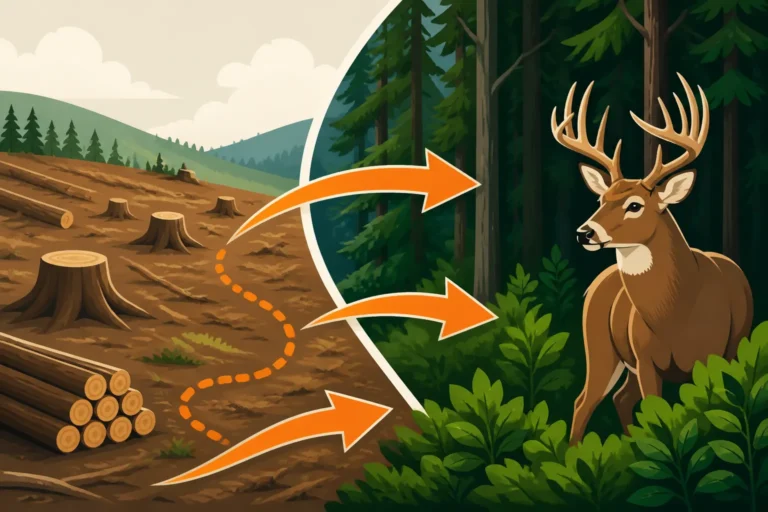
These vast timberlands span millions of acres, forming the backbone of Maine's hunting opportunities. While some areas within these larger tracts, particularly in what's known as the North Maine Woods, might have gate systems and charge day-use or camping fees for access, the general principle of openness remains. These areas are not public land in the governmental sense, but they function similarly for hunters, offering immense tracts of unpressured ground. You might find yourself hunting miles back on old logging roads, far from any signs of civilization, all on private timber company land. This expansive, interconnected network of private working forests is a primary reason why Maine hunters enjoy such broad access to varied habitats, from deep spruce-fir forests to recent clear-cuts.
Navigating Private Land: Understanding Your Responsibilities
While Maine's implied permission tradition is a blessing, it comes with significant responsibilities. This isn't a license to disregard property rights; it's a privilege that requires every hunter to be knowledgeable, ethical, and courteous. Failing to understand these responsibilities jeopardizes access for everyone.
The Importance of "Posted" Land
This is perhaps the most critical rule for hunting private land in Maine: Respect posted land. If a landowner does not want people on their property, they have the right to post it. In Maine, "Posted" signs, painted purple stripes on trees, or clearly marked boundaries indicating "No Trespassing" or "No Hunting" mean exactly that: do not enter without explicit permission. Ignoring these signs is trespassing, a legal offense that can carry penalties and, perhaps more importantly, erode the trust that underpins our implied permission system.
A landowner might post their property for a variety of reasons – safety concerns, protecting crops, managing their own hunting, or simply desiring privacy. Whatever their reason, it is their right, and our duty as hunters is to honor it without question. Imagine you've spent days scouting a prime piece of cover only to find it newly posted. It's frustrating, I know, but turning around and finding new ground is the only acceptable response. Always look for signs, especially when entering a new area or hunting close to dwellings or fields. The law is clear about What Posted Land Means in Maine, and it's something every hunter needs to internalize.
When to Ask for Explicit Permission
While implied permission is the general rule, there are absolutely times when asking for explicit permission is not only wise but necessary. This is especially true for smaller parcels of private land, properties near residential areas, cultivated fields, or any land where your presence might cause concern. Common sense is your best guide here. Would you want someone hunting 50 yards from your house without asking? Probably not.
If you're looking to hunt a small woodlot bordering someone's backyard, a field with standing crops, or any property where you're very close to homes or outbuildings, you absolutely need to knock on the door and ask. Often, a simple, polite conversation can lead to a positive relationship with a landowner and secure access for years to come. Many landowners appreciate the courtesy, and some might even be happy to have hunters help manage deer populations on their land. Remember, Asking a Maine Landowner for Permission is a sign of respect, not weakness. Even if you believe the land isn't explicitly posted, taking the extra step demonstrates good will and helps maintain the overall positive perception of hunters.
Estimating the Acres: A Deeper Dive
So, just how many acres are we talking about when we say "private land Maine opens to hunters"? Getting a precise, real-time figure is challenging because land ownership changes, and landowners can choose to post or unpost their land at any time. However, we can certainly paint a clear picture of the vastness of this resource.
Breaking Down the Numbers: Over 10 Million Acres and Counting
Maine is a massive state, and the vast majority of it, somewhere around 94%, is privately owned. Of that private land, a substantial portion — estimated to be well over 10 million acres — is traditionally open or accessible to hunters through the implied permission tradition or through agreements with large timberland owners. This is not a static figure, but it gives you a sense of the sheer scale.
Think about that: over ten million acres, a landscape larger than many small states, is potentially at your disposal for hunting. This includes the vast stretches of commercial timberland that dominate northern and western Maine, smaller woodlots in more populated areas that haven't been posted, and even some agricultural lands where farmers are happy to have deer management assistance. The reality is that much of this land, particularly the deep woods, sees very little hunting pressure simply because it's so vast and remote. This is what makes Maine a true hunter's paradise for those willing to explore beyond the beaten path. While the percentage of "truly wild" or unmanaged land might vary, the opportunity presented by these millions of accessible private acres is unparalleled.
Tools for Locating Open Private Land
Navigating millions of acres of private land effectively, especially when respecting boundaries and avoiding posted properties, requires modern tools. Gone are the days of relying solely on paper maps and vague directions. Today, technology provides hunters with invaluable resources.
The most crucial tools in your arsenal are GPS-enabled mapping applications designed for hunters. These apps typically feature detailed satellite imagery, topographical maps, and, most importantly, property lines with landowner information. This means you can be standing in the woods, look at your phone, and know precisely which parcel you're on, who owns it, and whether it's public or private. This is an absolute game-changer for ethical hunting on private land.
A prime example is onX Hunt. This application allows you to toggle layers that show property boundaries, landownership, and even highlight public lands. It's an indispensable tool for confirming you're not inadvertently trespassing and for identifying potential access points or adjacent unposted land. You can drop waypoints, track your movements, and even scout remotely from your couch. While some platforms like GoHunt offer incredible insights into hunting opportunities across different states, for pinpointing specific property lines and ensuring legal access on Maine's mixed ownership landscape, an app like onX Hunt is truly essential. It empowers you to make informed decisions in the field, reducing stress and increasing your confidence that you are hunting legally and respectfully. Utilizing these digital tools is not just a convenience; it's a core component of responsible hunting in Maine's unique land access environment.
Maintaining Access: Hunter Ethics and Future Generations
The generous private land access in Maine is not a guaranteed right; it's a privilege earned and maintained through the collective actions of its hunting community. Every time a hunter acts irresponsibly, that privilege is chipped away. It's up to all of us to ensure this tradition continues for future generations.
The Hunter's Role in Preserving Access
Preserving access on private land hinges entirely on hunter ethics and behavior. When you step onto private property, even with implied permission, you are a guest. This means operating with the highest degree of respect and stewardship. Leaving gates open, blocking access roads, damaging property, or littering are surefire ways to get land posted. It's not just about avoiding legal trouble; it's about being a good neighbor and demonstrating that hunters are responsible outdoor enthusiasts.
Always assume someone is watching, even if you’re miles back in the North Woods. Pack out everything you pack in, and then some. If you encounter a closed gate, close it behind you. Don't drive off established roads or create new tracks. Be mindful of noise, especially near dwellings. If you retrieve game from private land, ensure you leave no trace, and if it's posted land where you recovered game, then Retrieving Game From Private Land in Maine still requires specific permission from the landowner before you enter. The golden rule here is simple: leave the land better than you found it, and always consider how your actions reflect on the entire hunting community. Our actions directly influence whether a landowner decides to keep their property open or put up those dreaded "No Trespassing" signs.
Landowner Relations Programs and Education
Recognizing the delicate balance of private land access, various organizations and the state's Department of Inland Fisheries and Wildlife (MDIFW) often engage in landowner relations programs and educational efforts. These initiatives aim to foster better communication and understanding between landowners and recreational users, including hunters. They provide resources for landowners on how to properly post their land if they choose, and they educate hunters on the importance of respectful behavior.
These programs highlight that the continued openness of private land depends on a strong partnership. Hunters are encouraged to participate in courses like Maine Hunter Education Requirements, which emphasize not just safety but also ethics and land access etiquette. Simple acts of courtesy, like waving to a landowner you see while driving or taking a moment to thank a farmer for access, can go a long way. This spirit of cooperation is vital, particularly as land ownership changes and new generations come into possession of these critical tracts. By being proactive and demonstrating responsible conduct, we collectively safeguard the incredible access that Maine hunters currently enjoy.
Types of Private Land Access in Maine
Here's a quick overview of the common types of private land access you'll encounter in Maine:
| Type of Private Land | Access Policy (General) | Hunter Responsibility | Common Location |
|---|---|---|---|
| Unposted Timberland | Implied permission (unless posted) | High diligence, respect working forest | North, West, Central Maine |
| Small Woodlots (Unposted) | Implied permission (unless posted) | High diligence, consider asking | Near rural homes, towns |
| Agricultural Fields (Unposted) | Implied permission (unless posted) | High diligence, strongly consider asking, avoid crops | Farm country (Aroostook, Central Maine) |
| Posted Land | No entry without explicit, direct permission | Absolute respect, do not enter | Anywhere, typically near homes |
| North Maine Woods (Fee Areas) | Access by permit/fee | Adhere to NMW rules, gates, fees | Far Northern Maine |
Disclaimer
This article is for general informational purposes only and does not constitute professional advice. Laws, prices and regulations vary by location and change over time. Consult a qualified professional for guidance on your specific situation.