Timber Cuts and Where Deer Move After
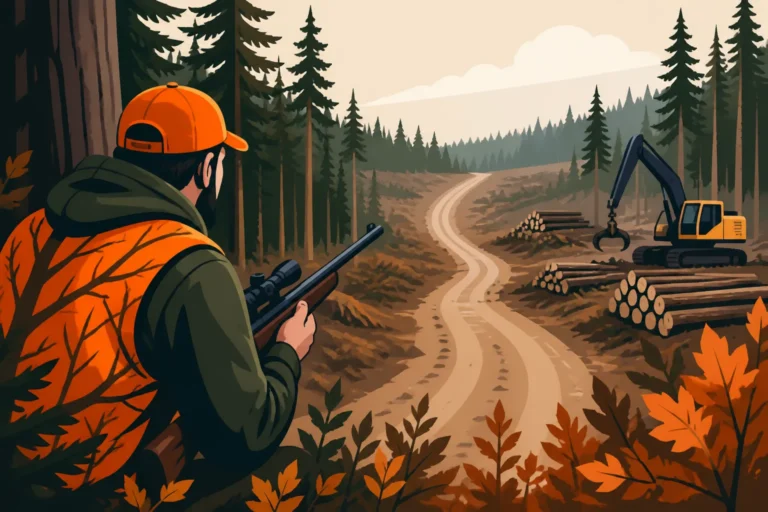
It’s a scenario every Maine hunter has faced: you scout a promising piece of timber all summer, mark your stands, maybe even hang a camera or two, only to show up for opening day and find a fresh timber cut has transformed the landscape. That sinking feeling in your gut, wondering if all your planning is now worthless, and if every deer has packed its bags and left for good, is completely understandable. But here’s the thing: while disruptive in the short term, timber cuts are often incredible deer magnets. This guide will help you understand the dynamics of logging operations in Maine and, more importantly, where the deer go and how you can adapt your hunting strategy to find them in these newly altered landscapes.
Understanding Maine's Timber Practices and Deer Habitat
Maine is a heavily forested state, and timber harvesting is a huge part of our landscape and economy. What might look like a devastated area to an untrained eye often quickly becomes a vibrant new food plot and sanctuary for deer. Understanding the different types of cuts is key to predicting deer movement.
Different Types of Timber Cuts and Their Immediate Impact
Not all timber cuts are created equal, and each has a distinct impact on the environment and, by extension, on deer behavior. The immediate aftermath can certainly look like a bomb went off, with machinery noise, falling trees, and churned-up earth. Deer are sensitive creatures, and this initial disturbance will always cause them to move, at least temporarily.
For instance, a clear-cut, where nearly all trees are removed from a large area, creates what some might call a "moonscape." The initial shock to the ecosystem is significant. The ground is exposed to more sunlight, and the heavy machinery leaves behind a maze of stumps, tops, and skidder trails. Deer will undoubtedly evacuate the immediate area while the cutting is active, seeking refuge in adjacent mature timber. However, once the equipment pulls out, these areas, especially those harvested in late fall or winter, almost immediately begin regenerating with lush, new growth in the spring. This quick rebound provides a buffet of young saplings and forbs that are highly palatable to deer.
Then there are selective cuts or partial cuts, where only certain trees are removed, leaving a stand of mature timber behind. This might involve taking out diseased trees, specific species, or those that have reached a certain size. These operations are often less disruptive, as much of the overhead canopy remains. Deer might just shift to a different part of the woodlot during active cutting, returning quickly once the daily operations cease. The benefit here is increased sunlight reaching the forest floor, stimulating understory growth, while still providing ample cover from the remaining trees.
Finally, we have thinnings, which are even less intrusive than selective cuts. These remove smaller, weaker trees to allow the remaining trees to grow larger and healthier. They usually result in a slight increase in light and browse at ground level without significantly altering the overall structure of the forest. Deer in these areas might barely notice the change, perhaps just moving to a different part of the stand for a day or two.
The Short-Term Effects: Browse and Security Cover
While the initial noise and activity send deer scattering, the true magic of timber cuts for deer habitat begins almost immediately after the loggers leave. Exposed soil, increased sunlight, and reduced competition from large canopy trees trigger an explosion of new plant growth. This creates a virtual supermarket for deer, offering a diverse array of nutritious browse.
Within a year or two, especially in a clear-cut or heavy selective cut, you’ll see dense thickets of regenerating saplings – maple, birch, aspen, oak, and beech all sending up tender shoots. These are incredibly rich in nutrients and easily digestible for deer. Beyond trees, various forbs, grasses, and shrubs like blackberry and raspberry canes will also colonize the open spaces. This dense, tangled undergrowth isn't just food; it's also incredibly effective security cover. A deer can disappear into a patch of head-high regeneration and be practically invisible from more than a few yards away, making it a perfect bedding and escape cover. Think of those seemingly impenetrable cedar swamps where deer hide in the late season – a young clear-cut can mimic that same level of protection.
It’s often said that "logging is deer management," and in Maine, that statement holds a lot of truth. These areas essentially become food plots on a grand scale, driven by natural regeneration rather than human planting. This new food source is vital, particularly in years when natural mast crops like acorns or beechnuts are scarce. Hunting After a Poor Acorn Year can be much more productive in areas with recent timber activity.
Deer Movement Patterns Post-Harvest
Deer are creatures of habit, but they are also highly adaptable. When their home range is suddenly altered by a timber cut, they will adjust their movements to take advantage of the new opportunities while still prioritizing safety.
Initial Displacement and Refuge Areas
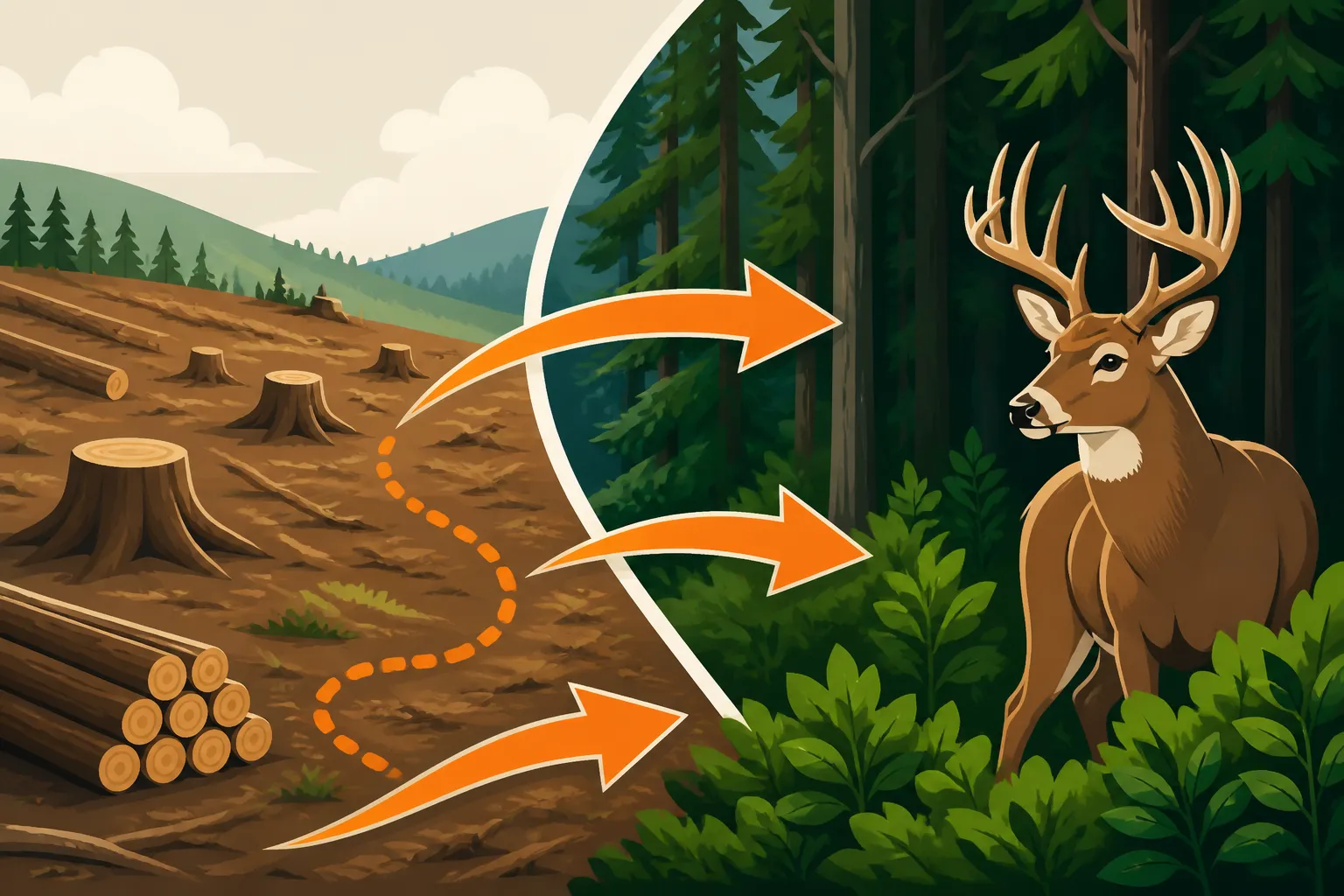
When the saws start buzzing and the skidders rumble, deer aren't going to stick around to watch the show. Their primary instinct is to find safety. Immediately, deer will move into the nearest patch of thick, undisturbed cover. This could be an adjacent stand of mature timber, a dense cedar swamp, or even small, un-cut islands of forest left within a larger cut area. These refuge areas become crucial travel corridors and temporary bedding sites until the disturbance passes.
Imagine a situation where a large clear-cut happens in a popular deer hunting area. For the duration of the logging operation, you might find deer stacked up on the perimeter in the untouched woods. They're still nearby, but they're hunkered down, feeling the pressure. Once the machinery leaves, however, a slow but steady re-colonization of the cut itself begins, often starting from these very refuge areas. Bucks, especially, will often skirt the edges of fresh cuts, observing from a distance before venturing back into the new growth. They'll use the remaining cover to move safely, often utilizing old trails that now lead to new opportunities.
The Draw of New Growth and Browse
Once the initial shock wears off, the allure of fresh browse becomes irresistible. Deer, particularly does and fawns, will be the first to brave the new territory. Young saplings of certain species, like red maple, aspen, and oak, are highly favored. Even balsam fir, often considered a last resort, provides excellent winter browse when it's young and tender. This new food source is not only abundant but often more accessible than the browse found in older, denser forests where much of the edible vegetation is out of reach.
Consider a clear-cut that's two to three years old. The ground is now covered in a dense carpet of regenerating softwood and hardwood sprouts. This isn't just a few scattered plants; it's a wall of green, providing an incredible amount of forage. Deer will spend significant time grazing and browsing in these areas, often moving out into the cut at dawn and dusk, then retreating to thicker pockets within or along the edges during daylight hours for bedding. These areas are nutritional powerhouses for them, helping them build fat reserves for winter and support fawns.
Edge Habitat and Transition Zones
The most consistently productive areas around any timber cut are often the edges and transition zones. This is where the old forest meets the new growth. These edges provide the best of both worlds: the dense cover and mature trees of the untouched forest for security, combined with the abundant food source of the regenerating cut.
Deer love edges because they offer quick access to food while keeping escape routes and hiding spots close at hand. A logging road that skirts the edge of a clear-cut, for example, becomes a prime travel corridor. Deer will walk these edges, browsing as they go, and often cross from one patch of cover to another through these transitional areas. Look for natural funnels where the new growth bottlenecks into a smaller patch of timber, or where a point of uncut woods juts into a cut area. These are classic ambush spots.
In Maine's varied topography, these edges can be even more pronounced. For example, a clear-cut on a hillside will have different edge characteristics than one on flat ground, and deer will use the topography for advantage. Hunting a Clear-Cut Regrowth Edge is a tactic many experienced Maine hunters rely on. They might travel along a ridge above the cut, using the thermal currents to their advantage, or slip along the bottom where a creek offers a natural travel route.
Scouting and Hunting Timber Cuts Effectively
Successfully hunting timber cuts isn't about luck; it's about understanding deer behavior and using smart scouting and hunting techniques. It requires a bit of detective work and a willingness to get into the thick stuff.
Using Maps and Technology to Identify Cuts
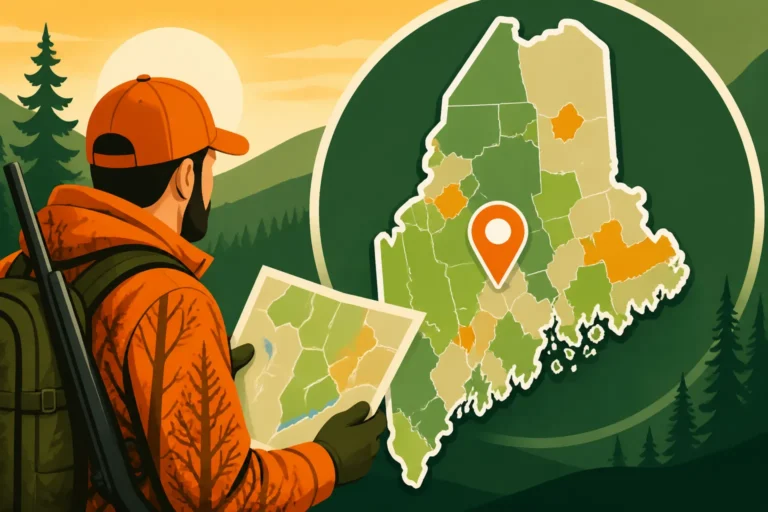
The first step in hunting timber cuts is finding them, and modern technology makes this significantly easier. Tools like the onX Hunt app are invaluable. You can often see recent logging activity by looking at the latest satellite imagery. Areas that were previously dark green forest will appear lighter or even completely bare, indicating a fresh cut. You can also use topographical maps to identify potential cuts on ridges, saddles, or near water sources, and then cross-reference with aerial photos.
Many states, including Maine, also have public data available on timber harvests, though it might not be as real-time as satellite imagery. Dedicated platforms like GoHunt sometimes integrate this type of data, giving hunters an edge in identifying active or recently completed timber operations. Layers showing public vs. private land are also crucial, as timber operations are often more common on large industrial timberlands. Reading Aerial Photos for North Woods Deer is a critical skill here, allowing you to identify not just the cut, but potential travel corridors and untouched pockets within it.
When using these tools, pay attention to the scale and age of the cuts. A small, older selective cut will be very different from a massive, fresh clear-cut. Use these maps to identify the edges where the cut meets mature timber, narrow funnels, and any un-cut fingers or islands of cover left within the larger cut. These are your starting points for ground scouting.
Boots on the Ground: Reading the Sign
Once you've identified potential areas on your map, it's time to hit the woods. Ground scouting a timber cut is absolutely essential. Deer sign in these areas can be prolific, but you need to know what to look for. Fresh tracks are a given, especially along old skidder trails or new deer paths forming through the regeneration. Look for concentrated browsing on young saplings – torn leaves, chewed tips, and stripped bark are all indicators that deer are feeding heavily in the area.
Rub lines on saplings and small trees, particularly in the fall, will tell you that bucks are moving through. These rubs might be smaller than those you find in mature timber, due to the smaller diameter of the trees, but they are still clear indicators of buck activity. Scrapes, often found along the edges of the cut or where deer transition into thicker cover, are also key. Don't be afraid to get into the densest parts of the regrowth; you'll often find bedding areas where deer have pushed down vegetation for a daytime nap. These beds will be sheltered from the wind and often oriented to catch the sun on cooler days. Finding Sign in Big North Woods Timber is a skill that becomes even more important in the messy, exciting landscape of a recent cut.
Look for patterns. Are the deer mostly feeding in one corner of the cut? Are they traveling along a particular ridge or old logging road to access it? The more time you spend on the ground, the more these patterns will reveal themselves.
Strategic Hunting Approaches in Cut Areas
Hunting timber cuts requires different tactics than still-hunting mature hardwoods. Your primary challenge will be visibility and shot opportunities due to the dense regrowth. Still-hunting slowly and deliberately is often the most effective method. Move into the wind, taking one slow step at a time, pausing often to scan for movement or listen for the subtle sounds of deer browsing. The dense cover means deer are often closer than you think, so slow movements are paramount.
Consider setting up on travel corridors that lead into or out of the cut, particularly those along the edges or where a finger of uncut timber extends into the cut. Ground blinds can be extremely effective here, as treestand placement can be challenging with a lack of mature trees. If you do find a suitable tree for a stand, place it overlooking a natural opening, a heavily browsed area, or a trail used to access the new growth. Remember, wind direction is always critical, but in a cut area with varying elevations and dense cover, thermals can be tricky. Wind and Thermals in Maine Hill Country will play a significant role in how deer move and how you should approach your stand.
When planning your approach, think about how you'll get in and out undetected. Old logging roads, even if overgrown, can provide quieter access. Always have a clear shot lane to the most likely feeding or travel areas, and be prepared for close-range shots. The deer are in there, but you have to be patient and adapt to their new playground.
Long-Term Habitat Evolution and Deer Adaptation
Timber cuts aren't static; they evolve over time, and so does their appeal to deer. Understanding this progression can help you predict where deer will be in a cut area, years after the chainsaws have gone silent.
Maturing Regrowth and Shifting Preferences
Initially, a timber cut is a smorgasbord of tender, nutritious browse. Deer flock to it for the abundance of food. However, as the regrowth matures, typically after 5-15 years, the plants grow taller, and the lower branches become less accessible or die off due to shading. The dense, head-high cover that was perfect for bedding eventually becomes pole timber, which is still good cover but less optimal for feeding at ground level.
At this stage, deer might shift their primary feeding areas to newer, more recent cuts or other areas with more accessible forage. However, these older regenerating cuts still serve a vital purpose: dense security cover. The thick, often thorny understory, combined with the taller but still relatively young trees, provides an excellent sanctuary from predators and hunters. Bucks, especially, might use these areas as daytime bedding sites, slipping out to adjacent food sources at dawn and dusk. The balance between food and cover shifts from being largely food-driven to being more cover-driven as the cut matures.
The Cycle of Forest Management and Deer
It's important to view timber harvesting as a continuous cycle, not a one-off event. Maine's working forests are constantly being managed, and new cuts are happening all the time. This means that deer populations often thrive where there's a mosaic of different forest ages – mature timber for mast crops and some security, young regenerating cuts for prime browse and bedding, and mid-aged stands for travel corridors and transitional cover.
When one area grows too old to provide optimal browse, another area is being cut, replenishing the food supply somewhere else. This creates a dynamic landscape that, while sometimes frustrating for hunters trying to pattern deer in a single spot, ultimately benefits the overall deer herd by ensuring a continuous supply of vital habitat components. Staying updated with mapping tools like onX Hunt can help you track these new cuts year after year, keeping you on top of where the best deer habitat is being created.
Understanding this cycle means realizing that a cut area you hunted five years ago might not be as productive today, but a new cut just a mile away might be the next hotspot. It’s about adapting your scouting and hunting efforts to the ever-changing face of Maine’s working forests.
Here's a quick overview of how different cuts impact deer:
| Type of Timber Cut | Initial Impact | Short-Term Benefit (1-5 years) | Long-Term Use (5+ years) |
|---|---|---|---|
| Clear-cut | High disturbance | Excellent browse and dense cover | Security cover, travel routes |
| Selective Cut | Moderate disturbance | Increased understory browse, good cover | Continuous browse, good cover |
| Thinning | Low disturbance | Slight increase in browse, minimal impact | Enhanced tree growth, slight browse |
This article is for general informational purposes only and does not constitute professional advice. Laws, prices and regulations vary by location and change over time. Consult a qualified professional for guidance on your specific situation.