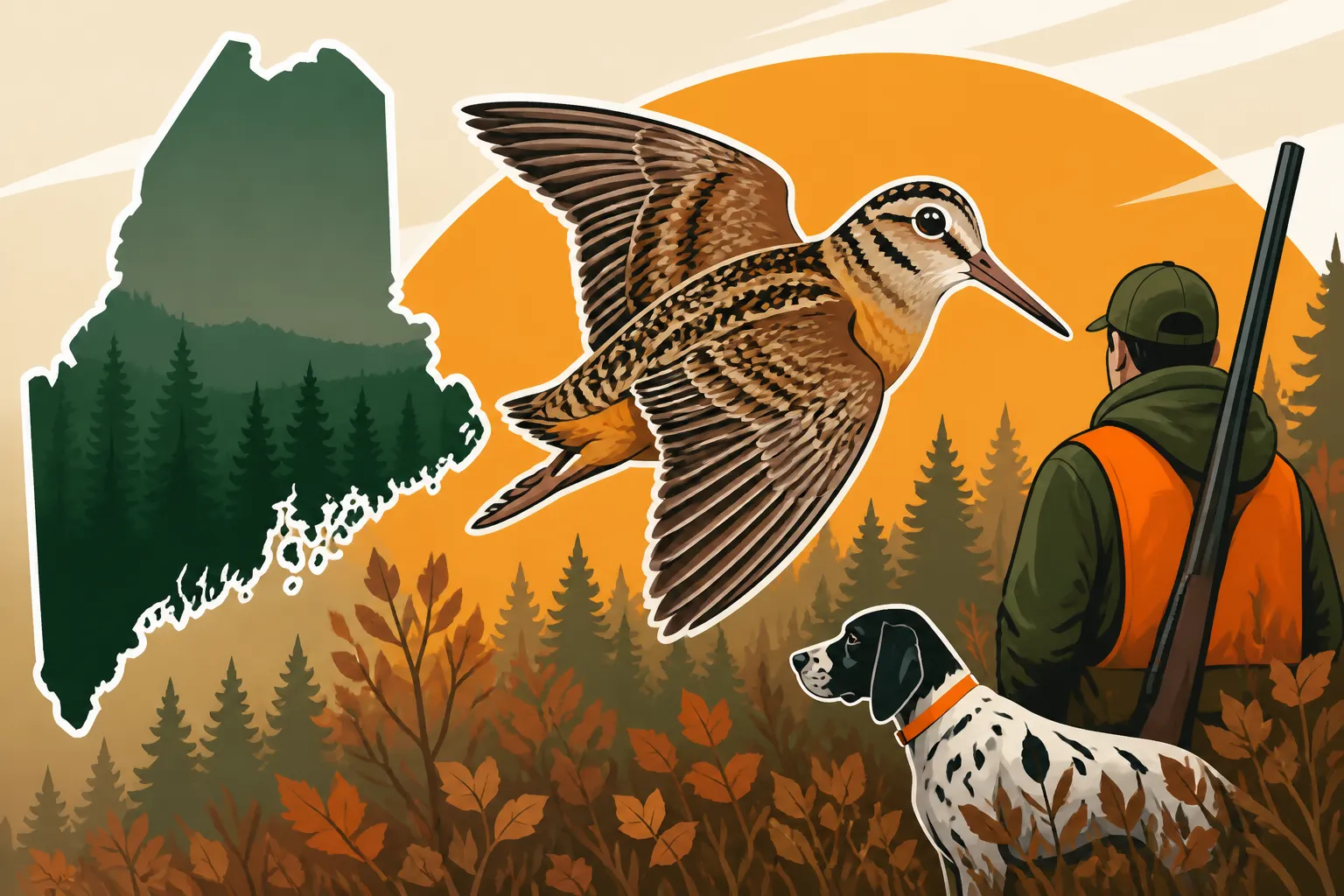
Best Maine Ground for Public Land Woodcock
Finding prime woodcock cover on public land in Maine can feel like searching for a needle in a vast, green haystack. Many hunters, especially those without extensive private land access, often feel intimidated by the sheer scale of public forests and the seemingly endless miles of timber. But let me tell you, with a bit of know-how and the right approach, you absolutely can unlock some fantastic timberdoodle opportunities without setting foot on private property. This guide is all about demystifying public land woodcock hunting in our beautiful state, helping you pinpoint those hidden gems where the birds are most likely to be holding.
Understanding Woodcock Habitat on Public Land
Woodcock aren't just anywhere; they're incredibly specific about where they choose to live, feed, and rest. This makes them a challenging but immensely rewarding bird to pursue. When you're looking at public land, you need to learn to "read" the landscape for these unique preferences. Maine has an abundance of suitable cover, but knowing what to focus on will drastically improve your success.
The Ideal Woodcock Home
Think young, vibrant, and a little bit damp. Woodcock absolutely adore moist, rich soil where they can probe for earthworms, which make up the bulk of their diet. This is why you'll often find them in areas with softer ground, particularly along the edges of streams, beaver flowages, and even swampy lowlands that aren't completely flooded. But it's not just about the mud; they also need dense, young cover for protection. We're talking about thick stands of alders, aspen, grey birch, and regenerating clear-cuts that are maybe 5 to 15 years old. This provides them with overhead concealment from predators like hawks and owls, while still being open enough at ground level for them to move around and forage.
Imagine walking through a public parcel and coming across a tangled mess of waist-high alders, intertwined with saplings, all situated next to a winding stream. The ground is soft underfoot, perhaps a little mucky, and sunlight barely filters through the canopy. That's the picture of ideal woodcock habitat. The thicker the better, usually, because it offers those crucial escape routes and thermal cover during cooler temperatures. These birds are looking for a place where they can feel safe, feed easily, and melt away into the brush when disturbed.
Identifying Public Land "Honey Holes"
Once you understand the basic habitat, the next step is to look for those "honey holes" – the spots that seem to concentrate birds year after year. On public land, these often boil down to specific microhabitats within larger forested tracts. Look for natural transitions in the landscape. A classic example would be where an older, mature hardwood stand gradually gives way to a low-lying, wet alder bottom. The edge between these two distinct cover types is a natural travel corridor and feeding ground for woodcock. Old logging roads, especially those that are no longer actively maintained and have started to grow in, can also be fantastic linear honey holes, often bordered by exactly the kind of thick, young growth woodcock prefer.
Another excellent indicator on public ground is the presence of past timber harvests. While clear-cuts initially look barren, within a few years, they erupt with the kind of dense, regenerating growth that woodcock thrive in. These areas might be harder to walk through, but they offer unparalleled cover. Focus on cuts that have good drainage but also some low, wet pockets. Even small, isolated pockets of appropriate cover, sometimes no larger than a backyard, can hold several birds, especially during migration. Don't overlook these smaller, less obvious spots, as they are often passed over by hunters seeking more expansive terrain.
Key Public Land Types for Woodcock
Maine boasts a fantastic array of public lands, each with its own characteristics and potential for woodcock hunting. Understanding the nuances of these different land types is crucial for planning a successful hunt. From state-managed areas to vast timber company holdings, there's likely good woodcock cover closer than you think.
Wildlife Management Areas (WMAs) and Public Reserved Lands
Maine's Wildlife Management Areas (WMAs) are specifically managed to enhance wildlife habitat and public recreation, making them excellent candidates for woodcock. Many WMAs contain a mosaic of forest types, including those critical early successional habitats that woodcock need. You'll often find beaver flowages, alder swamps, and regenerating timber stands within WMA boundaries. The beauty of WMAs is that they are actively managed, sometimes with specific goals for species like woodcock and grouse, meaning habitat improvements are ongoing. Before you head out, it's always a good idea to check the specific WMA's management plan or recent activity. Some WMAs might even have designated areas or trails that indirectly benefit woodcock.
Similarly, Maine's Public Reserved Lands are state-owned parcels managed for multiple uses, including timber production, recreation, and wildlife habitat. These lands are often larger and more remote than WMAs, offering a more wilderness-like experience. Because timber harvesting is a component of their management, you'll frequently find a patchwork of different age classes of forest, including those critical young growth areas that woodcock seek out. Unlike private land that can be leased or posted, these areas are generally open to public hunting, making them a fantastic resource. Remember to consult maps and use apps like onX Hunt to understand the specific boundaries and any unique regulations for these areas. You can often find great bird hunting on these lands, whether you're targeting woodcock or Ruffed Grouse in Maine.
Industrial Timber Company Lands
A significant portion of Maine, particularly in the northern and western parts of the state, is owned by large industrial timber companies. These lands are primarily managed for forestry but are often open to public recreation, including hunting, thanks to Maine's strong tradition of private land access. While some of these lands operate under the North Maine Woods gate system, which requires a fee, many other company lands are accessible for free. The constant cycle of logging on these properties creates an ever-changing landscape of clear-cuts, young plantations, and regenerating forests—all of which can be a boon for woodcock.
The trick to hunting these lands is understanding their logging rotations. Recent clear-cuts (2-5 years old) might be too dense or not yet productive, but areas cut 5-15 years ago can be absolutely phenomenal. These young stands, often dominated by aspen, birch, and alder, offer the perfect blend of cover and feeding grounds. You'll want to focus on areas that are accessible via old logging roads, particularly those with damp ground. Tools like GoHunt or onX Hunt, with their detailed satellite imagery and landowner overlays, are invaluable for scouting these vast tracts and identifying recent logging activity and potential habitat. While hunting these lands, always be respectful of active logging operations and equipment, and be sure to understand any specific company rules or closures. Many companies maintain websites with public access information, which can be a valuable starting point.
Here's a quick comparison of some public land options for woodcock hunting:
| Land Type | Typical Size | Habitat Management | Access Type | Potential for Woodcock | Notes |
|---|---|---|---|---|---|
| Wildlife Management Areas | Medium to Large | Active for wildlife | Generally Free | High | Often managed for early successional habitat; check specific WMA rules. |
| Public Reserved Lands | Large to Very Large | Multi-use, includes timber | Generally Free | High | Good mix of forest ages due to timber harvests; remote sections available. |
| Industrial Timber Lands | Very Large | Timber production | Free or Fee (NMW gates) | High | Logging creates prime young growth; use mapping apps to scout cuts. Respect active operations. |
| State Parks/Forests | Variable | Recreation focused | Variable, check rules | Moderate to Low | Some allow hunting; habitat can vary widely; often higher human traffic. |
Scouting and Accessing Prime Woodcock Cover
The most successful woodcock hunters on public land are often the ones who put in the legwork, both digitally and on the ground, before the season even starts. You can't just drive down a dirt road, jump out, and expect to find birds without some prior investigation.
Pre-Season Digital Scouting Tools
In today's world, digital tools are an absolute game-changer for public land hunting. Applications like onX Hunt or GoHunt provide satellite imagery that is incredibly detailed, allowing you to scout vast areas from your couch. Look for visual cues of ideal woodcock habitat: light green patches indicating young, regenerating forest, especially adjacent to darker green, mature timber. Follow lines of alders along water bodies or notice changes in vegetation texture that could signify different growth stages. These apps also clearly delineate property boundaries, which is essential for ensuring you're on public land and avoiding trespassing. You can use layers to highlight public land, track your movements, and mark potential hotspots for later investigation.
Beyond satellite imagery, many state agencies provide online mapping resources for WMAs and Public Reserved Lands. These maps can sometimes show habitat types, recent timber harvests, or even designated trails, giving you a valuable head start. Combine this with historical Maine Woodcock Singing Ground Surveys data if available, or just general knowledge of where American Woodcock in Maine tend to congregate during migration. By overlaying all this information, you can identify promising areas, mark waypoints, and create a game plan long before you ever step foot in the woods. This digital preparation saves you countless hours of aimless wandering and helps focus your physical scouting efforts on the most high-percentage ground. Using an App for North Maine Woods Land Status can be particularly useful when exploring those vast timber company tracts.
Boots-on-the-Ground Reconnaissance
As valuable as digital scouting is, there's absolutely no substitute for getting your boots on the ground. Before the season, or even during the early season before the leaves get too thick, walk the areas you've identified digitally. Pay attention to the understory – is it thick enough for woodcock? Is the soil moist and soft enough for probing? Look for actual woodcock sign: their splash (white droppings) and probe holes (small, round holes in the soil where they've searched for worms). Even empty spots will tell you something; if it looks perfect but there's no sign, move on.
Focus on edges: where thickets meet open woods, where a beaver flowage borders an alder stand, or where an old logging road winds through regenerating forest. These are natural travel corridors for birds. Pay attention to how the land lays and how water flows, as woodcock will gravitate towards moist depressions and low-lying areas. Consider the overall access: can you reasonably walk a dog through this cover, or is it an impenetrable tangle? Understanding the terrain firsthand will not only confirm your digital scouting but also help you plan your actual hunting strategy, including entry and exit points, and how you'll work your dog, if you have one. You might find some excellent cover right alongside a dirt road that others overlook because it doesn't look "wild" enough. Don't be afraid to pull over and investigate.
Timing Your Public Land Woodcock Hunt
Timing is everything when it comes to woodcock, especially on public land. Unlike resident grouse, woodcock are migratory, and their populations swell dramatically during certain windows. Knowing when to be in the woods can mean the difference between seeing a few birds and having a banner day.
Early Season Opportunities
When Maine Woodcock Season Dates open, many hunters are still focused on other pursuits or waiting for the leaves to drop. However, the early season can offer fantastic opportunities for resident woodcock on public lands. These are the birds that hatched and summered in Maine, and they'll be found in their home coverts. The challenge during this time is the dense foliage. Leaves are still heavy on the trees and brush, making it harder to spot flushing birds and even harder for dogs to penetrate the thick cover.
Despite the difficulty, hunting early can be incredibly rewarding. Resident birds are often less pressured and predictable. Focus on those prime breeding and brooding habitats you've scouted: thick alder bottoms, regenerating clear-cuts with good moisture, and creek edges. These birds haven't felt much hunting pressure yet, so they might hold tighter for a pointing dog. If you have a dog, be mindful of the warmer temperatures and ensure they stay hydrated. For the hunter, wearing lighter clothing and being prepared for a lot of busting through thick stuff is key. It's a great time to get your dog into birds and sharpen your shooting skills before the main migration hits.
Peak Migration Windows
The real excitement for public land woodcock hunting often comes with the peak migration. As colder weather pushes down from Canada, waves of woodcock move through Maine, utilizing our state as a critical stopover on their journey south. This period, typically from late September through October, can offer incredible hunting, especially as the leaves begin to fall, improving visibility significantly. Why Maine Is a Woodcock Migration Corridor is clear; our diverse habitats provide perfect refueling stations.
During the migration, birds will utilize a wider variety of cover than just their breeding grounds. While they still prefer moist, young growth, they might be found in slightly drier areas or even small, isolated patches of suitable cover they wouldn't normally inhabit. Look for them in thicker transition zones, along overgrown fencerows, and in any dense cover offering protection and food. The key is to be flexible and cover a lot of ground. You might find an area that was devoid of birds one week suddenly holding dozens the next. Pay attention to weather fronts; a strong cold front pushing south can often trigger a fresh influx of birds. Hunting after a frost can be particularly good, as some foliage drops and birds might concentrate in the remaining cover with softer ground. This is the time when you can expect to find the highest densities of woodcock on public land, making the effort of finding those public coverts truly pay off. Consider using a dog if you have one; a good pointing dog can make all the difference in locating and retrieving these camouflaged birds in dense cover. Woodcock Hunting an Alder Run at Dusk can be especially productive during these peak migratory movements.
Disclaimer
This article is for general informational purposes only and does not constitute professional advice. Laws, prices and regulations vary by location and change over time. Consult a qualified professional for guidance on your specific situation.