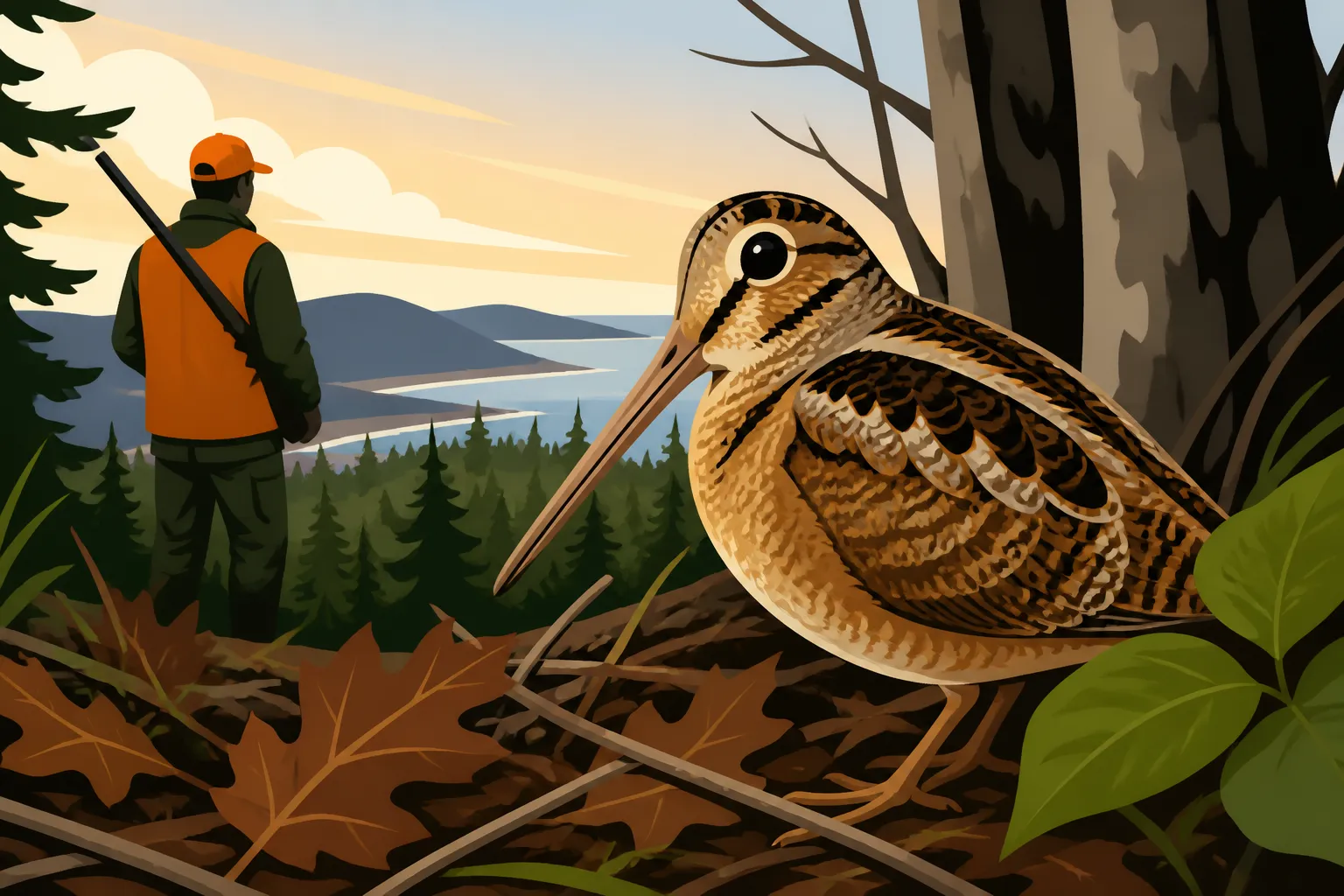
American Woodcock in Maine
For many folks who love to walk the woods with a shotgun in hand, the American Woodcock, affectionately known as the "timberdoodle," represents a unique kind of challenge and a deeply rewarding experience. They're quick, camouflaged masters of their brushy domain, and if you haven't spent time chasing them in Maine, you might feel a bit lost on where to even begin. This guide is here to shed light on these fascinating birds, from their secretive lives to the best ways to find them in our beautiful state.
Understanding the Elusive Timberdoodle: What Are American Woodcock?
The American woodcock is truly one of a kind. These migratory shorebirds, despite their classification, spend almost their entire lives in woodlands, far from any ocean. They're built for a specific purpose: probing soft earth for worms. This unique lifestyle makes them a favorite among upland bird hunters and dog enthusiasts who appreciate the challenge and the specialized habitat they call home. They're part of the rich tapestry of Upland Bird and Small Game Hunting in Maine, but they stand out with their distinct charm.
Identifying Maine's Woodcock
When you first encounter a woodcock, it's easy to mistake it for a small, chunky game bird or even a misplaced shorebird. They're characterized by their plump, cryptically patterned bodies, short legs, and an extraordinarily long bill, which is flexible at the tip. Their plumage is a beautiful mosaic of browns, blacks, and grays, providing perfect camouflage against leaf litter. A striking feature is their large, dark eyes, set high and far back on their heads, giving them nearly 360-degree vision without moving their head – a crucial adaptation for watching for predators while probing for food. You'll also notice their large, rounded head, which seems almost too big for their body. They're not particularly vocal in the fall, but their erratic, twittering flight when flushed is unforgettable.
Unique Adaptations for a Ground-Dwelling Life
Every aspect of the woodcock's anatomy and behavior is tailored to its life on the forest floor. That long, flexible bill isn't just for show; it's a highly sensitive tool for detecting earthworms deep in the soil. The prehensile tip allows them to grasp a worm and pull it out without opening their entire bill, a feat that would make many a diner envious! Their oversized eyes are perfect for seeing in low light conditions, as they are primarily crepuscular, meaning most active at dawn and dusk. Their short, rounded wings are designed for explosive, zigzagging flight through dense cover, giving hunters only a split second for a shot. And let's not forget their unique "rocking" walk, a subtle bobbing motion that some biologists believe helps them dislodge worms or mimic rainfall to draw them to the surface. It's a marvel of natural engineering, perfectly adapted to their environment.
The Woodcock's Role in Maine's Ecosystem
Woodcock play a vital role in our state's ecology. As insectivores, particularly focusing on earthworms, they help control invertebrate populations in the moist soils of our young forests and alder thickets. They also serve as an important food source for various predators, from raptors like hawks and owls to ground-based carnivores such as foxes, coyotes, and bobcats. Their presence is a strong indicator of healthy, diverse early successional habitats, which are crucial for many other wildlife species, including snowshoe hare, ruffed grouse, and numerous songbirds. When woodcock thrive, it’s often a sign that the overall ecosystem is doing well, demonstrating their position as a key link in the food web.
Where to Find Woodcock: Prime Habitat in the Pine Tree State
One of the biggest challenges for new woodcock hunters, or even seasoned veterans in a new area, is simply locating these birds. They aren't in every patch of woods. Instead, they seek out very specific conditions, often leading to frustration if you're not "reading" the landscape correctly. Maine offers an abundance of this specialized habitat, but knowing what to look for is key. This pursuit often overlaps with prime Grouse Hunting Maine Alder Runs, as both species appreciate similar dense, young cover.
The Importance of Young, Early Successional Forests
Woodcock are habitat specialists, and their preference leans heavily towards early successional forests. This isn't dense, mature timber, but rather young, regenerating woodlands typically less than 20 years old. These areas are characterized by a thick, shrubby understory that provides both cover from predators and the moist, soft soil they need for foraging. Think about areas that have been recently logged, overgrown pastures, or areas recovering from natural disturbances like windstorms. These environments offer a dense canopy overhead for concealment and soft ground underneath, a perfect combination for the timberdoodle. Without this constant regeneration, woodcock populations would struggle, making active forest management crucial for their survival in Maine.
Alders, Aspens, and Wet Coverts
When you're walking through a covert, trying to decide if it's "woodcocky" enough, look for specific plant species. Alders are perhaps the quintessential woodcock cover. These dense, shrubby trees thrive in moist, even wet, soil conditions, often along stream banks, beaver flowages, or low-lying areas. Their thick stems and canopy create a dark, secluded haven where woodcock feel safe. Aspens, particularly young stands of trembling aspen or bigtooth aspen, also provide excellent cover. These fast-growing trees often colonize disturbed sites and create the dense thickets woodcock adore. The key is often moisture. While they don't live in standing water, woodcock prefer soils that are consistently moist and soft, allowing them to easily probe for earthworms. If the ground is hard-baked and dry, your chances of finding them diminish significantly.
The Role of Old Fields and Abandoned Farmland
Maine is dotted with countless old fields and abandoned farmlands, especially in its more rural corners. These areas, left to revert to forest, become ideal woodcock habitat for a period. As the fields grow in with shrubs, small trees, and briars, they create exactly the kind of dense, tangled cover that woodcock seek. The soil in these former agricultural areas can also retain moisture well, providing excellent foraging opportunities. Many of these spots, particularly those bordering existing woodlands, act as perfect stopover points during migration or even breeding grounds during the summer. Using mapping tools like GoHunt to scout potential woodcock coverts before the season can reveal these forgotten parcels of land, often showing timber cuts or wetland areas, which are prime woodcock real estate. Before you head out, check your GoHunt app for updated land ownership boundaries and regulations, as access can change.
The Annual Migration: Maine's Place on the Atlantic Flyway
Understanding the woodcock's migratory patterns is absolutely critical for successful hunting. These aren't resident birds like our ruffed grouse; they follow a seasonal journey that brings them through Maine, often for relatively short windows of time. Maine holds a special place in this journey, acting as a crucial breeding ground and migration corridor. This connection is Why Maine Is a Woodcock Migration Corridor is a topic often discussed among seasoned hunters.
Spring Migration and Singing Grounds
As winter loses its grip and the ground begins to thaw, woodcock begin their northward migration. They arrive in Maine typically from late March through April, sometimes even into early May, depending on how quickly spring arrives. Upon arrival, the males immediately establish "singing grounds" – open areas, often brushy fields, logging landings, or even large lawns adjacent to good cover. This is where they perform their famous "sky dance," a spectacular aerial display designed to attract females. Hearing the peent calls from the ground, followed by the twittering of their wings as they spiral upwards, is one of the true delights of a Maine spring. These singing grounds are crucial for monitoring population trends and are part of American Woodcock Singing Ground Surveys conducted annually. Locating these areas in spring can give you a significant advantage in identifying prime hunting spots come fall.
Summer Breeding and Brood Rearing
Once the elaborate courtship rituals are complete, female woodcock will nest on the ground, usually in thick cover. They lay 3-4 eggs, which typically hatch in May or early June. The young woodcock grow incredibly fast, ready to fly within a few weeks of hatching. During the summer, these broods will stick to dense, moist cover, often along stream beds, alder runs, or thick regenerating clear-cuts. This period is less about movement and more about growth and fattening up for the fall migration. The density of cover provides protection for the vulnerable young birds. While hunting isn't allowed during this time, understanding where broods are raised helps inform where birds might be concentrated in early fall, before the major push south begins.
The Fall Shuffle: When Birds Arrive and Depart
The true excitement for woodcock hunters begins in the fall. Starting in late September and extending through October, Maine sees both its resident woodcock and those migrating from further north moving through the state. This period is often referred to as the "fall shuffle" or "flight birds." The timing can be tricky, heavily influenced by weather patterns and cold fronts. A sharp drop in temperature or the first hard frost can trigger a mass exodus of birds heading south. Conversely, mild weather can keep birds in Maine longer. This is the window when Maine Woodcock Season Dates are open, offering hunters their best opportunity. Keep a close eye on weather forecasts, particularly tracking cold fronts pushing down from Canada, as these often bring new waves of migratory woodcock into Maine. These "flight birds" can suddenly appear in coverts that seemed empty just days before, making a good hunt feel like a burst of magic.
Hunting American Woodcock in Maine: Tactics and Techniques
Hunting woodcock in Maine is a truly immersive experience, demanding a close connection to the land and, for many, the companionship of a good bird dog. It's not a high-volume shoot, but rather a rewarding pursuit that tests patience, shooting skills, and your ability to read the dense cover these birds inhabit. It’s part of the broader realm of Upland Bird and Small Game Hunting in Maine, but with its own distinct flavor and demands.
Understanding Woodcock Behavior During the Hunt
Woodcock are masters of camouflage and stillness. When a dog goes on point, the bird is often hunkered down, relying entirely on its cryptic plumage to blend into the leaf litter. They will hold incredibly tight, often letting a hunter walk right past them before flushing. When they do flush, it's typically an explosive, twittering burst of flight, taking a short, erratic path through the trees before dropping back into cover quickly. The key is to be ready. Move slowly and deliberately through good cover, scanning for subtle signs of a bird. When the dog locks up, prepare for the flush, anticipating the bird's likely escape route. Your window for a shot is often brief, so quick reflexes and an open choke are your best friends. It's a game of patience and anticipation.
Dog Work: The Invaluable Partner
While you certainly can hunt woodcock without a dog, a good bird dog truly elevates the experience and dramatically increases your success rate. Pointers, setters, and even flushers like Springer Spaniels are all excellent choices. A well-trained dog can systematically cover ground, locate birds that you would undoubtedly walk past, and hold them on point until you're in position. Once flushed and hopefully brought to hand, the dog's soft mouth is essential for retrieving the delicate birds from thick brush. Running Pointing Dogs on Maine Woodcock is a tradition for many, and the sight of a dog locked on point in an alder run is a classic Maine hunting scene. A dog also serves as an invaluable aid in locating downed birds in dense cover, reducing the chance of lost game. For many, the partnership with their canine companion is the heart of the woodcock hunting experience.
Gun and Load Choices for Close-Quarters Hunting
Given the dense cover and the woodcock's close-holding nature, choosing the right firearm and ammunition is crucial. Most woodcock hunting happens at very close range, often within 15 to 25 yards. Therefore, a lightweight, fast-handling shotgun is preferred, typically a 20-gauge, 28-gauge, or even a .410 for skilled shooters. Over/under or side-by-side shotguns with open chokes (like improved cylinder or skeet) are popular, allowing for quick follow-up shots in tight quarters. As for ammunition, small shot sizes are the standard. #8 or #9 shot is ideal, as it provides a dense pattern at close range for these small birds without over-penetrating and damaging the meat. You want a broad, forgiving pattern to account for the bird's erratic flight path through the timber. It's all about quick, instinctive shooting in the thick stuff. The specific challenges of these dense environments are why many also look to articles like Woodcock Hunting Maine Covert Country for more specialized advice.
Seasons, Limits, and Regulations for Maine Woodcock Hunting
Before you even think about loading your shotgun, you need to be crystal clear on the rules. Maine's woodcock regulations are set by the U.S. Fish and Wildlife Service, as they are migratory birds, but administered by the Maine Department of Inland Fisheries and Wildlife (MDIFW). Failing to understand these can lead to fines and a ruined hunt. This often includes being up-to-date on Maine Small Game Season Rules which cover a broader spectrum of species.
Maine's Woodcock Season Dates
The woodcock season in Maine typically runs from late September through mid-November, providing a generous window that covers the peak of both resident and migratory bird movements. However, it's absolutely critical to consult the current year's Maine Hunting & Trapping Laws Summary booklet or the MDIFW website, as dates can shift slightly from year to year. Generally, the season is a continuous block of time, unlike some other migratory bird seasons that might have split dates. The mid-October to early November period is often considered prime time, when "flight birds" are pushing through the state, offering the best chance at high numbers. You can always check the latest Maine Woodcock Season Dates directly from the MDIFW.
Bag and Possession Limits
To ensure sustainable harvest, there are strict bag and possession limits for woodcock. The daily bag limit is typically three birds, meaning you can harvest up to three woodcock in a single calendar day. The possession limit is usually nine birds, which is three times the daily bag limit. This means if you hunt for three consecutive days and harvest three birds each day, you can legally possess up to nine birds. These limits apply statewide and are in place to help manage the population across the Atlantic Flyway. It’s important to remember that these limits are firm, and exceeding them, even accidentally, is a violation of federal and state law.
Federal Harvest Information Program (HIP) Requirements
Because woodcock are migratory birds, hunters are required to comply with the Federal Harvest Information Program (HIP). This isn't a separate permit you buy; rather, it's a certification you complete when you purchase your hunting license. It typically involves answering a few questions about your migratory bird hunting activity from the previous season. The data collected through HIP is crucial for the U.S. Fish and Wildlife Service to estimate harvest numbers and make informed decisions about migratory bird seasons and limits across the country. If you plan to hunt woodcock, or any other migratory bird in Maine (like ducks or geese), you must complete this certification. Without it, your migratory bird hunting is illegal. This is an essential component of Maine Migratory Bird Certification. Don't overlook it!
Conservation and Management: Protecting Maine's Woodcock
The health of our woodcock populations isn't just up to nature; it's also influenced heavily by human actions, particularly in terms of land management and conservation efforts. These efforts are vital to ensure that future generations can enjoy the thrill of chasing timberdoodles across Maine's diverse landscapes.
Habitat Management Challenges and Solutions
The biggest challenge facing woodcock populations is habitat loss and degradation. As forests mature, they lose the dense, young cover that woodcock require. Additionally, development and changing land use patterns reduce the overall availability of suitable habitat. The solution lies in active, strategic forest management. This includes practices like clear-cutting in small patches, which, while sometimes controversial, creates the critical early successional habitat that woodcock and many other species depend on. Prescribed burning, when done safely and appropriately, can also regenerate forest understories. Encouraging landowners and timber companies to manage their lands with wildlife in mind is key. Organizations like the Ruffed Grouse Society and American Woodcock Society actively promote these habitat management practices, working with landowners and state agencies to create and maintain woodcock coverts.
Singing Ground Surveys and Population Monitoring
To effectively manage woodcock populations, biologists need reliable data. This is where American Woodcock Singing Ground Surveys come into play. These surveys are conducted each spring across their breeding range, including extensive routes throughout Maine. Trained observers drive specific routes at dawn, stopping at designated points to listen for the distinctive "peent" calls of male woodcock performing their sky dance. The number of peents heard at each stop provides an index of the breeding population. This long-term dataset helps biologists track population trends, identify areas of decline or stability, and make informed decisions about hunting seasons and bag limits. When these surveys indicate a downward trend, it flags a need for more intensive habitat work or, in some cases, stricter hunting regulations to ensure the species' long-term health. The Maine Woodcock Harvest Numbers are also collected and analyzed to understand the impact of hunting.
The Impact of Climate Change and Land Use
Climate change presents another complex challenge for woodcock. Shifting weather patterns, altered precipitation, and earlier thaws can impact breeding success and migration timing. For instance, earlier thaws might expose newly hatched chicks to late-season freezes, or affect the availability of earthworms if soils dry out too quickly. Furthermore, continued human development and fragmentation of habitat due to roads, housing, and infrastructure projects relentlessly chip away at the continuous tracts of young forest woodcock need. These changes in land use not only reduce available habitat but can also create barriers to migration and increase predation pressure. Addressing these broader environmental and land-use issues is critical for the long-term survival of woodcock, requiring a holistic approach to conservation that goes beyond just localized habitat projects.
Beyond the Hunt: Woodcock Biology and Fascinating Facts
The American woodcock is more than just a game bird; it's a creature of intricate biology and captivating behaviors. Understanding these aspects can deepen your appreciation for every flush and every dog point, giving you a richer connection to the wild places they call home.
The Incredible "Sky Dance"
Perhaps the most iconic aspect of woodcock biology is the male's elaborate "sky dance," a spring ritual designed to attract a mate. As the sun sets or rises, the male begins with a series of nasal "peent" calls from a spot on the ground, often a field edge or logging landing. Suddenly, he takes flight, spiraling upward on rapidly beating wings, creating a distinct, musical twittering sound caused by air rushing through specialized outer primary feathers. He ascends hundreds of feet into the air, reaching a peak, then descends in a series of sweeping zigzags, often punctuating the descent with soft, gurgling chirps. He lands precisely back on the same spot, ready to repeat the performance. This aerial ballet is a truly enchanting spectacle and one of nature's most impressive courtship displays, a must-see for anyone interested in Maine's wildlife.
Diet and Foraging Habits
The woodcock's diet is overwhelmingly dominated by earthworms. Their specialized bill and sensitive tip are perfectly engineered for probing soft, moist soil. They are so dependent on earthworms that the presence of these invertebrates directly influences woodcock distribution and abundance. While earthworms are the primary food source, woodcock will also consume other invertebrates, such as insect larvae, slugs, snails, and even some plant seeds, especially if earthworms are scarce. Their foraging is mostly done during crepuscular hours or at night, allowing them to take advantage of the cooler, moister soil conditions when worms are closer to the surface. Their continuous pursuit of food means they are constantly on the move, diligently working the ground with their unique "rocking" gait to maximize their chances of a meal.
Predator-Prey Dynamics in Maine
Like all wildlife, woodcock exist within a complex web of predator-prey dynamics. Their primary defense against predators is their incredible camouflage and their tendency to freeze motionless when threatened. This strategy works well against visual predators like hawks and owls during the day. However, they are also vulnerable to ground predators such as foxes, coyotes, bobcats, and various avian raptors. Nesting females and young chicks are particularly susceptible to predation. The dense cover they prefer is vital for hiding from these threats. The balance between predator populations and woodcock numbers is a delicate one, often influenced by habitat availability and other environmental factors. Healthy, diverse habitats provide enough hiding places and food sources to support a resilient woodcock population, even with natural predation pressures.
| Feature | Description | Significance for Hunters |
|---|---|---|
| Long, Flexible Bill | Up to 3 inches long, sensitive tip, used for probing soft soil. | Indicates preferred soft, moist ground. |
| Large, High-Set Eyes | Provides nearly 360-degree vision. Primarily active at dawn/dusk. | Allows them to see predators while foraging; hunt at prime times. |
| Cryptic Camouflage | Mottled brown, black, and gray plumage blends seamlessly with leaf litter. | Makes them incredibly hard to spot; rely on dogs. |
| Explosive, Erratic Flight | Rapid, twittering flush, zigzagging through dense cover. | Requires quick reflexes, open chokes, and fast-handling shotguns. |
| Habitat Preference | Young, early successional forests, alder thickets, wet coverts, old fields. | Focus scouting efforts on these specific cover types. |
| Diet (90% Earthworms) | Highly dependent on earthworms found in moist, soft soil. | Look for signs of damp soil, even during dry spells, in target coverts. |
| Crepuscular/Nocturnal | Most active at dawn, dusk, and night. | Hunting during these times (within legal hours) can coincide with higher activity. |
| Migratory Status | Follows Atlantic Flyway, breeding in Maine, migrating south for winter. | Understand flight timings; distinguish resident birds from incoming migrants. |
Disclaimer
Hunting is an activity with inherent risks. Always prioritize safety, understand and follow all Maine hunting laws and regulations, and respect private land. The information provided in this guide is for informational purposes only and should not be considered legal advice. Always refer to the most current Maine Department of Inland Fisheries and Wildlife regulations and federal guidelines before engaging in any hunting activities. Maine Hunter Education Requirements are critical for all new hunters, and even experienced hunters should refresh their knowledge regularly.