Hunting a Tidal Flat at Dawn
There's nothing quite like the raw, invigorating chill of a Maine coastal morning, especially when you're setting out before the sun even hints at the horizon, intent on Hunting a Tidal Flat at Dawn. For many hunters, this sounds like a daunting, even crazy, endeavor. And it’s true, navigating the unpredictable nature of the ocean's edge, dealing with rapidly changing tides, and battling the elements can test even the most seasoned outdoors person. But for those who embrace the challenge, hunting these unique environments at first light offers some of the most memorable and rewarding experiences Maine has to offer. This guide will help you understand the magic, the challenges, and the essential preparations for hunting Maine's tidal flats as day breaks.
Understanding the Tidal Flat Ecosystem
Maine's coastline is a tapestry of rugged ledges, sandy beaches, and vast, nutrient-rich tidal flats. These flats, exposed during low tide and submerged during high tide, are incredibly dynamic and surprisingly rich habitats that attract a variety of wildlife, making them prime hunting grounds if you know what to look for and when to go.
The Dynamics of Maine's Coastal Tides
Tidal flats are exactly what they sound like: relatively flat, often muddy or sandy areas that are alternately covered and uncovered by the ocean's rhythm. In Maine, these tides can be dramatic, with differences of 10-15 feet or more between high and low tide in many areas. This constant ebb and flow creates a unique environment. When the tide is out, the flats expose a smorgasbord of marine invertebrates, small fish, and various seaweeds, all of which are critical food sources for a host of wildlife. As the tide slowly creeps back in, it covers these feeding grounds, often pushing baitfish and other small creatures closer to the surface and into shallower water, making them accessible to diving and dabbling ducks, as well as providing cover and travel corridors for other game.
Understanding the local tide charts isn't just helpful; it's absolutely essential for safety and success. Misjudging the tide can leave you stranded, or worse, put you and your gear in danger from rapidly incoming water or strong currents. You need to know when the low tide will expose the most ground for setting decoys, and when the high tide will bring the birds close enough to be in range. The time around dawn, particularly when coinciding with a rising or falling tide that concentrates birds or exposes new feeding areas, can be magical.
Game Species Attracted to Tidal Flats
While many people associate tidal flats with clamming or birdwatching, they are fantastic hunting grounds, primarily for various waterfowl. The rich food sources and relatively sheltered waters make them magnets for ducks and geese.
- Sea Ducks: This is where the Maine coast truly shines for hunters. Eiders, scoters, and long-tailed ducks (formerly oldsquaws) are prominent visitors to these areas. They dive for mussels, clams, and other shellfish exposed or made accessible by the tides. Hunting Sea Ducks Along the Maine Coast is a classic Maine pursuit, and tidal flats often serve as staging areas or feeding grounds for these hardy birds. You might find them rafted up just beyond the low tide line, waiting for the water to deepen enough to dive, or flying low over the water as they commute between feeding spots.
- Dabbling Ducks: While less common than sea ducks in the truly open coastal areas, species like black ducks and mallards will frequent the marshier edges of tidal flats, especially where freshwater outflows mix with saltwater. They're looking for aquatic vegetation and invertebrates in the shallower, muddier fringes.
- Geese: Canada geese and sometimes even Brant will also utilize tidal flats, especially those with eelgrass beds or access to nearby agricultural fields. They often graze on exposed marine vegetation.
- Deer: This might surprise some, but whitetail deer are known to frequent the edges of tidal flats, particularly in areas with dense coastal cover. They might come to browse on certain types of marsh grass, find shelter, or even use the exposed flat as a travel corridor during specific tide cycles. While not a primary target on the flat itself, understanding their use of these edges can be valuable for combination hunts or scouting. Hunting Downeast Coastal Cover often involves understanding this coastal deer movement.
Essential Gear and Thorough Preparation
Hunting a tidal flat at dawn is not a spontaneous affair. It demands meticulous planning and the right gear to ensure both success and, more importantly, safety. The coastal environment can be unforgiving, with cold water, sharp shells, and often unpredictable weather.
Navigating the Elements: Waders, Decoys, and Blinds
Your gear list for a tidal flat hunt will look a little different than an inland deer hunt. Protection from the cold, wet environment is paramount.
- Waders: Invest in high-quality, insulated chest waders. Neoprene is often preferred for its warmth, but breathable models with good layering are also effective. You'll be spending a lot of time in knee-deep or deeper water, often on uneven, slippery, or shell-covered bottom. Studded boots or cleats can offer critical traction.
- Decoys: For sea ducks, you'll need sturdy, stable decoys that can ride the waves and currents without flipping. Eider, scoter, and long-tailed duck decoys are specific, and using a realistic spread is key. For dabblers or geese, standard waterfowl decoys will work, but ensure they are weighted or keeled for stability in moving water. Decoy anchors need to be robust; currents on a tidal flat can be surprisingly strong.
- Blinds and Cover: Natural cover on tidal flats can be sparse to non-existent. A portable boat blind, an A-frame ground blind brushed in with local marsh grass, or even just sitting strategically against a rock outcropping or a small clump of pines at the edge of the flat can provide the necessary concealment. Think about what kind of cover you'll have at both low and high tide, as your position might change. Remember that good camouflage is crucial against the open sky and reflective water at dawn.
The Art of Scouting and Timing the Tides
You absolutely cannot just show up and expect to succeed on a tidal flat. Scouting is everything.
- Pre-Season Reconnaissance: Before the season even opens, spend time observing the flats. What routes do the birds use? Where do they feed? Where do they raft up? Pay attention to how the tide influences their movements.
- Tools for Success: Modern mapping tools like onX Hunt are invaluable here. You can identify property boundaries (crucial for ensuring you're on public land or have permission), map out potential access points, and study the contours of the flat. The satellite imagery can often reveal deeper channels, sandbars, and areas of dense shellfish beds that might attract birds. Use onX Hunt to mark safe travel routes to your desired setup location, noting obstacles or soft mud. While GoHunt is primarily for Western big game, it highlights the importance of detailed pre-hunt research, a principle that applies to all hunting, including coastal fowl. For tides, however, you'll want dedicated tide charts, easily found online or through local marine weather apps.
- Understanding Tide Charts: This is critical. You need to know the exact times of high and low tide. Plan your arrival so you have ample time to set up before legal shooting light, often meaning arriving in the dark. A low tide at dawn might expose vast feeding areas, while a rising tide might push birds closer to shore. Conversely, a high tide might force you to hunt from a boat or from higher ground, looking for birds flying over the water. Cross-reference tide charts with sunrise and sunset times, and consider factors like moon phase, which influences tide severity.
- Wind and Weather: Coastal weather is notoriously fickle. Wind direction and speed significantly impact bird movement and decoy spread effectiveness. A strong onshore wind might push birds toward the flat, while an offshore wind might keep them out. Fog, common on fall mornings, can be both a blessing (for concealment) and a curse (for visibility and safety). Always check the marine forecast before heading out.
| Factor | Impact on Tidal Flat Hunting at Dawn | Planning Consideration |
|---|---|---|
| Tide Phase | Dictates water depth, exposed feeding areas, bird congregation. | Check local tide charts daily; plan setup for specific tide conditions (e.g., rising, falling, low). |
| Wind Direction | Affects bird flight patterns, decoy movement, boat handling. | Position decoys/blind to take advantage of wind, consider current/wave action. |
| Wind Speed | Influences bird comfort, decoy realism, safety. | Strong winds = challenging shooting, potential safety hazards. |
| Air Temperature | Affects hunter comfort, gear choices, water safety. | Layer up, choose insulated waders; beware of hypothermia risk. |
| Water Temperature | Critical for safety; cold water shock risk. | Always wear PFD; assume self-rescue is difficult if submerged. |
| Sunrise Time | Defines legal shooting hours. | Be set up and ready well before legal light. |
| Fog/Visibility | Can provide concealment or create dangerous navigation issues. | Use navigation aids (GPS on onX Hunt), exercise extreme caution. |
| Moon Phase | Affects strength of tides; can provide ambient light for setup. | Stronger tides require more attention to currents/water levels. |
Strategies for a Successful Dawn Hunt
Executing a tidal flat hunt successfully requires precision, patience, and a deep respect for the environment. It's not just about showing up; it's about being prepared for anything the Maine coast throws at you.
Stealthy Approaches and Strategic Setup
The early bird gets the worm, and the early hunter gets the birds. This adage is particularly true on tidal flats.
- Arrive Early, Move Quietly: You need to be in position, decoys set, and blind ready well before legal shooting light. This often means navigating in the pitch black. Use a reliable headlamp with a red light option to preserve your night vision. Hunting a Tidal Flat at Dawn relies on the element of surprise. Any noise, splashing, or visible light can spook wary birds long before they're in range.
- Boat or Foot Access: Depending on the flat's size and accessibility, you might approach by boat or on foot. If by boat, a shallow-draft craft is often necessary, and familiarity with your vessel and the local navigation challenges (rocks, mudflats, hidden ledges) is paramount. If on foot, move slowly and deliberately, especially over uneven or slippery terrain. Use your onX Hunt app to pre-mark any potential hazards or obstacles identified during scouting.
- Setting Your Spread: Your decoy spread should mimic a natural feeding or resting flock. For sea ducks, large spreads of 2-3 dozen decoys are common, often set in loose "pods" or strings. Consider a long line of decoys stretching out from your position to catch the attention of birds flying down the coast. For dabblers, a smaller, tighter spread near the marshy edges might be more effective. Always set your decoys facing into the wind, as real birds do. Think about creating a "landing zone" in front of your blind where you want the birds to commit. Decoying Eiders Off the Maine Coast offers specific insights into effective sea duck spreads.
Decoy Placement and Calling Techniques
Once the decoys are out and you're settled in, it's about drawing the birds in close.
- Reading the Flight: Watch how birds are approaching the flat. Are they hugging a specific shoreline? Are they flying low over a certain channel? Adjust your calling and positioning if you see a consistent flight path that your initial setup isn't intercepting. Remember that birds that have been pressured before will be much warier.
- Effective Calling: For sea ducks, calling is often less about intricate melodies and more about a simple, guttural "cluck" or "cackle" that mimics the sounds of a contented flock. Volume is key – the vastness of the ocean can swallow up weak calls. For black ducks or mallards, standard quacks and feed chuckles will work, but use them sparingly. Sometimes, silence is the best call. When Hunting Long-Tailed Ducks Along the Coast, their distinctive calls are often more about recognizing their approach than actively calling them in, though a well-placed whistle can occasionally get a response.
- Patience and Persistence: Coastal hunting can be feast or famine. There might be long lulls with no birds, followed by a flurry of activity. Stay alert, stay warm, and be ready when the opportunity arises.
Safety and Ethical Hunting on the Coast
Beyond the thrill of the hunt, responsible behavior is non-negotiable.
- Cold Water Safety: This cannot be stressed enough. Maine's coastal waters are dangerously cold for much of the hunting season. Always wear a PFD (personal flotation device), even if you're an excellent swimmer. Have a dry bag with spare clothes, a first-aid kit, and a way to start a fire. Inform someone of your hunting plans and expected return time. A GPS device (like your phone with onX Hunt maps downloaded) is crucial for navigation in low light or fog.
- Retrieve Your Birds: Wounded birds can be difficult to recover in moving water. Use a retriever dog if possible, or a boat to quickly pursue and retrieve any downed game. It's not only ethical but also a legal requirement to make every reasonable effort to recover your game.
- Respect Other Water Users: Maine's coast is a busy place, even at dawn. Be mindful of commercial fishermen, clammers, recreational boaters, and other hunters. Maintain safe shooting lanes and distances from dwellings or other people. Familiarize yourself with Maine Firearms Discharge Setback Distance regulations.
- Licensing and Stamps: Ensure you have all the necessary licenses and stamps, including your Maine hunting license, migratory bird hunting license, and a federal duck stamp. Maine Migratory Bird Certification and Maine Federal Duck Stamp Requirement are non-negotiable for waterfowl.
The Unique Rewards of a Dawn Hunt on the Tidal Flats
Hunting a tidal flat at dawn is undeniably challenging. It demands commitment, preparation, and resilience. But for those who embrace it, the rewards run deeper than just a filled game strap.
The Solitude and Unforgettable Beauty
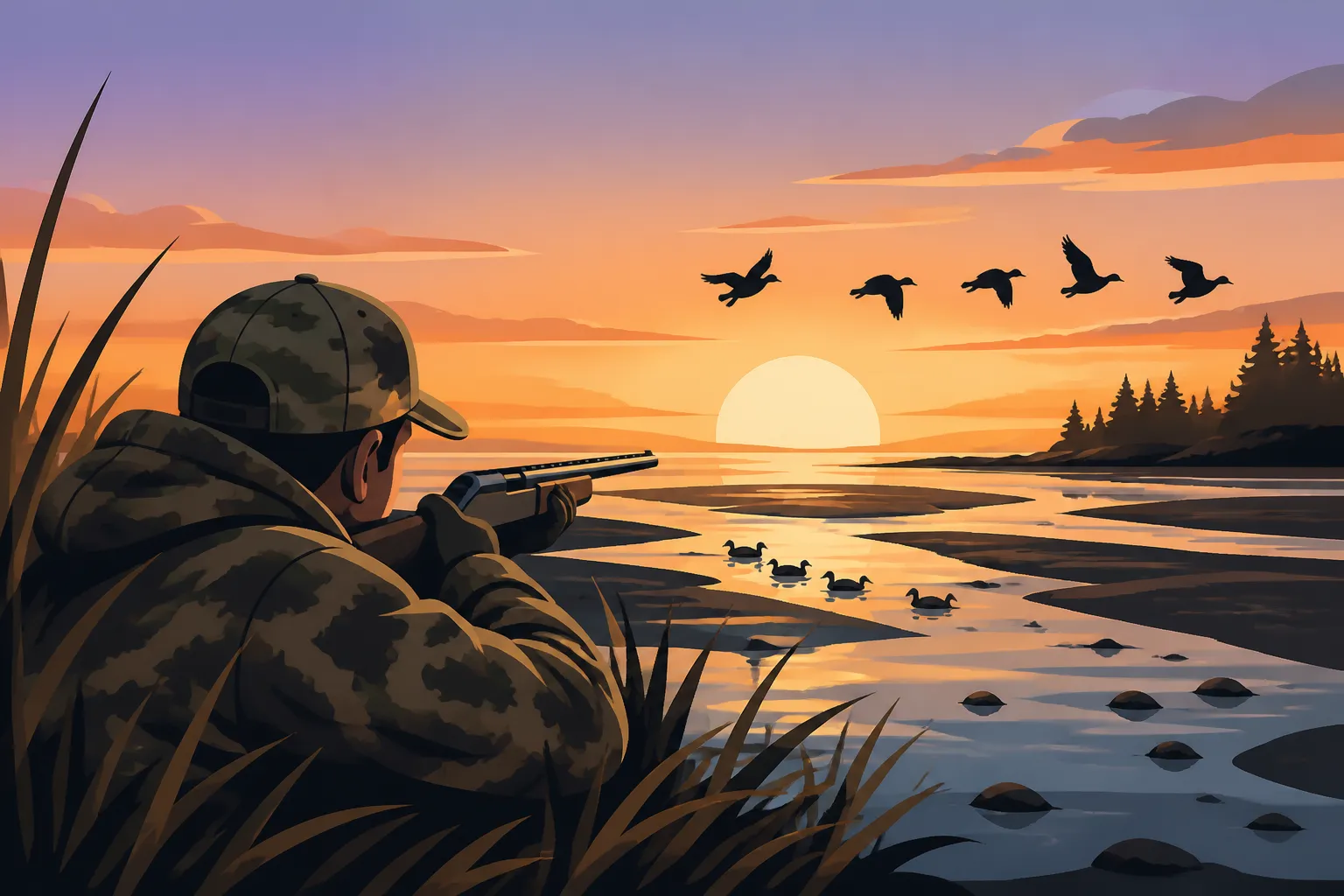
There's a profound sense of solitude when you're perched on the edge of a vast tidal flat, with the cold, salty air biting at your cheeks and the first slivers of light painting the eastern sky. Before the world fully wakes up, you witness a wild symphony: the whisper of the wind over the water, the distant cry of gulls, the silent passage of ducks against a canvas of orange and purple. Hunting the Maine coast at this hour offers an unparalleled connection to nature, a raw, untamed beauty that humbles and invigorates. You're part of something ancient, a primal dance between hunter and prey against a stunning backdrop.
Overcoming the Elements and Earning the Experience
Every successful tidal flat hunt at dawn feels earned. You've battled the cold, outsmarted the tides, and navigated the dark. You've waited patiently, enduring the discomfort, until the moment a flock of eiders wings into your spread, back-lit by the rising sun. The satisfaction of calling in birds against the backdrop of a spectacular Maine sunrise, knowing the effort and planning that went into that moment, is truly special. Whether it's the thrill of Hunting Scoters in Maine's Open Water as they dive and re-emerge, or the challenge of a wary flock of black ducks, the elements add a layer of accomplishment that makes the experience richer. It builds character, sharpens your skills, and imprints memories that last a lifetime, reminding you why you put yourself through the rigors of coastal hunting.
Disclaimer
This article is for general informational purposes only and does not constitute professional advice. Laws, prices and regulations vary by location and change over time. Consult a qualified professional for guidance on your specific situation.