Sea Ducks Along the Maine Coast
The raw, untamed beauty of Maine's coast is legendary, but for many hunters, the thought of chasing sea ducks across its icy, often tempestuous waters feels daunting, if not downright impossible. The unique challenges of salt water, strong tides, and specialized birds can be a real barrier, leaving many to stick to inland marshes. But believe me, venturing out for sea ducks along the Maine coast offers some of the most exhilarating and rewarding waterfowling experiences you'll ever find, and this comprehensive guide is here to break down everything you need to know to make it happen.
The Allure and Challenge of Maine Sea Ducks
Hunting sea ducks isn't like jump-shooting a local beaver pond for mallards. These birds are a different breed altogether, perfectly adapted to the harsh marine environment. Their resilience, flight patterns, and the sheer drama of hunting them against a backdrop of crashing waves and granite islands make for an unforgettable adventure. But with that allure comes a significant set of challenges that can intimidate newcomers and seasoned inland hunters alike.
Why Sea Ducks Are a Different Breed of Waterfowl
When you talk about sea ducks, you're not just talking about ducks that happen to live near the ocean. These are species like eiders, scoters, and long-tailed ducks (formerly oldsquaws) that spend nearly their entire lives on saltwater. They feed on mussels, crabs, and other marine invertebrates, diving deep and tolerating conditions that would send most puddle ducks packing. Their diets give their meat a distinctive, often strong, flavor that takes some getting used to, a far cry from the mild taste of a corn-fed mallard. This unique diet also means their habitat preferences are vastly different; you won't find them dabbling in a shallow freshwater marsh.
Their physiology reflects this lifestyle. They're built like miniature submarines, with dense bone structures, powerful wings, and thick plumage that insulates them from the coldest Atlantic winds and waves. Watching a flock of eiders battle a stiff nor'easter or seeing scoters dive and resurface in a choppy inlet is a masterclass in adaptation. This also makes them incredibly tough birds. They can take a lot of shot, which means you need to be dialed in with your shots and use appropriate loads to ensure clean kills and ethical hunting.
Overcoming the Coastal Environment's Obstacles
The Maine coast itself presents the biggest hurdles. We're talking about open water, strong tidal currents that can move decoys and boats with surprising force, and weather that can turn from calm to gale-force in a matter of minutes. Fog can roll in fast, obscuring visibility and making navigation treacherous. Rocks and ledges, while excellent spots for setting decoys, are also hazards for boats if you don't know the area or respect the tides.
Then there's the gear. You need a stable, seaworthy boat, not just a jon boat for the river. Decoys need to be heavy, durable, and numerous to make a realistic spread that attracts these wary birds. Your clothing must be absolutely waterproof and incredibly warm, because even a calm day on the ocean can feel brutally cold with the wind chill. Safety equipment like life jackets, marine radios, and navigation tools are non-negotiable. It's an investment, both in time and money, but the reward of a successful sea duck hunt is truly unparalleled. It’s an experience that really tests your mettle and respect for the natural world.
Essential Species: Eiders, Scoters, and Long-Tailed Ducks
Maine's coast is a prime wintering ground for several species of sea ducks, each with its own characteristics, habits, and hunting nuances. Understanding these differences is key to successful and enjoyable hunts. The primary species you'll encounter are Common Eiders, three species of Scoters (Black, Surf, and White-winged), and Long-tailed Ducks.
Common Eiders: The King of Sea Ducks
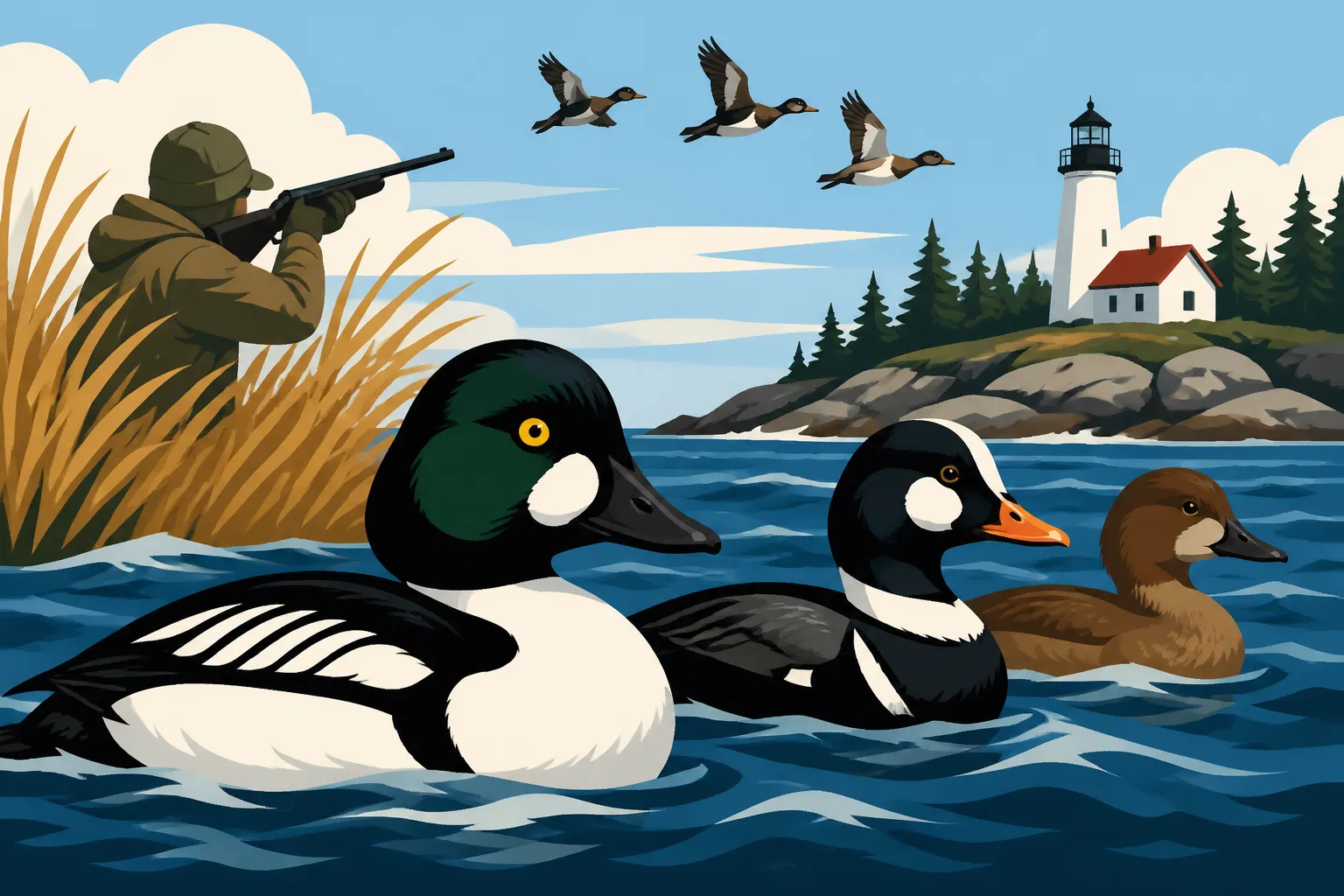
The Common Eider is, for many, the quintessential Maine sea duck. These are big, robust ducks, with the drakes sporting striking black and white plumage, often with a hint of green on the nape and a unique, sloping bill profile. Hens are mottled brown, offering excellent camouflage in rocky coastal environments. Eiders are abundant along the Maine coast, often found in large rafts far offshore or feeding on mussel beds closer to ledges and islands. They are powerful divers, capable of going to considerable depths to forage for shellfish, their primary food source.
Hunting eiders usually involves setting large spreads of decoys near known feeding areas, ledges, or points where currents create natural funnels. They often fly in tight groups, circling a spread before committing. Their flight can be surprisingly fast and direct, and when they lock up their wings and drop into a decoy spread, it's a sight to behold. A successful eider hunt often hinges on scouting good locations, understanding the tides, and deploying a realistic and sizable decoy rig. Many hunters consider a magnificent drake eider to be the ultimate sea duck trophy, especially with their beautiful feathers and impressive size. You can learn a lot about Decoying Eiders Off the Maine Coast to increase your chances.
Scoters: Fast Flyers and Deep Divers
Maine is home to all three North American scoter species: the Black Scoter, the Surf Scoter, and the White-winged Scoter. While all are primarily black (drakes), they each have distinctive markings. Black Scoters are all black with a bulbous orange knob on their bill. Surf Scoters have striking white patches on their forehead and nape, and a colorful, oversized bill. White-winged Scoters are distinguished by a white patch on their wings, visible in flight and at rest, and a smaller white patch under the eye. All scoters are sleek, fast-flying ducks that often travel in long, strung-out lines, hugging the contours of the coast or flying just above the wave tops.
Scoters, like eiders, are expert divers, feeding mainly on shellfish and crustaceans. They are often found in open water, farther offshore than eiders, but will also move into protected coves and tidal rips to feed. Hunting scoters often requires a willingness to position your boat in more exposed areas or utilize layout boats, where hunters lie prone just above the water, concealed by the boat itself. Their flight can be incredibly swift, making for challenging pass shooting, but when they commit to a decoy spread, they come in hard. For those interested in pursuing them, knowing how to approach Hunting Scoters in Maine's Open Water is essential. They offer a different challenge than eiders, demanding quick reflexes and good lead estimation.
Long-Tailed Ducks: Agile and Vocal
Long-tailed Ducks, previously known as Oldsquaws, are perhaps the most unique and vocal of Maine's sea duck contingent. Drakes are easily identified by their strikingly long, pointed tail feathers (hence the name), and their constantly shifting black and white plumage throughout the seasons. Hens are a more subdued brown and white. Their distinctive, yodeling call, often described as "ow-ow-ow-OW," carries a long way over the water and is an unmistakable sound of the winter coast.
Long-tailed Ducks are incredibly agile both in the air and underwater. They are exceptional divers, often feeding in deeper waters than eiders or scoters, sometimes over 200 feet deep, where they forage for a variety of aquatic invertebrates, small fish, and crustaceans. They are known for their erratic, almost acrobatic flight patterns, often flying low over the waves and making sudden turns and dives. This makes them a challenging target for wing shooters. Hunting them often involves positioning decoys in areas with strong currents or rips, where their food sources are concentrated. Their vocal nature can also be used to your advantage, as their calls can sometimes be mimicked to draw them in. For a deeper dive, consider techniques for Hunting Long-Tailed Ducks Along the Coast. These birds provide a dynamic and lively hunting experience, making every encounter memorable.
| Species | Primary Diet | Flight Characteristics | Typical Habitat | Distinctive Features (Drake) |
|---|---|---|---|---|
| Common Eider | Mussels, Crabs | Strong, direct, often tight flocks | Ledges, islands, mussel beds | Black & white, green nape, sloped bill |
| Black Scoter | Shellfish, invertebrates | Fast, direct, low over water | Open ocean, tidal rips | All black, orange bill knob |
| Surf Scoter | Shellfish, invertebrates | Fast, direct, low over water | Open ocean, protected coves | White forehead/nape, colorful bill |
| White-winged Scoter | Shellfish, invertebrates | Fast, direct, white wing patch | Open ocean, deeper water | White wing patch, white eye patch |
| Long-tailed Duck | Invertebrates, small fish | Erratic, agile, low to water | Deeper offshore waters, strong currents | Long tail feathers, yodeling call |
Understanding Maine's Coastal Sea Duck Habitat
Maine's coast isn't just one big, uniform body of water; it's a complex tapestry of islands, ledges, coves, and open ocean. Each feature plays a role in where sea ducks feed, rest, and travel. Understanding these different habitat types and how sea ducks utilize them is crucial for effective scouting and setting up successful hunts. The Maine coast stretches for thousands of miles if you count all the nooks and crannies, offering a diverse array of hunting opportunities.
Ledges, Islands, and Shorelines: Prime Feeding Grounds
When sea ducks aren't out in the open ocean, they're often concentrated around ledges, rocky islands, and rugged shorelines. These areas provide the perfect substrate for the shellfish and crustaceans that make up the bulk of their diet. Mussels, barnacles, and small crabs cling to the rocks, exposed or just below the surface, creating natural cafeterias for diving ducks. Eiders, in particular, are drawn to these shallow, nutrient-rich zones.
Hunting these areas means carefully navigating around submerged rocks and understanding the tidal swings. A ledge that's exposed at low tide might be completely covered at high tide, and the currents around them can be incredibly strong. You'll often find sea ducks "loafing" (resting) on sun-warmed rocks or packed tightly in calm water on the lee side of an island during rough weather. Scouting these specific features with binoculars from a safe distance before a hunt can reveal flight lines, feeding patterns, and where birds are most comfortable. Look for whitewash on rocks or tell-tale rafts of birds. Knowing the lay of the land, or rather, the lay of the water, is absolutely paramount here.
Open Water and Tidal Rips: Travel Corridors and Concentration Points
While ledges and islands are key, a significant portion of the sea duck hunting experience happens in the more exposed, open water areas, especially where strong tides create "rips" or current lines. Scoters and Long-tailed Ducks, in particular, spend a lot of time in these more expansive environments. Open water serves as both travel corridors for ducks moving between feeding and resting areas, and as feeding grounds in itself, especially for species that prefer deeper dives.
Tidal rips are formed where strong currents meet obstructions or opposing currents, creating areas of turbulent water. These rips often churn up nutrients and concentrate baitfish and invertebrates, making them attractive to diving ducks. Setting up on the edge of a strong rip, or just downcurrent from a known travel lane, can intercept birds moving through the area. This is where a stable boat and a good understanding of marine navigation and safety come into play. Waves can be significant, and rapidly changing conditions are the norm. Using tools like marine charts or apps like GoHunt can help you identify these rips and deeper water feeding zones. This kind of hunting definitely demands respect for the ocean's power.
Gear Up: Essential Equipment for Maine Sea Duck Hunters
Sea duck hunting isn't a minimalist sport. The harsh marine environment, the specialized nature of the birds, and the unique tactics involved demand a specific set of gear. From a seaworthy boat to specialized decoys and appropriate clothing, skimping on equipment can lead to a miserable, unsuccessful, or even dangerous hunt.
Boats and Motors: Navigating the Coast Safely
The single most critical piece of equipment for sea duck hunting on the Maine coast is a reliable, seaworthy boat. This isn't the time for an aluminum fishing skiff you'd use on a freshwater pond. You need a boat designed to handle choppy seas, strong currents, and potentially long runs in cold weather. Center console boats, sturdy skiffs, or even small cabin cruisers are common choices. Look for a boat with high freeboard to keep waves out, a stable hull, and plenty of power to get you to your spot and back safely, especially if conditions worsen. A boat around 18-24 feet is often ideal for navigating Maine's diverse coastal waters.
Equally important is a dependable motor, or ideally, two. A powerful main outboard is essential, but a reliable kicker motor for backup can be a literal lifesaver if your primary engine quits miles from shore. Regular maintenance on both is non-negotiable. Always carry a full tank of fuel, plus extra in approved containers. Beyond the boat itself, you'll need essential marine safety equipment: multiple life jackets (worn at all times!), a marine VHF radio for communication, a GPS unit with up-to-date charts, flares, a first-aid kit, and an anchor with plenty of rode. Knowing where the nearest Finding a Boat Launch for Sea Duck Access points are along your chosen stretch of coast is also crucial for planning your day. These are not luxuries; they are necessities when hunting the open Atlantic.
Decoys and Spreads: Attracting Wary Sea Ducks
Sea ducks are gregarious birds, meaning they often travel and congregate in large groups. To successfully attract them, you typically need large spreads of decoys. We're not talking about a dozen mallard blocks here. A typical sea duck spread might consist of 3-5 dozen or even more, with some hunters running hundreds, especially for eiders. The decoys themselves need to be durable and heavy to withstand waves and currents. Standard plastic decoys work, but many serious hunters invest in sturdy, oversized blocks or even custom-carved wooden decoys that ride the waves better and are more visible from a distance.
Species-specific decoys are important. Eiders are attracted to eider decoys, scoters to scoter decoys, and long-tailed ducks to long-tailed duck decoys. While some birds might decoy to a mixed spread, matching your decoys to your target species increases your success rate. Spreading them out in distinct "pods" that mimic small groups of feeding or resting birds, rather than one giant blob, can be very effective. Heavy lines, robust anchors for each decoy (or stringing them on gang lines), and a system for rapid deployment and retrieval are also essential. Remember, sea ducks are often harvested when they are Decoying Eiders Off the Maine Coast and other species, so a well-set spread is your primary tool.
Shotguns, Ammunition, and Clothing: Effective and Warm
For shotguns, 12-gauge is almost universally preferred due to its versatility and ability to handle heavy loads. Semi-automatics or pumps are common, but doubles can also work. What's crucial is choosing a gun that can withstand the corrosive effects of saltwater; regular cleaning and oiling are a must. As for ammunition, sea ducks are tough birds with dense feathers. Steel shot is legally required, and hunters often opt for larger shot sizes like BB, BBB, or even T shot to ensure sufficient energy for clean kills, especially when targeting larger birds like eiders. High-velocity loads in 3-inch or 3.5-inch shells are common, offering improved range and knockdown power.
Clothing is perhaps where many newcomers underestimate the challenge. Maine's coast in the fall and winter is brutally cold, often windy, and always damp. Layering is key: a good moisture-wicking base layer, insulating mid-layers (fleece or down), and a completely waterproof and windproof outer shell are essential. A high-quality insulated floating suit or bibs and jacket combo can provide both warmth and a critical safety margin. Waterproof gloves, a warm hat that covers your ears, and insulated, waterproof boots are non-negotiable. Being wet and cold on the open ocean is not only miserable but genuinely dangerous. Think quality over quantity, and invest in gear that will keep you warm, dry, and safe.
Tactics for Success: Decoying, Layouts, and Scouting
Successfully hunting sea ducks along the Maine coast demands a blend of careful planning, robust gear, and an understanding of the birds' behavior. It's often a game of patience, observation, and strategic placement. There are a few primary methods that hunters employ, each with its own advantages and challenges.
Setting Up Decoy Spreads and Boat Blinds
The most common method for sea duck hunting involves setting up a large spread of decoys and then concealing yourself in a boat blind nearby. This approach works particularly well for eiders and scoters that are feeding near ledges, islands, or along shorelines. The key is to position your boat and decoys where you can intercept birds flying along their natural travel corridors or where they are likely to come in to feed. This often means being within 20-30 yards of your decoys for optimal shooting.
Your boat blind needs to be effective against the backdrop of the rocky coast or open water. Many hunters use natural vegetation, camouflage netting, or specialized boat blinds designed to break up the boat's outline. It's vital to orient your boat to take advantage of the wind and current, allowing birds to approach the decoys naturally, typically landing into the wind. Also, consider the sun's position – you want the sun at your back, if possible, to blind incoming birds and improve your visibility. Patience is key; sea ducks often make several passes before committing, so resist the urge to move or call too early. Many hunters use the GoHunt app to mark successful decoy spreads for future reference.
Layout Boat Hunting for Open Water Ducks
For hunters targeting scoters and long-tailed ducks in more open water, or simply seeking a different kind of challenge, layout boat hunting is an incredibly effective, albeit more specialized, tactic. A layout boat is a low-profile, coffin-like vessel designed to be all but invisible on the water, allowing the hunter to lie down just above the water's surface, completely concealed. These boats are typically deployed from a larger "tender boat" that anchors a safe distance away, providing support and retrieving downed birds.
Layout hunting puts you right in the heart of the ducks' environment. The tender boat sets out a large, often enormous, spread of decoys around the layout boat, sometimes hundreds of them, to create a massive attraction. The hunter then lies in the layout boat, waiting for birds to commit. This method requires a high degree of confidence in your equipment and a steadfast crew in the tender boat, as conditions can change rapidly. It's an incredibly intimate way to hunt sea ducks, often resulting in spectacular close-range shooting as birds cup their wings and commit directly to the decoys. If you're serious about the open water, mastering Layout Boat Hunting the Maine Coast opens up new possibilities.
Scouting and Reading the Water
No amount of gear or elaborate spreads can compensate for poor location choice. Scouting is paramount for sea duck success. This means spending time observing the coast before the season or even on non-hunting days. Use binoculars to spot rafts of birds, identify their flight paths, and locate their preferred feeding and loafing areas. Look for concentrations of mussel beds, ledges that hold food, and areas where currents create rips. Online mapping tools, nautical charts, and apps like GoHunt can be invaluable for identifying potential hotspots and understanding underwater topography.
Beyond pre-season scouting, learning to "read the water" on the day of the hunt is a critical skill. Pay attention to wind direction, tidal charts, and current speed. Observe how birds are flying and where they are landing. Is there a pattern? Are they avoiding a certain area? Be willing to adjust your setup if necessary. Sometimes, a slight shift in decoy placement or moving your boat even a short distance can make all the difference. Understanding Reading a Ledge for a Morning Sea Duck Flight is a skill honed over many hours on the water, but it's one that consistently pays off. Sea ducks are creatures of habit, but those habits are often dictated by the dynamic marine environment.
Season Dates, Bag Limits, and Regulations
Navigating the rules and regulations for sea duck hunting in Maine can feel a bit complex, but it's essential for legal and ethical hunting. You're dealing with both state and federal regulations, and they can change from year to year, so always check the latest Maine Department of Inland Fisheries & Wildlife (MDIFW) regulations guide.
Maine's Sea Duck Zones and Split Seasons
Maine's waterfowl hunting regulations often divide the state into zones, and sea ducks are no exception. The most relevant zone for sea ducks is typically the Coastal Zone, which generally encompasses all tidal waters and saltwater portions of rivers and streams. However, specific boundaries for sea ducks can be even more nuanced. It's crucial to understand Maine Sea Duck Season and Zones as these dictate when and where you can hunt.
Unlike some inland duck seasons, sea duck seasons often have "split" dates. This means there might be an early season period, a closure, and then a later season period. These splits are designed to manage harvest pressure and align with bird migrations. For example, the season might open in early October, close for a short period, and then reopen in mid-November, running into January. Always consult the current year's hunting law book to confirm the precise Maine Duck Season Split Dates for your target species and zone. Showing up on the wrong day can lead to disappointment or, worse, a violation.
Bag Limits and Species-Specific Rules
Bag limits for sea ducks are generally set by federal frameworks but are implemented by the state. These limits specify how many birds of each species you can harvest per day (the daily bag limit) and how many you can possess (the possession limit, usually three times the daily bag). For instance, there are often specific daily limits for Common Eiders, Scoters (sometimes aggregated, sometimes individual species), and Long-tailed Ducks. You'll need to know the Maine Eider Daily Limit, the Maine Scoter Daily Limit, and the Maine Long-Tailed Duck Daily Limit.
It's also important to correctly identify your birds in flight before shooting. While this sounds basic, immature birds or hens of different species can sometimes look similar, especially in challenging light or weather conditions. Misidentification can lead to inadvertently exceeding a species-specific limit. This is where experience and practice come in handy. Take the time to study your bird identification guides before heading out. The overall Maine Duck Harvest Numbers are closely monitored by wildlife biologists, and accurate identification and adherence to limits are part of responsible hunting.
Licensing, Permits, and Federal Requirements
Before you even step foot in a boat or set a decoy, you need to ensure all your licensing and permit requirements are in order. This starts with a valid Maine hunting license. For migratory birds, which include all ducks, you also need several federal stamps and certifications.
- Maine Hunting License: Your basic state hunting license is the first step.
- Maine Migratory Bird Permit: This is a state-specific permit, often called the "HIP" (Harvest Information Program) certification. You need to register for Maine HIP Certification for Bird Hunters annually, which helps wildlife agencies gather data on migratory bird harvests.
- Federal Duck Stamp: This is a federal requirement for all waterfowl hunters 16 years of age or older. The annual Maine Federal Duck Stamp Requirement must be purchased, and the physical stamp signed across its face. The revenue from these stamps goes directly to conserving wetlands and purchasing habitat for the National Wildlife Refuge System.
- Sea Duck Endorsement (if applicable): While not always a separate "permit," some regulations may have specific rules or endorsements related to sea ducks. Always double-check the current MDIFW regulations.
Having all these documents in order and readily accessible (preferably on your person, not just in your boat) is critical. Game wardens are active on the coast, and they take migratory bird violations seriously. It’s also wise to be familiar with general hunting rules like Maine Firearms Discharge Setback Distance to avoid issues when hunting near shore.
Safety First: Navigating Maine's Rough Coastal Waters
Hunting sea ducks is an inherently adventurous pursuit, and with adventure comes risk, especially when you're dealing with the unpredictable nature of the open ocean. Safety should always be your absolute top priority, outweighing any desire to get a bird. The cold, vast, and often turbulent waters of the Maine coast demand respect and preparation.
Understanding Marine Weather and Tides
Maine's coastal weather can change in an instant. A calm, sunny morning can quickly devolve into a strong nor'easter with heavy seas and driving rain or snow. Always check multiple weather forecasts (marine forecasts specifically) before you leave shore, and keep an eye on changing conditions while you're out. Look for wind advisories, small craft warnings, and sudden temperature drops. If the forecast looks marginal, or if conditions start to deteriorate rapidly, it's always better to err on the side of caution and head for shore. No duck is worth risking your life.
Tides are another critical factor. Maine has significant tidal swings, sometimes 10-12 feet or more, which can dramatically alter water depths and create powerful currents. What might be an easy passage at high tide could be a rock-strewn deathtrap at low tide. Understanding tidal charts for your specific hunting area is essential for safe navigation and for predicting when certain ledges will be exposed or submerged. Strong currents can also make boat handling difficult and move decoys rapidly. A good marine GPS with updated charts, like those found on the GoHunt platform, is invaluable for identifying submerged hazards and navigating safely through constantly changing waters.
Essential Safety Equipment and Protocols
Beyond a seaworthy boat and knowledge of weather and tides, specific safety equipment and protocols are non-negotiable for sea duck hunting:
- Personal Flotation Devices (PFDs): Every person on board must have a US Coast Guard-approved PFD, and in cold water conditions, wearing them at all times is highly recommended. Hypothermia sets in rapidly in Maine's frigid coastal waters, and even strong swimmers can be quickly incapacitated.
- Communication Devices: Carry a marine VHF radio (VHF 16 is the hailing and distress frequency) and a fully charged cell phone in a waterproof bag. Consider a satellite messenger or EPIRB (Emergency Position Indicating Radio Beacon) for truly remote areas where cell service is non-existent.
- Navigation: A reliable GPS unit with detailed marine charts is crucial. Back it up with physical charts and a compass. Know how to read them.
- First-Aid Kit: A comprehensive kit capable of handling cuts, severe bleeding, and hypothermia is essential.
- Emergency Supplies: Flares, a whistle, a powerful flashlight or spotlight, extra warm clothing, water, and emergency food.
- Buddy System: Never hunt alone. Always have at least one other experienced person with you.
- Float Plan: Leave a detailed float plan with someone reliable on shore, including your departure point, intended hunting area, expected return time, and a description of your boat.
Remember, the vastness and coldness of the Maine coast mean that rescue efforts can take time. Your best defense is prevention and being prepared to handle an emergency yourself. A calm, well-prepared hunting party is a safe hunting party.
Beyond the Hunt: Culinary Considerations and Conservation
The experience of hunting sea ducks along the Maine coast is often as much about the adventure as it is about the harvest. However, once you've successfully brought birds to hand, the question of what to do with them naturally arises. Sea duck meat has a reputation, and conservation efforts are vital to ensuring these unique birds continue to thrive.
Preparing and Enjoying Sea Duck Meat
Let's be honest: sea duck meat isn't for everyone, and it definitely doesn't taste like a grain-fed puddle duck. Their diet of fish and shellfish gives the meat a distinct, often strong, "gamey" or "fishy" flavor that some find off-putting. However, with proper care and preparation, sea ducks can be delicious.
The key starts with field care. Bleed the birds immediately after harvest and get them on ice as quickly as possible. This helps to cool the meat and prevent spoilage. When processing, many hunters choose to breast out sea ducks, as the legs and thighs can be tougher and have a stronger flavor. Skinning the breast is often recommended over plucking, as the skin can hold much of the fishy oils. Soaking the breast meat in brine, buttermilk, or a mixture of salt and vinegar in the refrigerator for 24-48 hours can help draw out some of the stronger flavors.
When it comes to cooking, high-heat methods or slow, moist cooking are popular. Fast searing the breast to medium-rare can be excellent, especially if marinated. Recipes often call for strong complementary flavors like garlic, onions, red wine, or bold spices to balance the meat's richness. Smoking or grinding the meat for sausage can also be good options. Don't be afraid to experiment, and understand that some palates simply won't adjust. But for those who appreciate robust, wild flavors, a properly prepared sea duck can be a truly rewarding meal, a direct taste of the Maine coast.
Conservation and Sustainable Hunting Practices
Maine's sea duck populations, like all wildlife, are subject to various pressures, from habitat loss to climate change. Hunters play a crucial role in conservation through their license fees, duck stamp purchases, and adherence to regulations. The data collected from Maine Duck Harvest Numbers and Maine Waterfowl Banding Programs is essential for wildlife managers to make informed decisions about bag limits and season structures.
Practicing ethical and sustainable hunting is paramount. This includes:
- Accurate Identification: Only shoot birds you can positively identify as legal game.
- Adherence to Limits: Strictly respect daily and possession limits for each species.
- Clean Kills: Strive for clean, ethical kills to minimize crippling loss. Practice your shooting and use appropriate ammunition.
- Responsible Retrieval: Make every effort to retrieve all downed birds. This is especially challenging on the open ocean, so a good dog or a diligent boat operator is vital.
- Habitat Stewardship: Support organizations and policies that protect and restore coastal habitats and wetlands, which benefit not only sea ducks but countless other wildlife species.
The conservation story of sea ducks, particularly species like the Common Eider that rely on remote nesting islands such as those found near Maine Common Eider Nesting Islands, is ongoing. As hunters, we are often the first to notice changes in bird populations and habitat. By being informed, responsible, and engaged, we ensure that the thrilling tradition of sea duck hunting along the Maine coast can continue for generations to come.
Disclaimer
Please note: Hunting regulations and seasons can change frequently. Always consult the latest official Maine Department of Inland Fisheries & Wildlife (MDIFW) regulations handbook or website before planning any hunting trip. This guide is for informational purposes only and should not be considered a substitute for official legal documents.