Hunting Moosehead Lake’s North Shore
Hunting the vast, wild stretches of Moosehead Lake's North Shore can feel like stepping back in time, a truly remote and challenging experience that often leaves even seasoned hunters scratching their heads. You're not just dealing with rugged terrain; you're often contending with a mix of industrial timberland, remote public parcels, and the sheer scale of untouched wilderness. This guide is all about helping you unravel those challenges, understand the lay of the land, and formulate a successful strategy for an unforgettable hunt in one of Maine's most iconic regions.
Understanding the Unique Terrain of Moosehead's North Shore
The Moosehead Lake region, particularly its north shore, isn't your average hunting ground. It’s a place where the mountains meet vast expanses of forest, interspersed with countless bogs, streams, and remote ponds. This isn't manicured private land; it's a raw, untamed landscape that demands respect and thorough preparation.
Topography and Habitat Challenges
When you look at a map of the Moosehead Lake North Shore, what you see is a checkerboard of high ridges and deep valleys, often heavily timbered, broken up by wetlands that can be impassable. This dramatic topography means that animals, particularly deer and moose, often stick to specific travel corridors or elevation bands depending on the season, weather, and food availability. The thick spruce and fir stands on the slopes provide cover, while the lower, wetter areas might offer browse, especially important during colder months.
The sheer density of the cover can be intimidating. You might spend hours still-hunting through thick new growth, only to find yourself at the edge of an impenetrable cedar swamp. This isn't the kind of place where you can glass vast distances from a ridgetop like out west. Maine hunting is often a close-quarters game, demanding patience and a keen eye for subtle sign in dense woods. Understanding these nuances is crucial, as blindly crashing through the woods will likely alert every creature for miles around.
Water is also a dominant feature, from the massive lake itself to the countless tributaries, beaver flowages, and small ponds. These wetlands often create natural barriers or funnels for game. Knowing how to interpret these landscape features—where deer might cross a small stream, or where a moose might browse along a bog edge—is fundamental to finding success here. Expect mud, bogs, and stream crossings to be part of the experience, and gear up accordingly.
Timber Company Land and Public Access
Much of the land surrounding Moosehead Lake, especially to the north, is owned by large timber companies. This can be a double-edged sword for hunters. On one hand, these companies often allow public access for recreational purposes, including hunting, which is a fantastic tradition in Maine. This means vast tracts of land are open, unlike many other states. However, this access often comes with its own set of rules and sometimes fees, particularly if you're venturing deeper into the true North Maine Woods Gate System.
It’s vital to remember that these are working forests. You'll encounter active logging operations, newly cut areas, and networks of logging roads. While these cuts can create excellent deer and moose habitat in subsequent years as new growth emerges, they also mean a constantly changing landscape. What was a thick stand of timber last year might be a clear-cut this year, forcing you to adapt your scouting and hunting plans. Always be aware of active operations and respect the workers and machinery.
Despite the prevalence of timber company land, there are also parcels of true public land, such as Public Reserved Lands or some Wildlife Management Areas. These are generally managed for multiple uses, including wildlife habitat and recreation. Differentiating between these various land types is paramount. You need to know where you are, whose land you're on, and what regulations apply. This is where tools like mapping apps become indispensable, helping you navigate the patchwork of ownership.
Key Game Species and Their Habits in the Region
The Moosehead Lake North Shore is renowned for its big game, primarily moose and deer, but it also offers excellent opportunities for bears and upland birds. Each species presents its own unique challenges and requires specific strategies.
Moose and Deer
This region is prime moose country, truly living up to the "Moosehead" name. With abundant browse, plenty of water, and extensive mature timber for cover, moose thrive here. If you've been fortunate enough to draw one of Maine's coveted moose permits, or if you're accompanying a permit holder, the North Shore offers an incredible experience. Moose often utilize the dense cover for bedding and browse the edges of bogs, clear-cuts, and regenerating timber. In the early season, they'll be found closer to water sources, especially during warmer weather, feeding on aquatic vegetation. As the season progresses, they'll move towards higher ground or denser cover.
Hunting Moose in Maine's North Woods is an immersive experience. Calling is a popular and effective method, especially during the rut. A cow call echoing through the timber can bring a bull charging in, but you need to be ready for a truly massive animal. Successful moose hunting often involves extensive scouting, understanding their preferred travel routes, and being prepared for the immense physical challenge of extracting an animal from remote terrain. Don't underestimate the sheer size and strength of these animals.
White-tailed deer are also present, though often in lower densities than in southern Maine, particularly after harsh winters. However, the North Shore can produce some truly impressive bucks. These deer are often pressured far less than their southern counterparts, growing older and larger. They adapt to the big woods environment, often using thick spruce swamps for wintering and finding food in regenerating clear-cuts or along the edges of larger timber blocks. Finding a big woods buck often means getting off the beaten path, far from the main logging roads, and focusing on areas with good cover and diverse food sources.
Successful deer hunting here often involves patience and a nuanced understanding of their behavior. Rather than seeing large groups of deer, you're more likely to encounter solitary bucks or small family groups. Look for signs like rubs and scrapes along logging roads and in saddles between ridges. Hunting a Ridge-Top Saddle for Rutting Bucks can be particularly effective during the late October and early November rifle season, as bucks are actively cruising for does.
Bear, Grouse, and Other Small Game
The Moosehead Lake region is also prime habitat for Black Bears in Maine. Bear hunting here is incredibly popular, especially with bait or hounds. The dense forests provide ample cover, and the presence of logging operations often creates food sources, from berries in clear-cuts to acorns in oak pockets. If you're interested in pursuing a bear, many local guides operate in this area, familiar with the best spots. Bear activity tends to be higher in the late summer and early fall, before they den up for the winter. Scouting for natural food sources like beechnut ridges or old apple orchards can also be productive.
For those who enjoy upland bird hunting, the North Shore offers fantastic opportunities for Ruffed Grouse in Maine and woodcock. The mosaic of regenerating timber, old logging roads, and alder runs provides ideal habitat. Grouse will often be found along the edges of these roads, dusting themselves or feeding on berries. Woodcock prefer the wetter, denser cover of alder swamps and stream bottoms, especially during their fall migration. Hunting with a good bird dog can be incredibly rewarding here, but even without one, slowly walking logging roads and focusing on habitat transitions can produce flushes.
Beyond the headliners, you'll also find Snowshoe Hare in Maine in the thick spruce and fir stands, particularly after snow falls. Their tracks are unmistakable, and hunting them with beagles is a cherished tradition for many Mainers. Other small game, like red squirrels, are abundant but generally not pursued for sport. The diverse ecosystem of the Moosehead Lake North Shore ensures that every hunter, regardless of their preferred quarry, can find something to challenge and excite them.
Navigating Access and Planning Your Hunt
Hunting the Moosehead Lake North Shore is not a spontaneous endeavor. It requires careful planning, a solid understanding of access points, and reliable navigation tools to ensure a safe and successful trip.
Roads, Trails, and Water Access
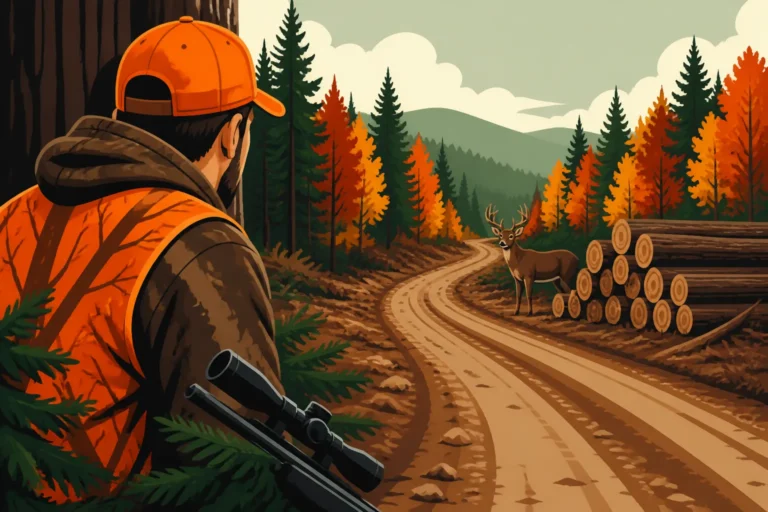
Accessing the remote areas north of Moosehead Lake primarily involves a network of gravel logging roads. Some of these are main haul roads, well-maintained and heavily traveled by timber trucks, while others are older, less-maintained tracks that might require a high-clearance vehicle. It's crucial to understand that these are private industrial roads, even if public access is allowed. Always yield to logging trucks – they have the right of way and can't stop quickly. Speed limits are often low, and dust can be a major issue, so drive defensively.
Many of these roads might be gated, particularly further north into the official North Maine Woods territory. While some gates are open to the public, others might require a fee, a permit, or even be completely restricted. It's vital to check with local authorities or timber companies before heading out. Sometimes, specific roads might close seasonally due to mud, active logging, or for public safety reasons. Having current information is key.
Beyond the vehicle-accessible roads, countless old skid trails, snowmobile trails, and trapper lines crisscross the landscape. These can be excellent arteries for hunters willing to walk further into the backcountry, often leading to less-pressured areas. However, these trails can become overgrown, confusing, and disappear altogether. Always have a reliable wayfinding system. Additionally, the vastness of Moosehead Lake itself provides water access to certain areas, especially islands or remote shoreline tracts that might be difficult to reach by land. Launching a boat or canoe can open up entirely new hunting possibilities.
Tools for Scouting and Navigation
In a region as vast and complex as Moosehead Lake's North Shore, modern scouting and navigation tools are not just helpful, they're essential. Relying solely on a paper map and compass is admirable, but for practical purposes, a robust GPS unit or, even better, a hunting app on your smartphone, will significantly enhance your safety and success. Brands like onX Hunt and GoHunt have revolutionized how hunters approach unfamiliar terrain, especially in areas with mixed land ownership.
Mapping apps, like onX Hunt, allow you to see detailed topographical maps, satellite imagery, and crucially, land ownership boundaries right on your phone. This is invaluable when trying to determine if you’re on public land, timber company land, or a private parcel that might require permission. You can mark waypoints for potential stand sites, food sources, or game sightings, track your movements, and navigate confidently even without cell service by downloading maps ahead of time. I always recommend having maps downloaded for offline use, because reliable cell service in the remote Moosehead region is a pipe dream in many areas. Using an App for North Maine Woods Land Status is a game-changer for navigating this complex system.
GoHunt also offers excellent resources, often geared towards western hunting but with tools and data useful for any big game hunter. Their ability to overlay various map layers, analyze habitat features, and even help with unit research can be applied to understanding the best areas for specific species around Moosehead. Before you even set foot in the woods, using these platforms to "e-scout" allows you to identify potential bedding areas, travel corridors, and access points. You can spot old clear-cuts that might have grown into prime deer browse, or identify small ponds where moose might feed. Reading Aerial Photos for North Woods Deer becomes much easier with these tools. Don't leave home without these digital companions.
Essential Strategies for Success on the North Shore
Hunting the Moosehead Lake North Shore demands a different mindset and approach than hunting agricultural areas or smaller woodlots. Success often hinges on your ability to adapt to the wilderness and employ patient, strategic methods.
Still-Hunting and Stand Placement
Given the dense cover and often vast tracts of land, still-hunting is an incredibly effective strategy on the North Shore. This involves moving slowly, deliberately, and quietly through the woods, pausing frequently to observe and listen. You're not just looking for deer or moose; you're looking for subtle signs: a flick of an ear, a patch of contrasting color, the barely audible crunch of leaves. When still-hunting, focus on terrain features that funnel game, such as saddles between ridges, creek bottoms, or the edges of dense swamps. Still-Hunting Western Maine Mountain Slopes involves careful use of topography to your advantage, moving along contours or ridgetops to get a better vantage.
For those who prefer stand hunting, strategic placement is everything. Don't just pick the first big tree you see. Look for natural funnels, pinch points, or areas with abundant fresh sign. Often, these will be along the edges of clear-cuts where new growth provides food, or near dense cover where animals bed. Consider the wind and thermals, which can be tricky in hilly, timbered country. What the wind does at your level might be different higher up or down in a valley. Understanding Wind and Thermals in Maine Hill Country is critical for not spooking game. Setting up along active logging roads where deer or moose cross regularly can also be productive, but be prepared for occasional vehicle traffic.
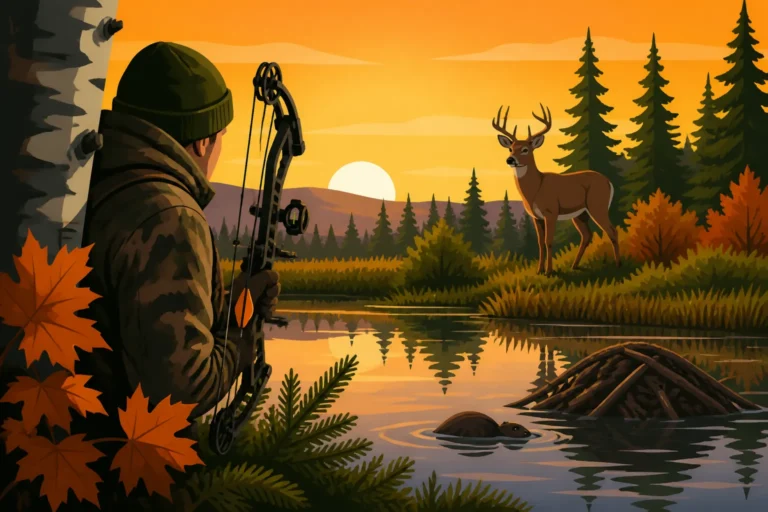
A well-placed ground blind can also be highly effective, especially in areas with limited suitable trees for stands. Brushing in a blind along a field edge, a cut, or a beaver flowage provides excellent concealment and a comfortable sit. The key is to make sure your stand or blind blends naturally into the environment and offers clear shooting lanes. Always scout these locations beforehand, if possible, to ensure they remain active and offer the best opportunity.
Dealing with Remote Conditions
Hunting the Moosehead Lake North Shore means embracing remoteness, and with remoteness comes a significant responsibility for self-sufficiency and safety. Unlike areas closer to towns, help can be hours away, not minutes. This isn't just a physical challenge; it's a mental one. You need to be prepared for all eventualities.
Always carry a comprehensive survival kit, including fire-starting materials, a first-aid kit, extra layers of clothing, and enough food and water for longer than you anticipate being out. A communication device, such as a satellite messenger or personal locator beacon (PLB), is not optional; it's mandatory. Cell service is spotty at best and nonexistent in many areas. Let someone know your detailed hunting plan, including your intended route and expected return time. This is non-negotiable.
The weather in Maine can change rapidly, especially in the North Woods. A warm, sunny morning can quickly turn into a cold, driving rain or even snow, particularly in the fall. Layering your clothing is paramount, using moisture-wicking base layers, insulating mid-layers, and a waterproof/windproof outer shell. Proper footwear, broken-in and waterproof, is equally important given the wet terrain. Finally, be prepared for the physical demands. Hauling a deer or, especially, a moose out of remote terrain is grueling work. Know your limits, hunt with a partner if possible, and have a plan for game recovery. Don't let the excitement of a successful hunt overshadow the importance of a safe extraction, and remember to properly field dress and care for your animal. Field Dressing a Moose in the North Woods is an art form itself.
Disclaimer
This article is for general informational purposes only and does not constitute professional advice. Laws, prices and regulations vary by location and change over time. Consult a qualified professional for guidance on your specific situation.